
 Save 15% on your 1st Autoship learn more

 Email us
 Live Chat
 FAQs
FAQs





Introduction
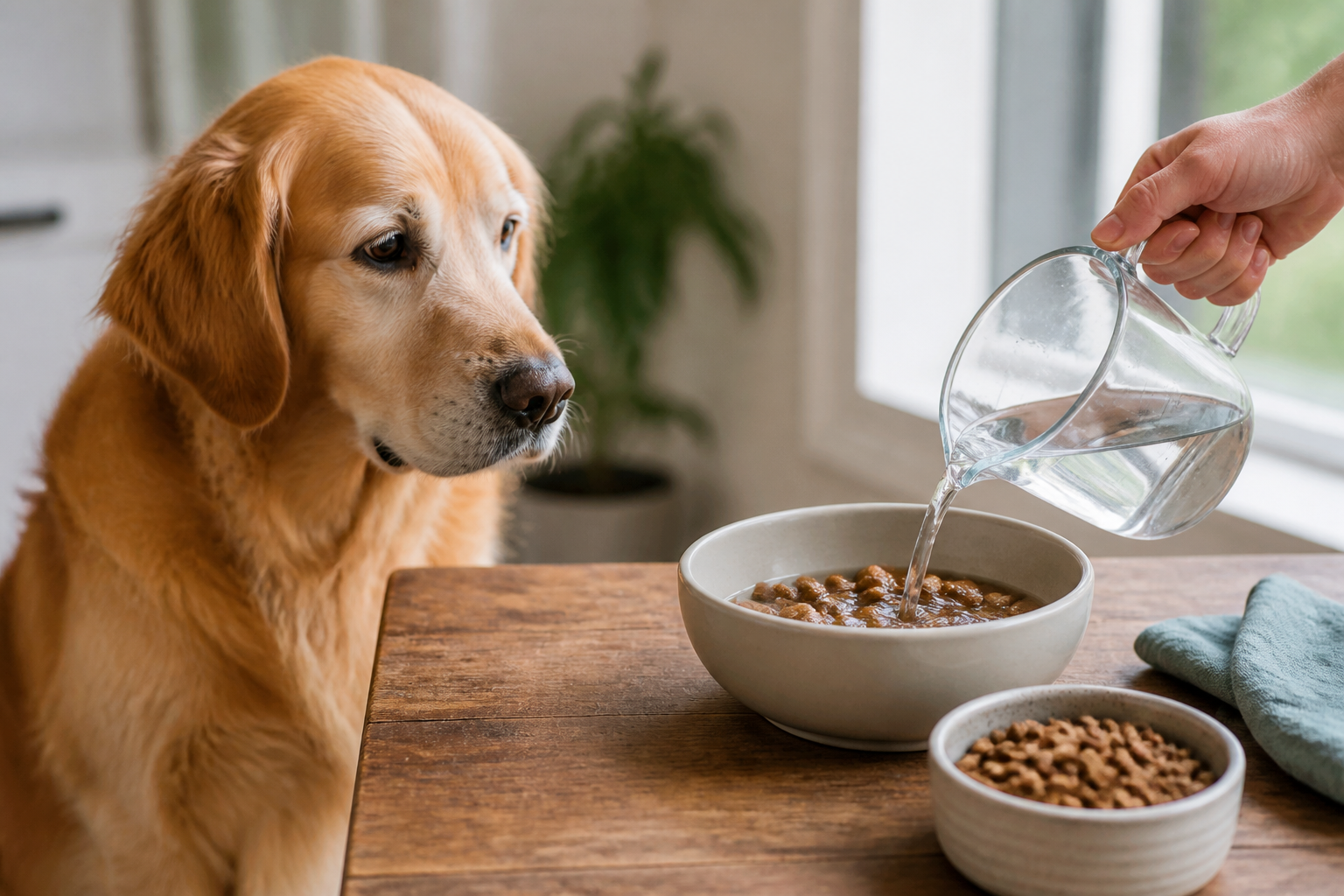
You might be standing over your dog's bowl, watching them sniff at their kibble before walking away. Or perhaps you have a senior dog who seems to struggle with the hard texture of their daily meals. Many pet owners wonder if adding a splash of water to the bowl is a helpful upgrade or an unnecessary mess. At BaxterBoo, we hear this question frequently from customers looking to improve their dog's mealtime experience. This article covers the benefits of hydration, the impact on dental health, and the best ways to soften kibble safely. We will also look at when soaking is necessary and when it might be better to keep things crunchy. Deciding whether to soak dry food depends on your dog's age, health status, and personal preferences.
Quick Answer: Soaking dry dog food is often better for senior dogs with dental issues, puppies being weaned, or dogs that need extra hydration. It enhances aroma and can improve digestion for fast eaters, though it requires strict hygiene to prevent bacterial growth.
The Benefits of Hydration
Adding water to dry food is one of the easiest ways to increase your dog's daily fluid intake. Many dogs do not drink enough water from their bowls throughout the day. This is especially true for dogs that spend a lot of time outdoors or those with high energy levels. Proper hydration supports every major system in the body. It helps the kidneys flush out toxins. It also keeps the joints lubricated and the skin healthy.
For dogs with a history of urinary tract issues, extra moisture is vital. Diluted urine can help prevent the formation of crystals or stones. If your dog has a chronic health condition, we recommend talking to your veterinarian about their specific hydration needs. Our dog pharmacy offers a variety of prescription diets and medications for dogs managing these ongoing health concerns. Adding water to these specialized diets can sometimes make them more palatable for a dog that feels unwell.
Key Takeaway: Hydration is the primary benefit of soaking kibble. It supports kidney function and urinary health while ensuring your dog stays hydrated even if they are not big drinkers.
Improving Digestion for Fast Eaters
Some dogs view mealtime as a race. They bolt down their food in seconds, often swallowing the kibble whole without chewing. This can lead to several problems. First, unchewed kibble is harder for the stomach to break down. This may result in digestive upset or gas. Second, bolting dry food can be a choking hazard.
When you soak the food, it expands before it enters the stomach. Dry kibble can nearly double in size once it hits digestive juices. By pre-soaking it, you ensure that the expansion happens in the bowl instead of the gut. This can help the dog feel fuller faster. It also forces them to lap up the food rather than gulping down hard nuggets. This slower pace is much easier on the digestive tract. For additional ideas, read our guide to wetting dry dog food for better digestion and hydration.
Managing Senior Dog Needs
As dogs age, their dental health often declines. Many senior dogs have missing teeth or sensitive gums. Crunching down on hard kibble can be painful for them. If you notice your older dog dropping food or hesitating to eat, the texture might be the problem. Soaking the food makes it soft enough to be lapped up or gently chewed. You can also explore our dog dental care collection for additional oral-care options.
Senior dogs also tend to have a diminished sense of smell and taste. This can lead to a lack of interest in food. When you add warm water to dry kibble, it releases the fats and aromas within the food. This makes the meal smell much stronger and more appetizing.
Vet Tip: If your senior dog suddenly stops eating or seems to be in pain while chewing, please consult your veterinarian. Dental disease or infections can be serious and may require professional treatment or specific medications.
Transitioning Puppies to Solid Food
Puppies go through a significant change when they move from mother's milk to solid food. Their tiny teeth and developing digestive systems are not ready for hard, dry nuggets right away. We often suggest soaking kibble for puppies between eight and twelve weeks old. This creates a "mush" that is easy for them to lap up. Our Puppy Shop can help new owners find age-appropriate essentials.
As the puppy grows, you can gradually reduce the amount of water. This helps them get used to the crunch of dry food over time. Using soaked food also ensures they stay hydrated during this high growth phase. At BaxterBoo, we see many new owners using this method to make the weaning process smoother and more comfortable for their new arrivals. For more guidance, read when puppies can eat dry dog food.
The Question of Bloat
Gastric Dilatation-Volvulus, or bloat, is a life-threatening condition where the stomach fills with gas and twists. It is a major concern for owners of large and deep-chested breeds. There is a long-running debate about whether soaking food helps or hurts in this situation. Some believe that pre-expanding the kibble prevents the stomach from over-inflating after a meal. Others worry that softened food might be swallowed too quickly, leading to more air intake.
Because the causes of bloat are complex, there is no single answer. However, many owners of high-risk breeds prefer to soak the food to ensure the dog is not drinking a massive amount of water immediately after eating dry kibble. A belly full of dry food followed by a belly full of water can be a risky combination. Our article on whether water should be added to dry dog food explores this question in more detail.
Bottom line: While the link between soaked food and bloat prevention is not fully proven, many owners use it to control the rate of expansion and hydration.
When Soaking Might Not Be Better
Soaking food is not the right choice for every household. The biggest drawback is the risk of spoilage. Dry kibble is stable at room temperature for a long time. Once you add water, the clock starts ticking. Bacteria love moisture and warmth. If you leave soaked food out for more than an hour, it can become a breeding ground for harmful pathogens.
If your dog is a "grazer" who likes to eat a few bites and come back later, soaked food is a bad idea. You must be prepared to pick up the bowl and wash it thoroughly after every meal. This added chore can be inconvenient for busy families. Additionally, some believe that dry kibble helps scrape plaque off the teeth. While this effect is often overstated, soaking the food completely removes any mechanical cleaning benefit the kibble might have offered.
How to Properly Soak Your Dog's Food
If you decide to try soaking your dog's kibble, follow these steps to do it safely.
Step 1: Measure the food. / Place the usual amount of dry kibble into a clean bowl.
Step 2: Add liquid. / Use roughly one part liquid to two parts kibble.
Step 3: Choose the temperature. / Use warm water rather than cold or boiling. Warm water releases aromas best.
Step 4: Wait for absorption. / Let the bowl sit for 15 to 30 minutes until the kibble is soft.
Step 5: Serve immediately. / Give the food to your dog right away and discard any leftovers after 30 minutes.
For more mealtime guidance, browse our dry dog food selection.
Using Broth for Extra Flavor
If your dog is particularly picky, you can use bone broth instead of water. This adds extra nutrients like collagen and glucosamine. Always choose a broth specifically made for dogs. Human broths often contain onions, garlic, and high levels of salt. These ingredients are toxic to dogs. A dog-safe broth can turn a boring meal into a high-value treat while providing the same hydration benefits as water. Our dog food topper selection includes options for adding extra flavor to meals.
Maintaining Bowl Hygiene
When you feed soaked food, you must wash the bowl after every single meal. Dried, soaked kibble sticks to the sides of the bowl like cement. It also attracts flies and other pests. Use hot, soapy water to ensure the bowl is sterilized. This protects your dog from digestive upset caused by old, fermenting food particles.
Finding the Right Balance
You do not have to choose between 100% dry or 100% soaked food. Many owners find a "middle ground" works best. You might add just a tablespoon or two of water to create a light gravy. This provides some of the aroma benefits without making the food completely mushy. It also allows some of the kibble to remain crunchy.
Observe your dog's reaction to different moisture levels. Some dogs love the soup-like consistency. Others might turn their noses up if the food loses its crunch. Your dog's stool is another good indicator. If you notice a sudden change in consistency, you may be adding too much liquid too fast.
Conclusion
Soaking dry dog food is a practical way to support your dog's health at various life stages. It is a fantastic tool for managing senior dental pain and helping puppies transition to solid meals. It also serves as a simple strategy for boosting hydration and making meals more appealing to picky eaters. However, you must commit to a strict cleaning routine to avoid the risks of bacterial growth.
If you are looking for more ways to support your dog's wellness, we invite you to explore our dog food category and health supplies. Our MVP Rewards programme allows you to earn points on every purchase, including the brands your dog already loves. For those managing long-term health conditions, remember that our pharmacy partnership provides a reliable source for prescription diets and medications. Whether you choose to soak their kibble or keep it crunchy, providing high-quality nutrition is the best thing you can do for your companion.
FAQ
Does soaking dog food help with dental health?
Soaking dog food does not directly improve dental health and may actually reduce the minor cleaning effect of dry kibble. For dogs with existing dental pain or missing teeth, however, softening the food makes eating much more comfortable. To maintain oral hygiene, we recommend regular brushing or using dental treats rather than relying on dry food alone.
How long can I leave soaked dog food out?
You should never leave soaked dog food out for more than 30 to 60 minutes. Once water is added to the kibble, it becomes a target for bacterial growth and fermentation, especially in warm weather. Always discard any uneaten portions promptly and wash the bowl with hot, soapy water to keep your dog safe.
Can I use boiling water to soak the kibble?
It is best to avoid boiling water because it can destroy some of the heat-sensitive vitamins and minerals in the food. Very hot water also carries the risk of burning your dog's mouth if they try to eat before it cools. Lukewarm or warm water is the ideal choice for softening the food and releasing appetizing aromas safely.
Will soaking food help my dog lose weight?
Soaking kibble can support weight management by increasing the volume of the meal without adding calories. The expanded food takes up more space in the stomach, which can help your dog feel satisfied and full for a longer period. This is a helpful strategy for dogs that always seem hungry even when they are on a calorie-restricted diet.






