
 Save 15% on your 1st Autoship learn more

 Email us
 Live Chat
 FAQs
FAQs





Introduction
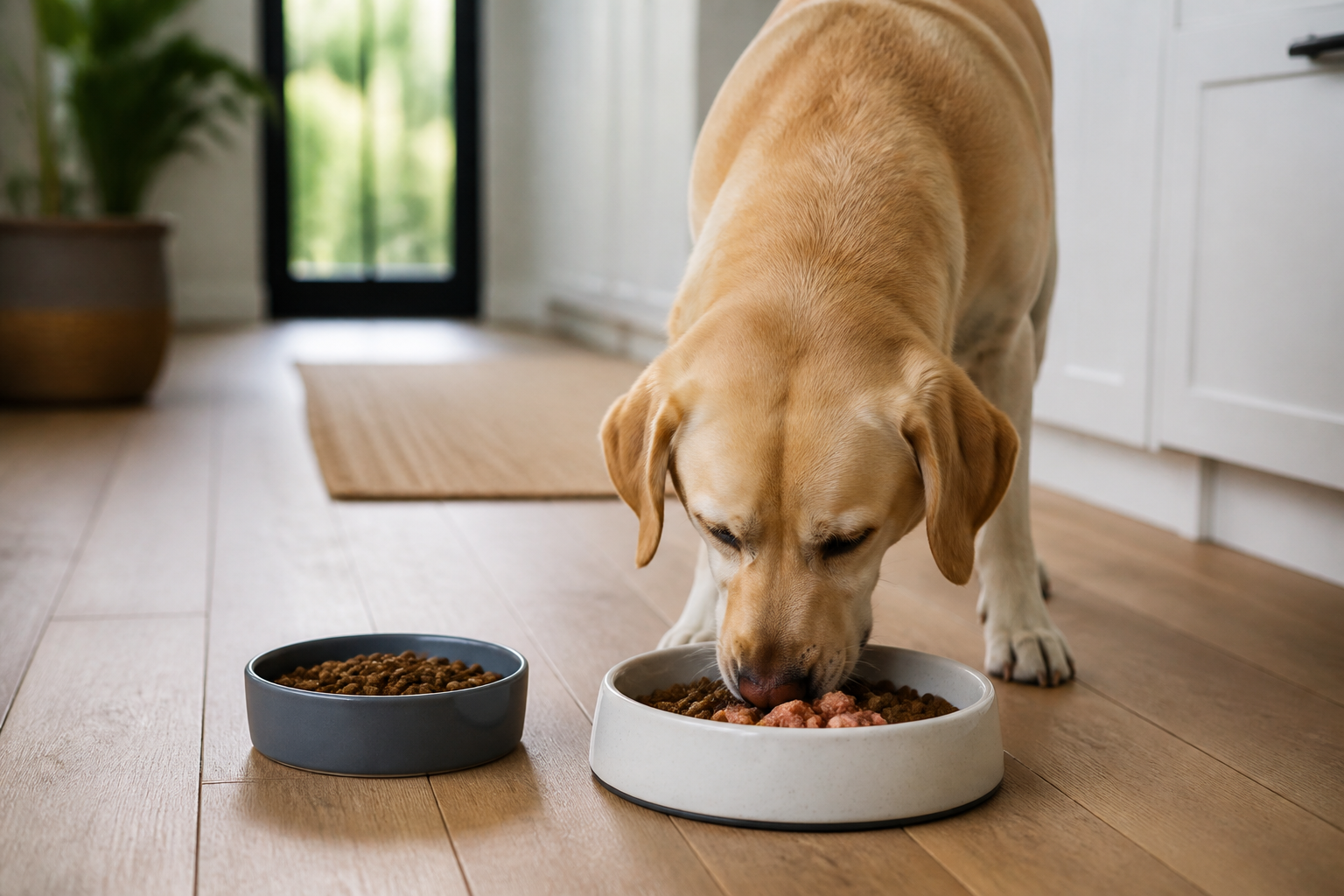
You stand in your kitchen with a scoop of dry kibble in one hand and a pull-top can of savory stew in the other. Your dog is likely spinning in circles or sitting with focused intensity because they know something special is happening. At BaxterBoo, we hear from pet parents every day who want to spice up mealtime without causing an upset stomach or unwanted weight gain. Mixing wet and dry dog food is a common practice that offers several nutritional and sensory benefits. This post covers the safety of mixed feeding, how to calculate the right portions, and the best ways to transition your pup. Done correctly, combining these textures can be a healthy way to keep your dog excited about their bowl.
Quick Answer: Yes, it is perfectly okay to mix wet and dry dog food as long as both products are high quality and labeled as complete and balanced. This method provides the dental benefits of kibble alongside the hydration and flavor of wet food.
The Benefits of Mixing Wet and Dry Dog Food
Many dog owners find that a hybrid diet offers a middle ground between the convenience of kibble and the high palatability of canned food. Each type of food brings specific advantages to the table. When you combine them, you create a more complex meal that appeals to a dog's natural instincts.
Improved Hydration
Wet dog food typically consists of about 70 to 80 percent moisture. This is significantly higher than dry kibble, which usually sits around 10 percent. For dogs that are not frequent drinkers at the water bowl, adding wet food to their daily routine is a simple way to increase fluid intake. Proper hydration supports healthy kidney function and helps flush toxins from the system. It can also be a preventive measure for dogs prone to urinary tract issues. Explore our dog food category to compare different meal formats.
Dental Health Support
One of the primary reasons pet parents stick with dry food is the mechanical cleaning action it provides. As a dog crunches on a piece of kibble, the texture helps to scrape away a small amount of plaque and tartar from the teeth. While it does not replace regular brushing or professional cleanings, the abrasive nature of dry food is a helpful tool for oral hygiene. By mixing the two, you keep this benefit while adding the moisture of the wet food.
Better Flavor and Texture
Dogs experience the world through their noses and mouths. Wet food generally has a much stronger aroma than dry food. This scent can jumpstart the appetite of a dog that has become bored with their standard meal. The variety of textures, such as gravy, shreds, or pate, provides a more interesting sensory experience. This is especially helpful for picky eaters who might push dry kibble around the bowl without actually eating it.
Key Takeaway: Mixed feeding combines the dental benefits of crunchy kibble with the hydration and high palatability of wet food, making it an excellent choice for picky or dehydrated dogs.
How to Calculate the Right Portions
The biggest risk when you start mixing food is overfeeding. It is very easy to scoop your usual amount of kibble and then top it off with half a can of wet food. This can lead to rapid weight gain. You must look at the caloric density of both foods to find the right balance. For a deeper look at portion conversions, read how much wet dog food equals one cup of dry.
Understanding Calorie Counts
Dry food is much more calorically dense than wet food. A single cup of kibble might contain 350 to 500 calories, while a standard 13-ounce can of wet food might contain 300 to 400 calories. Because wet food contains so much water, it has fewer calories per ounce than dry food. This means you cannot simply swap one cup for one can.
The Replacement Rule
A common starting point is the 25 percent rule. If you want to replace 25 percent of your dog's dry food with wet food, you must first subtract that 25 percent of kibble from the bowl. Then, you calculate the equivalent amount of calories in wet food to add back in. Most high-quality brands that we carry, such as Open Farm or Stella and Chewy's, provide calorie counts per cup and per can on the packaging.
Using Feeding Guidelines
Always check the feeding chart on both labels. These charts are usually based on a dog eating that specific food exclusively. If you are doing a 50/50 mix, you should feed half of the daily recommended amount of the dry food and half of the daily recommended amount of the wet food.
- Find the daily total for dry food and divide by two.
- Find the daily total for wet food and divide by two.
- Combine these amounts for the daily total.
- Monitor your dog's weight and body condition weekly.
- Adjust the portions based on activity levels or weight changes.
Vet Tip: If your dog is struggling with weight management, consult your veterinarian to determine their specific daily calorie needs. A vet can help you create a precise feeding plan using a body condition score.
Choosing the Right Foods to Mix
Not all dog foods are created equal. To ensure your dog stays healthy, you need to look for specific markers of quality on every label. Our team at BaxterBoo carefully selects brands that meet high nutritional standards so you can shop with confidence. Browse our selection of Open Farm products when comparing formulas.
Complete and Balanced Labels
The most important phrase to look for is "Complete and Balanced." This indicates that the food meets the nutritional levels established by the AAFCO (Association of American Feed Control Officials). If a food is labeled as a topper, mixer, or for supplemental feeding only, it does not have the full spectrum of vitamins and minerals your dog needs. You can mix a topper with a complete dry food, but you should not mix two supplemental foods and expect a balanced diet.
Matching Life Stages
A puppy has very different nutritional requirements than a senior dog. Puppies need higher levels of protein and fat for growth, along with specific minerals for bone development. If you are feeding a puppy, both the dry and wet food should be formulated for growth or all life stages. Similarly, senior dogs may benefit from lower calorie counts or added joint support. Avoid mixing a puppy wet food with an adult dry food, as this can throw off the essential nutrient balance.
Brand Consistency
While it is generally safe to mix different brands, staying within the same brand can simplify the process. Many manufacturers, like Royal Canin or Farmina, design their wet and dry formulas to complement each other. Using the same brand often means the protein sources and nutrient profiles are similar, which can be easier on a sensitive stomach.
Special Considerations for Specific Dogs
Every dog is an individual. What works for a high-energy Labrador might not work for a senior Chihuahua with dental issues. If you are comparing feeding approaches, should you feed your dog wet and dry food offers another perspective.
Picky Eaters
For dogs that turn their noses up at plain kibble, wet food acts as a natural flavor enhancer. We often suggest mixing the wet food thoroughly with the kibble rather than just plopping it on top. This ensures the dog cannot just lick off the "good stuff" and leave the dry pieces behind. The moisture from the wet food or a savory gravy coats every piece of kibble, making the entire meal more enticing.
Senior Dogs and Dental Issues
As dogs age, they may develop gum sensitivity or lose teeth. This can make chewing hard kibble painful. Mixing in wet food or soaking the kibble in the moisture of a canned stew can soften the meal significantly. This allows senior dogs to continue getting the nutrients they need without physical discomfort during mealtime. For another soft-food option, read how to wet dry dog food for better digestion and hydration.
Dogs with Sensitive Stomachs
If your dog has a history of digestive upset, be cautious when introducing a mixed diet. Stick to limited ingredient recipes or brands that focus on gut health, such as KOHA or Zesty Paws supplements. Changing the protein source or adding too much rich wet food at once can lead to loose stools or gas.
Note: If your dog experiences persistent vomiting or diarrhea after a food change, stop the new diet and contact your veterinarian immediately to rule out underlying health issues.
Safety and Storage for Mixed Feeding
Proper food handling is essential when dealing with wet food. Unlike dry kibble, which can sit in a bowl for a day without much issue, wet food is perishable. For shelf-stable add-ins, you can also browse our dog food topper collection.
Handling Leftover Wet Food
Once you open a can or pouch of wet food, the clock starts ticking. Oxygen and bacteria will begin to degrade the food. You should never leave mixed food in your dog's bowl for more than 30 to 60 minutes. If your dog does not finish their meal, the leftovers should be discarded.
Refrigeration Tips
If you only use a portion of a can, the remainder must be covered and refrigerated immediately. Use a tight-fitting plastic lid or transfer the food to an airtight container. Most wet dog food will stay fresh in the refrigerator for two to three days. Feeding cold food straight from the fridge can sometimes cause stomach upset in sensitive dogs, so you might let it sit at room temperature for a few minutes before serving.
Keeping the Bowl Clean
Biofilm and bacteria can build up quickly in bowls used for wet food. You should wash your dog's food bowl with hot, soapy water after every single meal. Stainless steel or ceramic bowls are preferred over plastic, as they are less likely to develop tiny scratches where bacteria can hide.
Transitioning to a Mixed Diet
You should never switch your dog's diet overnight. A sudden change can overwhelm the digestive system. A gradual transition over seven to ten days is the best way to avoid issues. For additional guidance, see how to switch from dry to wet dog food.
The 10 Day Transition Plan
Step 1: Days 1 to 3 / Feed 75 percent of the old dry food amount and add a very small spoonful of the new wet food.
Step 2: Days 4 to 6 / Move to 50 percent of the adjusted dry food amount and a slightly larger portion of wet food.
Step 3: Days 7 to 9 / Feed the final desired ratio, such as 75 percent dry and 25 percent wet.
Step 4: Day 10 / Complete the transition and monitor your dog's energy levels and stool quality.
Bottom line: A slow transition is the key to successfully mixing wet and dry food without causing digestive distress.
When Mixing Might Not Be Recommended
While mixed feeding is great for most dogs, there are times when it is best to stick to a single type of food. This is usually due to specific medical requirements or therapeutic needs.
Prescription and Therapeutic Diets
If your dog is on a prescription diet for a condition like kidney disease, urinary stones, or severe allergies, you must be extremely careful. Therapeutic diets are formulated with precise levels of minerals and proteins. Adding a standard retail wet food to a prescription dry food can dilute the medicinal benefits of the diet. For example, adding high-protein wet food to a low-protein kidney diet can actively harm the dog.
The BaxterBoo Pharmacy
If your dog requires a specialized prescription diet, we can help through our partnership with Pet's Choice. Our pet pharmacy carries FDA-approved medications and prescription pet foods, including brands like Farmina Vet Life and Royal Canin Veterinary Diet. Always consult your veterinarian before mixing any other food with a prescription diet. They can often recommend a wet version of the same prescription formula so you can still provide variety without compromising your dog's health.
Severe Weight Issues
For dogs that are significantly overweight, mixing in wet food can be tricky. While the extra moisture can help them feel full, the increased palatability might lead them to beg for more. In these cases, a strictly measured dry diet or a specific weight management wet food is often easier for the owner to track accurately.
| Feature | Dry Food (Kibble) | Wet Food (Canned/Pouch) | Mixed Feeding |
|---|---|---|---|
| Convenience | High - easy to store and serve | Moderate - requires refrigeration | Moderate - involves measuring both |
| Hydration | Low - relies on water bowl | High - naturally contains moisture | Improved - adds significant water |
| Dental Health | Beneficial - mechanical scraping | Neutral - soft texture | Beneficial - maintains some crunch |
| Palatability | Moderate - standard appeal | High - strong aroma and taste | High - best of both textures |
| Cost | Most economical | More expensive per meal | Cost-effective middle ground |
Practical Tips for the Modern Pet Parent
Managing a mixed feeding routine does not have to be a chore. A few simple habits can make the process part of your daily rhythm.
Using Toppers and Mixers
If you do not want to deal with half-empty cans in the fridge, consider using freeze-dried raw toppers or pouches. Brands like Stella and Chewy's offer freeze-dried meal mixers that stay shelf-stable. You can crumble these over kibble and add a little warm water to create a fresh gravy. This provides the flavor of a wet meal with the convenience of dry storage.
The Role of Autoship and Rewards
Consistency is vital for a healthy dog. Our Autoship programme is a great way to ensure you never run out of your dog's favorite dry or wet food combo. You can set different delivery schedules for each so that your pantry is always stocked. Plus, joining the MVP Rewards programme allows you to earn points on every purchase, which can help offset the cost of adding premium wet food to your dog's diet.
Watch for "Treat Inflation"
When you start mixing wet and dry food, it is easy to forget that the wet food adds to the total daily intake. Many pet parents continue to give the same amount of treats on top of the new, tastier meal. If you are mixing food to improve health, make sure those extra calories are accounted for. You can even use a few pieces of the dry kibble as "treats" throughout the day to keep the total calorie count in check.
Summary of Mixed Feeding Success
Mixing wet and dry dog food is a fantastic way to enhance your pet's life. It addresses the common issues of dehydration and picky eating while maintaining the benefits of dental health support. By choosing high-quality, AAFCO-approved foods and measuring portions carefully, you can provide a diet that is both exciting and nutritionally sound.
- Ensure both foods are "Complete and Balanced" for your dog's life stage.
- Calculate calories accurately to prevent unwanted weight gain.
- Transition slowly over a week to avoid stomach upset.
- Store opened wet food in the refrigerator and discard old bowl leftovers.
- Clean bowls daily to prevent bacteria buildup.
By following these guidelines, you can feel confident that you are providing the best possible nutrition for your companion. Whether you are shopping our warehouse in Vernon Hills or ordering online for home delivery, we are here to help you find the perfect combination of brands and formulas for your dog's unique needs.
FAQ
Can I mix two different brands of dog food?
Yes, you can mix different brands as long as both are high quality and formulated for your dog's specific life stage. However, if your dog has a sensitive stomach, staying with the same brand for both wet and dry food may reduce the risk of digestive upset. Many brands design their formulas to work together, ensuring consistent protein and nutrient sources.
How do I know how much wet food to add to the kibble?
The best way is to look at the calorie count on both packages. If you want to replace a quarter of the kibble, calculate 25 percent of your dog's daily calorie needs and find the equivalent amount in wet food ounces. You should always subtract the kibble before adding the wet food to avoid overfeeding.
Is it okay to feed dry food in the morning and wet food at night?
Yes, this is a very common feeding schedule that works well for many owners. As long as the total daily calories are correct for your dog's weight and activity level, it does not matter if the foods are mixed in the same bowl or fed at different times of the day. This can actually make storage easier since you may use a full pouch or small can at once.
Can I mix water with dry food instead of wet food?
Adding warm water or low-sodium broth to dry kibble is a great way to increase hydration and enhance aroma without adding many calories. While it does not provide the same protein and texture variety as canned food, it is a budget-friendly way to soften kibble for senior dogs or entice a picky eater. If you use broth, ensure it does not contain onions, garlic, or excessive salt.






