
 Save 15% on your 1st Autoship learn more

 Email us
 Live Chat
 FAQs
FAQs





Introduction
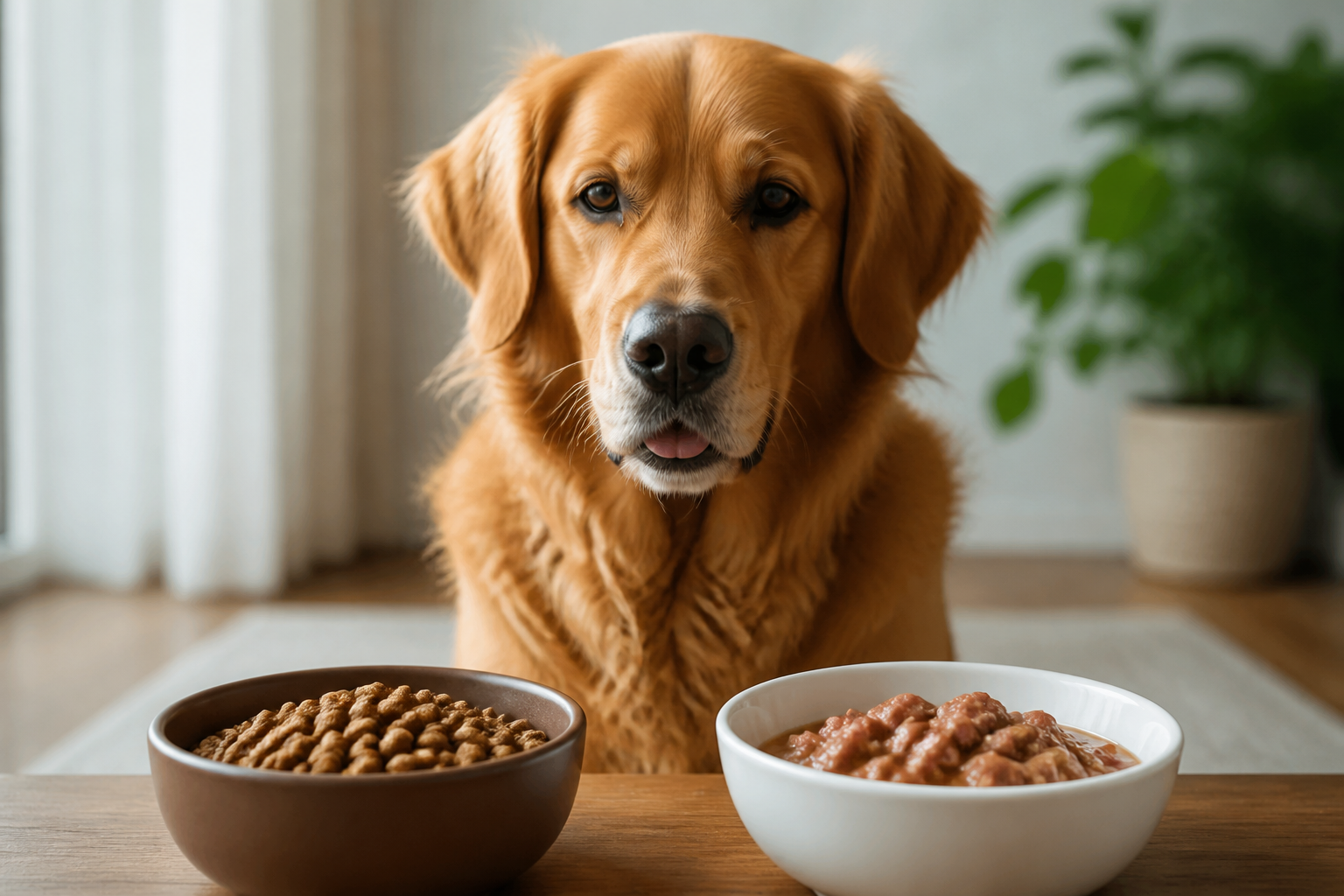
You are standing in front of the massive food wall at the pet store or scrolling through dozens of online options. You see stacks of heavy kibble bags on one side and colorful rows of cans on the other. It is a moment every dog owner knows well. You want the best nutrition for your companion, but the choice between textures can feel like a major crossroad. At BaxterBoo, we hear this question from new puppy parents and senior dog owners alike. This post will look at the nutritional differences, the lifestyle pros and cons, and the specific health benefits of both formats. We want to help you decide which bowl setup fits your dog’s unique needs. Both dry and wet foods can provide a complete and balanced diet, but your dog’s age and health will help you find the right answer.
Dry Food vs. Wet Food: The Main Differences
The most obvious difference between these two categories is the water content. Dry dog food, or kibble, usually contains about 10 percent moisture. Wet food is much higher, often reaching 75 to 80 percent moisture. This difference affects everything from how the food is made to how much you need to serve.
The manufacturing process for each is distinct. Kibble is created through a process called extrusion. Ingredients are mixed into a dough and then cooked under high pressure. The dough is pushed through a die to create specific shapes. These pieces are dried and often sprayed with fats or vitamins to ensure they are shelf stable.
Wet food follows a different path. The ingredients are mixed and then cooked inside the can or pouch. This sealed cooking process sterilizes the food and kills any pathogens. Because the moisture stays trapped inside, the food maintains a soft texture and a strong aroma. Both types of food are formulated to meet AAFCO standards. This means they both contain the essential vitamins and minerals your dog needs for their specific life stage.
Quick Answer: Both wet and dry foods provide complete nutrition if they are labeled as a complete and balanced diet. Dry food is more convenient and cost-effective, while wet food offers better hydration and higher palatability for picky eaters.
The Advantages of Dry Dog Food
Dry food remains the most popular choice for many American households. It is practical for busy families and offers specific benefits for a dog's daily routine.
Convenience and Cost
Kibble is generally the most budget friendly way to feed a dog. Because it is energy dense, you do not need to feed as much volume as you would with wet food. It is also easier to store in large quantities. You can buy a large bag of a trusted brand like NutriSource or PureVita and keep it for several weeks.
Kibble is also much easier to manage if your dog likes to graze. You can leave a portion of dry food out during the day without it spoiling. This is helpful for dogs that prefer small snacks over one large meal. It also makes cleanup much simpler for the owner.
Dental Health Benefits
Many owners choose dry food because of its impact on oral health. The crunchy texture of kibble requires a dog to chew more thoroughly. This mechanical action can help scrape away a small amount of plaque from the teeth.
Some specialized dry diets are even designed with a specific fiber matrix. This matrix does not crumble immediately when the dog bites down. Instead, it gently cleans the tooth surface. While kibble is not a replacement for regular brushing, it can be a helpful part of a dental care routine. We often recommend pairing a dry diet with our dog dental care collection for extra support.
Mental Enrichment and Training
Kibble is a versatile tool for mental stimulation. You can use individual pieces as low-calorie training treats throughout the day. It also works perfectly in interactive toys and puzzle feeders. Using a Kong toy filled with kibble can keep a dog busy and mentally engaged.
If your dog eats too fast, dry food allows you to use slow-feed bowls or snuffle mats. These tools force the dog to work for their food. This slows down their eating and reduces the risk of digestive upset or bloating.
Key Takeaway: Dry food is the best choice for convenience, cost management, and dental maintenance, especially for dogs that enjoy interactive feeding toys.
The Benefits of Wet Dog Food
While dry food is convenient, wet food offers several nutritional and sensory advantages. Many dogs find it far more exciting than a bowl of dry biscuits.
Hydration and Kidney Health
The high moisture content in wet food is a significant health benefit. Many dogs do not drink enough standing water on their own. Feeding a wet diet ensures they are getting a large portion of their daily hydration directly through their meals.
This extra moisture is particularly important for dogs with certain health conditions. If your dog has a history of urinary tract infections or kidney issues, increased water intake is essential. Our dog pharmacy carries several prescription wet diets that are specifically formulated for these conditions. Adding moisture to the diet helps flush the system and can prevent the formation of certain bladder stones.
Palatability for Picky Eaters
Wet food is much more aromatic than dry food. When the can is opened, the scent of meat and gravy is immediate. For a picky eater or a dog with a decreased appetite, this scent can be the difference between eating and skipping a meal.
Senses often dull as dogs age. Senior dogs may lose interest in their food because they can no longer smell or taste it as well. The rich flavors of brands like Stella & Chewy's wet recipes can entice an older dog to maintain their weight. It is also a much softer texture for dogs with missing teeth or sensitive gums.
Weight Management and Satiety
Wet food can be a secret weapon for weight loss. Because it contains so much water, it has a lower calorie density than kibble. This means your dog can eat a larger volume of food while consuming fewer calories.
A larger meal helps the dog feel full. This sense of satiety can prevent them from begging for treats between meals. If your dog is struggling with obesity, a high-protein wet food may help them lose weight without feeling hungry all the time.
Vet Tip: If your dog is suddenly refusing their usual food or showing signs of dental pain, consult your veterinarian. They can help rule out underlying health issues and determine if a transition to wet food is the right medical move.
Mixing Wet and Dry Food
You do not have to choose just one format. Many owners find that a combination of both provides the best results. Mixing wet and dry food can improve the flavor of a meal without the high cost of an all-canned diet. For more guidance, read how to mix dry dog food with wet food.
How to Mix Safely
The key to mixing is getting the calorie balance right. If you simply add a half-can of wet food to your dog’s normal portion of kibble, they will likely gain weight. You must reduce the amount of dry food to account for the calories in the wet food.
A common approach is to use wet food as a topper. This provides the aroma and texture variety dogs love while keeping the crunch of the kibble. You can also mix them thoroughly so the gravy coats every piece of dry food. This makes it much harder for a picky dog to pick out the "good stuff" and leave the kibble behind.
Benefits of Variety
Exposing your dog to different textures early in life can be very helpful. If a dog only ever eats dry kibble, they may be hesitant to try wet food later if they develop a medical need for it. Offering a mix helps them become more flexible eaters. It also makes mealtime more exciting, which can improve the bond between you and your pet.
Key Takeaway: Mixing formats allows you to balance the cost-savings of dry food with the hydration and flavor benefits of wet food.
Special Considerations by Life Stage
Your dog’s nutritional needs change as they grow and age. The choice between wet and dry often depends on where they are in their life journey.
Feeding Puppies
Puppies have small teeth and high energy needs. When they are first weaning, wet food or soaked kibble is often the best choice. It is easy on their developing gums and simple to swallow. As they grow, introducing dry kibble helps with the transition to adult food. High-quality brands like Royal Canin offer puppy formulas in both wet and dry versions that are specifically balanced for growth. For additional guidance, see when puppies can eat dry dog food.
Senior Dog Care
Senior dogs often face a combination of health challenges. They may have stiff joints, dental disease, or a slowing metabolism. Wet food is often a better choice for seniors because it is easier to chew. It also makes it much easier to hide medications or supplements like Cosequin for joint support.
If your senior dog is experiencing cognitive decline or weight loss, the higher fat and protein content often found in wet food can help. It is also a great way to ensure they stay hydrated, as older dogs are more prone to dehydration. Our guide to whether senior dogs should eat wet or dry food offers additional comparison points.
Bottom line: Choose wet food for puppies and seniors who need softer textures or extra hydration, and rely on dry food for active adults with healthy teeth.
Storage and Safety Guidelines
How you store your dog’s food is just as important as which type you buy. Improper storage can lead to nutrient loss, spoilage, or even bacterial growth.
Managing Kibble Bags
Once you open a bag of dry food, it begins to oxidize. This can make the fats in the food go rancid over time. We carry many airtight storage containers at BaxterBoo that can help keep your kibble fresh. However, the best way to store dry food is actually inside its original bag.
Place the entire bag into a sealed bin. This provides an extra layer of protection and keeps the manufacturing information handy in case of a recall. Try to use a bag within six weeks of opening. If you have a small dog, avoid buying the largest bag available, even if it seems like a better value.
Handling Open Cans
Wet food spoils very quickly once it is exposed to the air. You should never leave wet food in a bowl for more than thirty minutes to an hour. If your dog does not finish their meal, discard the leftovers.
Any unused food in the can must be refrigerated immediately. Use a silicone lid or a reusable cover to keep the food from drying out and to contain the smell. Most wet food should be used within three days of opening. If you find you are throwing away too much, look for smaller cans or pouches.
Step 1: Check the expiration date before opening any package.
Step 2: Store dry food in a cool, dark place, ideally inside its original bag.
Step 3: Refrigerate open wet food immediately in a sealed container.
Step 4: Clean food bowls after every meal to prevent bacterial buildup.
When to See a Veterinarian
Choosing between wet and dry food is usually a matter of preference. However, sometimes a change in eating habits points to a bigger issue. If your dog suddenly stops eating their dry food, it might be a sign of a toothache or a gum infection.
If your dog is drinking excessive amounts of water or has frequent urinary accidents, they may need a specialized diet. This is where a consultation with your vet is vital. They can prescribe specific medical diets like Farmina Vet Life for managing chronic conditions. Our pharmacy can fulfill these prescriptions, ensuring your dog gets exactly what they need for their recovery or long-term health management.
Making the Final Decision
There is no single correct answer to the wet versus dry debate. For many owners, a high-quality dry food is the primary diet because of its convenience and value. For others, wet food is a necessary tool for hydration and appetite support.
Think about your dog’s specific needs. Do they have healthy teeth? Are they a good drinker? Do you have a strict budget? Answering these questions will point you toward the right choice. Many families find that a "base" of dry food with a daily "topping" of wet food provides the perfect balance of nutrition and enjoyment.
- Evaluate your dog's current dental health and hydration levels.
- Consider your daily schedule and whether you can manage meal-based feeding.
- Calculate the monthly cost of an all-wet versus an all-dry or mixed diet.
- Monitor your dog's weight and energy levels after any diet change.
Conclusion
Deciding whether your dog should eat dry or wet food involves balancing their health needs with your lifestyle. Dry food offers great value, dental support, and easy storage. Wet food provides essential moisture, rich flavor for picky eaters, and a softer texture for seniors. Many owners find that mixing the two offers the best of both worlds.
- Dry food is best for budget, convenience, and dental scraping.
- Wet food is best for hydration, seniors, and finicky appetites.
- Mixing both can improve palatability while keeping costs manageable.
Bottom line: The best food is the one that meets your dog's nutritional requirements and that they will eat consistently and happily.
Our team at BaxterBoo wants your pet to thrive through every life stage. If your dog needs a specialized or prescription diet, visit our pet pharmacy to explore available options. For your everyday food needs, consider signing up for our Autoship programme to save on your favorite brands and ensure you never run out of your dog's favorite meal. You can also explore the MVP Rewards programme for another way to save over time.
FAQ
Is wet food better for older dogs than dry food?
Wet food is often a better choice for senior dogs because it is much softer and easier to chew. Many seniors suffer from dental disease or tooth loss, which makes hard kibble painful to eat. The stronger aroma of wet food also helps entice older dogs whose sense of smell may be fading.
Can I feed my dog only dry food for their whole life?
Yes, a healthy dog can live a long and healthy life on a high-quality dry food diet. As long as the food is labeled as complete and balanced, it provides all the necessary nutrients. Just ensure your dog always has access to plenty of fresh water to make up for the low moisture in the kibble.
Does dry food really keep a dog's teeth clean?
Dry food can help reduce plaque buildup because of the mechanical scraping action of chewing. However, it is not a substitute for regular veterinary dental cleanings or daily brushing. Some dogs swallow kibble whole, which provides no dental benefit at all.
How do I transition my dog from dry food to wet food?
You should transition slowly over seven to ten days to avoid upsetting your dog's stomach. Start by mixing a small amount of wet food into their current dry food. Gradually increase the portion of wet food while decreasing the dry food every two days until the switch is complete.






