
 Save 15% on your 1st Autoship learn more

 Email us
 Live Chat
 FAQs
FAQs





Introduction
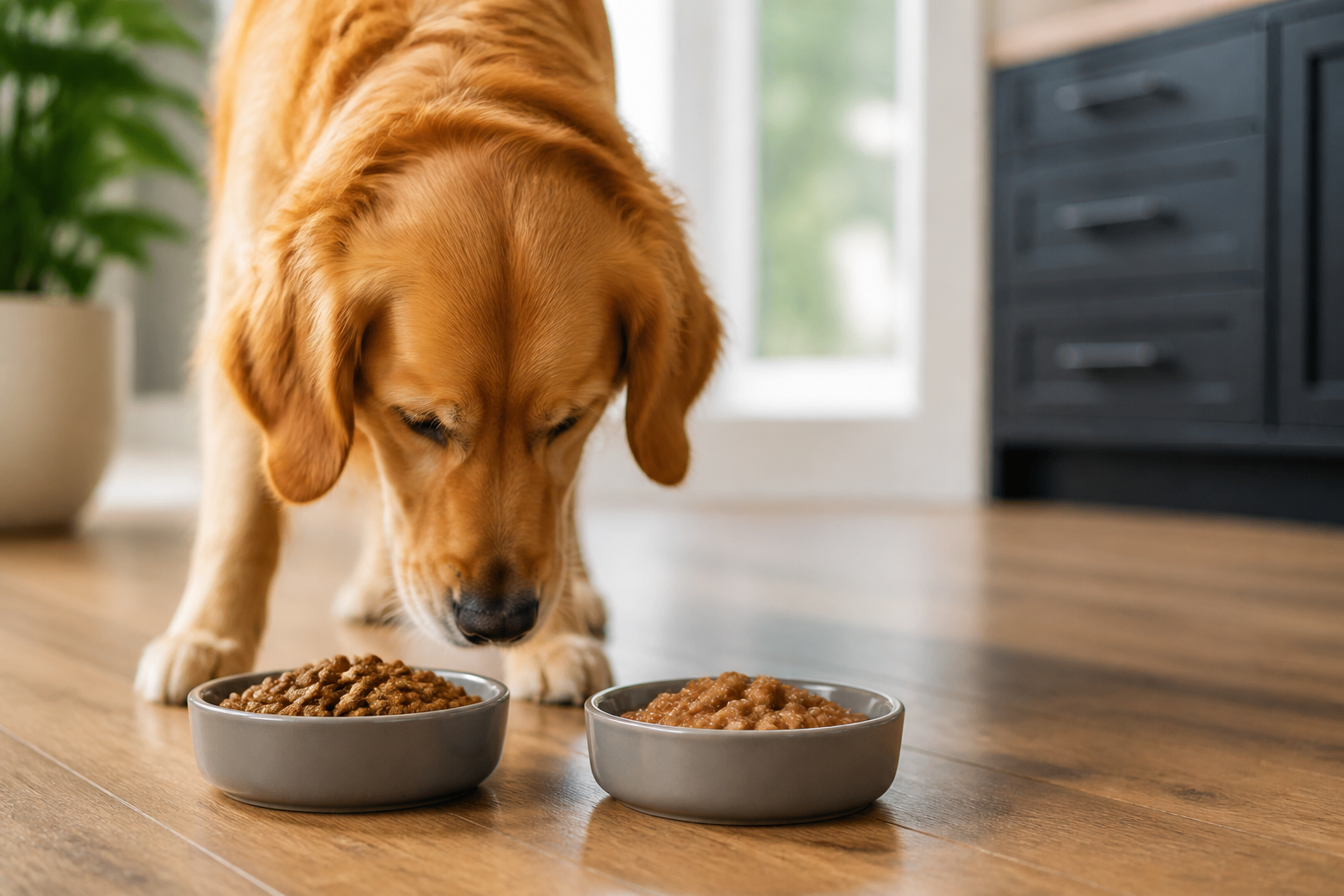
You are standing in the pet food aisle looking at a wall of bags and cans. One bag promises better teeth while a nearby can boasts real gravy and high protein. Your dog is waiting at home for dinner and you want to make sure you choose the right fuel for their body. Choosing between wet and dry food is one of the most common decisions our customers face here at BaxterBoo. It is not just about what smells better to your pup. The choice affects their hydration levels, dental health, and even your monthly budget. This guide will break down the differences between kibble and canned options to help you decide. We want to ensure your dog thrives at every life stage.
The Physical Differences Between Wet and Dry Food
The most obvious difference between these two types of food is the texture. Dry food, or kibble, is crunchy and hard. Manufacturers create it through a process called extrusion. They mix dry and wet ingredients into a dough and then cook it under high pressure. The dough is pushed through a die to create specific shapes. Finally, it is dried and sprayed with fats and vitamins to ensure it stays fresh and tastes good.
Wet food goes through a very different process. Producers grind the protein sources and mix them with a gravy or jelly that contains essential minerals and vitamins. This mixture is then sealed in a can or pouch and heated to sterilize the contents. This cooking process preserves the food without needing the same types of preservatives often found in dry kibble.
The moisture level is the biggest gap between the two. Dry food usually contains about 10 percent moisture. Wet food can contain as much as 78 percent or even 84 percent water. This massive difference impacts how much your dog needs to eat to feel full. For a broad selection of both formats, browse our dog food category.
Quick Answer: Neither wet nor dry food is universally better for every dog. The best choice depends on your dog's age, health conditions, and personal preferences. Many owners find that a combination of both provides the best balance of hydration and dental benefits.
The Benefits of Choosing Dry Dog Food
Dry food remains the most popular choice for many American households. It is often the foundation of a dog’s diet because it is practical and effective. If you have a busy schedule or a dog that likes to snack throughout the day, kibble offers several logistical advantages.
Convenience and Storage
Dry food is incredibly easy to manage. You can measure it out quickly with a scoop and it does not require refrigeration after you open the bag. As long as you keep the bag sealed in a cool and dry place, it stays fresh for weeks. This makes it ideal for owners who prefer to buy in bulk to save money.
Dental Health Support
The crunchy texture of kibble serves a physical purpose. As your dog chews, the hard edges of the kibble can help scrape away small amounts of plaque from the teeth. Some specialized dental diets are even specifically shaped to maximize this cleaning action. While it does not replace a toothbrush, it is a helpful tool for maintaining oral hygiene.
Mental Enrichment
Dry kibble is the perfect tool for training and enrichment. You can easily put it into puzzle toys or snuffle mats to make your dog work for their meal. This provides mental stimulation that a bowl of wet food simply cannot offer. It is also much cleaner to use as training treats during a walk.
Cost Effectiveness
Because dry food is energy dense, you do not need to feed as much of it by volume. It generally costs less per serving than canned food. For owners of large breeds or multi-dog households, this makes a significant difference in the monthly budget.
Bottom line: Dry food is the king of convenience and cost, offering dental benefits and easy storage for busy pet parents.
When Wet Dog Food is the Better Choice
While kibble is convenient, wet food offers unique nutritional and physical benefits. It is often the first choice for dogs with specific health needs or those who are very picky about their meals.
Superior Hydration
Many dogs do not drink enough water on their own. If your dog is prone to urinary tract issues or kidney stones, the extra moisture in wet food is a huge benefit. It helps flush the system and keeps the kidneys functioning properly. For senior dogs whose thirst drive might be lower, wet food acts as a safety net for hydration.
High Palatability
Wet food smells much stronger than dry food. This aroma is very appealing to dogs, especially those who are sick or aging. If your dog is turning their nose up at their bowl, adding a bit of wet food often jumpstarts their appetite. It provides a variety of textures like pâté, chunks in gravy, or stews that keep mealtime interesting. If you are changing formats, our guide to switching from dry to wet dog food offers a helpful next step.
Weight Management and Satiety
Because wet food is mostly water, it is less calorie dense than kibble. This means your dog can eat a larger volume of food without consuming too many calories. This helps them feel full longer. It is a great strategy for dogs that always seem hungry but need to lose a few pounds.
Ease of Chewing
Puppies with small baby teeth or senior dogs with missing teeth often struggle with hard kibble. Wet food is soft and requires very little effort to swallow. It is also an excellent option for dogs recovering from dental surgery or those with sensitive gums.
Vet Tip: If your dog has a chronic health condition like kidney disease or severe allergies, consult your veterinarian about prescription diets. Our pet pharmacy carries FDA-approved prescription foods and medications through our partnership with Pet's Choice to help manage these specific needs.
Life Stage Considerations
Your dog's nutritional requirements change as they grow. What worked for them as a puppy might not be the best choice when they reach their senior years.
Choosing for Puppies
Puppies have tiny teeth and very high energy needs. During the weaning process, wet food is often the best bridge between milk and solids. As they grow, you can introduce small-breed kibbles that are easier for their mouths to handle. Many owners choose to soak dry kibble in warm water or bone broth to soften it for their growing pups. For more puppy-specific guidance, read our guide to choosing dry dog food for puppies.
Supporting Senior Dogs
As dogs age, their senses of smell and taste may dull. They might also develop arthritis in their jaws or lose teeth. Wet food is often more rewarding for seniors. It provides the hydration they need to support aging kidneys and is much easier on their mouths. If your senior dog is losing weight, the high protein and fat content in many canned foods can help maintain their muscle mass.
Breed Size Matters
Small breed dogs often have very fast metabolisms. They may benefit from the calorie density of dry food, but their tiny mouths sometimes require the softer texture of wet food. Large breed dogs can be very expensive to feed on an entirely wet diet. For these big guys, dry food usually serves as the main meal while wet food acts as a special topper.
The Best of Both Worlds: Mixed Feeding
You do not have to choose just one. Many pet owners find that mixing wet and dry food provides the most benefits. This approach gives your dog the dental scrubbing of kibble along with the hydration and flavor of canned food.
How to Mix Correctly
If you decide to mix, you must be careful about calories. You cannot simply add a scoop of wet food to a full portion of dry food without causing weight gain. The best way to start is by replacing a portion of the dry food with an equivalent caloric amount of wet food.
Step 1: Determine the total daily calories your dog needs based on their weight and activity level. Step 2: Decide on a ratio, such as 75 percent dry and 25 percent wet. Step 3: Calculate the weight or volume for each type based on the labels. Step 4: Mix them thoroughly in the bowl to prevent your dog from just picking out the wet pieces.
Benefits of Variety
Exposing your dog to different textures early in life is very helpful. If they ever need to switch to a specific canned diet for medical reasons later, they will be more likely to accept the change. It also prevents them from becoming bored with their daily routine.
Key Takeaway: Mixed feeding allows you to balance cost, convenience, and health benefits, but always adjust the portions to prevent overfeeding.
Managing Special Health Conditions
Diet is often the first line of defense for managing health issues. Both wet and dry foods play specific roles here.
Urinary and Kidney Health
Dogs with kidney issues often require lower protein and phosphorus levels. More importantly, they need constant hydration. In these cases, veterinarians often recommend a primarily wet food diet. Our pharmacy offers several prescription options from brands like Royal Canin and Farmina Vet Life that are formulated specifically for these conditions.
Allergies and Sensitive Stomachs
If your dog has itchy skin or a sensitive tummy, the ingredient list is more important than the format. However, wet foods often have fewer synthetic preservatives than dry foods. This can sometimes make them easier for sensitive dogs to digest. Brands like Stella and Chewy’s or The Honest Kitchen offer limited ingredient options in both formats to help identify triggers.
Weight Loss Strategies
For an overweight dog, dry food can be dangerous because it is so easy to overfeed. Measuring exactly by weight rather than by volume is key. Wet food can be a helpful tool here because the high water content fills the stomach without the extra calories.
- Check the first three ingredients for high quality protein.
- Avoid foods with excessive artificial colors or flavors.
- Look for a statement that the food meets AAFCO standards for your dog's life stage.
- Ensure the packaging is intact and within the best by date.
Safe Storage for Freshness
Proper storage is essential to prevent your dog's food from spoiling or losing its nutritional value. For additional guidance, read how long dry dog food stays good.
Dry Food Storage Tips
Keep the kibble in its original bag. These bags are designed to keep out moisture and light. You can place the entire bag inside a plastic or metal airtight bin. Do not pour the food directly into the bin, as fats can soak into the plastic and go rancid over time. Try to use the bag within six weeks of opening.
Wet Food Storage Tips
Once a can is open, the clock starts ticking. You must cover unused wet food and put it in the refrigerator immediately. Use a silicone can cover or move the food to an airtight glass container. Never leave wet food out in a bowl for more than two to four hours. Any unused portion in the fridge should be thrown away after three days.
Bottom line: Freshness matters for nutrition and safety, so store kibble in its original bag and refrigerate opened cans immediately.
Transitioning to a New Diet
Never switch your dog's food overnight. Their digestive systems are sensitive to sudden changes in protein sources or fiber levels. A quick switch often leads to gas, bloating, or diarrhea.
Step 1: Days 1 and 2 should be 75 percent old food and 25 percent new food. Step 2: Days 3 and 4 should be a 50/50 split. Step 3: Days 5 and 6 should be 25 percent old food and 75 percent new food. Step 4: Day 7 is when you can feed 100 percent of the new diet.
If your dog shows signs of an upset stomach, slow the process down. Give them a few more days at the current ratio before moving to the next step. This gradual change allows the natural bacteria in their gut to adjust to the new ingredients.
Making the Final Decision
When you shop at BaxterBoo, you will find hundreds of high quality options from brands like NutriSource, Acana, and Open Farm. The right choice for your dog is the one that they enjoy eating and that keeps them at a healthy weight.
Consider your own lifestyle as well. If you travel often with your dog, dry food is much easier to pack. If you have a senior dog who needs a little extra love at mealtime, a high quality canned food might be the perfect solution. Watch your dog’s coat, energy levels, and stool quality. These are the best indicators of whether their current diet is working for them.
We carry a wide variety of both wet and dry foods to suit every budget and health requirement. Whether you need a standard bag of grain free kibble or a specialized prescription diet from our pharmacy, we are here to help you find the best fit.
Key Takeaway: The best food is the one that meets your dog's specific nutritional needs while fitting into your daily routine and budget.
Summary of Feeding Choices
Both formats have clear pros and cons. Use this checklist to help you decide which way to go.
- Choose Dry Food if: You want a cost effective option, your dog has good teeth, or you use puzzle toys for feeding.
- Choose Wet Food if: Your dog needs more hydration, they are a picky eater, or they have dental pain.
- Choose a Mix if: You want to provide variety and hydration while keeping costs manageable.
If you are ever unsure, a quick chat with your veterinarian is the best next step. They can look at your dog's specific health history and give you a tailored recommendation. Our warehouse and online store are stocked with over 500 brands to ensure you can find exactly what your vet recommends.
Conclusion
Deciding whether your dog should eat wet or dry food does not have to be a stressful choice. Both options provide complete and balanced nutrition when you choose trusted brands. Dry food offers convenience and dental support, while wet food provides essential moisture and a boost for picky appetites. Many pet parents find the middle ground of mixed feeding to be the most rewarding path.
Remember to monitor your dog's weight and energy levels as you introduce any new food. If you are managing a chronic health condition, our pharmacy partnership with Pet's Choice is a great resource for prescription diets. For every other need, our wide selection at BaxterBoo is ready for you. Consider signing up for our Autoship programme to save on your favorite brands and ensure your dog never misses a meal.
FAQ
Can I mix wet and dry food from different brands?
Yes, you can generally mix brands as long as both foods are high quality and meet your dog's nutritional needs. However, it is usually easier to monitor for allergies if you stick to similar protein sources across both. Always check the calorie counts on both labels to ensure you are not overfeeding your pet.
Is wet food better for weight loss than dry food?
Wet food can be very helpful for weight loss because it has a high water content and lower calorie density. This allows your dog to feel full while consuming fewer calories overall. However, weight loss ultimately depends on total daily caloric intake, so portion control is necessary regardless of the food type.
Does dry food really clean a dog's teeth?
Dry food can help reduce plaque buildup through the mechanical action of chewing, but it is not a cure for dental disease. Some kibbles are specifically designed with a texture that scrubs the teeth more effectively. For the best oral health, you should combine dry food with regular teeth brushing and professional veterinary cleanings.
How long can wet food sit out in the bowl?
You should never leave wet food out for more than two to four hours at room temperature. Because of its high moisture content, it can quickly become a breeding ground for bacteria. If your dog is a grazer who likes to eat slowly throughout the day, dry kibble is a much safer and more practical choice.






