
 Save 15% on your 1st Autoship learn more

 Email us
 Live Chat
 FAQs
FAQs





Introduction
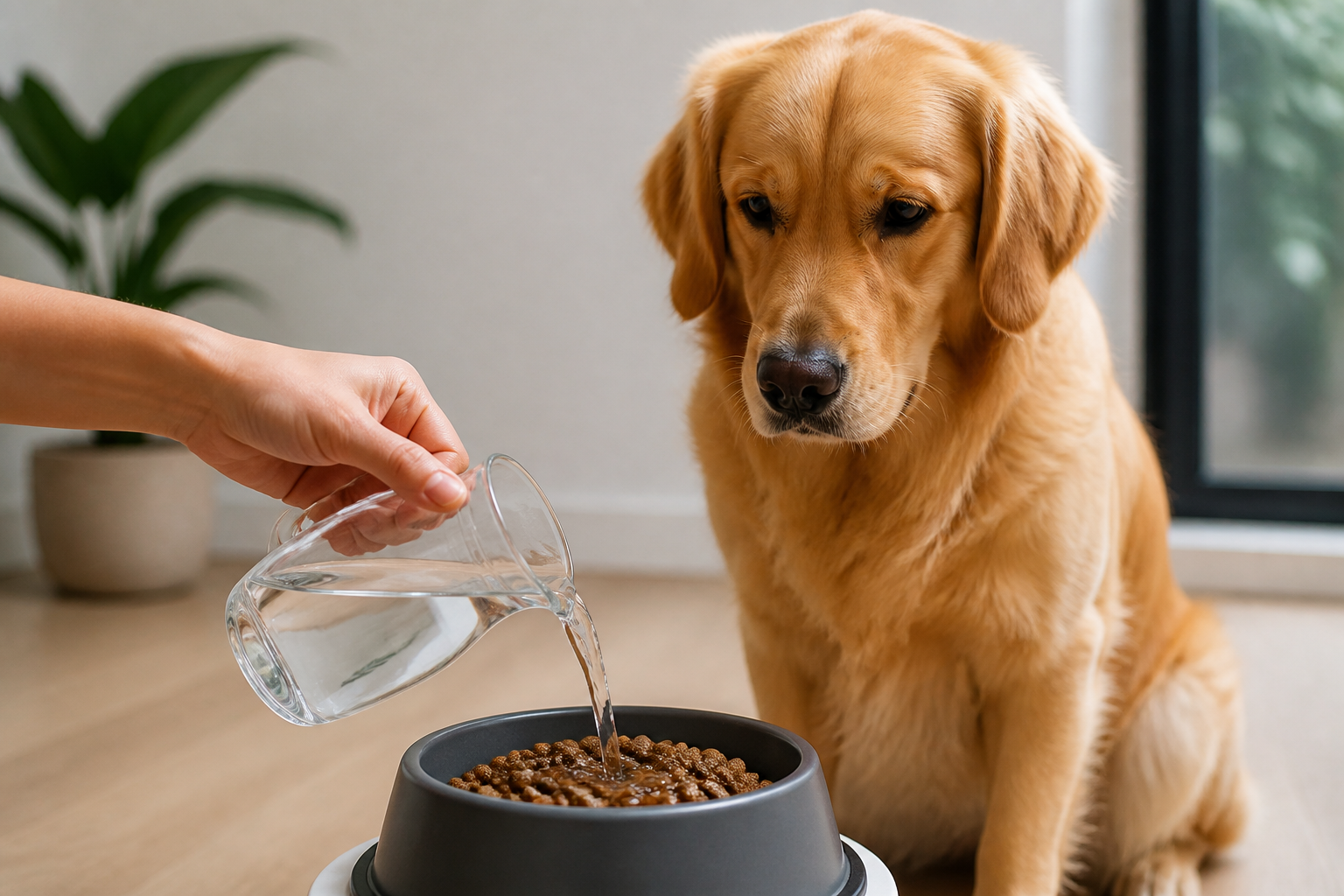
You are standing in the kitchen with a scoop of kibble and a hungry dog waiting at your feet. You might notice the biscuits look a bit dry or dusty. Maybe your dog has been ignoring their bowl lately. Or perhaps you are worried they are not drinking enough from their water dish. This common moment leads many pet owners to wonder if adding a splash of water to the bowl is a good idea. At BaxterBoo, we hear this question often from neighbors visiting our warehouse and customers shopping online. Adding water to dry food is a simple change that can offer significant health and behavioral benefits. This article explores why you might want to hydrate that kibble and how to do it safely. You will learn about the benefits for digestion, hydration, and picky eaters.
The Main Benefits of Hydrating Kibble
Most dry dog food is made through a process called extrusion. This involves high heat and pressure to create those crunchy nuggets. While this makes the food shelf-stable and convenient, it also removes almost all moisture. Adding water back into the bowl can change the entire eating experience for your dog. If you are comparing different formulas, our dog food category offers a range of options.
The most immediate benefit is improved hydration. Many dogs do not drink enough water throughout the day. This is especially true for dogs that are less active or those living in dry climates. By adding water directly to their food, you ensure they take in a set amount of liquid with every meal. This supports kidney function and urinary tract health.
Adding water also enhances the smell of the food. When you add warm water to kibble, it releases the aromas of the fats and proteins. Dogs experience the world through their noses. A bowl of dry pellets might not smell like much to them. Once the water hits the bowl, the scent becomes much more enticing. This is a great trick for dogs that have lost interest in their standard meals.
Supporting Better Digestion
Dry kibble can be hard for some dogs to break down. It often sits in the stomach and needs to absorb internal fluids before it can move through the digestive tract. If your dog is already slightly dehydrated, this can slow down their digestion.
Adding water before they eat allows the kibble to begin softening. This can make the nutrients more accessible to your dog's system. It also helps the food move more smoothly through the intestines. Some owners find that this simple step leads to more consistent and healthier bowel movements. For additional mealtime guidance, read how to wet dry dog food for better digestion and hydration.
Key Takeaway: Adding water to kibble improves hydration and enhances the natural aroma of the food to encourage eating.
Helping the Picky Eater
We all know a dog that turns their nose up at plain dry food. It can be frustrating to buy a high-quality brand only to have your pet ignore it. Before you switch to a more expensive brand, try adding a bit of warm water.
The change in texture can be a big win for picky dogs. Some dogs prefer a softer, mash-like consistency over hard crunching. This is particularly helpful for dogs that might be feeling a bit under the weather. A warm, smelly meal is much more comforting than a cold, dry one.
If water alone does not work, you can explore other liquid options we carry. Low-sodium bone broths or goat milk can add even more flavor and nutrition. Brands like The Honest Kitchen or Open Farm offer specific mixers designed for this purpose.
- Start with a small amount of liquid to see if your dog likes the change.
- Use warm water rather than cold to maximize the aroma.
- Monitor your dog to see if they finish the bowl faster or with more enthusiasm.
Solutions for Seniors and Puppies
Life stages play a huge role in how a dog experiences food. Puppies and senior dogs often have the most to gain from hydrated kibble.
Puppies have smaller, weaker teeth and sensitive gums. Hard kibble can sometimes be painful or difficult for them to chew. Softening the food makes it much easier for them to consume their required calories. It also bridges the gap between weaning and eating solid adult food.
Senior dogs often face dental issues like missing teeth or gum disease. They may also experience a decline in their sense of smell and taste. Softening the food reduces the effort needed to eat. The increased aroma helps them stay interested in their meals despite their fading senses. For another perspective on food texture and life stages, see what is better, wet or dry food for dogs.
Vet Tip: If your senior dog suddenly stops eating hard kibble, consult your veterinarian. They may have a dental infection or an underlying health issue that requires professional care.
Managing Weight and Gulping
If you have a dog that treats every meal like a race, water can be a helpful tool. Dogs that "gulp" their food can swallow a lot of air. This can lead to gas or more serious digestive upset. Softened food can be more difficult to gulp quickly. It often forces the dog to lap up the meal, which naturally slows them down.
For dogs on a weight loss plan, water adds volume without adding calories. A bowl of kibble looks much larger and feels more filling when it is expanded with water. This can help your dog feel satisfied on a reduced-calorie portion. You can also read should water be added to dry dog food for more guidance on the practice.
Quick Answer: Yes, you can mix water with dry dog food. It helps with hydration, makes the food easier to chew, and enhances the smell for picky eaters.
The Dental Health Myth
There is a common belief that dry kibble is essential for cleaning a dog's teeth. The idea is that the crunching action scrapes away plaque and tartar. While some dental-specific diets are designed this way, most standard kibble does very little for oral health.
Most dogs swallow kibble whole or break it into only two pieces. This does not provide enough friction to clean the teeth effectively. Furthermore, the carbohydrates in dry food can stick to the teeth and actually contribute to plaque. Adding water does not significantly change the dental outlook for most dogs. The best way to manage dental health is through regular brushing and professional cleanings.
Safety Precautions and Spoilage
While adding water is beneficial, it does introduce a safety concern. Dry kibble is shelf-stable because it lacks moisture. Once you add water, you create a perfect environment for bacteria to grow. You cannot leave hydrated kibble sitting out all day.
If your dog is a "grazer" who likes to eat a few bites every hour, mixing water might not be the best choice. You must be committed to a set feeding schedule. If the food is not eaten within 30 to 60 minutes, it should be discarded.
- Measure your dog's dry food into a clean bowl.
- Add a small amount of warm, filtered water.
- Let it sit for a few minutes if you want a softer texture.
- Serve the meal immediately.
- Wash the bowl thoroughly with soap and water after every meal.
Key Takeaway: Never leave water-soaked kibble out for more than an hour, as it can quickly grow harmful bacteria.
Exploring Liquid Toppers
Water is the easiest and most affordable option for hydrating food. However, it is not the only choice. We carry a wide variety of liquid toppers at BaxterBoo that can provide extra health benefits.
Bone broth is a popular choice for senior dogs. It contains collagen and amino acids that support joint health and digestion. Brands like Caru or Brutus Broth make options specifically for pets. These are much safer than grocery store broths, which often contain onions or excessive salt.
Goat milk is another excellent hydrator. It is packed with probiotics that support a healthy gut. For dogs with sensitive stomachs, raw goat milk can be easier to digest than plain water or beef-based toppers.
When to Consult Your Veterinarian
Most healthy dogs will benefit from a bit of extra water in their diet. However, some situations require a professional opinion. If your dog is on a prescription diet for a specific health condition, talk to your vet before adding anything to the bowl.
Therapeutic diets for kidney disease, urinary stones, or severe allergies are precisely balanced. Adding too much water or mixing in broths could dilute the effectiveness of the medication in the food. If your dog has a chronic health condition, your vet can give you the best ratio of water to kibble.
Our pet pharmacy offers specialized prescription diets and medications. If your vet has recommended a specific food for weight management or kidney support, you can find those options in our pharmacy section. Having a prescription on file makes it easy to get the exact nutrition your dog needs delivered to your door.
Vet Tip: For dogs with kidney or urinary issues, extra hydration is often a medical necessity. Ask your vet if a transition to a prescription wet food or a specific hydration routine is right for your pet.
Transitioning to Hydrated Food
If your dog has always eaten dry food, do not drown the bowl in water on the first day. A sudden change in texture or temperature can be confusing. Some dogs might even be suspicious of the new smell.
Start by adding just a tablespoon or two of warm water. Let them get used to the slightly softened texture. Over the course of a week, you can increase the amount of water until you reach your desired consistency. Most owners find that a 1:4 ratio (one part water to four parts kibble) is a good starting point. For another gradual approach, read how to switch from dry to wet dog food.
- Week 1: Add a very small splash of warm water.
- Week 2: Increase to a 1:8 ratio of water to food.
- Week 3: Settle on a 1:4 ratio if the dog enjoys it.
Bottom line: A slow transition helps your dog accept the new texture and prevents any digestive upset from the change.
Common Questions About Mixing Liquids
Owners often wonder if they should use hot or cold water. Warm water is best because it effectively releases aromas without the risk of burning the dog's mouth. Avoid boiling water, as it can actually damage some of the heat-sensitive vitamins added to the kibble.
Another question involves the type of bowl. When you add water, the food becomes stickier. Stainless steel or ceramic bowls are much easier to clean than plastic ones. Bacteria can hide in the small scratches found in plastic bowls. Since wet kibble encourages bacterial growth, a non-porous bowl is much safer.
We recommend checking your dog's muzzle after they eat. Longer-haired breeds like Schnauzers or Spaniels can get "kibble beard" when eating hydrated food. A quick wipe with a damp cloth after mealtime will keep their coat clean and prevent odors.
Summary of the Hydration Method
Adding water to dry dog food is a simple, cost-effective way to improve your pet's life. It solves the problem of poor hydration and can make old, boring food exciting again. Whether you have a growing puppy or a slowing senior, a little moisture goes a long way.
- Boosts hydration for better kidney and urinary health.
- Enhances smell and flavor for picky eaters.
- Makes chewing easier for dogs with dental issues or small mouths.
- Helps slow down dogs that eat too quickly.
- Requires strict cleaning habits to avoid bacterial growth.
Key Takeaway: Hydrating dry food is a versatile tool for weight management, senior care, and general wellness.
At BaxterBoo, we want to make sure you have the right tools for every meal. If you find that your dog loves the added moisture, you might consider setting up our Autoship programme for their favorite kibble or bone broth toppers. This ensures you never run out and gives you the benefit of the MVP Rewards programme for extra savings. For dogs with specific medical needs, our pharmacy partnership is here to provide the prescription diets and medications your vet recommends.
FAQ
Is it okay to leave watered-down kibble out all day?
No, you should never leave moistened kibble out for more than an hour. Once water is added to dry food, it becomes a breeding ground for bacteria like Salmonella or Listeria. If your dog does not finish the meal within 30 to 60 minutes, discard the leftovers and wash the bowl thoroughly.
Does adding water to kibble cause bloat?
There is no definitive evidence that adding water directly causes bloat, also known as Gastric Dilatation-Volvulus. In fact, some experts suggest that softening the food may help prevent dogs from gulping down too much air while they eat. However, if your dog is a breed prone to bloat, you should always consult your veterinarian about the safest feeding practices.
Can I use chicken broth instead of water?
You can use chicken broth as long as it is specifically formulated for pets. Most grocery store broths contain onions, garlic, and high levels of sodium, all of which can be toxic or harmful to dogs. Using a pet-safe bone broth or a simple splash of filtered water is the safest way to hydrate your dog's meal.
How much water should I add to my dog's food?
A common recommendation is to add roughly one-quarter cup of water for every one cup of dry kibble. This creates a pleasant aroma and softens the food without turning it into a soup. You can adjust this amount based on your dog's personal preference for texture and moisture.






