Save 15% on your 1st Autoship learn more

 Email us
 Live Chat
 FAQs
FAQs





Introduction
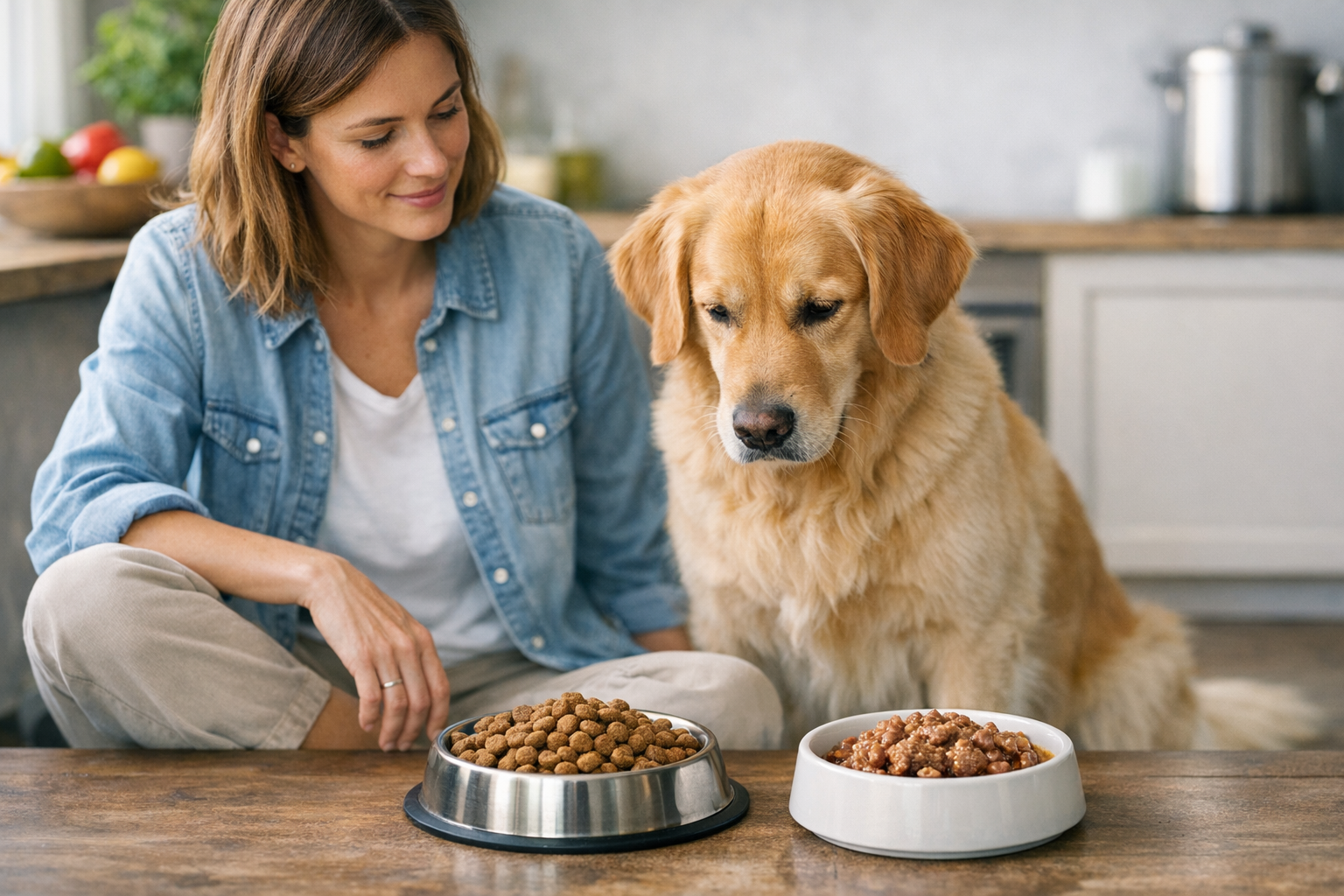
You are standing in the pet food aisle and staring at a wall of bags and cans. One side offers crunchy kibble in bulk bags. The other side features colorful cans with promises of savory stews and tender pâtés. It is one of the most common dilemmas we hear about from pet owners at BaxterBoo. You want to provide the best nutrition possible, but the conflicting advice about dental health, hydration, and cost can make the decision feel heavy. This post covers the specific benefits of both formats, how they are made, and which dogs benefit most from each type. We will also look at the logistics of mixing them to get the best of both worlds. Both dry and wet food can offer complete nutrition. Your choice should depend on your dog’s age, health needs, and daily routine. If you want to compare options as you read, start with our dog food category.
Quick Answer: Neither dry nor wet food is universally better for every dog. Dry food offers convenience and dental support, while wet food provides essential hydration and higher palatability. Most owners find that a combination of both or a choice based on specific health needs works best.
How Dry and Wet Foods Are Made
To understand which food is right for your dog, it helps to know how they are produced. The manufacturing process creates the physical differences you see in the bowl. Most importantly, it determines the moisture levels and how the food must be stored. If you are interested in mixing the two, our post on how to mix dry dog food with wet is a helpful next read.
The Extrusion Process for Dry Food
Dry food, or kibble, goes through a process called extrusion. This starts with a mix of ingredients like meat, grains, and vitamins. These are ground into a dough. This dough is cooked under high pressure and temperature. It is then pushed through a die to create specific shapes.
Once the shapes are formed, they are dried to remove almost all moisture. Dry food typically contains only about 10 percent water. After drying, the kibble is often sprayed with fats or oils to make it smell and taste better. Some brands also add probiotics at this stage. This process makes the food shelf-stable and easy to handle.
The Canning Process for Wet Food
Wet food is made very differently. The ingredients are ground and mixed with a liquid. This liquid is usually a gravy, jelly, or broth that contains added nutrients. The mixture is put into cans or pouches and sealed.
The sealed containers are then heated to a high temperature to sterilize the contents. This kills bacteria and ensures the food stays safe without needing heavy preservatives. Wet food contains much more water than kibble. Most canned options are about 75 to 80 percent moisture. This high water content is the primary reason wet food looks and smells so different from dry food.
The Advantages of Dry Dog Food
Dry food is the most popular choice for many American households. Its popularity comes from its practicality and the specific physical benefits it offers to the dog.
Convenience and Shelf Life
Kibble is incredibly easy to manage. You can measure out a portion and leave it in the bowl for several hours. This is ideal for dogs that are grazers. If your dog likes to take a few bites and come back later, dry food is the only safe option for that style of eating.
It also has a very long shelf life. You can buy a large bag that lasts for several weeks. As long as you keep the bag sealed and in a cool, dry place, it stays fresh. This makes it the most economical choice for many families. It reduces the number of trips you need to make to the store and cuts down on packaging waste.
Dental Health Benefits
One of the biggest arguments for dry food is the mechanical cleaning of the teeth. When a dog crunches down on a piece of kibble, the texture provides a slight scraping action. This can help reduce the buildup of plaque and tartar on the surface of the teeth.
While kibble is not a substitute for regular brushing, it does provide more oral stimulation than soft food. Many veterinarians recommend dry food for breeds that are prone to dental issues. This include small breeds like Yorkies or Chihuahuas. Their crowded teeth often trap food, and the crunch of kibble can provide a small daily assist in keeping those surfaces clean. For more on oral care, see our dog dental care category and our guide to 10 best dental chews for dogs.
Mental Enrichment and Training
Dry food is much easier to use for mental stimulation. You can put kibble into a puzzle toy or a slow feeder. This forces your dog to work for their meal, which burns mental energy and prevents boredom. You can also use individual pieces of kibble as low-calorie training treats throughout the day. This is much harder to do with wet food, which requires a bowl and a spoon.
Key Takeaway: Dry food is the best choice for owners who prioritize convenience, budget, and dental health. It is also the superior format for enrichment toys and dogs that prefer to graze throughout the day.
The Advantages of Wet Dog Food
While kibble is convenient, wet food offers several nutritional and sensory advantages that dry food simply cannot match. For many dogs, these benefits are essential for their long-term health.
Superior Hydration
The most significant benefit of wet food is its moisture content. Many dogs do not drink enough water on their own. This is especially true for senior dogs or those living in hot climates. By feeding wet food, you are essentially "hiding" a large amount of water in their meal.
Increased hydration is vital for kidney and urinary tract health. It helps flush the system and keeps the bladder functioning correctly. If your dog has a history of urinary stones or kidney issues, your vet might even suggest a prescription wet diet. Our pet pharmacy carries many of these specialized options. They are available through prescription when you have a valid approval.
High Palatability for Picky Eaters
Wet food smells much stronger than dry food. For a dog, smell is a huge part of the eating experience. The rich aroma of a canned stew is often enough to entice even the fussiest eaters.
This is particularly helpful for dogs that have a decreased appetite. This could be due to illness, medication, or simply getting older. As dogs age, their sense of smell can fade. The intense scent of wet food helps them stay interested in their meals. It is also a great way to hide medication, as the strong flavor masks the taste of pills.
Weight Management and Satiety
Even though wet food looks richer, it is often less calorie-dense by volume than dry food. This is because a large portion of the weight is just water. This means a dog can eat a larger portion of wet food while consuming the same number of calories as a small scoop of kibble.
This creates a feeling of fullness, or satiety. If you have a dog that always seems hungry, wet food can help them feel satisfied for longer. This makes it a useful tool for weight loss plans. Your dog feels like they are getting a big meal, but they are actually consuming fewer calories.
Vet Tip: If your dog has a history of kidney disease or urinary crystals, consult your veterinarian about a wet-food-only diet. The extra moisture is often a critical part of managing these chronic conditions and preventing future flare-ups.
Comparing the Downsides
Neither format is perfect. Understanding the drawbacks will help you decide which compromise you are willing to make.
The Cons of Dry Food
- Lower moisture: Dogs on a strictly dry diet must be encouraged to drink more water.
- Less appetizing: Some dogs simply find kibble boring and may stop eating it over time.
- Higher carbs: To keep the kibble shape, these foods often contain more starches and carbohydrates than wet food.
- Tough on sensitive mouths: Dogs with missing teeth or sore gums may find the hard pellets painful to chew.
The Cons of Wet Food
- Cost: Feeding a large dog exclusively on wet food is significantly more expensive than using dry food.
- Storage and mess: Once a can is opened, it must be refrigerated and used within two to three days. It can also be messy and leave a strong smell in your kitchen.
- Dental concerns: Soft food can stick to the teeth and gums more easily. This can lead to faster plaque buildup if you do not brush your dog's teeth regularly.
- Spoilage: Wet food cannot be left out. Anything not eaten within an hour should be discarded to prevent bacteria growth.
Life Stage Considerations
Your dog's age is a major factor in the dry vs. wet debate. Their nutritional needs and physical abilities change as they grow. If you want more age-specific reading, our post on should senior dogs eat wet or dry food covers this topic in more detail.
Puppies and Weaning
Young puppies often start with wet food or kibble that has been soaked in warm water. Their baby teeth are small and their jaws are not yet strong enough for hard crunching. Wet food is very easy for them to swallow and digest. As they grow and their adult teeth come in, you can transition them to dry food. Introducing both textures early can prevent them from becoming picky adults. For puppy-specific shopping, see the Puppy Shop.
Senior Dogs and Health Declines
Senior dogs are the most frequent consumers of wet food. Many seniors suffer from dental disease or have had teeth removed. For them, dry kibble is a physical challenge. Wet food allows them to eat without pain.
Additionally, older dogs are more prone to dehydration. Their thirst drive may not be as strong as it once was. Wet food provides that safety net of moisture. If your senior dog is losing weight, the high fat and protein content in many wet foods can help them maintain a healthy body condition.
The Case for Mixed Feeding
You do not have to choose just one. Many pet owners find that mixing wet and dry food provides the most balanced approach. We see this often with our customers who want the dental benefits of kibble but the hydration of canned food. If you want more on this approach, our guide to mixed feeding is a useful companion piece.
Why Mix?
Mixing allows you to stretch your budget further. You can use a high-quality dry food as the base and add a spoonful of wet food as a topper. This adds variety to the bowl and makes the meal more exciting for your dog. It also ensures they get at least some extra moisture every day.
How to Mix Safely
The biggest risk with mixing is overfeeding. Wet food and dry food have different calorie counts. If you simply add a can of wet food on top of a full portion of kibble, your dog will gain weight.
Step 1: Consult your veterinarian to find your dog's daily calorie requirement. Step 2: Read the labels on both the bag and the can to find the calories per cup or per can. Step 3: Replace a portion of the dry food with an equal calorie amount of wet food. Step 4: Monitor your dog's weight and body condition over several weeks. Step 5: Adjust the proportions if you notice any unwanted weight gain or loss.
Bottom line: Mixing formats is an excellent way to provide variety and hydration without the high cost of an all-wet diet.
Special Health Needs and Prescription Diets
Sometimes the choice is made for you by a medical condition. Certain health issues require specific nutrient profiles that are better delivered in one format over the other.
Digestive Sensitivity
Dogs with sensitive stomachs often do better on wet food. The ingredients are usually more restricted and the cooking process makes the proteins very easy to digest. However, some dogs require the fiber content found in specific dry formulas to maintain regular bowel movements.
Prescription Management
If your dog develops a condition like diabetes, heart disease, or food allergies, your vet may prescribe a therapeutic diet. These are precisely formulated to manage the disease. At BaxterBoo, we offer these through our pharmacy partnership. Whether your vet recommends a dry kibble for weight management or a wet food for kidney support, you can have it delivered directly to your door. Our pet pharmacy makes it easy to manage these long-term health needs alongside your regular supplies.
Practical Storage Tips
How you store the food affects its safety and how much your dog enjoys it. For more ideas on handling kibble, see are you supposed to mix dry dog food with water.
Keeping Kibble Fresh
Do not pour the kibble out of its original bag into a plastic bin. The bags are designed to keep oxygen and light out. Instead, place the entire bag inside a sealed container. This prevents the fats on the kibble from going rancid. Always wash the storage bin between bags to remove old oils.
Managing Open Cans
If you do not use a whole can at once, you need a silicone can cover. These create an airtight seal in the fridge. Do not leave the food in the can for more than three days. If your dog dislikes cold food, you can stir in a tiny bit of warm water to bring it to room temperature before serving. Never microwave the food in the metal can.
Choosing the Best Option for Your Home
The "best" food is the one that fits your dog's health needs and your lifestyle. If you have a busy schedule and a healthy dog with great teeth, dry food is a fantastic choice. It provides everything they need in a convenient package.
If you have a senior dog who struggles to drink enough water or a tiny puppy with a small appetite, wet food might be the better path. It provides the extra care they need during those sensitive life stages. Many owners find the middle ground by using dry food for breakfast and a mixed meal for dinner.
At BaxterBoo, we carry over 500 brands to ensure you find exactly what your dog needs. Whether you prefer the crunch of Orijen and NutriSource or the savory toppers from Stella & Chewy's, we have you covered.
Summary of Feeding Choices
Choosing between dry and wet food does not have to be a permanent decision. You can adapt as your dog ages or as their health needs change.
- Dry food is best for dental health, budget, and convenience.
- Wet food is best for hydration, seniors, and picky eaters.
- Mixed feeding offers a balance of taste and value.
- Prescription diets are often available in both formats through our pharmacy.
Key Takeaway: Focus on the quality of ingredients first. A high-quality dry food is better than a low-quality wet food, and vice versa. Look for a statement from AAFCO on the label to ensure the food is complete and balanced.
If you are ready to start a new routine, consider signing up for our Autoship programme. You can mix and match your favorite dry and wet brands to be delivered on your schedule. This saves you money on every order and ensures you never run out of your dog's favorite meals. You also get a free MVP Rewards programme membership, which helps you earn rewards even faster.
FAQ
Can I leave wet dog food out all day?
No, you should not leave wet food out for more than one hour. Because of the high moisture content, it can quickly grow bacteria at room temperature. If your dog does not finish their wet food within 30 to 60 minutes, you should pick it up and throw it away.
Does dry food really clean a dog's teeth?
Dry food provides a mechanical scraping action that can help reduce plaque, but it is not a complete dental solution. Some specialized dental kibbles are shaped specifically to maximize this effect. However, you should still incorporate regular teeth brushing and dental treats for the best oral health.
Is wet food higher in protein than dry food?
When you look at the labels, wet food often appears to have less protein because of the high water content. However, if you remove the water and look at the "dry matter basis," wet food is often higher in protein and fat than kibble. This makes it very satisfying and palatable for most dogs.
Why is wet food more expensive than kibble?
Wet food is more expensive because of the ingredients and the packaging. Meat is the most expensive part of dog food, and wet food contains a higher percentage of it compared to the grains or starches in kibble. Additionally, the process of canning and shipping heavy, water-filled cans costs more than shipping lightweight bags of dry food.