
 Save 15% on your 1st Autoship learn more

 Email us
 Live Chat
 FAQs
FAQs





Introduction
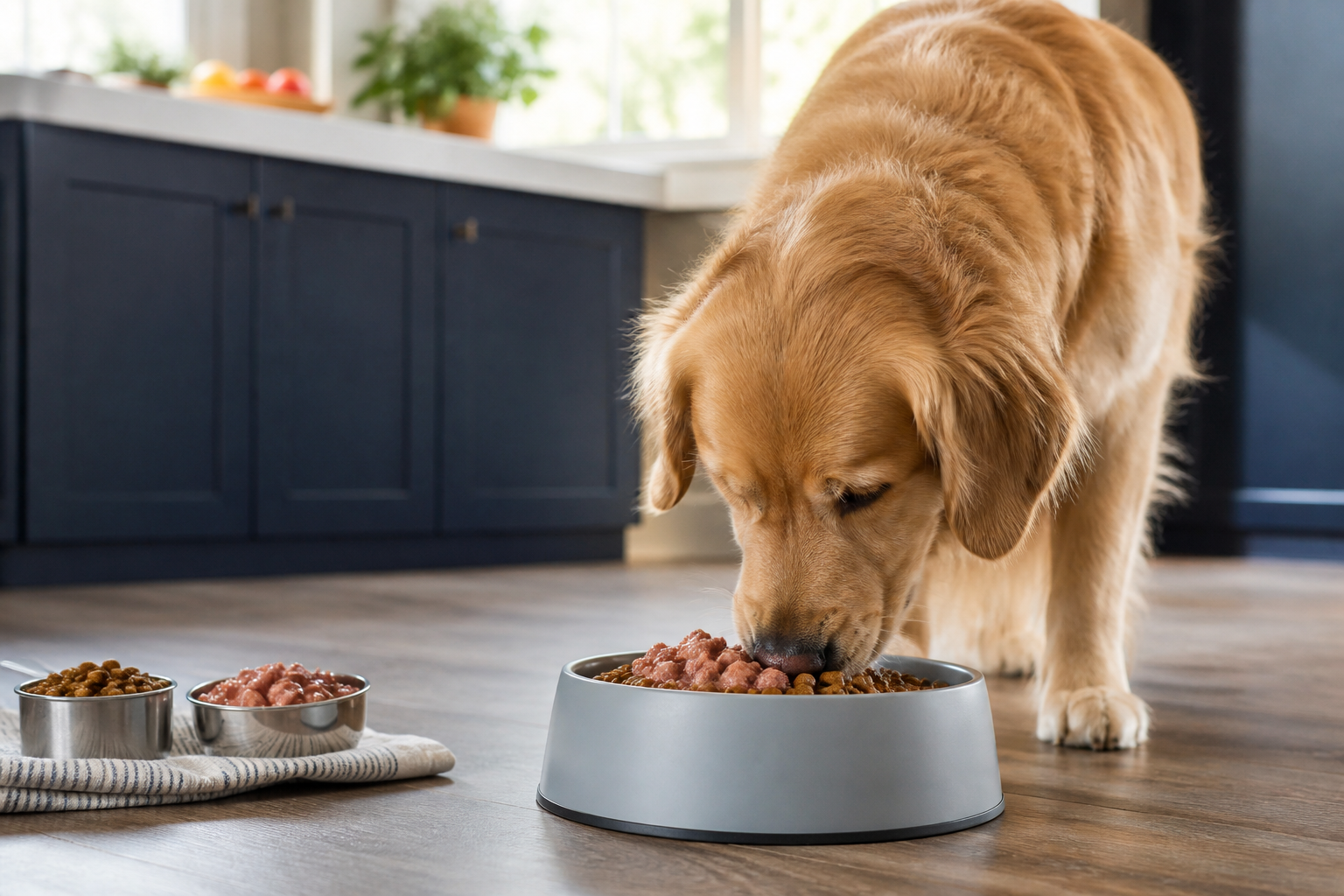
Standing in the pet food aisle or scrolling through endless options online can feel overwhelming when your dog starts turning their nose up at plain kibble. You might wonder if adding a scoop of canned food will upset their stomach or if it is better for their health in the long run. At BaxterBoo, we talk to pet owners every day who want to spice up mealtime without sacrificing nutrition. This practice of mixed feeding is a popular way to give your dog the best of both worlds. It combines the dental benefits of crunchy kibble with the high moisture and rich aroma of wet food. This post covers the safety of mixing foods, the specific health benefits for different life stages, and how to calculate the right portions. Mixing wet and dry dog food is an excellent way to boost hydration and palatability while maintaining a balanced diet.
Quick Answer: Yes, you can safely mix wet and dry dog food as long as both products are labeled as complete and balanced. You must calculate the calories of both to avoid overfeeding and ensure your dog receives the correct nutrient ratios for their life stage.
The Benefits of a Mixed Feeding Routine
Many pet owners find that a combination of textures makes a significant difference in their dog’s enthusiasm at mealtime. Dry food is known for its convenience and its ability to help scrape away some plaque as your dog chews. Wet food provides a much higher moisture content and a more intense scent that appeals to a dog’s natural instincts.
One major advantage is improved hydration. Some dogs are not naturally big water drinkers. Since wet food is often around 75 percent water, adding it to their bowl helps support kidney function and urinary tract health. This is particularly useful during hot summer months or for dogs living in dry climates.
Variety also plays a role in mental stimulation. While some dogs are happy eating the same meal for years, others thrive with different flavors and textures. Mixing allows you to rotate through different protein sources like beef, lamb, or poultry while keeping their favorite kibble as a consistent base. Explore our dog food category to compare dry and wet options.
Is It Safe to Mix Different Types of Dog Food?
It is perfectly safe to mix wet and dry dog food if you follow a few basic rules. The most important factor is ensuring that both the kibble and the wet food are formulated to be complete and balanced. This means the food meets the nutritional levels established by the AAFCO (Association of American Feed Control Officials).
If you mix a complete and balanced dry food with a wet "topper" or "mixer" that is intended for supplemental feeding only, you must be careful. Supplemental foods do not have the full spectrum of vitamins and minerals your dog needs. If these toppers make up more than 10 percent of the daily calorie intake, they can unbalance the overall diet.
Matching Life Stages
You should always match the life stage of both the wet and dry components. If you have a growing puppy, both the kibble and the canned food should be labeled for growth or all life stages. Puppies require specific ratios of calcium and phosphorus for bone development. Mixing an adult wet food with a puppy kibble can disrupt these sensitive ratios. Similarly, senior dogs may benefit from formulas with lower calories and added joint support. For age-appropriate options, browse our puppy food selection.
Mixing Different Brands
You do not necessarily have to stay within the same brand when mixing. Many owners mix a high-quality kibble from a brand like NutriSource with a canned topper from Stella and Chewy's. However, if your dog has a sensitive stomach, sticking to the same brand can be safer. Many brands formulate their wet and dry lines to complement each other using similar ingredient profiles. This consistency often makes digestion easier for pets prone to upset.
| Feeding Style | Primary Benefit | Main Drawback |
|---|---|---|
| Dry Kibble Only | Dental health and convenience | Low moisture content |
| Wet Food Only | High palatability and hydration | Higher cost and shorter shelf life |
| Mixed Feeding | Balanced texture and variety | Requires careful calorie counting |
Who Benefits Most from a Mixed Diet?
While most dogs can enjoy a mixed bowl, certain groups see specific health and behavioral improvements from this feeding style.
Picky Eaters
Some dogs are simply less motivated by food. This can be frustrating for owners who worry about their pet getting enough calories. The strong aroma of wet food is often enough to entice a finicky eater back to the bowl. The gravy or pate can coat the kibble, making the entire meal more appealing.
Senior Dogs
As dogs age, their sense of smell and taste can dull. This often leads to a decreased interest in food. Wet food has a much stronger scent than dry kibble, which helps stimulate an older dog's appetite. Additionally, senior dogs with missing teeth or painful gums often find it difficult to crunch hard kibble. Mixing in wet food helps soften the dry pieces, making them easier to chew and swallow. For another approach to softer meals, read how to switch from dry to wet dog food.
Dogs Needing Weight Management
It might seem counterintuitive to add wet food for weight loss, but wet food is often less calorie-dense by volume because of the water content. By replacing a portion of kibble with an equal volume of wet food, you can help your dog feel full while actually reducing their total calorie intake. We carry specialized lines like Farmina Vet Life that focus on weight management and can be used in a mixed feeding plan under veterinary guidance.
Vet Tip: If your dog has a chronic health condition like kidney disease or diabetes, always consult your veterinarian before mixing foods. Prescription diets are precisely balanced for specific medical needs, and adding outside food can interfere with the therapeutic benefits of the diet.
How to Calculate the Right Portions
The most common mistake pet owners make when mixing food is overfeeding. You cannot simply add a half-can of wet food to your dog's normal serving of kibble. This will quickly lead to weight gain and the health problems that come with it.
To get the portion right, you need to look at the calorie content (kcal) of both foods. This information is usually found on the back of the bag or the side of the can. If your dog needs 800 calories a day, and you want to feed 50 percent wet and 50 percent dry, you must provide 400 calories of each.
The Replacement Method
A simple way to start is the replacement method. Find out how many calories are in one cup of your dog's dry food. Then, check how much wet food provides that same number of calories. For many brands, one 13-ounce can is roughly equivalent to one cup of kibble, but this varies wildly between brands and formulas. For more guidance, read how much wet food equals one cup of dry food.
Step-by-Step: Introducing a Mixed Diet
- Check the Labels. Confirm both foods are complete and balanced for your dog's life stage.
- Determine Daily Calories. Use your vet's recommendation or the feeding guide on the package to find the total calories your dog needs.
- Start Small. Begin by replacing only 10 to 25 percent of the kibble with wet food to ensure your dog's stomach handles the change well.
- Monitor Digestion. Watch for any signs of loose stool or gas over the first week.
- Adjust for Weight. Keep an eye on your dog's body condition and reduce portions if they start gaining unnecessary weight.
Key Takeaway: Proper mixed feeding is about balancing calories, not just mixing volumes. Always use the calorie counts on the packaging to ensure your dog stays at a healthy weight.
Managing Health Conditions and the Pharmacy
Sometimes, mixing food is more than a preference. It is part of a medical strategy. Dogs with urinary stones often need the extra hydration that wet food provides. Dogs with severe allergies might require a specific prescription protein that is only available in a certain format.
Our dog pharmacy provides access to prescription medications and prescription pet foods. If your veterinarian has prescribed a specific diet for a condition like skin allergies or kidney support, we can help fulfill those needs. Our pharmacy offers the convenience of home delivery for the medications and specialized foods your dog needs for long-term wellness.
For owners managing chronic conditions, consistency is vital. If you are using a prescription dry food, we recommend checking if there is a corresponding wet version of the same prescription line. This ensures the therapeutic levels of nutrients remain consistent across the entire meal.
Storage and Safety Tips for Mixed Feeding
When you move to a mixed feeding routine, you have to be more mindful of food safety. Dry kibble is shelf-stable and can sit in a bowl for the better part of a day without issue. Wet food is a different story. For additional transition guidance, see how to mix dry dog food with wet food.
Refrigeration is Required
Once you open a can of dog food, the clock starts ticking. Any unused portion must be covered and refrigerated immediately. It should be used within two to three days. If your dog does not finish their mixed meal within 30 to 60 minutes, you should pick up the bowl and discard the leftovers. Bacteria grow quickly in the moist environment of wet food, especially when it is mixed with kibble and saliva.
Use Airtight Containers
To keep the kibble fresh, store it in its original bag inside an airtight container. This prevents the fats in the food from going rancid. For the wet food, use a silicone can cover or transfer the food to a glass container to maintain the best flavor and prevent the "refrigerator smell" from soaking into the food.
The Importance of Clean Bowls
Mixed feeding can be messier than dry feeding. Gravy and pate leave a residue that can harbor bacteria if the bowl is not washed daily. We recommend using stainless steel or ceramic bowls, as plastic bowls can develop tiny scratches that trap bacteria and lead to chin acne or other skin irritations in sensitive dogs.
Common Myths About Mixing Dog Food
There is plenty of misinformation circulating about what happens when you mix different types of food. Let's clear up a few of the most common myths.
Myth: Mixing Food Causes Upset Stomachs
While a sudden, drastic change in food can cause diarrhea, a gradual transition to mixed feeding is usually well-tolerated. The key is to introduce the wet food slowly over five to seven days. This gives the gut microbiome time to adjust to the new moisture levels and ingredients.
Myth: Wet Food Rotts Your Dog's Teeth
It is a common belief that wet food causes dental decay. While dry kibble does provide some mechanical cleaning through abrasion, it is not a substitute for regular dental care. The primary cause of dental issues is genetics and a lack of brushing. While kibble is slightly better for dental health than a diet of 100 percent soft food, mixing the two does not "ruin" the benefits of the dry food.
Myth: You Should Never Mix Different Protein Sources
Unless your dog has a confirmed food allergy, there is no medical reason to avoid mixing proteins. In fact, some experts believe that providing a variety of protein sources can help prevent the development of allergies later in life. If your dog enjoys a beef kibble with a chicken topper, and they have no digestive issues, it is perfectly fine to continue.
Practical Tips for Busy Pet Parents
We know that calculating calories and measuring out two different types of food every morning can be a chore. Here are some ways to make the process easier.
- Pre-portion your wet food. If you use half a can per meal, scoop the other half into a small container the night before.
- Use a kitchen scale. Measuring by weight (grams) is much more accurate than using a measuring cup, especially when dealing with different shapes of kibble.
- Set up Autoship. Items like canned food are heavy and bulky. Using our Autoship programme ensures you never run out of your dog's favorite wet food and saves you a trip to the store. Plus, you get savings on your first order and a free MVP Gold membership.
- Warm it up. If your dog is particularly picky, try adding a splash of warm water to the mix or microwaving the wet food for a few seconds. This releases the aromas and makes the meal even more tempting.
Bottom line: Mixing wet and dry food is a safe, flexible way to improve your dog's mealtime experience while supporting their health.
FAQ
Can I mix wet and dry dog food from different brands?
Yes, you can mix different brands as long as both are labeled as complete and balanced. If your dog has a very sensitive stomach or specific food allergies, it is often safer to stick to the same brand to keep the ingredient profile consistent.
How much wet food should I add to my dog's kibble?
There is no set amount, but a common ratio is 25 percent wet and 75 percent dry. The most important thing is to reduce the amount of kibble to account for the calories in the wet food so you do not overfeed your dog.
Does mixing wet food with kibble help with dental health?
The dry kibble still provides some mechanical scraping on the teeth even when mixed with wet food. However, the best way to maintain dental health is through regular brushing and professional cleanings, rather than relying solely on the texture of the food.
Is it okay to leave mixed dog food out all day?
No, you should not leave mixed food out for more than an hour. The moisture in wet food allows bacteria to grow much faster than dry kibble alone. If your dog is a "grazer" who likes to eat small amounts throughout the day, mixed feeding may not be the best choice unless you can provide multiple small meals.






