
 Save 15% on your 1st Autoship learn more

 Email us
 Live Chat
 FAQs
FAQs





Introduction
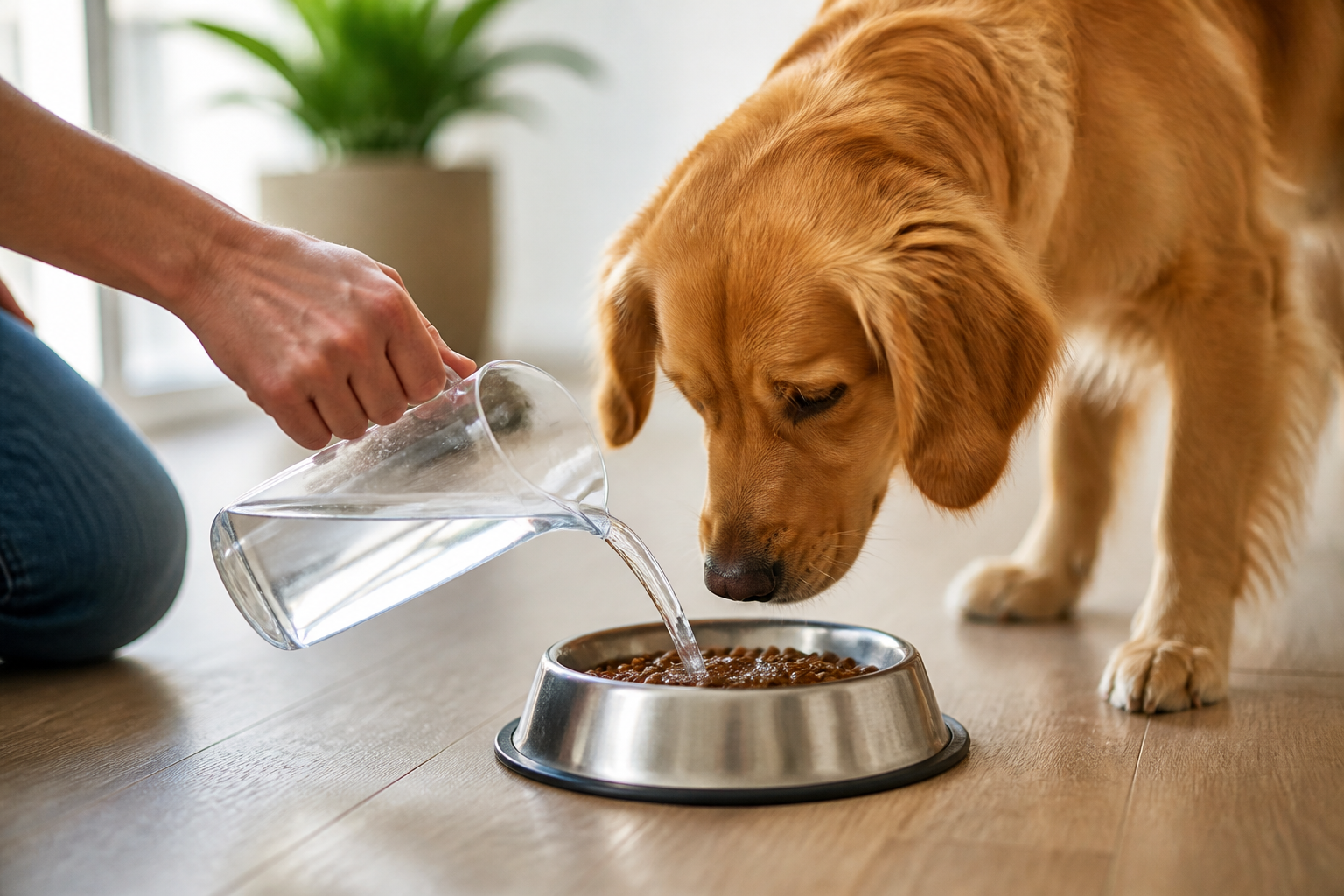
You stand in your kitchen, measuring out a scoop of dry kibble, and notice your dog doesn't seem very excited. Maybe they are sniffing the bowl and walking away, or perhaps you are worried they aren't drinking enough from their water dish throughout the day. This leads many owners to wonder if a simple splash of water could improve the meal. At BaxterBoo, we hear this question often from pet parents looking to support their dog's health and appetite. Adding moisture to a dry diet can provide several benefits, but it also requires some care to avoid spoilage. This article covers the pros and cons of hydrating kibble, the best methods for different life stages, and when to consider professional guidance for your dog's nutrition. Knowing how to safely moisten food can help your dog stay hydrated and satisfied.
Quick Answer: Yes, you can safely add water to dry dog food to improve hydration and palatability. It is important to serve the food immediately and discard any leftovers within an hour to prevent bacterial growth.
The Primary Benefits of Hydrating Kibble
Many dogs do not drink enough standing water to meet their daily needs. This is especially true for active dogs or those living in warmer climates. When you add water to their food, you are ensuring they get a significant portion of their daily fluids during mealtime. Proper hydration supports every system in the body. It helps the kidneys filter waste, keeps the skin supple, and maintains healthy joints. If you are comparing meal options, explore our dog food category for dry, wet, and other food choices.
Improved Digestion and Nutrient Absorption
Dry food is highly processed and very low in moisture. When a dog eats dry kibble, their body has to provide the moisture to break those hard pellets down in the stomach. By pre-moistening the food, you take some of the work off their digestive system. This can be particularly helpful for dogs that suffer from occasional gas or bloat. Softened food moves through the digestive tract more smoothly, which may help the body absorb nutrients more effectively.
Boosting Palatability for Picky Eaters
Warm water can do wonders for a dog that has lost interest in their dinner. The heat from the water releases the fats and aromas already present in the kibble. Since a dog's sense of smell is closely tied to their appetite, making the food smell stronger often encourages them to eat. This is a common trick used for dogs recovering from a minor illness or those that are naturally fussy about their food. For another perspective on this topic, read our guide to mixing dry dog food with water.
Weight Management and Satiety
If you have a dog that always seems hungry, water can be a useful tool. Adding water increases the volume of the food in the bowl without adding any calories. The expanded kibble takes up more room in the stomach, helping your dog feel full faster. This is a simple way to manage weight for dogs on a calorie-restricted diet who might otherwise beg for treats between meals.
Key Takeaway: Adding water to kibble is an easy, low-cost way to boost hydration, improve smell, and help a dog feel full without increasing their caloric intake.
Potential Drawbacks and Safety Concerns
While there are many benefits, you must be aware of the risks involved with adding moisture to dry food. The biggest concern is bacterial growth. Dry kibble is shelf-stable because it has a very low moisture content. Once you add water, you create a perfect environment for bacteria like Salmonella or Listeria to grow. This happens much faster than most owners realize, especially in a warm house.
The Risk of Spoilage
If your dog is a "grazer" who likes to pick at their food over several hours, hydrating their kibble is not a good idea. Wet food should never be left out at room temperature for more than an hour. After that point, the risk of spoilage increases significantly. If your dog does not finish the moistened meal within 60 minutes, you should throw the remains away. Leaving it out for the next meal can lead to digestive upset or more serious foodborne illnesses. For additional food-safety guidance, see our article about wetting dry dog food.
Dental Health Considerations
There is a long-standing belief that dry kibble helps keep a dog's teeth clean by scraping away plaque. While some specialized dental diets are designed for this, most standard kibble is too brittle to provide much of a "brushing" effect. However, softening the food completely removes any abrasive texture. If you decide to feed softened food long-term, you may need to be more diligent about manual teeth brushing or providing approved dental chews to keep their gums healthy.
Mess and Cleanup
Hydrated food is naturally messier than dry pellets. It can stick to the fur around your dog's mouth, which may lead to skin irritation or a lingering smell if not cleaned. You will also need to wash your dog's bowl with hot, soapy water after every single meal. Dried-on mush from a previous meal can harbor bacteria that could contaminate the next serving.
Vet Tip: If your dog has a history of dental disease or recurring digestive issues, consult your veterinarian before making permanent changes to their feeding routine. They can help determine if a prescription diet from our pet pharmacy is a better fit for your dog's specific health requirements.
Special Considerations for Life Stages
The decision to add water often depends on the age and physical condition of your dog. Different life stages have different structural and nutritional needs that moisture can help address.
Puppies and Weaning
When puppies are transitioning from mother's milk to solid food, their teeth and jaws are not yet strong enough for hard kibble. Adding warm water to create a "mush" or gruel is a standard part of the weaning process. It allows them to get the nutrition of the kibble while practicing the mechanics of lapping and chewing. As they get older, you can gradually reduce the amount of water until they are comfortable with dry food. For age-specific options, browse our selection of puppy supplies.
Senior Dogs and Dental Issues
Older dogs often face challenges that make dry food difficult to eat. They may have missing teeth, sensitive gums, or painful conditions like periodontal disease. For these seniors, hard kibble can be physically painful to crunch. Softening the food allows them to continue eating their favorite brand without discomfort. Additionally, senior dogs are more prone to dehydration and kidney issues, making the extra water even more beneficial for their longevity.
Dogs with Reduced Kidney Function
Dogs managing chronic conditions like kidney disease often need as much moisture as possible. While our pharmacy carries FDA-approved prescription diets for these conditions through our partnership with Pet's Choice, adding water to that food is often encouraged by vets. It helps flush the system and reduces the workload on the kidneys.
Bottom line: Softening food is almost always beneficial for very young puppies and senior dogs with dental pain or hydration needs.
How to Properly Add Water to Dog Food
If you decide to try this at home, follow a consistent process to ensure the food is safe and appealing. It is not just about pouring a glass of water into the bowl. The temperature and the timing matter.
Step-by-Step Guide to Hydrating Kibble
Step 1: Measure the dry food. / Always start with the standard portion of dry kibble your dog usually eats.
Step 2: Add warm water. / Use warm, but not boiling, water. Warm water helps release aromas, while boiling water can destroy some of the vitamins and probiotics in the food.
Step 3: Use the right ratio. / Start with one part water to three parts kibble. You can adjust this based on your dog's preference for a slight crunch or a total mash.
Step 4: Let it sit. / Allow the food to soak for 10 to 15 minutes. This gives the water time to penetrate the center of the kibble so it doesn't stay hard in the middle.
Step 5: Serve and monitor. / Offer the food to your dog and watch to see if they enjoy the new texture. Remember to pick up the bowl after an hour. For more preparation ideas, read how to wet dry dog food for better digestion and hydration.
What to Avoid
Do not use hot water directly from a boiling kettle. It can cause burns to your dog's mouth and throat. Also, avoid adding milk or juice to the food. Many dogs are lactose intolerant, and juices often contain sugars or artificial sweeteners like Xylitol that are toxic to dogs. Plain, filtered water is always the safest choice for hydration.
- Checklist for Success:
- Use filtered or tap water that is safe for human consumption.
- Aim for a temperature similar to lukewarm tea.
- Wash the bowl thoroughly after every use.
- Watch for changes in stool consistency when first starting.
Alternatives to Plain Water
If your dog is still not interested in their food after adding water, or if you want to provide extra nutrients, there are other ways to add moisture. These options can provide a flavor boost that plain water lacks.
Bone Broth for Dogs
Bone broth is an excellent topper for dry kibble. It is packed with collagen, amino acids, and minerals that support joint health and digestion. However, you must use a broth specifically made for pets. Human bone broths often contain high levels of sodium, onions, and garlic, all of which are dangerous for dogs. We carry various shelf-stable bone broths that are formulated specifically for canine safety and nutrition. You can explore our selection of The Honest Kitchen products for rehydratable foods and toppers.
Wet Food Mix-ins
Another popular method is "topping" or mixing in a small amount of canned wet food. This provides the moisture and aroma of a wet diet while keeping the cost lower than feeding 100% wet food. If you use this method, remember to reduce the amount of dry kibble slightly to account for the extra calories in the wet food. This helps prevent unwanted weight gain.
Goat Milk and Rehydratable Foods
Some owners prefer using raw goat milk or specialized rehydratable diets like those from The Honest Kitchen or Stella and Chewy's. These foods are designed to be mixed with water and often provide a more complete nutritional profile once hydrated compared to just putting water on standard kibble. See our selection of Stella & Chewy's products for meal mixers and bone broth toppers.
Key Takeaway: Bone broths and wet food toppers are great alternatives if your dog finds plain water-soaked kibble unappealing.
When Adding Water Might Not Be Enough
While adding water can help with minor appetite issues or hydration, it is not a cure for underlying health problems. If your dog suddenly stops eating or shows a dramatic change in thirst, a bowl of soaked kibble is not the solution.
Recognizing Red Flags
If your dog is refusing food for more than 24 hours, or if they are lethargic and vomiting, you should contact your veterinarian immediately. These can be signs of infection, dental abscesses, or internal health issues that require medical intervention. Adding water to food will not fix a broken tooth or an intestinal blockage.
Prescription Diets and the Pharmacy
For dogs with chronic allergies, skin conditions, or urinary tract issues, a change in water intake is only one piece of the puzzle. BaxterBoo offers a wide range of prescription pet foods through our pharmacy partnership. These diets, such as Farmina Vet Life or Royal Canin Veterinary Diet, are formulated to treat specific medical conditions. Our pharmacy provides a convenient way to get these FDA-approved foods delivered to your door, ensuring your dog gets the exact nutrition they need to manage their health. Read our article about managing dog food with water for another discussion of hydration and special diets.
Understanding the "Kibble Crunch" Myth
There is a common debate in the pet world about whether dogs actually need to "crunch" their food. Some owners worry that by softening the food, they are making their dog's jaws weak or causing their teeth to rot. In reality, most dogs do not chew their kibble thoroughly anyway. Many dogs "inhale" their food, swallowing the pellets nearly whole.
Digestion Starts in the Stomach
Unlike humans, dogs do not have high levels of amylase in their saliva to start breaking down carbohydrates in the mouth. Most of their digestion happens in the stomach and small intestine. Therefore, the texture of the food in the mouth is less important for digestion than the moisture content in the stomach. Softened food can actually reduce the risk of "regurgitation," which happens when a dog eats too fast and the dry kibble irritates the throat, causing them to throw it back up.
Preventing Gulping and Bloat
For large breed dogs prone to bloat (GDV), adding water can be a safety measure. When dry kibble enters the stomach and then absorbs water, it expands. If a dog gulps a large amount of dry food and then drinks a lot of water afterward, the rapid expansion can contribute to stomach discomfort or even the twisting associated with bloat. Pre-expanding the food with water before they eat can help mitigate this risk, though it is not a guaranteed preventative.
Bottom line: Don't worry about the lack of crunch. Most dogs get very little dental or digestive benefit from the hardness of standard kibble.
Making the Switch: Transitioning Your Dog
If your dog has eaten dry food their entire life, they might be suspicious of a bowl of mush. It is best to transition slowly rather than changing the texture overnight.
The Gradual Approach
Start by adding just a tablespoon or two of water to the top of the kibble right before you put it down. This introduces the new scent and a slightly different texture without making the whole meal soggy. Over the course of a week, you can increase the amount of water and the soaking time.
Monitoring for Changes
Keep an eye on your dog's bathroom habits during this transition. Adding more water to the diet will naturally lead to more frequent urination. This is normal and a sign that the hydration is working. However, if you notice loose stools or diarrhea, you may be adding too much water too quickly, or your dog's system may be sensitive to the change. If the digestive upset lasts more than a day or two, go back to dry food and consult your vet.
Vet Tip: A sudden increase in thirst or urination can also be a sign of underlying issues like diabetes or kidney disease. If you notice these symptoms even without adding water to the food, schedule a checkup with your veterinarian.
Managing the Routine for Busy Owners
We know that pet owners have busy schedules. Letting food soak for 15 minutes might feel like a chore during a hectic morning. There are ways to make this routine easier without sacrificing your dog's health.
Using Our Autoship Program
Consistency is key to a dog's digestive health. Our Autoship programme ensures you never run out of your dog's favorite kibble or the bone broths you use for hydration. When you sign up for Autoship, you get savings on your first order and a free MVP Gold membership. This makes it easier to keep the right supplies on hand for every meal, even if you are using specialized toppers or prescription foods from our pharmacy.
Pre-preparing Portions
While you shouldn't soak the food hours in advance, you can measure out the dry portions and have your water or broth ready to go. This shaves a few minutes off the process. If you find the 15-minute wait time too long, even a quick 2-minute soak is better than nothing. It will still release the aromas and provide extra moisture, even if the center of the kibble stays firm.
Key Takeaway: Using tools like Autoship and simple pre-portioning can make a hydrated feeding routine manageable for any schedule.
Summary of Feeding Options
Every dog is different, and what works for a young Labrador might not work for a senior Chihuahua. Use the following table to help decide which hydration method is right for your dog.
| Method | Best For | Pros | Cons |
|---|---|---|---|
| Plain Warm Water | General hydration | Free, easy, no extra calories | Minimal flavor boost |
| Pet-Safe Bone Broth | Picky eaters, joints | High flavor, extra nutrients | Additional cost |
| Wet Food Topper | High-energy dogs | Very palatable, high protein | Higher calories, messier |
| Goat Milk | Puppies, sensitive tums | Probiotics, easy to digest | Requires refrigeration |
Final Thoughts on Hydrating Dog Food
Adding water to dry dog food is a simple, effective way to improve your pet's life. It addresses common issues like dehydration, lack of appetite, and the physical difficulties of aging. While you must be careful about cleanliness and spoilage, the benefits for the kidneys, digestion, and general wellness are significant. Whether you choose plain water or a nutritious bone broth, your dog will likely appreciate the extra effort.
If your dog requires a specific diet for a health condition, remember that our pharmacy is here to help with FDA-approved prescription foods and medications through our Pet's Choice partnership. We have been helping pet owners find the right solutions since 2006, and we are committed to providing the best gear and guidance for your dog's journey. Explore our wide selection of premium dry foods and hydrating toppers to find the perfect combination for your dog's bowl.
FAQ
Will soaking kibble in water cause it to lose its nutritional value?
No, adding water does not reduce the vitamins or minerals in the food. However, you should avoid using boiling water, as extreme heat can degrade some sensitive vitamins and beneficial probiotics. Using lukewarm or warm water is perfectly safe and helps preserve the nutritional integrity of the meal.
Can I add water to my dog's food and leave it out all day?
No, you should never leave moistened kibble out for more than an hour. Once water is added, the food becomes a breeding ground for bacteria that can cause serious illness. If your dog doesn't finish the bowl within 60 minutes, discard the leftovers and wash the bowl thoroughly.
Does adding water to food help dogs with urinary tract issues?
Increased water intake is often a key part of managing urinary health, as it helps flush the bladder and dilute the urine. While adding water to food is helpful, dogs with recurring UTIs or stones often need a specific prescription diet. Our pharmacy carries veterinary-authorized options designed to support urinary tract health.
Is it better to use cold or warm water when moistening dry food?
Warm water is generally better because it releases the fats and aromas in the kibble, making it much more appealing to your dog. Warm water also softens the pellets faster than cold water. Just ensure the water is not so hot that it could burn your dog's mouth or tongue.






