
 Save 15% on your 1st Autoship learn more

 Email us
 Live Chat
 FAQs
FAQs





Introduction
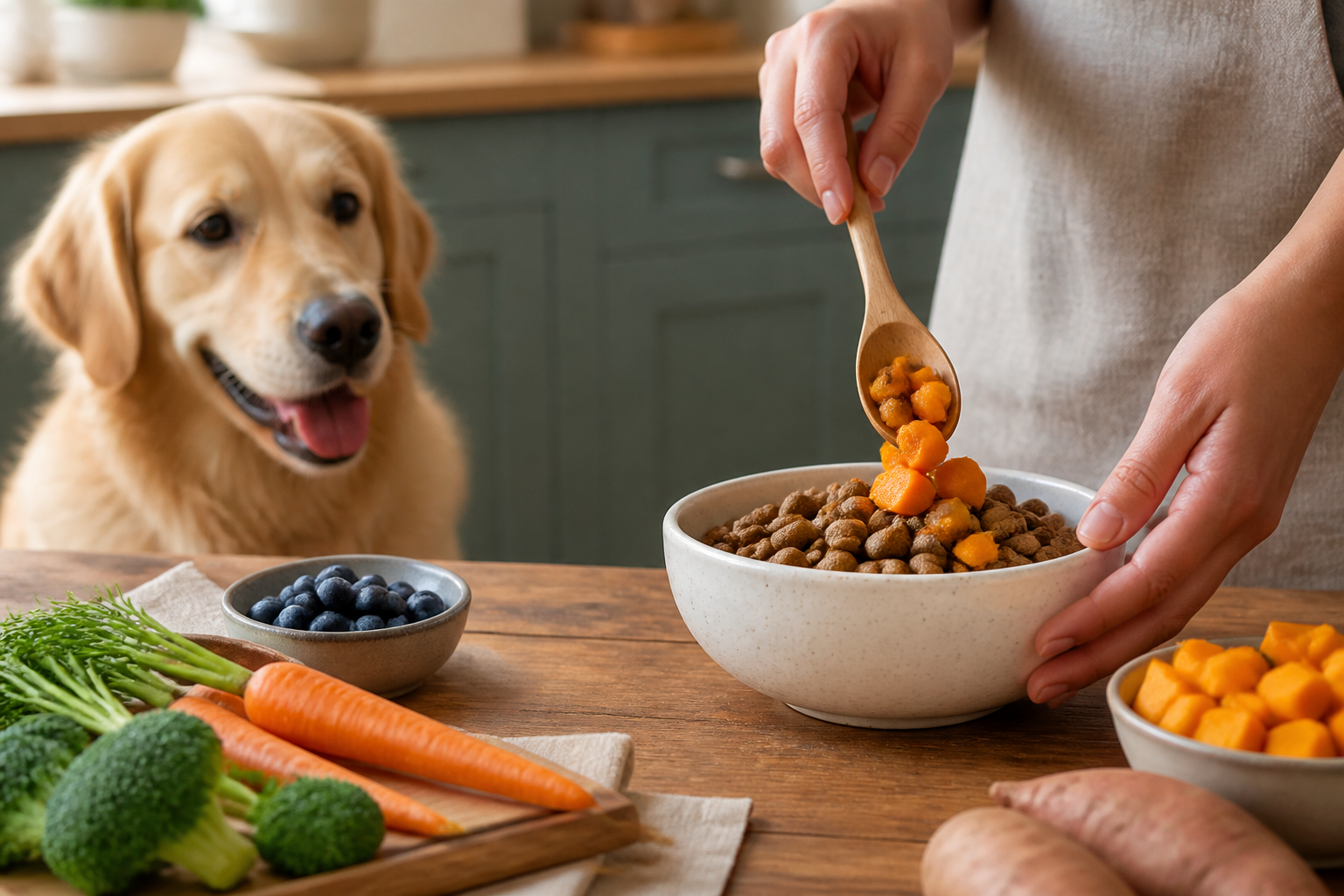
We have all stood over a bowl of dry kibble, watching our dogs look up with those pleading eyes that seem to ask for something a little more exciting. While high-quality dry food provides a balanced foundation, eating the same crunchy brown nuggets every single day can become monotonous for even the most enthusiastic eater. At BaxterBoo, we know that mealtime is often the highlight of your dog's day, and adding a few fresh or functional mixers can turn a routine meal into a nutritional powerhouse. This article covers the safest, most effective ways to enhance your dog's bowl using common kitchen staples and specialized toppers. We will look at how to balance calories, improve hydration, and use mix-ins to support specific health needs. By following a few simple guidelines, you can safely provide the variety and nutrition your dog deserves.
Quick Answer: You can safely mix in plain proteins like cooked chicken or eggs, hydrating liquids like bone broth, or fiber-rich vegetables like green beans and pumpkin. To keep the diet balanced, ensure these extras make up no more than 10 percent of your dog's total daily calorie intake.
The 10 Percent Rule for Mix-ins
Before you start raiding the refrigerator, it is important to understand the math of a balanced diet. Commercial dog foods are formulated to be complete and balanced, meaning they have a precise ratio of vitamins, minerals, and amino acids. When you add high volumes of outside food, you risk diluting those essential nutrients.
Most experts recommend that "extra" foods, including treats and meal mixers, should not exceed 10 percent of your dog's daily calories. If you exceed this, you might inadvertently cause a nutritional imbalance or lead your pet toward unwanted weight gain. If your dog requires a very specific diet due to a health condition, we carry several prescription options through our pet pharmacy partnership with Pet's Choice, including brands like Farmina Vet Life and Royal Canin. Always talk to your vet before making major changes to a therapeutic or prescription diet.
How to Calculate the Balance
- Check the calorie count on your dog's kibble bag.
- Determine 10 percent of their daily allowance.
- Choose toppers that fit within that caloric "budget."
- Reduce the amount of kibble slightly to make room for the new calories.
Vet Tip: If your dog is currently overweight or managing a condition like diabetes, consult your veterinarian before adding any toppers. Even healthy additions like fruit contain sugars and calories that can impact a strictly managed medical plan.
High-Protein Mixers from Your Kitchen
Adding fresh animal protein is one of the best ways to boost the appeal of dry food. Dogs are biologically designed to thrive on animal-based fats and proteins, which support muscle maintenance, skin health, and immune function.
Eggs: The Gold Standard
Eggs are an incredible addition because they are highly digestible and contain essential fatty acids and minerals. You can serve them scrambled, hard-boiled, or even raw if you are confident in the quality of the source. One large egg contains about 70 calories, so for a small dog, half an egg might be their entire "extra" allowance for the day.
Lean Cooked Meats
Unseasoned, cooked chicken breast, turkey, or lean beef are excellent choices. Avoid using rotisserie chickens from the grocery store, as they are often injected with high levels of sodium and seasoned with onion or garlic powder, both of which are toxic to dogs. Stick to plain, boiled, or baked meats with no added salt or oil.
Canned Fish
Sardines packed in water (not oil) are a favorite among many pet owners. They are rich in Omega-3 fatty acids, which support brain health and a shiny coat. Because fish can be calorie-dense and may contain trace amounts of minerals, use them sparingly. A single sardine is often enough for a medium-sized dog.
Key Takeaway: Whole food proteins are highly palatable and provide amino acids that support lean muscle mass, but they must be served plain without any added seasonings or fats.
Adding Fiber and Micronutrients with Vegetables
Vegetables are a low-calorie way to add volume to the bowl, which is especially helpful for dogs that always seem hungry. They provide antioxidants, fiber, and various vitamins that might be slightly diminished during the high-heat processing of kibble.
The Power of Pureed Pumpkin
Plain canned pumpkin (not pumpkin pie filling) is a staple for many dog owners. It is high in soluble fiber, which can help regulate digestion. Whether your dog is dealing with slightly loose stools or mild constipation, a tablespoon of pumpkin can often help get things back on track.
Green Beans and Carrots
Green beans are often called the "diet snack" for dogs. They are crunchy, low in calories, and high in fiber. Many owners use them to bulk up meals for dogs on a weight loss plan. Carrots are another great option, providing beta-carotene. You can serve them raw for a crunch or steamed and mashed for easier digestion.
Leafy Greens
Spinach or kale can be finely chopped or lightly steamed and mixed into kibble. These greens are packed with iron and calcium. However, they should be fed in moderation, as high amounts of certain greens can interfere with calcium absorption in some dogs.
Checklist for Preparing Vegetables
- Wash all produce thoroughly to remove pesticides.
- Steam or puree "tough" vegetables like broccoli or carrots to help your dog absorb the nutrients.
- Cut all items into bite-sized pieces to prevent choking.
- Avoid any additions that contain salt, butter, or spices.
Using Dairy and Fermented Foods
While many dogs are lactose intolerant, certain dairy products are easier to digest and provide beneficial probiotics. Probiotics are live "good" bacteria that support a healthy gut microbiome.
Plain Greek Yogurt
A dollop of plain, unsweetened Greek yogurt can be a cooling and delicious topper. It is important to ensure the yogurt does not contain Xylitol (an artificial sweetener) or high levels of added sugar. The probiotics in yogurt can support the immune system and help with gas or bloating.
Goat Milk
Goat milk is often called "universal milk" because it is much easier for dogs to digest than cow milk. It contains smaller fat globules and lower levels of lactose. Many specialty pet stores, including us at BaxterBoo, carry frozen or powdered goat milk specifically formulated for pets. It is a fantastic way to add moisture and nutrients simultaneously.
Cottage Cheese
Low-fat, low-sodium cottage cheese is a good source of protein and calcium. It is often recommended by veterinarians as part of a bland diet for dogs with upset stomachs, but it also makes a great occasional meal enhancer.
Bottom line: Fermented dairy like yogurt or goat milk provides a probiotic boost, but always start with a very small amount to ensure your dog does not have a sensitivity to lactose.
Specialized Store-Bought Toppers
If you do not have time to cook, there are many expertly formulated products designed specifically to be mixed with kibble. These products are often more nutrient-dense than plain table scraps.
Freeze-Dried Raw Mixers
Brands like Stella & Chewy's offer freeze-dried raw morsels that you can crumble over the top of kibble. These provide the benefits of raw nutrition, such as natural enzymes and minimally processed proteins, with the convenience of a shelf-stable product. Because these are very calorie-dense, you should reduce the amount of dry food you provide when using them.
Bone Broth for Dogs
Pet-specific bone broth is different from the broth you find in the soup aisle. It is made without onions, garlic, or excessive salt. Pouring a bit of warm bone broth over dry food softens the kibble and releases the aroma, making it much more appealing to picky eaters. It also provides collagen, which supports joint health.
Wet Food as a Topper
You do not have to choose between wet and dry food. Mixing a spoonful of canned food into the kibble is one of the easiest ways to add moisture and flavor. We carry a vast selection of canned foods from brands like Farmina and NutriSource that work perfectly as mixers.
Hydration and the Importance of Moisture
Dry kibble typically contains only about 10 percent moisture. In the wild, a dog's ancestors would have consumed a diet much higher in water content. Constant low-level dehydration can put stress on the kidneys and urinary tract over time.
Adding moisture to dry food is one of the simplest things you can do for your dog's health. You can use:
- Filtered water.
- Unsalted meat stock.
- Pet-specific broths.
- Rehydrated dehydrated foods (like The Honest Kitchen).
For more ideas, read our guide to wetting dry dog food for better digestion and hydration.
When you add liquid to kibble, it begins to ferment and smell more strongly. This "smell factor" is often what convinces a picky dog to start eating. It also helps the dog feel full faster, which can assist with weight management.
Addressing Specific Health Needs with Mix-ins
Sometimes, a mix-in is more than just a flavor boost. It can be a delivery system for wellness. If your dog is struggling with a specific issue, certain mixers can provide targeted support.
Joint Support
For senior dogs or breeds prone to hip issues, adding a splash of fish oil or a green-lipped mussel powder to their dry food can help. Cosequin and other joint supplements are often available in flavored powders or liquids that mix easily into kibble.
Skin and Coat Health
If your dog has dry, itchy skin, adding healthy fats can make a significant difference. Salmon oil, pollock oil, or flaxseed oil provide the Omega fatty acids needed to repair the skin barrier.
Anxiety and Calming
For stressed dogs, you might look into calming toppers. Some supplements contain L-theanine or chamomile and come in powder forms that can be sprinkled over the meal.
Note: If your dog's health needs require more than just a supplement, our pharmacy carries FDA-approved medications and prescription diets through our partnership with Pet's Choice. This allows you to manage chronic conditions like kidney disease or severe allergies with the guidance of your veterinarian.
Foods You Should Never Mix In
While many human foods are safe, some are highly toxic to dogs. It is crucial to be vigilant, especially when using leftovers.
- Onions and Garlic: These can cause oxidative damage to red blood cells, leading to anemia.
- Grapes and Raisins: These can cause sudden kidney failure.
- Xylitol (Birch Sugar): Often found in peanut butter and yogurt, this causes a life-threatening drop in blood sugar and liver failure.
- Chocolate and Caffeine: These affect the heart and nervous system.
- Cooked Bones: Unlike raw bones, cooked bones become brittle and can splinter, causing internal punctures.
- Macadamia Nuts: These can cause weakness, vomiting, and tremors.
How to Successfully Transition to Mixers
If your dog has only ever eaten dry kibble, their digestive system might be sensitive to sudden changes. To avoid an upset stomach, follow a slow transition process.
Step 1: Start with a very small amount. / Add just a teaspoon of the new mixer to their usual meal for the first two days.
Step 2: Monitor their digestion. / Check for any signs of loose stools, gas, or vomiting before increasing the amount.
Step 3: Gradually increase the portion. / Over the course of a week, you can move toward the full 10 percent allowance.
Step 4: Rotate for variety. / Once you know which foods are safe for your dog, you can rotate between different vegetables or proteins to keep them interested.
Summary of Safe Mix-in Ideas
| Category | Recommended Items | Benefits |
|---|---|---|
| Proteins | Cooked chicken, eggs, sardines | Muscle maintenance, high palatability |
| Produce | Pumpkin, green beans, blueberries | Fiber, antioxidants, vitamins |
| Dairy | Plain Greek yogurt, goat milk | Probiotics, hydration, calcium |
| Liquids | Bone broth, filtered water | Kidney support, enhances aroma |
| Commercial | Freeze-dried raw, wet food | Balanced nutrition, convenience |
Conclusion
Mixing healthy, fresh ingredients into your dog's dry food is a wonderful way to show them love while boosting their overall wellness. Whether you are using a spoonful of plain pumpkin for digestion or adding Stella & Chewy's meal mixers for a protein punch, the key is moderation and consistency. By keeping your additions to 10 percent of the total diet and avoiding toxic seasonings, you can provide a varied, exciting menu every day. If your dog has specific medical needs that require more than just a topper, remember that BaxterBoo offers a full range of prescription foods and medications through our pharmacy. We are here to help you navigate every stage of your pet's life with expert advice and the best products available. Start small, watch your dog's reaction, and enjoy the satisfaction of seeing them truly enjoy their dinner.
Key Takeaway: Variety is the spice of life for dogs too, but safety and calorie balance must always come first when enhancing a kibble-based diet.
FAQ
Is it okay to mix wet and dry dog food every day?
Yes, mixing wet and dry food is a common practice that can improve hydration and palatability. As long as both foods are complete and balanced for your dog's life stage, you can mix them daily. Just be sure to adjust the portions of both to prevent overfeeding and weight gain.
For additional guidance, see our article on mixing wet and dry dog food.
Can I add raw meat to my dog's dry food?
While some owners successfully use raw toppers, there is a risk of bacterial contamination for both the dog and the humans in the household. If you want the benefits of raw food with less risk, we recommend using freeze-dried raw mixers. These products undergo processes like high-pressure pasteurization to ensure safety while maintaining nutritional integrity.
Does adding water to dry food make it lose its dental benefits?
The dental benefits of kibble are often overstated, as many dogs swallow the pieces whole or the kibble crumbles too easily to actually "scrub" the teeth. Adding water or broth is generally better for their hydration and digestion than any minor dental benefit they might lose. For real dental health, we recommend regular brushing or specific dental chews and treats.
What is the best liquid to add to my dog's dry food?
The best liquid is either plain filtered water or a pet-specific bone broth. These options add necessary moisture without adding unwanted sodium, fat, or toxic ingredients like onions and garlic. If you use a store-bought broth, always ensure it is labeled specifically for pets to avoid hidden ingredients that could be harmful.
You can also review these tips for adding water to dry dog food.






