
 Save 15% on your 1st Autoship learn more

 Email us
 Live Chat
 FAQs
FAQs





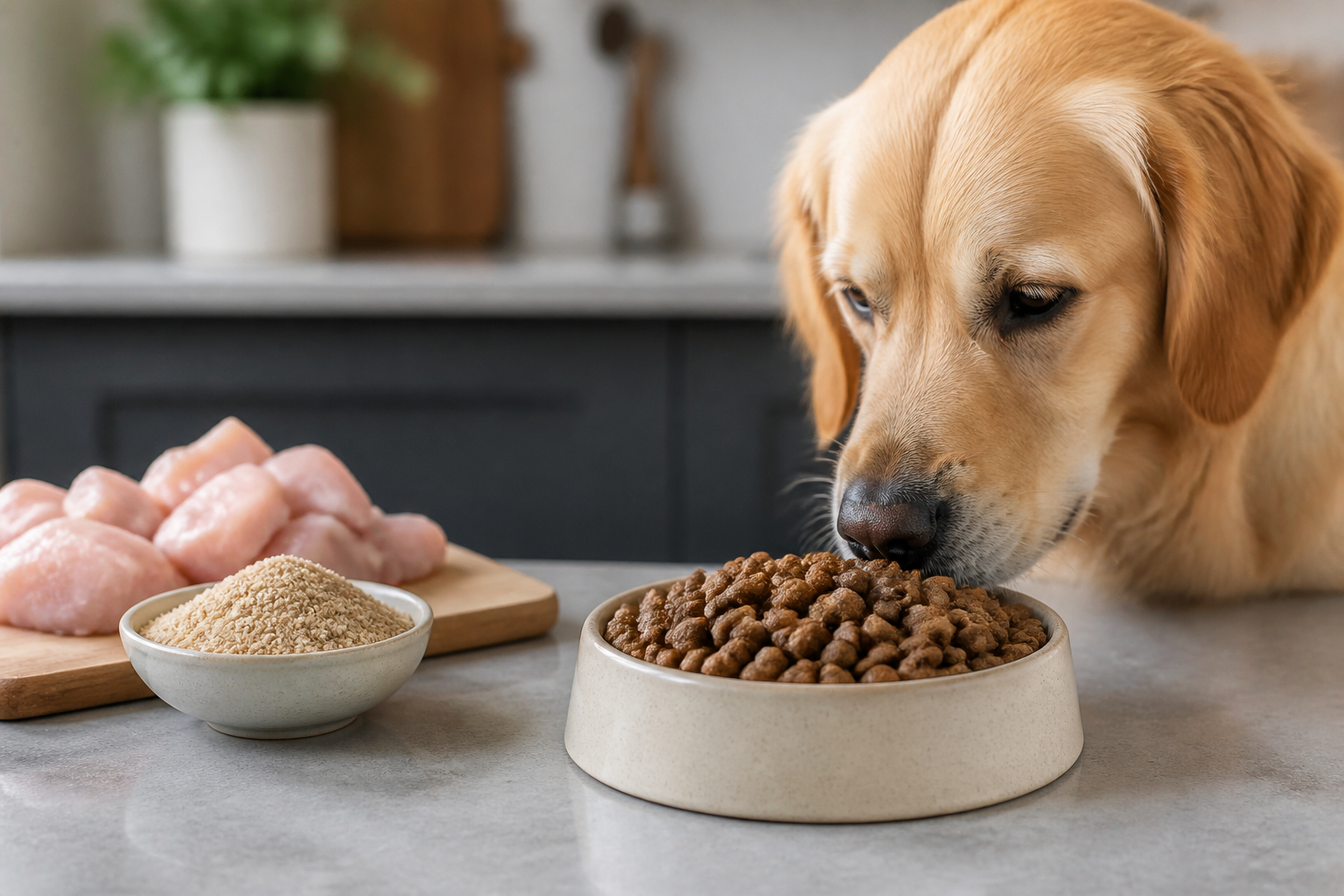
Introduction
You are standing in the pet food aisle or scrolling through a product page, flipping over a bag of kibble to check the ingredients. You see "deboned chicken" as the first ingredient, which sounds great. But right next to it is "chicken meal." You might wonder if this is a high-quality protein or just a cheap filler used to bulk up the bag. It is a question we hear often at BaxterBoo from pet parents who want to ensure they are providing the best possible nutrition for their dogs.
This article covers exactly what chicken meal is, how it is made, and whether it deserves a spot in your dog's bowl. We will compare it to fresh chicken and by-products so you can decode pet food labels with confidence. Understanding these terms helps you choose a diet that supports your dog's energy levels and long-term health.
Understanding the Definition of Chicken Meal
To understand chicken meal, we have to look at the standards set by the Association of American Feed Control Officials (AAFCO). This organization defines the ingredients used in pet foods across the United States. According to their guidelines, chicken meal is the dry rendered product from a combination of clean flesh and skin with or without accompanying bone. It is derived from the parts or whole carcasses of chicken.
Crucially, the definition excludes feathers, heads, feet, and entrails. This means that when you see a "named" meal like chicken meal, it is a specific concentrated protein source. It is not a mystery bag of leftovers. The process of creating this meal involves grinding the chicken parts and cooking them at high temperatures. This process is known as rendering.
Rendering serves two main purposes. First, it removes the water and fat from the chicken. Second, the high heat kills off bacteria, viruses, and other pathogens that might be present in raw animal tissues. The result is a dry, shelf-stable powder that is incredibly high in protein and minerals.
Quick Answer: Chicken meal is a concentrated protein powder made by rendering chicken flesh, skin, and bone. It removes moisture to create a nutrient-dense ingredient that provides more protein by weight than fresh chicken.
The Rendering Process Explained
The rendering process is similar to making a very intense bone broth or a reduction in your own kitchen. Huge vats of chicken parts are heated until the moisture evaporates and the fat separates from the protein and bone. The liquid fat, often labeled as chicken fat, is skimmed off and used separately. The remaining solid material is then dried and ground into a fine flour.
Because the moisture is removed, the final product is much more stable than fresh meat. Fresh chicken is about 70 percent water. If you were to leave a raw chicken breast on a counter, it would spoil quickly. Chicken meal, however, can be stored and transported easily without the same risk of rapid spoilage.
Some critics point out that the high heat used in rendering can damage certain heat-sensitive vitamins. While this is true, most premium pet food manufacturers compensate for this. They add a balanced blend of vitamins and minerals back into the kibble after the cooking process is complete. This ensures the food meets all the nutritional requirements for a dog's life stage.
Chicken vs. Chicken Meal: The Labeling Trick
One of the most confusing parts of reading a dog food label is the order of ingredients. Ingredients are listed by weight before they are cooked. This is where "label splitting" or marketing tactics often come into play.
If a bag lists "fresh chicken" as the first ingredient, it sounds very impressive. However, that fresh chicken is 70 percent water. Once the kibble is baked or extruded, most of that water weight disappears. If the manufacturer weighed the ingredients after cooking, that fresh chicken might actually fall to the fourth or fifth spot on the list.
Chicken meal is already dehydrated before it is added to the mix. This means its weight on the label is a more accurate representation of the actual protein it contributes to the finished kibble. In many cases, a food that lists chicken meal as the primary ingredient actually provides more animal-based protein than a food that lists fresh chicken first. For more guidance, read this guide to decoding premium dog food labels.
Key Takeaways on Protein Density
- Fresh chicken is high in moisture and lower in protein by total weight.
- Chicken meal is low in moisture and very high in protein concentration.
- Many high-quality brands use both to provide a balance of fresh flavor and dense nutrition.
- Always check the "Guaranteed Analysis" on the bag to see the actual protein percentage.
Nutritional Benefits of Chicken Meal
When sourced from reputable suppliers, chicken meal is an excellent source of nutrition. It is packed with essential amino acids that dogs need for muscle development, immune function, and healthy skin. Because it often includes ground bone, it is also a natural source of calcium and phosphorus, which are vital for bone health.
Another benefit of chicken meal is its natural glucosamine and chondroitin content. These compounds are found in the cartilage and connective tissues of the chicken. They are the building blocks of healthy joints. For senior dogs or breeds prone to hip dysplasia, having a natural source of these nutrients in their daily meals can be very helpful.
Vet Tip: While chicken meal contains some natural glucosamine, senior dogs or those with mobility issues often need higher therapeutic levels. If your dog is slowing down, consult your veterinarian about adding a dedicated joint supplement or moving to a prescription mobility diet.
Quality and Safety Standards
The word "meal" can sometimes be a red flag if it is not preceded by a specific animal name. At our warehouse in Vernon Hills, we carefully curate the brands we carry to ensure transparency. You should look for "chicken meal" or "lamb meal" rather than "meat meal" or "poultry meal." Generic terms like "animal meal" often indicate lower-quality sourcing where the species of the animal is not guaranteed.
There is also a discussion in the pet food industry regarding 4D meats. These are meats from animals that were dying, diseased, disabled, or deceased before reaching the slaughterhouse. While federal law generally prohibits these from the human food supply, the rules for pet food can be more complex.
This is why brand reputation matters. Companies like Farmina, Open Farm, and Stella and Chewy's have very strict sourcing requirements. They often use human-grade starting materials or strictly audited suppliers. When you buy from trusted brands, the risk of poor-quality "rendered" material is significantly reduced. You can compare formulas in our dog food category or browse our selection of Farmina products.
Chicken Meal vs. Chicken By-Products
You will also see "chicken by-product meal" on many labels. It is important to know the difference. While chicken meal is limited to flesh, skin, and bone, by-products include the "clean parts" of the carcass that are not muscle meat. This can include organs like the heart, liver, lungs, and kidneys.
In some ways, by-products can be very nutritious. In the wild, canines eat the organ meats first because they are dense with vitamins. However, by-product meal can also include heads and feet, which are less digestible. Chicken meal is generally considered a more consistent and higher-quality protein source than by-product meal because it contains more muscle tissue.
How to Introduce a New Food
If you decide to switch your dog to a food with a different protein structure, you must do it slowly. A sudden change can lead to an upset stomach or diarrhea. Follow these steps for a smooth transition. For another perspective, see this practical guide to transitioning a dog to a new dry food.
Step 1: Mix the foods. / Start with 25 percent of the new food and 75 percent of the old food for three days.
Step 2: Increase the ratio. / Move to a 50/50 mix for the next three days.
Step 3: Finish the transition. / Use 75 percent new food for three days before switching completely to the new diet.
This gradual process allows your dog's digestive enzymes to adapt to the new ingredient profile, whether it contains more concentrated chicken meal or fresh whole meats.
The Role of the BaxterBoo Pharmacy
Sometimes, a change in diet is not just about preference but about managing a health condition. If your dog has severe food allergies or sensitivities, your vet might recommend a limited ingredient diet or a prescription formula. Many of these specialized diets use highly controlled protein sources, including specific meals or hydrolyzed proteins.
Through our partnership with Pet's Choice, we offer a full-service pharmacy for BaxterBoo customers. We carry FDA-approved prescription pet foods and medications for chronic conditions. If your veterinarian prescribes a specific diet from brands like Farmina Vet Life or Royal Canin to manage allergies or kidney issues, you can fulfill those needs directly through our pet pharmacy. This allows you to manage your dog's nutrition and medication in one convenient place.
Environmental Impact and Value
Using chicken meal is also a more sustainable way to produce pet food. It ensures that more of the animal is used, reducing waste in the food chain. For budget-conscious owners, chicken meal provides a way to offer high-protein nutrition without the extreme price tag of a 100 percent fresh, human-grade meat diet.
Because the protein is so concentrated, the "cost per serving" of a food with chicken meal is often lower. You can feed a smaller volume of food while still meeting your dog's daily protein requirements. This makes it an efficient choice for large-breed owners or multi-dog households.
Key Takeaway: Chicken meal is an efficient, sustainable, and protein-dense ingredient that offers excellent nutritional value. The key is choosing brands that are transparent about their sourcing and avoid generic "meat" labels.
Signs Your Dog is Thriving on Their Food
No matter what the label says, the best indicator of food quality is your dog's physical condition. If the chicken meal in their diet is high-quality and easily digestible, you will see it in their daily life.
Look for these signs of good nutrition:
- A shiny, soft coat without excessive daking or itching.
- Bright eyes and consistent energy levels throughout the day.
- Firm, well-formed stools that are easy to pick up.
- Maintained muscle mass and a healthy weight for their breed.
If you notice your dog is itching constantly, has frequent ear infections, or has chronic loose stools, it might be time to look at the ingredients. Some dogs have a specific allergy to chicken. In those cases, switching to a meal based on lamb, fish, or beef might be necessary. For additional guidance, explore these sensitive skin dog food recommendations.
Conclusion
Chicken meal is a misunderstood but highly valuable ingredient in the world of dog nutrition. It provides a concentrated, shelf-stable, and protein-rich foundation for many of the high-quality kibbles we carry. By understanding that it is simply rendered chicken with the water removed, you can look past the marketing "water weight" of fresh meats and see the true nutritional value of the food.
Whether you are looking for a high-performance puppy formula or a joint-supportive senior diet, we have the selection to help your pet thrive. Our team has been helping pet owners find the right balance of quality and value since 2006.
- Look for named meals like "chicken meal" rather than generic "meat meal."
- Check for joint-supporting nutrients like glucosamine which are natural in chicken meal.
- Use the pharmacy for prescription diets if your dog has specific medical needs.
- Save time and money by setting up an Autoship programme for your favorite brands.
Bottom line: High-quality chicken meal is a safe, nutritious, and protein-dense ingredient that serves as an excellent foundation for a healthy canine diet.
FAQ
Is chicken meal better than fresh chicken in dog food?
Neither is strictly better, as they serve different roles. Fresh chicken provides moisture and high palatability, while chicken meal provides a much higher concentration of protein per pound. Many premium brands use both to ensure the food is both tasty and nutritionally dense.
Does chicken meal contain feathers or beaks?
No, the official AAFCO definition of chicken meal specifically excludes feathers, heads, feet, and entrails. It must consist of clean flesh, skin, and bone. If a product contains those other parts, it must be labeled as a by-product or a different type of meal.
Why is chicken meal so common in dry kibble?
Chicken meal is used because it is shelf-stable and very easy to incorporate into the "extrusion" process that creates kibble. Since it has very little moisture, it does not interfere with the texture of the crunchy bits, and it allows manufacturers to meet high-protein requirements without the food becoming too soggy during production.
Can chicken meal cause allergies in dogs?
Chicken meal itself is not an allergen, but the chicken protein within it can be. If a dog has a known chicken allergy, they will react to both fresh chicken and chicken meal. In these cases, you should look for alternative protein meals such as turkey, venison, or salmon.






