
 Save 15% on your 1st Autoship learn more

 Email us
 Live Chat
 FAQs
FAQs





Introduction
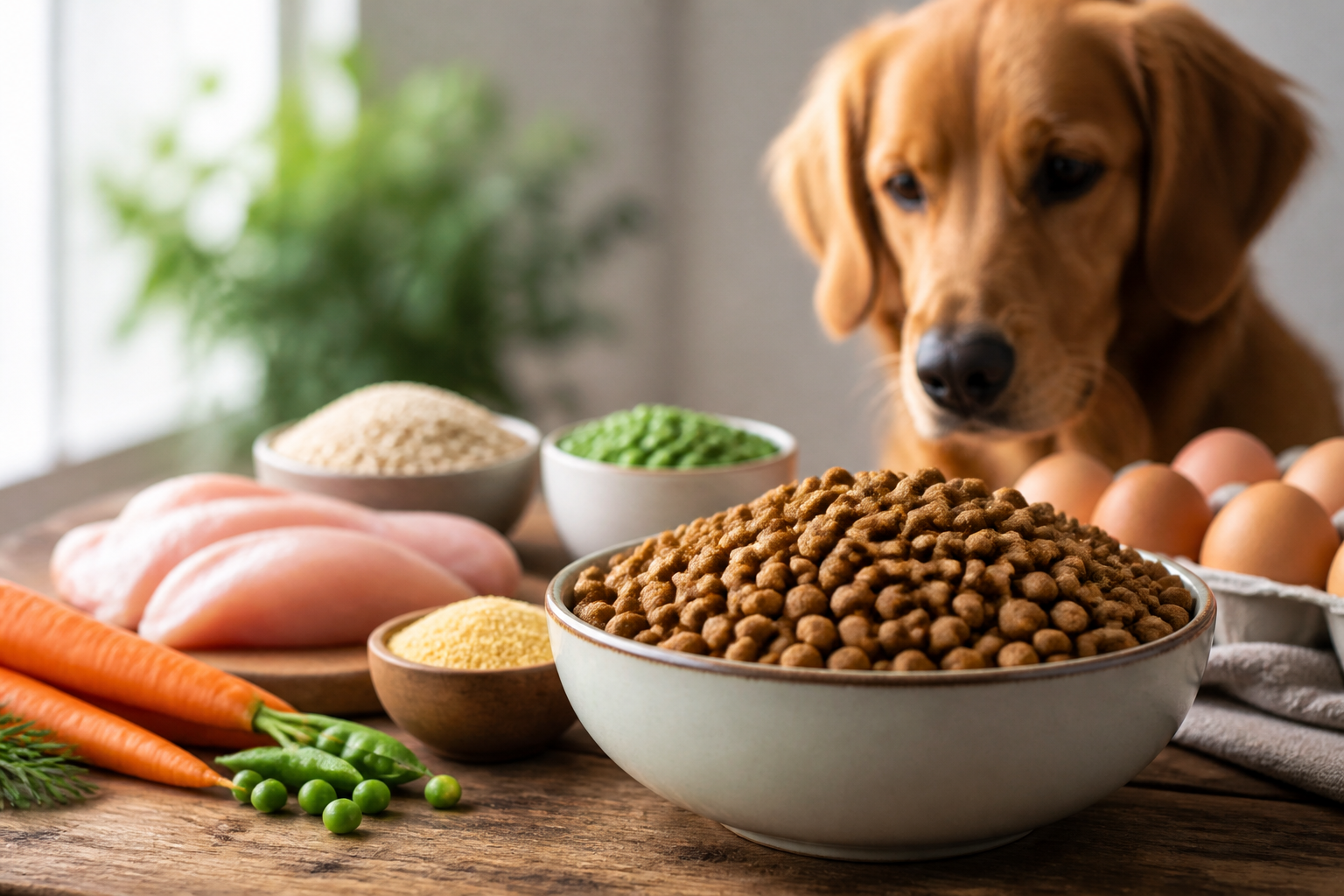
You stand in the pet food aisle or scroll through our website, looking at a bag of kibble. You see pictures of roasted chicken, fresh blueberries, and bright green peas. You might wonder how those whole ingredients become the uniform, crunchy brown nuggets your dog eats every day. Understanding what is dry dog food made out of is the first step toward becoming a more confident pet parent. At BaxterBoo, we believe that knowing exactly what goes into your dog's bowl helps you make better choices for their long term health. This article explores the common ingredients found in dry dog food, the nutritional purpose of those components, and the manufacturing process used to create a shelf stable meal. Understanding the balance between proteins, carbohydrates, and fats will help you select the right formula for your dog's specific life stage.
Quick Answer: Dry dog food is primarily made of animal proteins, carbohydrates like grains or legumes, fats, and essential vitamins and minerals. These ingredients are mixed into a dough and cooked under pressure through a process called extrusion to create crunchy kibble.
The Foundation of Animal Protein
Protein is the most important part of any dog food. Dogs are scavengers by nature, but their bodies are designed to thrive on animal tissue. When you look at a label, the first few ingredients should ideally be specific animal proteins. These provide the essential amino acids your dog needs for muscle maintenance, immune function, and skin health.
Manufacturers use different forms of protein. You will often see "fresh meat" or "deboned chicken" listed first. These ingredients contain a lot of water weight. While they are high quality, the water is removed during the cooking process. This means the actual protein contribution might be smaller than it appears.
To balance this, many premium brands like NutriSource or Acana use meat meals. A meat meal is a concentrated protein source. It is made through rendering. This is a cooking process that separates the protein from fat and moisture. The result is a dry, nutrient dense powder. Using both fresh meat and meat meals ensures your dog gets enough total protein once the kibble is fully processed.
The Truth About By-Products
You might see "animal by-products" on some labels. This term often worries pet owners, but it is frequently misunderstood. By-products are simply the parts of the animal that humans typically do not eat in the United States. This includes organ meats like the liver, kidneys, and lungs. These parts are actually very nutrient dense. They provide natural sources of vitamins and minerals that muscle meat lacks.
However, quality matters. We recommend looking for "named" by-products, such as "chicken by-product meal." Avoid generic terms like "meat meal" or "animal by-product." Generic terms do not tell you which species the protein came from. This can be a major issue if your dog has specific food allergies.
Key Takeaway: Look for named animal proteins like "lamb meal" or "deboned turkey" in the first three ingredients. These provide the concentrated amino acids necessary for your dog's daily energy and physical repair.
Carbohydrates and Binders
Kibble cannot be made of meat alone. It needs a structure to hold its shape. This is where carbohydrates come in. Carbs serve two roles. They provide a source of energy through glucose, and they act as a "glue" during the manufacturing process. Without a starch or binder, the kibble would crumble into dust inside the bag.
Grain-Inclusive Options
Many traditional dry foods use grains as their primary carbohydrate. Common choices include:
- Brown or white rice
- Barley
- Oatmeal
- Sorghum
- Millet
Whole grains provide fiber, which helps with digestion and stool quality. Brands like Stella and Chewy's offer "wholesome grain" recipes for owners who prefer traditional starches. These grains are generally easy for most dogs to digest once they are cooked.
Grain-Free Options
If your dog has a grain sensitivity, manufacturers use legumes or tubers instead. Common grain-free binders include:
- Peas
- Lentils
- Chickpeas
- Sweet potatoes
- Tapioca
These ingredients also provide protein and fiber. However, they are used primarily for their starch content to ensure the kibble stays crunchy. If your dog has a sensitive stomach, you might find that certain binders work better than others.
Bottom line: Carbohydrates are necessary to give kibble its shape and provide a steady source of energy for active dogs.
Healthy Fats for Energy and Coat Health
Fat is a vital ingredient that often gets a bad reputation. In reality, dogs need fat for more than just energy. It is essential for the absorption of certain vitamins like A, D, E, and K. Fat also makes the food taste better. After the kibble is cooked and dried, it is often sprayed with a coating of fat to increase its appeal to your dog.
Look for named fat sources on the label. Chicken fat is a common and high quality choice. Fish oils, such as salmon oil, are even better. Fish oils provide Omega-3 fatty acids. These support brain development in puppies and reduce inflammation in senior dogs.
Avoid generic "animal fat" or "vegetable oil." These are often lower quality and can vary in composition from batch to batch. Brands like Orijen and Zesty Paws emphasize the use of high quality fatty acids to support a shiny coat and healthy skin.
Vet Tip: If your dog has a history of pancreatitis or needs a low fat diet, consult your veterinarian. Our pharmacy partner, Pet's Choice, carries prescription diets like Farmina Vet Life for dogs with specific medical needs.
Vitamins, Minerals, and Supplements
Even the best meat and grains cannot provide every single nutrient a dog needs. To make a food "complete and balanced," manufacturers add a blend of vitamins and minerals. This is often called a "pre-mix."
Common Additives
If you read the long list of chemical-sounding names at the end of the ingredient list, you are seeing the nutritional safety net.
- Chelated Minerals: These are minerals attached to organic molecules. They are easier for your dog's body to absorb. Look for terms like "zinc proteinate" or "copper chelate."
- Probiotics: Some brands add beneficial bacteria after the cooking process. This supports gut health and the immune system.
- Glucosamine and Chondroitin: These are often added to "large breed" or "senior" formulas to support joint health.
- Preservatives: Dry food must stay fresh on the shelf. Natural preservatives like tocopherols (Vitamin E) or rosemary extract are preferred over artificial chemicals like BHA or BHT.
Key Takeaway: The "Guaranteed Analysis" on the bag tells you the minimum and maximum levels of these nutrients. This ensures your dog gets the right amount of calcium, phosphorus, and vitamins in every serving.
How It Is Made: The Extrusion Process
The process of making dry dog food is called extrusion. It is similar to how breakfast cereal or pasta is made. Understanding this process explains why kibble looks and feels the way it does.
Step 1: Grinding and Mixing
First, the dry ingredients are ground into a fine flour. This includes the meat meals, grains, and vitamin pre-mixes. This powder is then mixed with wet ingredients like fresh meat, fats, and water to create a thick dough.
Step 2: Pre-conditioning
The dough enters a pre-conditioner. Here, it is heated with steam. This begins the cooking process and ensures the moisture is evenly distributed. This step is critical for making the starches digestible.
Step 3: The Extruder
The dough is pushed into the extruder. This is a long tube with a giant screw inside. As the screw turns, it pushes the dough through the tube under intense pressure and heat. This pressure "puffs" the dough and cooks it almost instantly.
Step 4: Shaping and Cutting
At the end of the extruder, the dough is forced through a die plate. This plate has holes in specific shapes, like circles, stars, or triangles. A rotating knife cuts the dough as it emerges. This determines the size and shape of the kibble.
Step 5: Drying and Cooling
The wet kibble pieces are very soft and contain about 25% moisture. They travel through a large dryer to reduce the moisture to under 10%. This prevents mold and bacteria from growing. Once dried, the kibble is cooled so it does not sweat inside the packaging.
Step 6: Coating
The final step is "enrobing." The cool, dry kibble enters a revolving drum. It is sprayed with fats, oils, and sometimes natural flavors or probiotics. This makes the food smell and taste irresistible to your dog.
Bottom line: Extrusion is a high tech process that ensures every piece of kibble is uniform, cooked, and safe for long term storage.
Selecting the Right Formula at BaxterBoo
Now that you know what goes into the bag, how do you choose? Not every dog needs the same ingredients. A high energy puppy has different requirements than an older dog who spends most of the day on the sofa. You can compare formulas in our dry dog food category.
Puppy Formulas
Puppies need more protein and fat to fuel their rapid growth. Look for ingredients like DHA, which is an omega fatty acid found in fish oil. It supports brain and eye development. Most puppies should stay on puppy specific food until they are at least twelve months old.
For more guidance on introducing kibble during weaning, read our guide to when puppies can eat dry dog food.
Adult and Healthy Weight Formulas
For adult dogs, the focus shifts to maintenance. If your dog is prone to weight gain, look for "Healthy Weight" formulas. These often have more fiber and less fat. This helps your dog feel full without consuming too many calories. Brands like Open Farm offer transparently sourced options for various activity levels.
You can also browse adult dog food formulas when comparing options for a mature dog.
Senior and Prescription Diets
As dogs age, their metabolism slows down. They may benefit from lower calorie counts but higher quality protein to prevent muscle loss. Senior foods often include added joint support like Cosequin or extra antioxidants for cognitive health.
Our guide to choosing the right dog food for senior pets covers protein, fiber, omega-3s, and other considerations for older dogs.
Sometimes, a standard bag of food is not enough. If your dog has a chronic health condition like kidney disease or severe allergies, they may need a prescription diet. Through our partnership with Pet's Choice, we offer FDA-approved prescription pet foods. These diets are formulated with specific ingredient ratios to manage medical conditions. You will need a valid prescription from your veterinarian to order these specialized foods.
Checklist for Choosing Dry Food
- Check that the first ingredient is a named animal protein.
- Ensure the food is "Complete and Balanced" according to AAFCO standards.
- Avoid artificial colors, flavors, and chemical preservatives.
- Choose a kibble size appropriate for your dog's mouth.
- Look for a "Best By" date that is at least six months away.
For another look at ingredient lists and life-stage nutrition, explore our guide to selecting the best dry dog food.
Transitioning to a New Food
When you find a food with better ingredients, do not switch all at once. A sudden change can upset your dog's stomach. Their digestive system needs time to adjust to new protein and fiber sources.
Step 1: Mix 25% of the new food with 75% of the old food for two days.
Step 2: Move to a 50/50 mix for the next two to three days.
Step 3: Increase to 75% new food and 25% old food for another two days.
Step 4: Serve 100% of the new food.
Watch your dog's energy levels and stool quality during this week. If you notice any vomiting or diarrhea, slow down the transition and talk to your vet.
For additional transition ideas, read how to switch from dry to wet dog food.
Vet Tip: Always keep fresh water available. Because dry dog food has very low moisture, your dog needs to drink more to stay hydrated and help their body process the kibble.
Why Quality Ingredients Matter
At BaxterBoo, we have been helping pet owners find the best products since 2006. We carry over 500 brands because we know that every dog is an individual. High quality ingredients mean better digestion, fewer allergies, and a healthier life for your pet. When you buy a bag of food from us, you are getting a product that has been curated by people who truly care about animal wellness.
Our MVP Rewards program also makes it easier to provide high quality nutrition. You can earn up to 5% back on your purchases, which helps make premium brands more affordable. If you find a food your dog loves, our Autoship program ensures you never run out. You will save on your first order and get free MVP Gold membership.
Dry dog food is a convenient and nutritious way to feed your dog. By understanding the ingredients and the manufacturing process, you can look past the marketing on the bag. You can make decisions based on what your dog actually needs to thrive.
FAQ
Is grain-free dry dog food better than grain-inclusive?
It depends on your dog's specific health needs and allergies. Many dogs do very well on whole grains like brown rice or oatmeal, which provide essential fiber and nutrients. Grain-free diets use ingredients like peas or lentils instead. You should consult your veterinarian to decide which carbohydrate source is best for your pet.
What are the "natural flavors" often listed in dog food ingredients?
Natural flavors are typically concentrated liquids or powders made from animal tissues. These are sprayed onto the kibble at the end of the manufacturing process to make it taste and smell better. They are generally safe and help encourage picky eaters to finish their meals.
Why is there a wide range of prices for dry dog food?
Price differences usually reflect the quality and source of the ingredients. Premium foods often use more fresh meat, fewer fillers, and higher quality vitamin pre-mixes. They may also use more expensive natural preservatives and include extra supplements like probiotics or joint support.
Does the size of the kibble actually matter?
Yes, kibble size is important for both safety and dental health. Small breed dogs can struggle with large nuggets, which may become a choking hazard. Conversely, large dogs may swallow tiny kibble whole without chewing, which can lead to digestive upset. Many brands offer specific sizes tailored to your dog's breed size.






