
 Save 15% on your 1st Autoship learn more

 Email us
 Live Chat
 FAQs
FAQs





Introduction
You pour the kibble into the bowl and your dog gives it a quick sniff before looking back up at you with a bored expression. It is a common sight for many pet owners who rely on the convenience and balance of dry food. While high-quality kibble provides necessary nutrients, it can sometimes lack moisture and variety. At BaxterBoo, we know that mealtime is often the highlight of your dog's day. Adding fresh, whole-food toppers can turn a routine meal into a nutritional powerhouse that supports skin, coat, and joint health. This post covers the safest and most effective ingredients you can mix into your dog's dry food to boost hydration and flavor. By understanding the right ratios and ingredients, you can enhance your dog's diet while keeping their nutrition perfectly balanced.
Quick Answer: You can add healthy items like plain canned pumpkin, unsalted bone broth, raw or cooked eggs, and water-packed sardines to dry food. To keep the diet balanced, ensure these extras make up no more than 10 to 25 percent of your dog's daily calorie intake.
The Golden Rule of 25 Percent
Before you start raiding the refrigerator, you need to understand caloric balance. Most commercial dry foods are formulated to be complete and balanced. This means they contain the exact ratio of vitamins and minerals your dog needs. When you add outside food, you risk diluting those nutrients.
We recommend that "extras" or toppers never exceed 25 percent of your dog's total daily calories. For many dogs, staying closer to 10 percent is even safer to prevent weight gain. If you add a significant amount of fresh food, you must decrease the amount of kibble you serve. This prevents overfeeding and ensures your dog stays at a healthy weight.
Key Takeaway: Always account for the calories in your toppers by reducing the amount of dry kibble you feed to avoid unwanted weight gain.
Hydration Boosters for Dry Food
Dry kibble typically only contains about 10 percent moisture. In the wild, a dog's diet would naturally be much more hydrating. Adding liquids to the bowl can help with digestion and support kidney function.
Bone Broth
Bone broth is one of the most popular additions for a reason. It is rich in collagen and amino acids that support joint health and gut integrity. However, you must never use store-bought broth intended for humans. Those often contain high levels of sodium, onions, and garlic, which are toxic to dogs. Look for pet-specific bone broths or make your own without any added salt or aromatics.
Goat Milk and Kefir
Raw goat milk is often called universal milk because it is very easy for most dogs to digest. It contains natural probiotics that support a healthy gut microbiome. Kefir is another fermented option that provides similar benefits. These are excellent for dogs with sensitive stomachs or those who need a little extra immune support.
Plain Old Water
If you are on a budget or have a dog with severe allergies, warm water is a fantastic topper. It releases the natural aromas of the kibble, making it smell more enticing. Let the food soak for a few minutes to create a soft, gravy-like texture. This is especially helpful for senior dogs who might have dental issues or trouble chewing hard pieces. For additional ideas, read our guide to making dry dog food soft.
Protein Powerhouse Additions
Adding fresh protein can help maintain lean muscle mass. Many dry foods are high in carbohydrates to help the kibble stay together during manufacturing. Fresh protein helps balance that ratio. You can also compare complete meals and mixers in our dog food category.
Eggs
Eggs are a near-perfect protein source. They contain essential fatty acids and minerals. You can serve them raw, scrambled, or hard-boiled. If you serve them raw, some owners worry about biotin deficiency. However, the yolk contains enough biotin to offset what the raw whites might bind. If you prefer to be safe, a light scramble without butter or oil is a great way to serve them.
Sardines
Canned sardines are a nutritional gold mine. They are packed with Omega-3 fatty acids, which are vital for a shiny coat and healthy skin. Only buy sardines packed in water with no added salt. Avoid sardines in oil, as the fat content is often too high for dogs and can lead to digestive upset or even pancreatitis.
Muscle Meats
Small amounts of plain, cooked chicken, turkey, or lean beef can be mixed in. Ensure the meat is unseasoned. Avoid using deli meats, as these are loaded with preservatives and sodium. If you use ground meats, drain the fat after cooking before adding it to the bowl.
Vet Tip: If your dog has a history of pancreatitis or sensitive digestion, always consult your veterinarian before adding high-protein or high-fat toppers like eggs or sardines.
Garden Fresh Vegetables and Fruits
Vegetables and fruits add fiber and antioxidants to the diet. Not all produce is safe, so you must choose wisely.
Canned Pumpkin
Plain canned pumpkin (not pumpkin pie filling) is a staple in many pet households. It is high in fiber and can help with both diarrhea and constipation. It is also low in calories, making it a great "filler" for dogs that always seem hungry but need to watch their weight. You can also browse pumpkin-focused dog food and treat options.
Leafy Greens and Cruciferous Veggies
Steamed broccoli, kale, or spinach can be chopped and added to the bowl. Dogs do not digest raw vegetables well because they cannot easily break down the cell walls of plants. Steaming or pureeing them makes the nutrients much more accessible.
Berries and Apples
Blueberries are packed with antioxidants and make a great, low-calorie treat or topper. Apples (without seeds or the core) provide a nice crunch and fiber. Avoid grapes and raisins entirely, as they can cause kidney failure in dogs.
Things to Avoid
- Onions and Garlic: Can damage red blood cells.
- Grapes and Raisins: Can cause kidney failure.
- Avocados: High fat content can cause stomach upset.
- Macadamia Nuts: Highly toxic to dogs.
- Xylitol: Often found in peanut butter or yogurt; it is deadly to dogs.
Using Commercial Toppers and Mixers
If you don't have time to prep fresh food every day, there are many high-quality commercial options. We carry a wide variety of these at BaxterBoo, including options in our freeze-dried pet food collection.
Freeze-Dried Raw
Brands like Stella and Chewy's offer freeze-dried meal mixers. These give your dog the benefits of raw nutrition with the convenience of a shelf-stable product. You can crumble these over the kibble or rehydrate them with water to add moisture. They are often made with 95 percent meat, organs, and bone, mimicking an ancestral diet.
Targeted Solutions
Some toppers are designed for specific health needs. There are "dusts" and mixers formulated for joint support, skin and coat health, or digestive enzymes. These often contain ingredients like turmeric, green-lipped mussel, or pumpkin seeds.
Step-by-Step: Introducing a New Topper
Step 1: Choose one ingredient. / Do not add multiple new things at once so you can monitor for allergies or upset.
Step 2: Start with a small amount. / Add just a teaspoon or two to the regular meal.
Step 3: Watch the stool. / Monitor your dog's digestion for 24 to 48 hours to ensure the new food agrees with them.
Step 4: Gradually increase. / If everything looks good, you can increase to the desired amount while reducing kibble accordingly.
Managing Health Conditions Through the Bowl
Sometimes, adding something to the food is about more than just flavor. It is about managing ongoing health needs. For dogs with chronic conditions like kidney disease, heart issues, or severe allergies, a standard over-the-counter topper might not be appropriate.
In these cases, we recommend looking into prescription diets. Our pet pharmacy offers a variety of FDA-approved medications and prescription pet foods through our partnership with Pet's Choice. If your veterinarian has prescribed a specific diet, such as Farmina Vet Life or Royal Canin Veterinary Diet, you can often find those options and have them delivered to your door.
For senior dogs, you might add a supplement like Cosequin or Honest Paws to support mobility. These can be mixed directly into the dry food, especially if you add a bit of water or broth to help the powder or liquid coat the kibble.
Key Takeaway: For pets with specific medical needs, always work with your vet and utilize a trusted pharmacy for prescription-grade food and supplements.
Dealing with Picky Eaters
Some dogs are simply bored with their food, while others are naturally more selective. If your dog is turning their nose up at dry food, try these strategies. For more ideas, read our guide to dry food for picky eaters.
- Warming it up: Adding warm water or broth increases the smell. Dogs eat with their noses first.
- The "Dusting" Method: Take a high-value freeze-dried treat and crush it into a fine powder. Sprinkle this over the kibble and toss it like a salad. This ensures every piece of kibble tastes like the treat.
- Texture Variety: Mix in a tablespoon of high-quality wet food. The difference in texture between the crunchy kibble and soft wet food is often enough to get a dog interested.
We see many owners in our Vernon Hills store looking for ways to entice their pets. Often, a simple rotation of different proteins (switching from a chicken topper to a beef topper) can prevent mealtime boredom.
Bottom line: Variety and moisture are the two most effective ways to make dry food more appealing to a picky eater.
Summary of Safe Additions
When looking at what to add to your dog's dry food, keep it simple and clean.
- Hydration: Water, unsalted bone broth, raw goat milk.
- Protein: Eggs, sardines (in water), plain cooked chicken or beef.
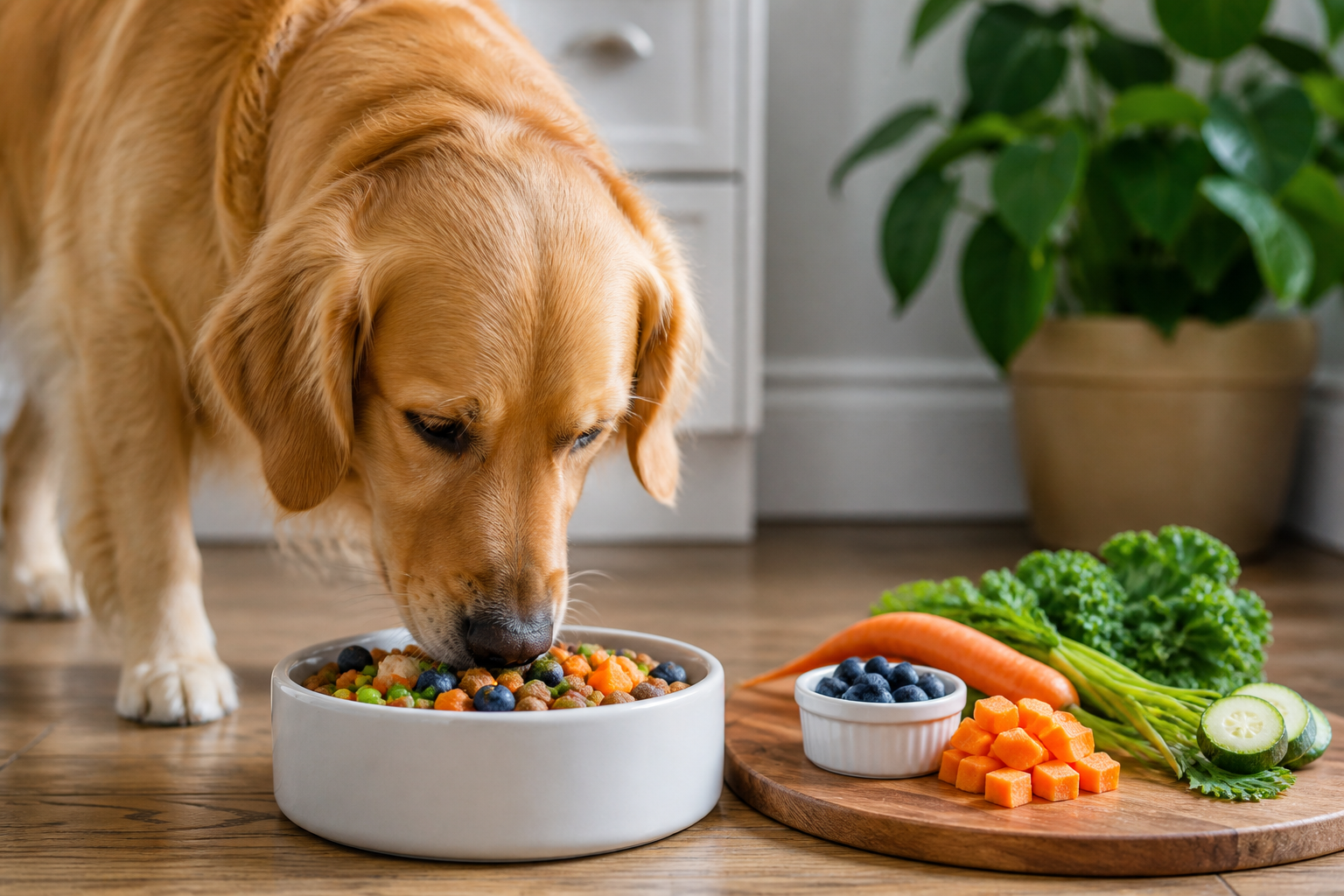
- Produce: Plain pumpkin, blueberries, steamed green beans, carrots.
- Commercial: Freeze-dried raw mixers, "magical" dinner dusts, wet food toppers.
Always remember the 25 percent rule and keep an eye on your dog's weight. If you notice any sudden changes in energy, skin condition, or digestion, it is time to scale back and consult your vet. For guidance on keeping dry food fresh, see how long dry dog food stays fresh.
Our goal at BaxterBoo is to provide you with the tools to keep your pets thriving. Whether you are looking for a new toy to keep them active or the best freeze-dried mixer to spice up their dinner, we are here to help. You can also join our MVP Rewards programme to earn points on every topper or bag of kibble you buy.
FAQ
Can I add raw eggs to my dog's food every day?
While raw eggs are highly nutritious, it is best to limit them to a few times a week depending on your dog's size. A large dog can handle a whole egg more frequently than a small breed. Always monitor for any digestive changes when introducing raw proteins to a kibble-based diet.
Is it okay to mix wet and dry dog food?
Yes, mixing wet and dry food is an excellent way to add moisture and variety. Just ensure the total amount of food does not exceed your dog's daily caloric requirements. Many owners use a 75/25 or 50/50 split between dry and wet food to balance cost and nutrition. For more transition guidance, read how to switch from dry to wet dog food.
Does adding human food make my dog a beggar?
Adding food to the bowl during mealtime is different from feeding scraps from the table. As long as the "extras" are placed in their bowl during their scheduled feeding time, it should not encourage begging. Consistency is the key to maintaining good mealtime manners.
What is the best way to add bone broth to kibble?
The most effective way is to pour about a quarter cup of warm (not hot) bone broth over the dry food. Let it sit for two to three minutes so the kibble absorbs some of the liquid. This creates a softer texture and makes the meal much more aromatic for the dog.






