
 Save 15% on your 1st Autoship learn more

 Email us
 Live Chat
 FAQs
FAQs





Introduction
Standing in the pet food aisle can feel like an impossible puzzle. You are surrounded by hundreds of bags and cans, all promising the best nutrition for your best friend. Maybe your puppy is turning their nose up at kibble, or your senior dog is struggling to chew. Choosing between dry and wet food is one of the most common decisions we help owners make at BaxterBoo. This post will break down the nutritional differences, the practical benefits of each, and how to decide which fits your lifestyle. Both options offer complete nutrition when chosen carefully. The right answer usually depends on your dog’s specific health needs, age, and personal preferences.
Quick Answer: Both dry and wet dog food provide high quality nutrition. Dry food is generally more affordable and convenient for storage, while wet food offers better hydration and is often more appealing to picky eaters.
Understanding the Primary Differences
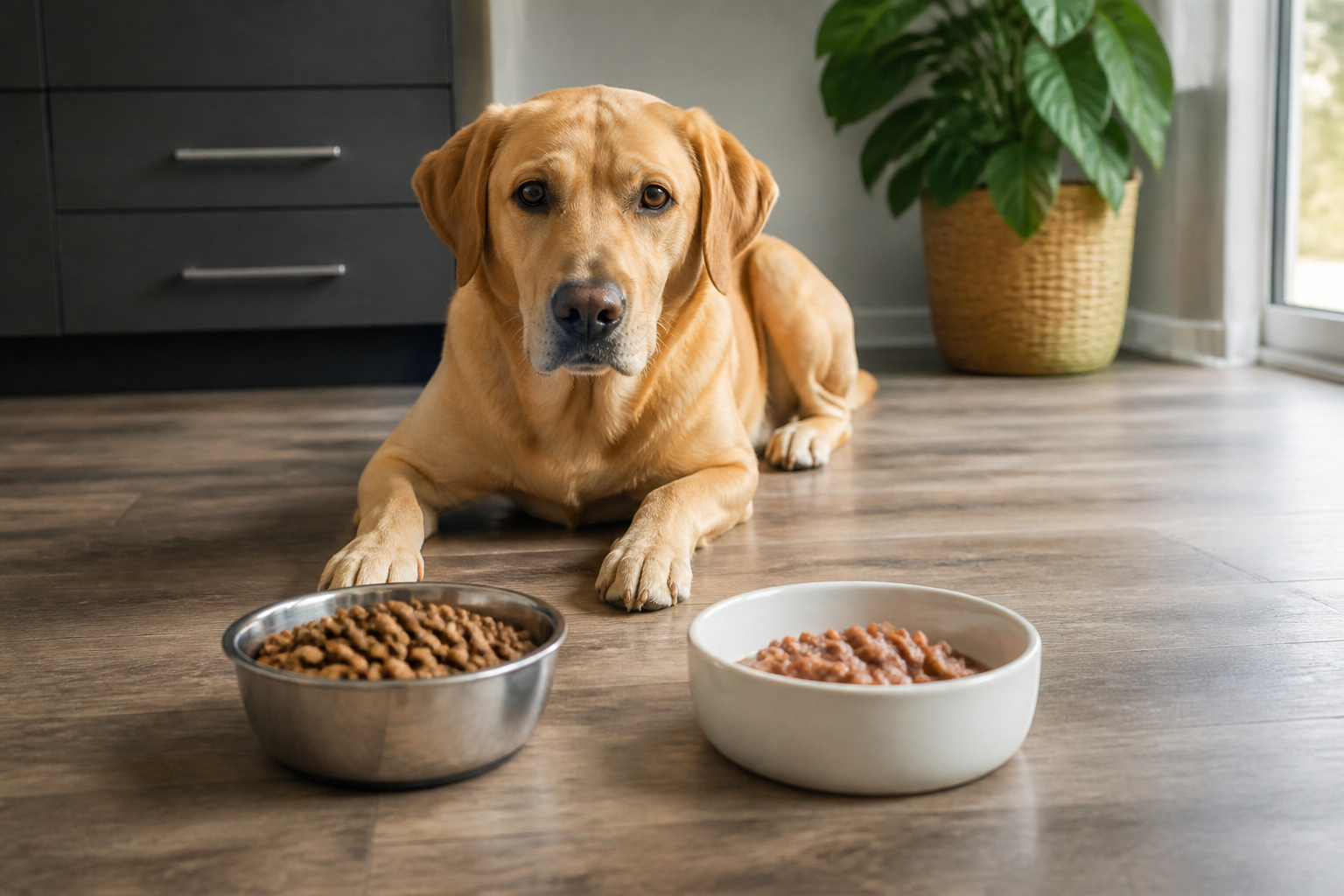
The most obvious difference between these two food types is the water content. Dry dog food, often called kibble, usually contains about 10 percent moisture. Wet food, found in cans or pouches, contains between 75 and 80 percent moisture. This gap changes more than just the texture. It affects how the food is made and how it behaves in your dog’s bowl.
Kibble is created through a process called extrusion. Manufacturers mix dry and wet ingredients into a dough. This dough is cooked under high pressure and pushed through small holes to create specific shapes. After the pieces are dried, they are often sprayed with fats and vitamins to ensure they stay fresh and taste great.
Wet food starts with ground protein sources. These are mixed with a gravy or jelly that contains essential vitamins and minerals. The mixture is sealed into cans or pouches and then sterilized. This heat treatment kills bacteria and ensures the food stays safe without needing the same preservatives often found in dry goods.
Nutritional Density and Portions
Because dry food has the water removed, it is very nutrient dense. A small cup of kibble packs a lot of calories and protein. This makes it a very efficient way to feed large, active dogs. You do not need to feed a high volume of food to meet their energy needs.
Wet food is less calorie dense because of the high water content. This means a dog can eat a larger portion of wet food without consuming more calories than a smaller scoop of kibble. For dogs that always seem hungry, the extra volume of wet food can help them feel full.
Key Takeaway: Dry food provides concentrated energy in small amounts, while wet food offers higher volume and hydration with fewer calories per gram.
The Benefits of Dry Dog Food
Many owners prefer dry food for its simplicity. We see many families choose kibble because it fits a busy lifestyle. It is easy to scoop, easy to store, and does not require refrigeration after the bag is opened. Our dog food category makes it easy to compare different formulas.
Convenience and Cost
Dry food is almost always the more economical choice. You can buy it in large bags that last for weeks. This lowers the cost per meal significantly compared to buying individual cans. Kibble is also perfect for dogs that like to graze. You can leave a bowl of dry food out all day without worrying about it spoiling or attracting pests as quickly as wet food might.
Dental Health Benefits
The crunchy texture of kibble serves a practical purpose. As your dog chews, the hard surface of the kibble helps scrape away plaque and tartar from the teeth. This is especially helpful for breeds prone to dental issues, such as Poodles or Chihuahuas. While it does not replace regular tooth brushing, it provides a daily mechanical cleaning that wet food cannot offer.
Mental Stimulation and Enrichment
Kibble is much easier to use in training and enrichment toys. You can put dry pieces into a snuffle mat, a Kong, or a puzzle feeder. This forces your dog to use their brain to get their meal. It slows down fast eaters and provides a healthy outlet for their energy. Wet food is much harder to use in these types of interactive toys without creating a mess.
Vet Tip: If your dog is a "gulper" who swallows kibble whole, the dental benefits are lost. In these cases, use a slow feeder bowl to encourage chewing and prevent choking.
Why You Might Choose Wet Dog Food
While kibble is convenient, wet food has unique properties that make it essential for certain dogs. It is often the first choice for owners managing specific health conditions or picky appetites. For more ideas about making the switch, read this guide on switching from dry to wet dog food.
Superior Hydration
Hydration is the biggest advantage of wet food. Many dogs do not drink enough water from their bowls. High moisture food helps support the kidneys and urinary tract. This is vital for dogs with a history of kidney disease or urinary crystals.
High Palatability for Picky Eaters
Wet food smells much stronger than dry food. This aroma is very enticing to dogs. If your dog is recovering from an illness or is just naturally finicky, the rich scent of a canned stew can encourage them to eat. It is also a great way to hide medication, as the texture easily masks pills or powders. You can compare soft meal options in our wet dog food selection.
Easier for Seniors and Puppies
As dogs age, they may lose teeth or develop sensitive gums. Crunching on hard kibble can become painful. Soft wet food allows senior dogs to eat comfortably. For puppies that are just weaning off their mother's milk, wet food provides a gentle transition to solid nutrition.
Bottom line: Wet food is an excellent tool for increasing water intake and encouraging appetite in dogs that are picky or have dental pain.
Comparing Protein and Carbohydrates
There is a common myth that wet food is always higher in protein. This is not necessarily true, but the way the percentages are listed can be confusing. To compare the two fairly, you have to look at the dry matter basis.
Dry food usually lists a protein content between 25 and 40 percent. Wet food might only list 8 to 10 percent. However, once you remove the water from the wet food, the protein levels are often very similar or even higher than kibble. Wet food typically contains fewer carbohydrates because it does not need starches like grains or potatoes to hold a shape. This can be beneficial for dogs that need a lower carb diet.
Managing Weight with Food Choice
If your dog is carrying a few extra pounds, wet food can be a helpful tool. Because it is mostly water, you can give your dog a satisfyingly large bowl of food that is actually low in calories. This prevents the "begging" behavior that often happens when owners try to cut back on calorie dense kibble.
For dogs that need a specialized prescription diet for weight management or other health concerns, our pet pharmacy offers a wide selection. Through our partnership with Pet's Choice, we provide FDA-approved prescription foods and medications. If your vet recommends a specific diet for weight, kidney, or dental health, we can help you manage those recurring needs easily.
Vet Tip: Always consult your veterinarian before switching to a prescription diet or a weight loss plan. They can calculate the exact calorie count your dog needs based on their target weight.
The Strategy of Mixing Both
You do not have to choose just one. Many owners find that a hybrid approach works best. This is often called "mixed feeding" or using a topper. This method provides the dental benefits of kibble with the hydration and taste of wet food. For more portion guidance, see this article about mixing dry dog food with wet food.
How to Mix Safely
The key to mixing is calorie control. You cannot simply add a can of wet food on top of a full portion of dry food. This will lead to rapid weight gain. You must reduce the amount of kibble to account for the calories in the wet food.
A common ratio is 75 percent calories from dry food and 25 percent from wet. This keeps the cost manageable while still providing the aroma and moisture benefits. If you are using wet food as a topper, ensure it is labeled as a "complete and balanced" meal. Some toppers are meant only for supplemental feeding and do not have all the vitamins your dog needs.
Transitioning Between Food Types
If you decide to change your dog's diet, go slowly. A sudden switch can cause an upset stomach, vomiting, or diarrhea. For additional transition tips, read this guide on how much wet dog food equals one cup of dry.
Step 1: Mix 25 percent of the new food with 75 percent of the old food for two days.
Step 2: Increase to a 50/50 split for the next two days.
Step 3: Move to 75 percent new food and 25 percent old food for two more days.
Step 4: Feed 100 percent of the new food by day seven.
Bottom line: Mixing wet and dry food provides a balance of convenience and palatability, but you must adjust portions to avoid overfeeding.
Storage and Safety Requirements
Proper storage is critical to keep your dog's food safe and nutritious. The way you handle kibble is very different from how you should handle cans.
Keeping Kibble Fresh
Once you open a bag of dry food, the fats inside begin to oxidize when they touch the air. This can make the food go rancid and lose its nutritional value. We recommend keeping the food in its original bag. Most high quality brands use bags designed to keep moisture and air out.
Place the entire bag inside an airtight plastic or metal bin. Try to use the bag within six weeks of opening. If you buy a massive bag to save money but it takes your dog three months to finish it, the food at the bottom will likely be stale and less nutritious.
Handling Wet Food
Opened wet food is much more perishable. You should only leave it in your dog’s bowl for about 30 minutes. If they do not eat it, throw it away. Bacteria grow quickly in the moist environment.
Unused portions must be covered and refrigerated immediately. Use a silicone can cover or move the food to an airtight container. Use any refrigerated wet food within three days. If you find your dog cannot finish a whole can in that time, look for smaller cans or pouches that better fit their daily serving.
Key Takeaway: Store dry food in its original bag within an airtight container and use within six weeks. Refrigerate opened wet food and discard after three days.
Choosing Based on Life Stage
Your dog's needs will change as they grow. What works for a puppy may not be the best choice for a senior dog.
Puppies
Puppies have high energy requirements and small teeth. During the weaning process, wet food is often preferred because it is soft. As they get older, introducing kibble helps them develop strong jaw muscles. Many puppy owners soak kibble in warm water or mix it with wet food to make it easier to chew while providing the dense calories a growing puppy needs.
Senior Dogs
Seniors often face a decline in their sense of smell and taste. This can lead to a loss of appetite. The strong aroma of wet food can be a lifesaver for older dogs. Additionally, senior dogs are more prone to dehydration and kidney issues. Increasing their moisture intake through wet food is a proactive way to support their aging bodies.
Final Considerations for Owners
The best food is ultimately the one your dog enjoys and thrives on. Watch your dog’s coat, energy levels, and stool quality. A shiny coat and firm stools are usually signs that the food is working well. If you notice persistent itching, lethargy, or digestive upset, it is time to talk to your vet about a diet change.
At BaxterBoo, we carry over 500 brands, including trusted names like Royal Canin, Purina Pro Plan, and Farmina. We have seen firsthand how the right food can improve a dog's quality of life. Whether you choose the convenience of dry or the hydration of wet, the quality of the ingredients matters most.
- Look for a named meat source as the first ingredient (like chicken or beef, not "meat by-products").
- Check for an AAFCO statement on the label to ensure it is nutritionally complete.
- Consider your dog’s activity level when choosing calorie density.
- Watch for allergies or sensitivities that might require a limited ingredient diet.
If you are looking for ways to save on your dog's favorites, consider our Autoship program. You can get recurring deliveries of your preferred food and save on your first order. Plus, every purchase earns you points through our MVP Rewards program, which you can use for future discounts.
Bottom line: There is no single "best" choice, but understanding your dog's specific needs for hydration, dental health, and taste will lead you to the right decision.
FAQ
Is wet food better for a dog's kidneys than dry food?
Wet food is generally better for kidney health because of its high moisture content. Proper hydration helps the kidneys filter waste more efficiently. If your dog has a history of urinary or kidney issues, your vet may even recommend a prescription wet food from a pharmacy.
Does dry food really clean a dog's teeth?
Dry food can help reduce the buildup of plaque and tartar through mechanical scraping as the dog chews. However, it is not a substitute for regular dental cleanings or brushing. Some specific dental diets are specially formulated with larger kibble sizes to maximize this cleaning effect.
Can I leave wet food out if my dog is a grazer?
No, you should not leave wet food out for more than 30 to 60 minutes. Because of its high moisture content, it becomes a breeding ground for bacteria very quickly. If your dog prefers to eat small amounts throughout the day, dry kibble is a much safer and more practical choice.
Is wet food more expensive than dry food in the long run?
Yes, wet food is typically more expensive per calorie than dry food. This is due to the cost of the canning process and the fact that you are paying for a high percentage of water. For large dogs, feeding an exclusively wet diet can be significantly more costly than a high quality dry diet.






