
 Save 15% on your 1st Autoship learn more

 Email us
 Live Chat
 FAQs
FAQs





Introduction
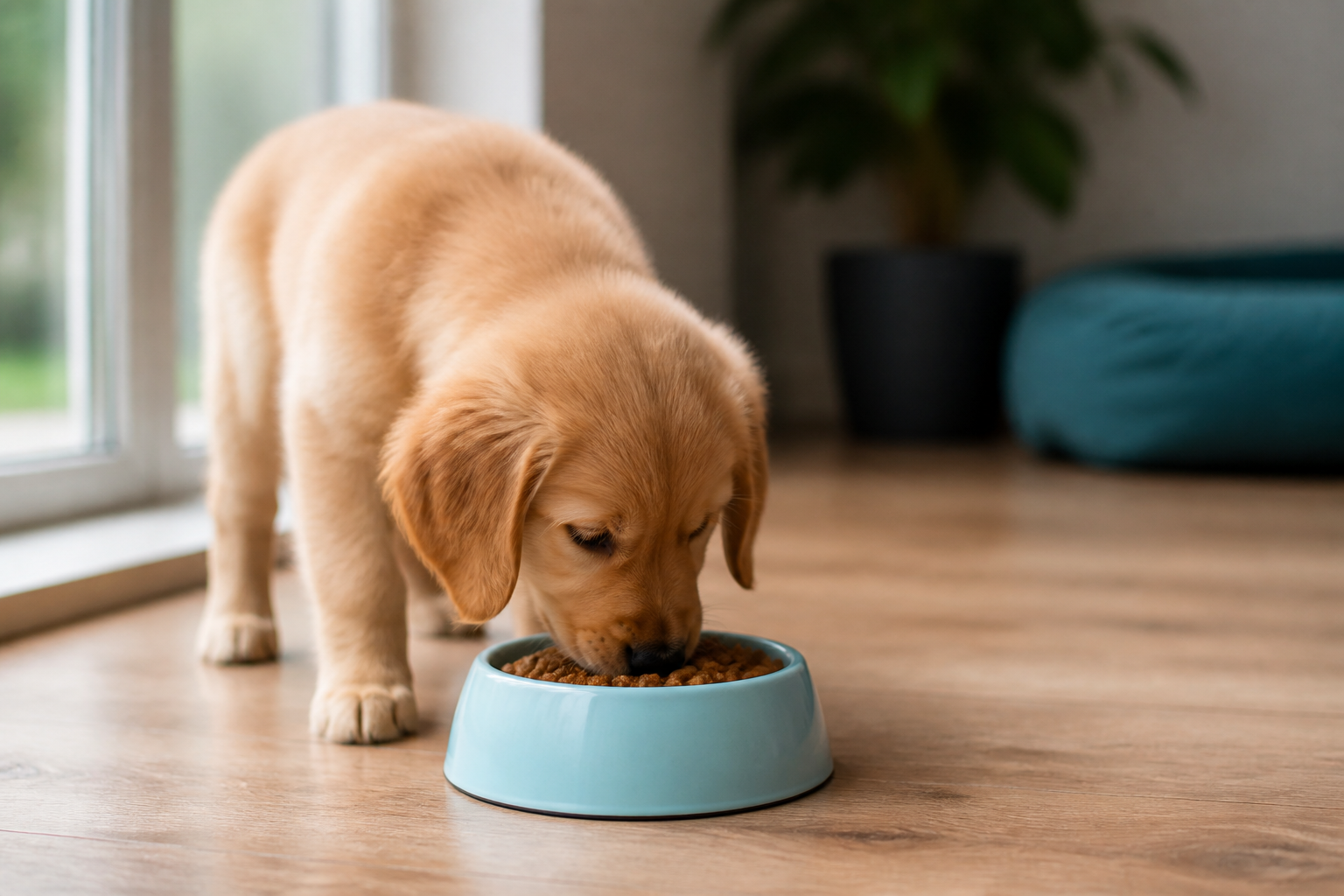
Bringing a new puppy home is a whirlwind of excitement, puppy breath, and quite a few questions about their basic care. One of the most common moments of uncertainty for new pet parents happens right at the food bowl. You might wonder if those tiny teeth are ready for hard kibble or if you should keep softening their meals with water. At BaxterBoo, we have helped thousands of owners navigate these early developmental milestones since 2006. Understanding the transition to solid food is about more than just convenience. It is about ensuring your growing dog gets the precise nutrients they need during a critical window of bone and muscle development. This guide covers the ideal weaning timeline, how to safely introduce dry textures, and what to look for in a high quality puppy formula. Establishing a proper feeding routine now sets the foundation for your puppy’s lifelong health and wellness.
Quick Answer: Puppies can start eating softened dry food around 3 to 4 weeks of age as part of the weaning process. Most puppies are capable of eating fully dry kibble without added liquid by 8 to 10 weeks old.
The Natural Timeline for Solid Food
Puppies do not just wake up one day ready to crunch through a bowl of hard kibble. It is a biological process that mirrors their physical development. For the first few weeks of life, a puppy gets every bit of nutrition and hydration from their mother's milk. This milk is rich in antibodies and the perfect balance of fats and proteins for a newborn.
Around the three-week mark, those tiny, sharp deciduous teeth (baby teeth) begin to erupt. This is the signal that the puppy is physically ready to start exploring textures beyond liquid. At this stage, they are still nursing, but they become curious about what their mother is eating. This is when the weaning process begins. Weaning is not an overnight event but a gradual transition that usually lasts about four to five weeks.
By the time a puppy is six to seven weeks old, they should be getting most of their calories from specially formulated puppy food. Most breeders and shelters wait until a puppy is at least eight weeks old before sending them to a new home. This ensures the puppy is fully weaned and comfortably eating dry food or a mix of wet and dry food.
Key Milestones in the First Two Months
- Birth to 3 weeks: Exclusive nursing or puppy milk replacer.
- 3 to 4 weeks: Introduction of "puppy mush" or gruel.
- 5 to 7 weeks: Gradual reduction of liquid, increasing kibble thickness.
- 8 weeks and up: Transition to fully dry kibble or a standard wet food diet.
Key Takeaway: The move to dry food is a month-long journey that starts with soft textures at three weeks and ends with hard kibble by week eight.
How to Properly Soften Puppy Kibble
You cannot simply put a bowl of hard dry food in front of a month-old puppy. Their teeth are small, and their digestive systems are still learning how to process complex ingredients. To bridge the gap, you need to create a consistency often called puppy mash.
Start by choosing a high quality puppy food formula. We carry over 500 trusted brands like Stella and Chewy's and NutriSource that offer excellent puppy-specific formulas. To soften the food, use warm water or a puppy-safe milk replacer. Avoid using cow's milk, as it can cause significant digestive upset and diarrhea in young dogs.
The goal is to let the kibble soak until it is soft enough to mash with a fork. In the beginning, the mixture should be quite liquid, almost like a thin soup. As the weeks progress, you will gradually use less liquid until the puppy is eating the kibble in its natural state.
Step-by-Step: The Softening Process
Step 1: Measure the portion. / Place the recommended amount of dry puppy kibble into a shallow, stable bowl. Step 2: Add warm liquid. / Pour warm (not boiling) water or milk replacer over the kibble until it is fully submerged. Step 3: Wait and soak. / Let the bowl sit for 10 to 15 minutes until the kibble has absorbed the moisture and expanded. Step 4: Mash and check. / Use a spoon or fork to mash the softened bits into a smooth paste and test the temperature with your finger to ensure it is not too hot.
Vet Tip: If your puppy seems to struggle with the transition or shows signs of a sensitive stomach like frequent vomiting or loose stools, consult your veterinarian. They may recommend a prescription gastrointestinal diet, which we can fulfill through our pet pharmacy.
The 4-Week Weaning Schedule
Consistency is the most important factor when moving from milk to kibble. If you move too fast, you risk causing tummy trouble. If you move too slow, the puppy might not get enough concentrated calories for their growth spurts.
| Week of Weaning | Ratio of Dry Food to Liquid | Texture Goal |
|---|---|---|
| Week 1 | 1 part kibble to 3 parts liquid | Thin soup or gruel |
| Week 2 | 2 parts kibble to 2 parts liquid | Thick oatmeal consistency |
| Week 3 | 3 parts kibble to 1 part liquid | Soft chunks with little liquid |
| Week 4 | 100% dry kibble | Hard, crunchy pieces |
During the first week, puppies might mostly walk through the food or lick it off their paws. This is normal. They are learning how to lap and swallow something thicker than milk. By the second week, they usually start to understand the mechanics of eating from a bowl. By week four, their jaw strength has increased enough to handle the crunch.
Choosing the Right Puppy Formula
Not all dry food is created equal. Puppies have very different nutritional requirements than adult dogs. They need more protein to build muscle, more fat for energy, and a specific balance of calcium and phosphorus for bone growth.
When looking at the labels of brands we carry, such as Acana or Orijen, check for an AAFCO (Association of American Feed Control Officials) statement. It should say the food is formulated for "growth" or "all life stages." If a food is labeled only for "adult maintenance," it will not have the nutrient density your puppy needs.
For additional guidance on selecting a formula, read our guide to the best dry dog food for puppies.
Essential Ingredients for Growth
- DHA: An omega-3 fatty acid usually derived from fish oil that supports brain and eye development.
- High Quality Protein: Look for specific meat sources like chicken, beef, or lamb as the first ingredient.
- Antioxidants: Ingredients like blueberries or spinach that help support a developing immune system.
- Proper Mineral Ratios: Precise amounts of calcium are vital, especially for large breed puppies who can suffer from joint issues if they grow too quickly.
Key Takeaway: Always choose a food specifically labeled for puppies to ensure they receive the higher calorie and mineral counts required for healthy development.
Feeding Frequency and Portions
Puppies are like little engines with tiny fuel tanks. They burn energy incredibly fast but cannot hold much food at one time. Feeding one or two large meals a day can lead to bloating or blood sugar crashes, especially in toy breeds.
For puppies under four months old, we generally recommend four small meals spread throughout the day. This keeps their energy levels stable and makes digestion easier. As they reach six months, you can usually transition to three meals. By the time they are a year old, most dogs do well on two meals a day.
For more portion guidance, see our resource on how much dry dog food to feed a puppy.
Portions by Age and Size
It is tempting to just fill the bowl, but overfeeding a puppy can lead to skeletal problems and obesity later in life. Always use a standard measuring cup rather than "eyeballing" the amount. Every brand has a different calorie density, so refer to the feeding chart on the specific bag of food you purchased.
- Establish a routine: Feed at the same times every day to help with potty training.
- Monitor body condition: You should be able to feel your puppy's ribs but not see them.
- Adjust for treats: If you are using kibble for training throughout the day, subtract that amount from their scheduled meals.
Bottom line: Frequent, small, measured meals are better for a puppy’s digestion and energy than fewer large feedings.
Special Considerations for Large and Small Breeds
Breed size plays a massive role in when and how you feed dry food. A Great Dane puppy and a Chihuahua puppy have vastly different growth trajectories.
Large and Giant Breeds
Large breed puppies, like Labradors or Mastiffs, are prone to orthopedic issues if they grow too fast. Their dry food often has slightly lower fat and calorie counts than standard puppy food to encourage a slow, steady growth rate. They often stay on puppy food longer, sometimes up to 18 or 24 months, until their growth plates have fully closed.
Small and Toy Breeds
Tiny puppies are susceptible to hypoglycemia (low blood sugar). They need calorie-dense kibble with very small pieces that are easy for their little mouths to shatter. Because they reach their adult size faster, they can often transition to adult food around 9 to 10 months of age.
Vet Tip: For large breed puppies, it is especially important to discuss a nutrition plan with your vet. Our pharmacy offers prescription diets from brands like Farmina Vet Life and Royal Canin that are specifically designed for puppies with unique developmental needs or health conditions.
Dealing with Teething and Picky Eating
Around four to six months of age, puppies lose their baby teeth and their adult teeth come in. This can be a painful time. You might notice your puppy is suddenly reluctant to eat their dry kibble. They might pick up a piece, drop it, or skip a meal entirely.
If your puppy seems uncomfortable, you can temporarily go back to softening the kibble with a little warm water or low-sodium broth. This allows them to get the nutrition they need without having to crunch down on sore gums. You can also offer chilled chew toys to help soothe their mouth before mealtime.
Picky eating is another common hurdle. Sometimes owners accidentally create a picky eater by offering "toppers" or human food the moment a puppy hesitates at their bowl. Unless your puppy is showing signs of illness, such as lethargy or vomiting, stay consistent with their dry food. Most healthy puppies will eat when they are hungry enough.
For more information about the transition and teething stage, read our puppy weaning timeline guide.
Signs of Teething Issues
- Red or swollen gums.
- Drooling more than usual.
- Small spots of blood on chew toys or in the food bowl.
- Chewing on inappropriate objects like furniture or shoes.
Transitioning Between Brands
If you decide to switch the brand of dry food your puppy is eating, perhaps to move from a grain-free option to one with wholesome grains, you must do it slowly. A sudden change in protein sources or fiber levels can cause diarrhea and gas.
We recommend a seven-day transition period. Start by mixing 25 percent of the new food with 75 percent of the old food for two days. Then move to a 50/50 split for another two days. By days five and six, you should be at 75 percent new food. By day seven, your puppy is ready for a full bowl of the new formula.
Bottom line: A slow, one-week transition protects your puppy’s sensitive digestive tract from upset when changing food brands.
Hydration and the Importance of Water
When a puppy is nursing, they get all their hydration from milk. As you move toward 100 percent dry kibble, they must learn to drink enough water on their own. Dry kibble only contains about 10 percent moisture, whereas wet food or milk is closer to 75 percent.
Always keep a clean, shallow bowl of fresh water available. Some puppies are messy drinkers and might benefit from a heavy ceramic bowl that they cannot tip over. If you notice your puppy isn't drinking much, you can continue to add a splash of water to their kibble even after they have mastered the crunch.
Monitoring Your Puppy's Health
Your puppy’s stool is the best indicator of how well they are handling their dry food. Ideally, it should be firm and easy to pick up. If the stool is consistently soft or liquid, it could be a sign that the food is too rich, or the transition happened too quickly.
Keep an eye on their energy levels and coat quality. A healthy puppy on a good dry food diet should have a shiny coat, clear eyes, and plenty of "zoomie" energy. If they seem dull or have flaky skin, they might need a food with higher omega fatty acid content or a supplement.
For puppies managing chronic conditions like allergies or digestive sensitivities, we provide access to FDA-approved medications and specialty diets through our pharmacy partnership. Working with your vet ensures that any underlying health issues are addressed alongside their daily nutrition.
When to Call the Vet
- Refusal to eat for more than 24 hours.
- Persistent diarrhea or vomiting.
- Extreme lethargy or lack of interest in play.
- Visible pain while chewing.
Summary of Puppy Feeding Success
Transitioning to dry food is one of the first major steps in your puppy’s life. By following a gradual weaning schedule and choosing a high quality formula, you give them the tools they need for a long, healthy life.
- Start at 3-4 weeks: Use a mushy gruel to introduce solid flavors.
- Go slow: Take four weeks to reach a fully dry kibble consistency.
- Prioritize quality: Look for AAFCO growth statements and brands like Stella and Chewy's or Zesty Paws.
- Watch the clock: Feed small, frequent meals to keep energy stable.
- Check the teeth: Be patient during the teething phase between 4 and 6 months.
Whether you are looking for the perfect first bag of kibble or need to manage a specific health condition with prescription food, we are here to help. Our team at BaxterBoo is dedicated to providing the expert guidance and handpicked products your new family member deserves. For recurring needs like food and preventives, consider signing up for our Autoship programme to save on every order and ensure you never run out of the essentials.
FAQ
Can I feed my 6-week-old puppy dry food?
At six weeks, most puppies are still in the middle of the weaning process and usually require their kibble to be softened with water. While they may have some teeth, their jaws are often not strong enough to handle a diet of 100 percent hard kibble. It is best to continue providing a moistened, oatmeal-like consistency until they are closer to eight weeks old.
How do I know if my puppy is ready for hard kibble?
You will know your puppy is ready when they successfully eat softened food without any digestive upset and their adult teeth have begun to emerge. If your puppy is around eight weeks old and shows an interest in crunching on the dry bits of food before they are fully soaked, you can begin reducing the water. Most puppies at this age will naturally start preferring the texture of dry food.
Is it okay to mix wet and dry food for a puppy?
Yes, mixing wet and dry food is an excellent way to provide both hydration and dental benefits. Many owners find that adding a spoonful of wet food makes the kibble more palatable for picky eaters while still allowing the dry pieces to help scrape away plaque. Just be sure to adjust the total calorie count so you are not overfeeding your puppy with the combined portions.
What should I do if my puppy won't eat dry food?
If a healthy puppy refuses dry food, try warming it slightly to release the aromas or adding a small amount of low-sodium chicken broth. If they are currently teething, the hard texture may be uncomfortable, so softening it with water can help. If the refusal is sudden and accompanied by other symptoms like lethargy, it is important to contact your veterinarian to rule out any medical issues.






