
 Save 15% on your 1st Autoship learn more

 Email us
 Live Chat
 FAQs
FAQs





Introduction
You reach into your dog's food bin and notice a fine, brownish dust at the bottom. Or perhaps your dog has started scratching their ears and paws relentlessly after every meal. These moments often lead pet owners to ask one unsettling question: are there mites in dry dog food? The short answer is yes. These microscopic pests are known as storage mites. They thrive in dry goods like kibble, flour, and cereal.
At BaxterBoo, we know how much you care about the quality of what goes into your pet's bowl. We have spent years helping owners manage everything from picky eaters to chronic skin issues. This article covers what these mites are and how they get into your home. We also explain how to spot an infestation and the best ways to protect your dog from allergic reactions. Understanding these tiny intruders is the first step toward a healthier, itch-free life for your pet.
Understanding Storage Mites
Storage mites are microscopic arachnids. They are relatives of the common house dust mite. While they are tiny, they can cause big problems for dogs with sensitivities. Unlike mange mites or ear mites, storage mites do not live on your dog's skin. They are environmental pests that live in the food itself.
The most common species found in pet food is Tyrophagus putrescentiae. These mites are attracted to the proteins, fats, and starches found in dry kibble. They are so small that they are nearly invisible to the naked eye. An infestation can grow quite large before you ever notice a change in the food's appearance.
Quick Answer: Yes, storage mites can live in dry dog food. They are microscopic organisms that thrive in high-humidity environments and feed on the starches and fats in kibble, often triggering skin allergies in sensitive dogs.
The Lifecycle of a Mite
Storage mites reproduce with incredible speed. They thrive when the environment is warm and damp. Ideal conditions include temperatures between 70 and 80 degrees Fahrenheit. They also prefer humidity levels above 60 percent. A single female mite can lay hundreds of eggs in her short lifetime. If a few mites find their way into a poorly sealed bag, they can create a massive colony within weeks.
Why They Love Kibble
Dry dog food is a perfect habitat for these pests. Kibble is dense in nutrients. It contains grains, cereals, and fats that mites find delicious. While the manufacturing process uses high heat that kills mites, the food can become contaminated later. Once a bag is opened, the food begins to absorb moisture from the air. This moisture softens the kibble and provides the hydration mites need to survive and multiply. For comparison, you can explore our dry dog food category.
How Do Mites Get Into the Food?
Most high-quality food is free of mites when it leaves the factory. The extrusion process used to make kibble involves high temperatures. This heat is sufficient to destroy any mites or eggs present in the raw ingredients. The contamination almost always happens during the journey from the factory to your dog's bowl.
Supply Chain Vulnerabilities
Mites often enter through small tears or punctures in the packaging. If a bag sits in a humid warehouse or on a grocery store shelf for a long time, the risk increases. Even a microscopic hole in a seal can act as an entryway for a wandering mite. Once one mite enters a bag with a high moisture content, the infestation begins.
Storage Issues at Home
The way you store your food at home is the most common factor in an infestation. Many people keep dog food in the garage or a damp basement. These areas often have high humidity and fluctuating temperatures. If you leave the food in its original paper bag, mites can easily crawl through the porous material. Even some plastic bins are not truly airtight, allowing moisture and pests to sneak in over time.
Key Takeaway: Storage mites are environmental pests that enter food through small gaps in packaging or poor storage habits. They are not a sign of "bad" food, but rather a sign that moisture and warmth have allowed them to flourish.
Signs Your Dog Has a Mite Allergy
For many dogs, the presence of a few mites is not a problem. However, many dogs develop a hypersensitivity to them. This is often called storage mite atopy. It is one of the most common causes of what owners mistake for a "food allergy."
The allergy is not caused by the mites biting the dog. Instead, the dog reacts to the proteins found in the mites' waste products and their decaying bodies. When your dog puts their face in the bowl, they inhale these allergens. They also ingest them while eating. For related information, read our guide to sensitive skin dog food.
Common Symptoms to Watch For
- Intense itching or scratching, especially after mealtime.
- Red, inflamed skin around the muzzle, eyes, and ears.
- Obsessive licking or chewing of the paws.
- Recurrent ear infections that do not seem to clear up.
- Hair loss or "hot spots" from constant scratching.
- Chronic diarrhea or soft stools in some cases.
Vet Tip: If your dog is constantly itchy, it is important to consult your veterinarian. They can perform allergy testing to determine if your pet is reacting to storage mites or specific food proteins like chicken or beef.
How to Spot an Infestation
Since you cannot see the individual mites, you have to look for the evidence they leave behind. If you suspect your dog's food has been compromised, perform a quick inspection.
The "Mite Dust" Test
Look at the bottom of your dog's food container. Do you see a fine, brownish-grey dust? This is often called "mite dust." It consists of live mites, dead mites, and their waste. Unlike the normal crumbs or "fines" found in a bag of kibble, mite dust may appear to move slightly if you watch it under a bright light.
The Smell Test
Some owners notice a change in the scent of the food. An infested bag may have a faint, sweetish, or minty odor. This is produced by the mites as they colonize the kibble. If the food smells "off" or different than when you first opened it, it is best to be cautious. You can also review these dry dog food freshness and storage tips.
Summary Checklist for Inspection:
- Check for fine dust at the bottom of the bag or bin.
- Look for a slight "shimmering" or movement in the dust.
- Sniff the food for any unusual sweet or minty smells.
- Inspect the bag for small punctures or greasy stains on the paper.
Practical Steps for Mite-Free Storage
Prevention is much easier than trying to fix an infestation. You can virtually eliminate the risk of storage mites by changing how you handle and store your dog's food.
Buy Smaller Quantities
It is tempting to buy the largest bag available to save money. However, a large bag that takes three months to finish is a huge risk. The longer the bag stays open, the more time mites have to find it. We recommend buying a bag size that your dog can finish within 30 days. This ensures the food stays fresh and reduces the window for environmental exposure.
Use Airtight Containers
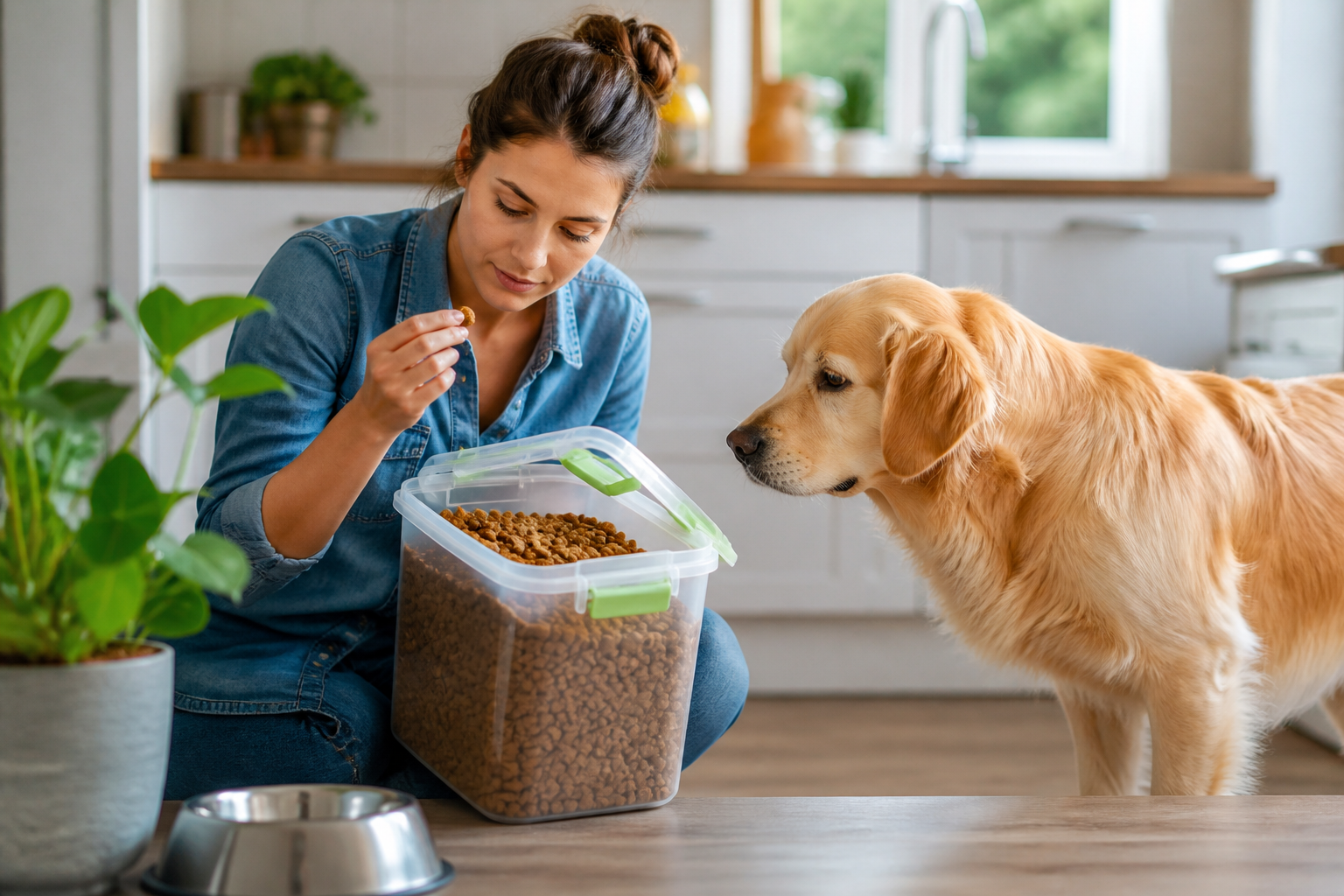
The original paper bag is not a good long-term storage solution. It absorbs humidity and is easy for pests to penetrate. Transfer your kibble into a high-quality, airtight plastic or glass container. Ensure the seal is tight and functional.
The Right Way to Refill
Never "top off" your food bin. Many owners pour a new bag of food on top of the old crumbs at the bottom. This is a mistake. If the old food had a few mites, you have just given them a fresh supply of food to colonize.
Step 1: Empty the container completely once the food is gone. Step 2: Wash the container with hot, soapy water. Step 3: Dry the container thoroughly. Any remaining moisture can cause mold or attract mites. Step 4: Pour in the new bag of food and seal it immediately.
Keep It Cool and Dry
Store your food container in a climate-controlled area of your home. Avoid the garage, the laundry room, or the area under the kitchen sink. These spots are often too humid. A cool, dry pantry is the best place for your pet's food.
Bottom line: Airtight storage in a cool, dry place is the single most effective way to prevent storage mites from infesting your dog's food.
Using the Freezing Method
If your dog is extremely sensitive to mites, you may want to use the freezing method. Freezing dog food for 48 hours kills any live mites and prevents eggs from hatching. This is a common recommendation from veterinary dermatologists for dogs with severe atopic dermatitis.
However, you must remember that freezing does not remove the allergens. The dead mites and their waste will still be in the food. If your dog is already reacting, you should start with a fresh, clean bag of food before using the freezing method for maintenance. For another feeding format, see our freeze-dried dog food feeding guide.
Managing Mite Allergies with Veterinary Support
If your dog is already suffering from a storage mite allergy, cleaning the food may not be enough to stop the itching. The immune system is already over-sensitized. This is where professional medical support becomes necessary.
Our pet pharmacy provides access to FDA-approved medications through our partnership with Pet's Choice. If your veterinarian diagnoses a storage mite allergy, they may prescribe specific treatments to help your dog feel better.
Prescription Diets
Some dogs do better on prescription diets that use hydrolyzed proteins or limited ingredients. These foods are often manufactured under stricter controls and packaged in specialized bags to prevent contamination. You can find many of these veterinary-exclusive brands through our pharmacy once you have a prescription from your vet.
Allergy Medications
Chronic itching can lead to skin infections and a very unhappy dog. Your vet might recommend antihistamines, corticosteroids, or newer allergy medications like Apoquel or Cytopoint. These help calm the immune system's overreaction to the mite allergens.
Medicated Shampoos and Topicals
Bathing your dog with medicated shampoo can help wash away environmental allergens from their fur. This is a great way to provide immediate relief for red, inflamed skin. We carry a wide variety of these supplies in our dog healthcare category to help you manage your pet's comfort at home.
Vet Tip: Do not attempt to treat a severe allergic reaction with over-the-counter supplements alone. If your dog has broken skin, hair loss, or signs of an ear infection, see your vet for a professional treatment plan and a valid prescription.
Dietary Alternatives for Sensitive Dogs
If you find that your dog simply cannot tolerate dry kibble due to mites, you might consider switching to a different type of food. Mites need a dry, grain-rich environment to thrive. Foods with high moisture content are much less likely to host storage mites.
Wet and Canned Foods
Canned food is cooked inside the sealed can. This makes it sterile until the moment you open it. Since it is high in moisture and does not sit in an open bin for weeks, it is a very safe choice for mite-allergic dogs. Brands like Tiki Cat or Weruva offer excellent high-moisture options that are naturally resistant to storage mite issues.
Air-Dried and Freeze-Dried Options
While these are technically "dry," they are often processed differently than traditional kibble. Many high-quality freeze-dried foods, such as those from Stella and Chewy's or Vital Essentials, are made in smaller batches and packaged in very high-quality, resealable bags. Because these foods are often grain-free, they may be less attractive to certain species of storage mites. Browse our freeze-dried pet food collection when comparing alternatives.
Grain-Free Kibble
While some storage mites can live on the fats and proteins in grain-free food, many species prefer the starches in cereal grains. Switching to a grain-free diet from a brand like Acana, Orijen, or Zignature can sometimes reduce the severity of the problem. Always check with your vet before making a major dietary change to ensure the new food meets your dog's nutritional needs. For additional context, read our freeze-dried dog food article.
Hygiene in the Feeding Area
Mites do not just stay in the food bag. They can live in the cracks and crevices of your kitchen or wherever you feed your dog. Maintaining a clean feeding station is a vital part of pest control.
Wash Bowls Daily
Your dog's saliva combined with food residue creates a perfect breeding ground for bacteria and mites. Wash your dog's food and water bowls every single day with hot water and soap. If you use a scoop to measure the food, wash that regularly as well.
Clean the Floor
Small bits of kibble often fall onto the floor or under the baseboards. These forgotten pieces of food act as "scout" locations for mites. Vacuum the feeding area regularly and wipe down the floor to remove any grease or crumbs.
Inspect Other Dry Goods
If you find mites in your dog's food, check your own pantry. Storage mites are not picky. They will happily move into your flour, cereal, or pasta. Keeping all dry goods in airtight containers protects both the humans and the pets in your household. For more guidance, read our article on keeping dog food dry.
Key Takeaway: A clean feeding environment is just as important as a clean food bin. Daily bowl washing and regular vacuuming can stop an infestation from spreading through your home.
Conclusion
Finding out that mites could be in your dog's food is a bit shocking, but it is a manageable problem. These microscopic pests thrive on moisture and warmth. By switching to airtight storage, buying smaller bags, and keeping your feeding area clean, you can protect your dog from these invisible allergens.
If your dog is already showing signs of an allergy, such as constant itching or ear infections, remember that you do not have to handle it alone. Consult your veterinarian for a proper diagnosis. If they determine your dog needs medical support, our pharmacy is here to help with FDA-approved medications and prescription diets through our partnership with Pet's Choice.
Take a moment today to check your food storage setup. A few simple changes can make a world of difference for your pet's skin and overall health. For the best selection of airtight containers, grain-free foods, and health supplements, explore our dog food collection.
FAQ
Can you see storage mites in dog food?
No, you generally cannot see individual storage mites because they are microscopic. However, you can see the "mite dust" they produce, which looks like a fine brownish-grey powder at the bottom of the food container. If you look very closely under a bright light, this dust may appear to move or shimmer slightly.
Does freezing dog food kill mites?
Yes, freezing dry dog food for at least 48 hours will kill live storage mites and prevent their eggs from hatching. It is important to note that freezing does not remove the allergens already present in the food. The dead mites and their waste can still cause an allergic reaction in sensitive dogs.
Can storage mites make my dog itch?
Absolutely. Many dogs are highly allergic to the proteins found in the bodies and waste of storage mites. This can cause intense itching, red skin, paw licking, and chronic ear infections. This condition is often confused with a protein allergy, but it is actually a reaction to the mites in the environment.
How do I get rid of mites in my dog's food bin?
If you suspect an infestation, you should discard the contaminated food immediately. Wash the storage bin thoroughly with very hot, soapy water and let it dry completely before adding new food. To prevent future issues, always use an airtight container and store it in a cool, dry place.






