
 Save 15% on your 1st Autoship learn more

 Email us
 Live Chat
 FAQs
FAQs





Introduction
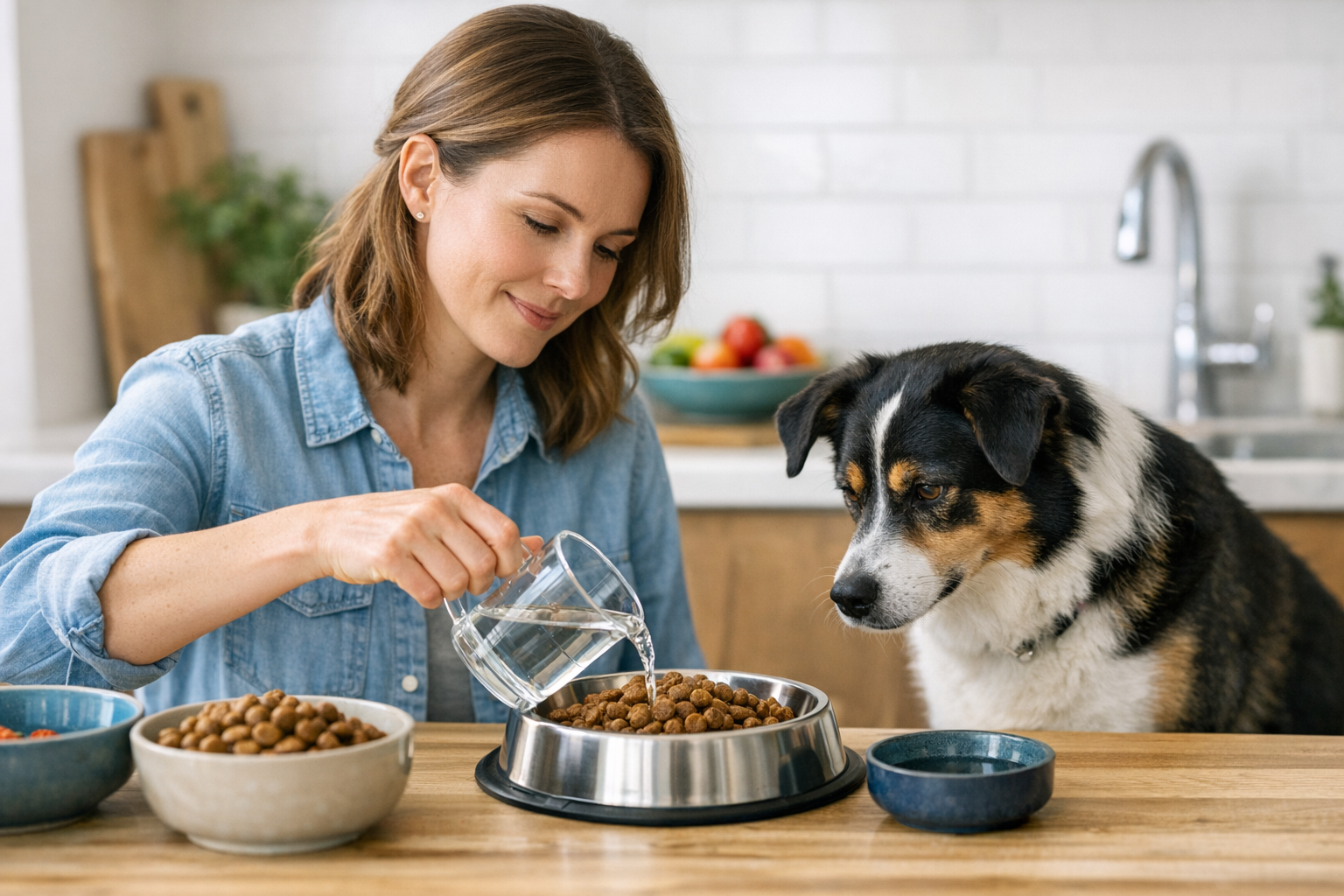
You might find yourself standing over the dog bowl, wondering if those hard brown nuggets are a bit too dry for your companion. Many owners consider adding a splash of water to kibble to help a picky eater or to soften a meal for an older dog with dental issues. It is a common question we hear at our BaxterBoo warehouse from pet parents looking to improve their dog's daily routine. While most dry foods are designed to be eaten exactly as they come in the bag, adding moisture can offer significant health and palatability benefits. This article covers the advantages of hydrating kibble, the best way to do it safely, and when you should stick to the crunch. Adding water to dry food is more than a simple preference; it can be a useful tool for better hydration and digestion.
If you are still comparing meal options, start with our dog food category.
Quick Answer: You can certainly wet dry dog food to improve hydration, enhance aroma, or make it easier to chew. Adding warm water or broth is particularly helpful for seniors, puppies, or picky eaters, provided you serve the meal immediately to prevent spoilage.
The Benefits of Adding Water to Kibble
Dry dog food usually only contains about 10 percent moisture. In the wild, a dog’s diet would naturally include much more hydration through fresh protein. By adding water to the bowl, you are bringing that moisture content closer to a natural state. This simple step helps the kidneys and urinary tract function more efficiently.
Improved hydration is the most obvious benefit. Some dogs are "lazy drinkers" who rarely visit their water bowl throughout the day. If your dog does not drink enough, their urine can become overly concentrated. This may lead to crystals or urinary stones over time. Adding a cup of water to their meal ensures they get a baseline of hydration regardless of their drinking habits.
For broader support beyond the bowl, browse our dog healthcare category.
Key Takeaway: Adding water to kibble is an easy way to support kidney health and ensure consistent hydration for dogs that do not drink enough on their own.
Enhancing Aroma and Palatability
If you have a picky eater, you know the frustration of a dog turning their nose up at a fresh bowl of food. Dry kibble is often coated with fats and oils to make it taste better. When you add warm water, these fats begin to melt and release a much stronger aroma. Since a dog’s sense of smell is closely tied to their appetite, a more fragrant bowl is often a more finished bowl.
Warm water specifically helps "bloom" the flavors of the ingredients. This is especially useful for dogs recovering from illness who may have a diminished sense of smell. It also helps senior dogs whose sensory perceptions might be fading with age.
Aiding the Digestive Process
Kibble is very dense. When a dog eats dry pellets, their stomach must provide the moisture to break that food down. This draws fluids away from other parts of the body during digestion. If the food is already pre-hydrated, the stomach does not have to work as hard.
Some experts believe that pre-soaking kibble can help prevent a dog from gulping air while they eat. Large breeds that eat too quickly are sometimes prone to bloat, a life-threatening condition where the stomach twists. Softened food is harder to "inhale" quickly and may encourage a slightly slower eating pace.
When Wetting Dog Food Is Necessary
There are specific life stages and health situations where wetting dry food is not just an option but a recommendation. For these dogs, the hard texture of standard kibble can be a physical barrier to getting the nutrition they need.
Support for Senior Dogs
As dogs age, they often face dental challenges. Missing teeth, receding gums, or fractured carnassials can make crunching down on hard kibble painful. You might notice an older dog dropping pieces of food or hesitating before they eat. Softening the food with water or bone broth allows them to eat without discomfort.
Senior dogs also tend to have a higher risk of dehydration. Their thirst drive may decrease, or they might have underlying conditions like kidney disease. Our pet pharmacy provides prescription diets specifically for kidney support, and these are often most effective when paired with high moisture intake.
Vet Tip: If your senior dog suddenly stops eating dry food, schedule a dental checkup. While wetting the food helps in the short term, they may have a painful infection or a broken tooth that requires professional veterinary care.
Transitioning Puppies
Puppies moving from mother's milk or milk replacer to solid food cannot handle hard kibble right away. Their "milk teeth" are sharp but delicate. We usually recommend creating a "gruel" by soaking puppy-specific kibble in warm water for 20 minutes. As the puppy grows, you can gradually reduce the amount of water until they are comfortable with the full crunch.
If you are feeding a young dog, take a look at The Puppy Shop.
Post-Surgery Recovery
Dogs recovering from surgery, especially oral surgery or procedures requiring sedation, may be groggy or have a sore throat. A soft, hydrated meal is much easier for them to swallow. It also provides the extra hydration needed to help their body flush out anesthesia medications.
Common Additives Beyond Plain Water
While plain tap water is perfectly fine, you can use other liquids to add even more nutritional value to the bowl. Many of these options provide electrolytes, probiotics, or joint support.
- Bone Broth: This is packed with collagen and amino acids. Ensure you use a version specifically made for pets, as human broths often contain onions and garlic, which are toxic to dogs.
- Goat Milk: Often called "universal milk," it is easy to digest and full of probiotics. It is an excellent choice for dogs with sensitive stomachs.
- Low-Sodium Chicken Broth: If you are in a pinch, a low-sodium, onion-free chicken broth can entice a sick dog to eat.
- Warm Water: Simple, free, and effective. Use warm, not boiling, water to avoid destroying heat-sensitive vitamins.
How to Properly Hydrate the Bowl
To get the best results, follow a consistent process. This ensures the food reaches the right texture without becoming a soggy mess that your dog dislikes.
- Measure the kibble: Start with your dog's standard portion.
- Add liquid: Use a ratio of roughly one part liquid to two parts kibble.
- Wait: Let the bowl sit for 10 to 15 minutes. This allows the water to reach the center of the kibble.
- Test the temperature: Ensure the food is not too hot before serving.
- Clean up: Remove any uneaten food after 30 minutes.
Bottom line: Hydrating kibble takes a few extra minutes of prep time but can significantly improve the eating experience and nutrient absorption.
The Drawbacks and Safety Risks
While there are many pros, adding water to dry food is not without its risks. The most significant concern is bacterial growth. Dry kibble is shelf-stable because it lacks moisture. Once you add water, you create a perfect environment for mold and bacteria to thrive.
The Risk of Spoilage
If your dog is a "grazer" who likes to pick at their food throughout the day, you should not wet their kibble. Wet food should never be left out at room temperature for more than an hour. After that point, the risk of contamination increases. If your dog does not finish their hydrated meal quickly, you must throw the leftovers away.
Dental Health Considerations
There is a long-standing belief that dry kibble helps clean a dog’s teeth by scraping away plaque. While some dental-specific diets are engineered for this, most standard kibbles shatter too easily to provide much benefit. However, a completely soft diet provides zero mechanical scraping.
If you switch to a fully hydrated diet, you must be more diligent about dental care. This includes regular brushing or providing dental chews. Soft food is more likely to get stuck in the gumline, which can lead to tartar buildup if ignored.
Mess and Cleanup
Wetting food is objectively messier. Dogs with long ears or beards, like Spaniels or Schnauzers, may end up with soggy food stuck to their fur. You will also need to wash the food bowl with hot, soapy water after every single meal. A dry food bowl can sometimes go a day or two between washes, but a wet food bowl becomes a breeding ground for germs immediately.
Addressing Picky Eating Habits
Sometimes, wetting dry food is a temporary fix for a deeper behavioral issue. If a dog learns that refusing plain kibble results in a "better" version with broth or toppers, they may hold out for more.
If your dog is healthy and at a good weight, but suddenly becomes picky, look for other causes. They might be getting too many treats during the day, or perhaps the food in the bag has gone rancid. Adding water can mask the smell of old fats, but it won't fix the nutritional loss of spoiled food.
Key Takeaway: Use hydration as a health tool rather than a way to spoil a dog into eating, and always maintain a clean bowl to prevent illness.
Medical Conditions and the BaxterBoo Pharmacy
Some health conditions make moisture intake a matter of medical necessity. For example, dogs prone to Calcium Oxalate or Struvite crystals need a high volume of water to keep their bladder flushed.
If your veterinarian has prescribed a specific diet for a medical condition, our pet pharmacy can help. We work with Pet's Choice to provide prescription diets and medications. Many of these prescription kibbles are designed to be highly palatable, but adding water can further assist in managing conditions like:
- Chronic Kidney Disease (CKD): Extra water helps kidneys filter waste.
- Diabetes: Consistent hydration is vital for metabolic stability.
- Urinary Tract Infections (UTIs): Increased urine output helps clear bacteria.
- Weight Management: Water adds volume to the stomach, helping a dieting dog feel full.
When managing these conditions, always follow your veterinarian's specific instructions regarding diet. They can tell you exactly how much water is ideal for your dog's specific weight and health status.
If you plan to make this a regular routine, consider our Autoship programme for steady food refills.
Choosing the Right Bowl
If you decide to start wetting your dog's food, the type of bowl you use matters. Plastic bowls often develop tiny scratches over time where bacteria can hide, even after washing. Stainless steel or ceramic bowls are much better options for wet or hydrated food. They are non-porous and can usually be sanitized in the dishwasher.
For dogs that tend to "gulp" their food even when it is wet, consider a slow-feeder bowl. These have ridges and valleys that force the dog to use their tongue to get the food out. This further slows down the eating process and prevents digestive upset.
Transitioning to Hydrated Food
If your dog has always eaten dry food, do not fill the bowl with water all at once. A sudden change in texture or a new additive like bone broth can cause an upset stomach.
- Step 1: Start by adding just a tablespoon or two of warm water to their regular meal.
- Step 2: Observe their digestion and stool quality for a few days.
- Step 3: Gradually increase the amount of liquid over a week until you reach the desired consistency.
- Step 4: Monitor their weight. Because hydrated food is easier to digest and more palatable, some dogs may start eating more than they need.
Vet Tip: If your dog develops diarrhea or begins vomiting after you start adding water or broth, stop the additives and return to plain kibble. If the symptoms persist for more than 24 hours, contact your veterinarian.
Frequently Asked Questions
Can I use boiling water to soften dog food faster?
You should avoid using boiling water because it can destroy some of the heat-sensitive vitamins and minerals added to the kibble. Extremely hot water also poses a burn risk to your dog's mouth and throat. Use warm water that is comfortable to the touch, similar to how you would prepare a baby's bottle.
How long can I leave wet kibble in the bowl?
You should remove any uneaten hydrated kibble after 30 to 60 minutes. Because the moisture allows bacteria to grow quickly, leaving it out longer can lead to food poisoning or digestive upset. If your dog does not finish the meal, it is safest to discard the remains rather than saving them for later.
Does adding water to kibble cause dental problems?
Adding water does not directly cause dental disease, but it removes the minor abrasive benefit of dry food. Soft food is also more likely to cling to teeth and gums. If you choose to wet your dog's food, you should supplement their routine with regular teeth brushing or vet-approved dental treats to maintain oral health.
Can I mix wet canned food and water into dry kibble?
Yes, many owners use a "topper" approach by mixing a small amount of canned food with kibble and a splash of water. This creates a savory gravy that most dogs find irresistible. Just be sure to adjust the total calorie count of the meal to account for the added wet food so your dog maintains a healthy weight.
Conclusion
Deciding whether to wet your dog's dry food depends on their individual health needs and preferences. For many dogs, the added hydration supports kidney function, improves digestion, and makes mealtimes more enjoyable. It is an especially valuable technique for puppies, seniors, and dogs with specific medical conditions. Remember to keep the process sanitary by using clean bowls and discarding uneaten portions quickly.
If you are looking for high-quality kibble, bone broths, or specific bowls to start this routine, we have everything you need at BaxterBoo. For dogs with chronic health issues, our pharmacy partnership ensures you can get the prescription diets and medications your vet recommends. Supporting your pet's health starts with what goes into their bowl every day.
Key Takeaway: Hydrating dry food is a simple, effective way to boost your dog's health, provided you maintain strict hygiene and monitor their response to the change.
Browse our selection of NutriSource products or our selection of Stella & Chewy's products if you want more food options to compare.
For more tips, read how long dry dog food stays fresh once opened and how many cups of dry dog food per day for your dog.
If you are comparing senior feeding choices, see should senior dogs eat wet or dry food and is freeze dried dog food good for your dog.
You can also learn more about the MVP Rewards programme or Figo Pet Insurance if you want added value and protection for your pet.






