
 Save 15% on your 1st Autoship learn more

 Email us
 Live Chat
 FAQs
FAQs





Introduction
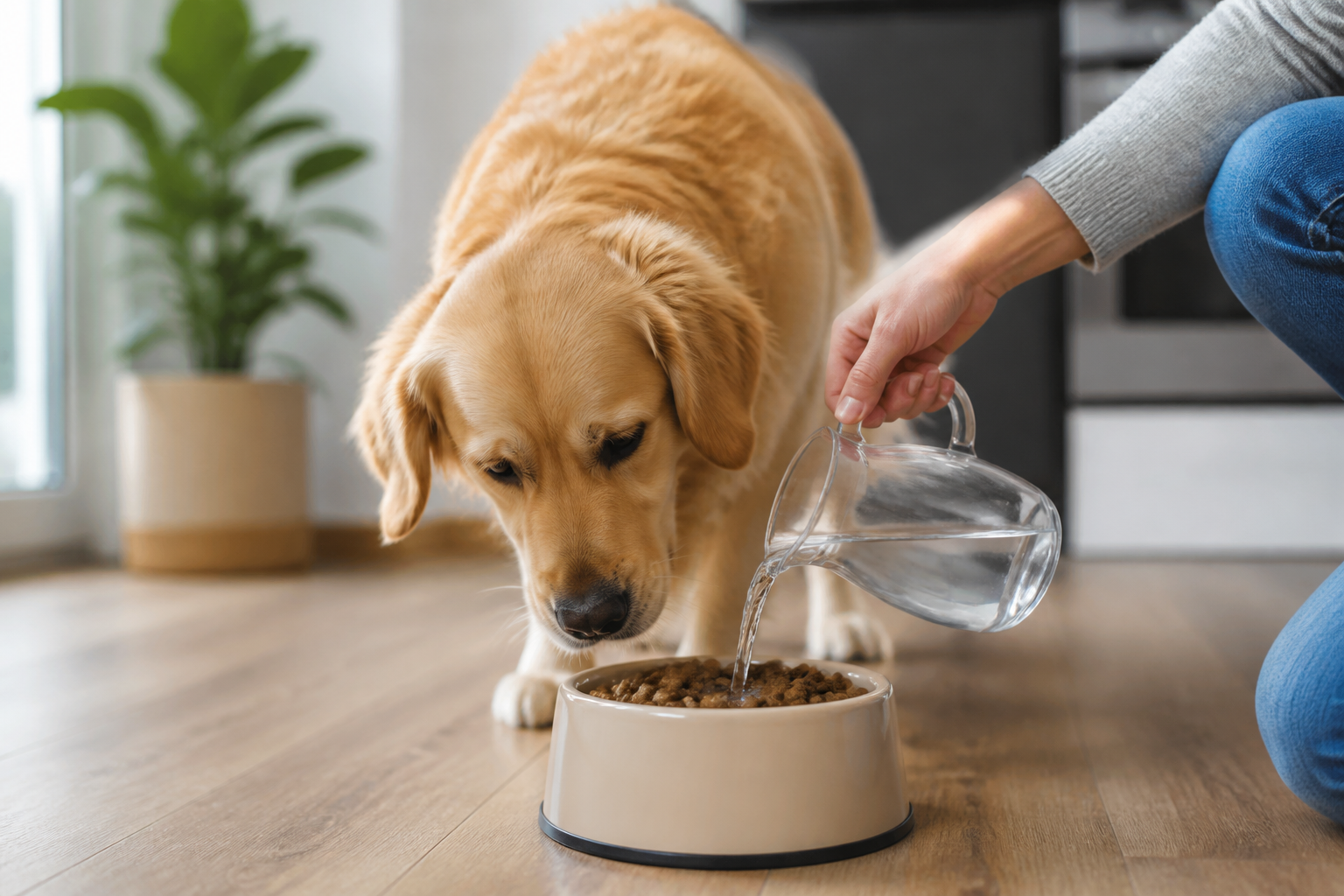
You might be standing at your kitchen counter with a scoop of kibble and a bowl of water, wondering if mixing them is a good idea. Many of us at BaxterBoo have faced this exact moment. We want to help our dogs stay hydrated or make their dinner more appealing, but we also worry about their safety. Bloat is a frightening topic for any dog owner, especially those with large or deep-chested breeds. While some people swear by soaking kibble to improve digestion, others fear it might trigger a medical emergency. This article looks at the latest research on how moisture affects dry food and what actually causes gastric distress in dogs. Adding water does not cause bloat on its own, but specific ingredients and feeding habits can change the risk for your pet.
Understanding Bloat and GDV
Bloat is the common name for a very serious condition called Gastric Dilatation-Volvulus (GDV). It happens when a dog's stomach fills with gas, food, or fluid. This causes the stomach to expand like a balloon. In many cases, the stomach then twists on its axis. This twist traps the contents and cuts off blood flow to the stomach and other vital organs.
GDV is a life-threatening emergency. Without immediate surgery, it can be fatal in just a few hours. This condition is most common in large, deep-chested breeds like Great Danes, German Shepherds, and Standard Poodles. However, any dog can technically experience it. Knowing the signs is the first step in keeping your pet safe.
Vet Tip: if your dog has a distended belly, is pacing, or is trying to vomit without success, call an emergency vet immediately. Bloat is a time-sensitive crisis that requires professional intervention.
Common Symptoms of Bloat
- A swollen or hard abdomen that may sound like a drum when tapped gently.
- Unproductive retching where the dog tries to vomit but nothing comes up.
- Excessive drooling and panting.
- Restlessness and an inability to get comfortable.
- Rapid heartbeat and signs of pain.
The Link Between Water and Kibble
The question of whether adding water causes bloat often stems from a famous study out of Purdue University. Researchers looked at thousands of dogs to find patterns in those that developed GDV. They found that the relationship between food and bloat is not about the water itself. Instead, it is about how the water interacts with certain ingredients in the dry food. If you are comparing formulas, browse our dog food category to explore available options.
The Citric Acid Connection
One of the most significant findings involved citric acid. Many brands use citric acid as a natural preservative. When dry food containing citric acid is moistened before feeding, the study found the risk of bloat increased by 320 percent. It appears that the combination of water and citric acid might cause the food to expand or release gas more rapidly in the stomach.
If your dog’s food uses citric acid, it is generally safer to feed it dry. You can check the ingredient label on your bag to see if this preservative is listed. If you want to add moisture to a food that contains citric acid, consider using a small amount of canned food as a topper instead of plain water.
Why Texture and Size Matter
The size of the kibble also plays a role in how a dog digests their meal. Smaller kibble pieces are often swallowed whole without much chewing. This can lead to a dog eating too fast and swallowing large amounts of air. Swallowed air is a major contributor to gas buildup in the stomach.
Studies have shown that dogs eating larger kibble pieces may have a lower risk of bloat. Large kibble forces the dog to crunch and chew, which slows down the eating process. If you have a large breed, look for formulas specifically designed for their size, such as those from Royal Canin or Farmina. These brands often create larger, denser kibble shapes to encourage slower eating.
Key Takeaway: Adding water to kibble containing citric acid may increase bloat risk. Check your food labels before soaking dry meals.
The Benefits of Adding Water to Dog Food
Despite the concerns about citric acid, adding water to kibble is not always a bad thing. For many dogs, it provides essential benefits that outweigh the risks. This is especially true if the food is preserved with mixed tocopherols (Vitamin E) instead of citric acid. For another perspective on moistening kibble, read our guide to wetting dry dog food.
Hydration and Kidney Health
Many dogs do not drink enough water from their bowls throughout the day. This can lead to chronic dehydration and put a strain on the kidneys. By adding a splash of water or low-sodium broth to their kibble, you ensure they get a boost of hydration with every meal. This is a simple way to support urinary tract health and prevent crystals or stones.
Helping Senior Dogs with Dental Issues
As dogs age, their teeth and gums can become sensitive. Hard kibble can be painful to crunch for a senior dog with dental disease or missing teeth. Soaking the food for 10 to 15 minutes turns the hard nuggets into a soft mash. This makes it much easier for them to eat and ensures they still get the nutrition they need. We often recommend this for older pets who have started to shy away from their food bowls. For more guidance, see our article about wet and dry food for senior dogs.
Increasing Satiety for Weight Management
Dry food is very nutrient-dense. This means a small volume of food contains a lot of calories. For a dog on a diet, their bowl might look sadly empty. Adding water causes the kibble to swell and take up more space. This helps the dog feel fuller after eating without adding any extra calories to their daily limit.
Quick Answer: Adding water to dry food is generally safe and beneficial for hydration. It only becomes a risk factor if the food contains citric acid or if the dog eats the moistened food too quickly.
Risks of Moistening Dry Food
While there are benefits, you should be aware of a few practical risks when you choose to soak your dog's meals. A broader overview of these benefits and drawbacks is available in our guide to adding water to dry dog food.
Bacterial Concerns
Dry kibble is shelf-stable because it has very low moisture content. Once you add water, you create a perfect environment for bacteria to grow. If your dog does not finish their meal right away, you cannot leave the moistened food sitting in the bowl.
You should pick up any uneaten wet food after about 20 to 30 minutes. Leaving it out at room temperature for hours can lead to mold or bacterial contamination. This can cause upset stomachs or more serious foodborne illnesses.
Feeding Speed and Air Intake
Some dogs find moistened food much more delicious than dry kibble. This extra palatability can cause them to bolt their food even faster than usual. When a dog gulps down wet food, they often swallow air along with it. As we mentioned, aerophagia (swallowing air) is a known risk factor for bloat.
Step 1: Check the ingredient list. / Ensure the food does not contain citric acid if you plan to soak it.
Step 2: Add lukewarm water. / Use about one part water to three parts kibble.
Step 3: Wait briefly. / Let it sit for 5 to 10 minutes until the kibble is soft but not falling apart.
Step 4: Monitor the meal. / Watch your dog to ensure they are not eating too quickly.
Practical Steps to Prevent Bloat
Since adding water is only one small part of the bloat puzzle, it is important to look at your entire feeding routine. Managing how and when your dog eats is the best way to lower their risk. For additional mealtime guidance, read our tips for mixing dry dog food with water.
Slowing Down Fast Eaters
If your dog clears their bowl in seconds, they are at a higher risk for GDV. Using a slow feeder bowl or a puzzle toy like a Kong can make a huge difference. These tools have ridges and valleys that force the dog to use their tongue to get the food out. This prevents them from taking giant gulps and swallowing air.
Scheduling Meals and Exercise
Feeding one large meal a day is a major risk factor for bloat. It puts a lot of weight and pressure on the stomach at once. Instead, divide your dog's daily portion into two or three smaller meals.
You should also avoid vigorous exercise for at least one hour before and after a meal. Running, jumping, or playing hard on a full stomach can contribute to the stomach twisting. We suggest a quiet "rest time" after breakfast and dinner to allow for proper digestion.
Bottom line: Preventing bloat requires a combination of slow feeding, smaller meal portions, and restricted exercise around mealtimes.
Medical Support and Specialized Diets
If your dog has a family history of bloat or has experienced a mild episode of gas distension, your veterinarian might recommend a specific plan. This often includes prescription diets designed for high digestibility. These foods move through the stomach more quickly, which reduces the chance of gas buildup.
Our pharmacy carries FDA-approved medications and prescription pet foods through our partnership with Pet's Choice. We can help you manage your dog's long-term health with ease. If your vet prescribes a diet like Farmina Vet Life or a specific gastrointestinal formula, you can have it delivered directly to your door.
Some owners of high-risk breeds also choose a preventative surgery called a gastropexy. During this procedure, the vet tacks the stomach to the abdominal wall. This does not prevent the stomach from filling with gas, but it prevents the deadly twisting. If your dog is undergoing a routine spay or neuter, ask your vet if a preventative gastropexy is right for them.
Conclusion
Adding water to dry dog food is a helpful tool for hydration and dental comfort, but it is not a one-size-fits-all solution. For dogs eating food preserved with citric acid, keeping the kibble dry is the safer choice. For others, a bit of warm water can make mealtime much more enjoyable and healthy. The most important things you can do are to slow down your dog's eating, feed multiple small meals, and watch for any signs of distress. At BaxterBoo, we want to make sure you have the right gear and information to keep your pet's tummy happy and safe.
- Check for citric acid before soaking food.
- Use slow feeders to prevent air swallowing.
- Avoid exercise for an hour after meals.
- Consult your vet about high-risk breeds.
If you want to ensure you never run out of your dog's favorite digestive-friendly food, consider signing up for our Autoship programme. You will save on your orders and get a free MVP Gold membership to help you earn rewards even faster.
FAQ
Can I add water to kibble if my dog is a Great Dane?
Great Danes are at the highest risk for bloat, so you must be very careful. You should only add water if the food does not contain citric acid and if you use a slow feeder to prevent gulping. Always talk to your vet about the best feeding plan for giant breeds.
Does warm water cause kibble to expand faster than cold water?
Yes, warm water typically breaks down the structure of the kibble more quickly than cold water. This can be helpful for picky eaters as it releases more aroma, but it also means you must monitor the food for bacterial growth more closely. Never use boiling water, as it can destroy some of the vitamins and nutrients in the food.
Is it better to use wet food instead of soaking dry kibble?
Feeding a high-quality canned food or mixing it with dry kibble can actually decrease the risk of bloat compared to feeding dry food alone. Canned food is already hydrated and does not expand in the stomach the way some dry kibbles do. Many owners find that using a wet food topper is a safer way to add moisture and flavor. You can browse our dog food topper collection for options.
Can a raised bowl prevent bloat when adding water?
Actually, some studies have shown that raised bowls can increase the risk of bloat in certain large breeds. Unless your dog has a medical condition like megaesophagus or severe neck pain, it is usually safer to feed them from a bowl on the floor. If you use a raised feeder, make sure it is paired with a slow-feed insert to prevent fast eating.






