
 Save 15% on your 1st Autoship learn more

 Email us
 Live Chat
 FAQs
FAQs





Introduction
You are finishing a busy afternoon of errands in the summer heat. You realize that the bag of premium kibble you just bought has been sitting in your trunk for three hours. The car is sweltering. When you lift the bag, the packaging feels hot to the touch. You start to wonder if the high temperature has already ruined the meal you just paid for. At BaxterBoo, we see this concern often from our customers in Vernon Hills and across the country.
Heat is one of the primary enemies of pet food quality and safety. It does not just make the food less tasty. It can actually change the chemical composition of the ingredients. This article explains how heat affects dry dog food, how to spot spoilage, and the best ways to store kibble to keep your dog healthy. We want to help you understand the risks of heat exposure so you can keep your pup's bowl safe and nutritious.
Why Heat Is Dangerous for Dry Dog Food
Dry dog food might look like a shelf stable product that can handle anything. In reality, it is a complex mixture of proteins, carbohydrates, and fats. These ingredients are sensitive to environmental changes. When temperatures rise, the chemical bonds in the food begin to break down.
The most vulnerable part of any kibble is the fat content. Most high quality dog foods use animal fats or vegetable oils to provide energy and support a healthy coat. Heat provides the energy needed for a process called oxidation. This is when oxygen reacts with the fats in the kibble. This process creates free radicals and compounds that smell and taste terrible.
Quick Answer: Yes, dry dog food can go bad in heat. High temperatures accelerate fat oxidation and vitamin degradation. This leads to rancidity and a loss of nutritional value.
Oxidation does more than just ruin the flavor. It can also destroy essential nutrients. Heat is particularly hard on fat soluble vitamins like A, D, E, and K. If a bag of food sits in a hot garage or car for too long, the nutritional profile on the label may no longer be accurate. Your dog might be eating their fill but missing out on the vitamins they need for their immune system and bone health.
For more information about freshness, see our guide to how long dry dog food stays fresh once opened.
The Danger Zone: Understanding Temperature Limits
Most pet food manufacturers recommend storing kibble in a cool and dry place. The ideal temperature range is between 50 and 70 degrees Fahrenheit. Once the temperature climbs above 80 degrees, the clock starts ticking faster on the food's shelf life.
Think about the temperature inside a parked car. On a 90 degree day, the interior of a vehicle can reach 120 degrees in less than thirty minutes. If the food is sitting in the trunk, it is basically being slow cooked. This level of heat can cause rapid spoilage. It can also cause the natural oils in the food to seep out of the kibble and soak into the bag.
Temperature Thresholds for Kibble
| Temperature Range | Safety Level | Impact on Dog Food |
|---|---|---|
| 50°F to 70°F | Ideal | Maintains maximum shelf life and nutrition. |
| 71°F to 85°F | Moderate Risk | Slow degradation of vitamins and fats begins. |
| 86°F to 100°F | High Risk | Limit exposure to 4 hours or less. |
| Over 100°F | Critical | Rapid spoilage and rancidity can occur within 1 to 2 hours. |
Humidity often goes hand in hand with heat. If the air is moist, the risk of mold growth increases. Mold can produce mycotoxins that are extremely dangerous for dogs. These toxins can cause severe illness or even death in some cases. High heat paired with high humidity is the worst possible environment for dry pet food.
Key Takeaway: Always store dog food in a climate controlled environment. Avoid garages, attics, or cars where temperatures regularly exceed 80 degrees.
For additional storage guidance, read how long you can keep dry dog food for peak freshness.
How to Tell if Dog Food Has Gone Bad
You cannot always see the damage caused by heat. Oxidation happens at a microscopic level before it becomes obvious to the human eye. However, there are several signs you can look for if you suspect a bag of food has been compromised.
The sniff test is your best tool. Fresh dog food should have a mild, grainy, or meaty scent. If the food smells sour, metallic, or like old paint, the fats have likely gone rancid. Many people describe the smell of rancid dog food as being similar to a box of old crayons. If the aroma makes you turn your head away, do not offer it to your dog.
Common Signs of Spoiled Kibble
- Unusual Odor: A sharp, sour, or "chemical" smell instead of a meaty aroma.
- Oily Texture: Kibble that feels excessively greasy or sticky to the touch.
- Visible Mold: Any white, green, or black fuzz on the food or the inside of the bag.
- Insects: Small moths or weevils inside the container.
- Pet Refusal: A dog that usually loves mealtime suddenly turning their nose up at the bowl.
Your dog's nose is much more sensitive than yours. They can often smell the early stages of rancidity before you can. If your dog is usually a great eater and suddenly refuses a new bag of food, trust their instincts. It is possible the food was exposed to heat during shipping or storage before it even reached your home.
For more warning signs, explore how to tell if dry dog food has gone bad.
Vet Tip: If your dog eats spoiled food and starts vomiting or has diarrhea, contact your veterinarian immediately. For pets with chronic digestive issues, our pet pharmacy carries prescription diets to help manage their recovery.
Health Risks of Feeding Spoiled Food
Feeding rancid or moldy food can lead to more than just a picky eater. It can cause genuine health problems. Rancid fats can irritate the lining of the stomach and intestines. This often leads to common symptoms like vomiting, diarrhea, and lethargy.
In more severe cases, long term consumption of oxidized fats can contribute to chronic inflammation. This can affect a dog's skin health and coat quality. It can also put extra strain on the liver as the body tries to process the degraded compounds.
Mold is an even bigger threat. Mycotoxins are produced by certain types of fungi that grow on grains and fats in hot, humid conditions. These toxins are not destroyed by heat, so even if the food dries out later, the danger remains. Symptoms of mycotoxin poisoning include tremors, seizures, and severe stumbling. These are medical emergencies that require immediate veterinary care.
Proper Storage Solutions to Beat the Heat
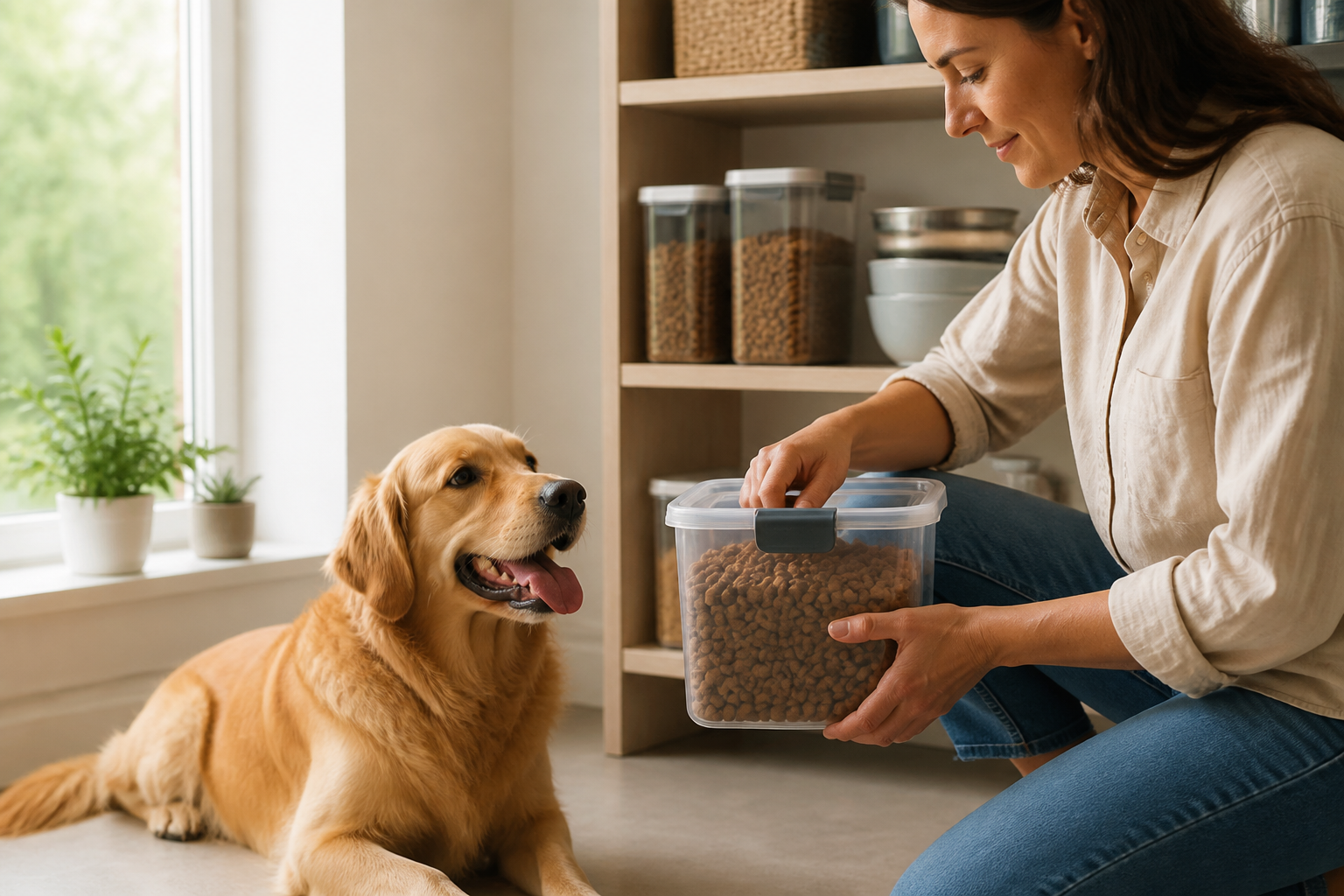
The way you store your food at home is just as important as how you transport it. One of the biggest mistakes pet owners make is pouring the kibble out of the original bag and into a plastic bin. This might look tidier, but it can actually speed up spoilage.
Dog food bags are highly engineered pieces of packaging. Most premium brands use bags with specialized liners designed to keep oxygen out and fats in. When you pour the food into a plastic bin, you expose all the kibble to a massive amount of oxygen. Furthermore, the fats from the food can leach into the plastic over time. These old fats can go rancid and contaminate the next batch of fresh food you pour in.
For more storage ideas, see how to keep dog food dry for freshness and safety.
The Best Storage Method: Bag-in-Bin
Step 1: Keep the food inside its original bag. / This preserves the protective liner and keeps the batch info handy.
Step 2: Place the entire bag inside an airtight container. / This provides a secondary barrier against pests and humidity.
Step 3: Squeeze out excess air before sealing the bag. / Reducing oxygen contact is the best way to slow down fat oxidation.
Step 4: Store the container in a cool, dark place. / A pantry or a climate controlled closet is much better than a garage.
Following these steps will help maintain the nutritional integrity of the food for as long as possible. We recommend using a container with a rubber gasket seal. This creates a true airtight environment that keeps moisture out and prevents smells from attracting bugs.
Bottom line: Using the original packaging inside an airtight bin is the gold standard for keeping kibble fresh.
Traveling and Transporting Dog Food Safely
Summer road trips are a blast with dogs, but they require some planning for mealtime. If you are buying a large bag of food on a hot day, make it your very last stop. Do not leave the food in the car while you go into other stores. If you must travel a long distance with food in the car, try to keep it in the passenger area where the air conditioning can reach it.
For camping or long trips, consider moving a small amount of food into a cooler. You do not need to add ice, but the insulation of the cooler will protect the food from temperature spikes. Small, individual portions in silicone bags or stainless steel containers are also great for short trips. These materials do not interact with the fats in the food like some plastics do.
Traveling Checklist
- Purchase food as the final errand of the day.
- Keep the bag in the air conditioned cabin, not the trunk.
- Use an insulated bag or cooler for long drives.
- Bring only what you need in smaller, airtight containers.
If you find yourself frequently worried about food going bad, consider our Autoship program. This allows you to receive smaller, fresher bags more often. You can set the schedule so you always have enough food without needing to store giant bags in a hot environment for months at a time.
When to Toss It and When to Keep It
Deciding whether to throw away an expensive bag of food is difficult. However, your dog's safety is the priority. If the bag was left in a car for more than two hours in temperatures over 90 degrees, you should inspect it very closely. If you see any oil spots on the outside of the bag, the fats have likely melted and started to migrate. This is a strong sign of heat damage.
If the food was only in the heat for a short time and shows no signs of smell or texture change, it is likely safe to keep. In this case, try to use the bag up more quickly than usual. You might also store the food in a slightly cooler spot than normal to compensate for the heat exposure.
If you ever feel uncertain about a bag of food, it is better to be safe than sorry. The cost of a new bag of food is much lower than the cost of an emergency vet visit for food poisoning. At BaxterBoo, we carry over 500 trusted brands, so we can help you find a replacement quickly if you need one.
Our dry dog food category offers options when you need to replace food that may have been compromised.
Frequently Asked Questions about Heat and Dog Food
We hear many questions about food safety at our Vernon Hills warehouse. Here are the most common concerns regarding heat and kibble.
Can I still feed the food if it was only in the car for an hour?
If the temperature was under 90 degrees and the bag was not in direct sunlight, the food is likely fine. Check for any oily residue on the kibble or a change in the smell before serving it. If the car was exceptionally hot, use the food up quickly and keep it in a cool pantry.
Is it safe to store dog food in the garage?
Storing dog food in a garage is generally not recommended unless the garage is climate controlled. Garages experience extreme temperature swings that can lead to condensation inside the bag. This moisture can cause mold to grow long before you reach the bottom of the bag.
Does heat affect grain-free food differently?
All dry dog food is susceptible to heat damage, regardless of grain content. However, foods with very high fat levels may go rancid faster than lower fat diets. Always check the fat percentage on the label and be extra cautious with high performance or puppy formulas.
What should I do if my dog ate potentially spoiled food?
Monitor your dog closely for any signs of lethargy, vomiting, or diarrhea. Ensure they have access to plenty of fresh water to stay hydrated. If they show persistent symptoms or seem very ill, call your veterinarian to discuss the situation and bring the food bag with you if you go in for an appointment.
Summary of Safe Food Practices
Managing pet food in the heat requires a bit of vigilance. By keeping kibble away from high temperatures and storing it in its original packaging, you can protect your dog's health and your wallet. Remember that your dog relies on you to provide safe and nutritious meals.
- Avoid temperatures above 80 degrees for storage.
- Never leave food in a hot car for more than an hour or two.
- Keep kibble in the original bag to prevent oxidation.
- Trust your dog's nose if they refuse a meal.
Our team at BaxterBoo is here to help you navigate the best choices for your pet. Whether you need a high quality food that fits your dog's needs or a secure storage container, we have you covered. Visit our main food collection or explore our pet pharmacy for specialized health needs.
FAQ
Does heat kill the nutrients in dog food?
Yes, prolonged exposure to heat can break down essential vitamins and antioxidants. Fat soluble vitamins like Vitamin A and E are especially sensitive to high temperatures. This means the food may no longer provide a complete and balanced diet if it has been severely heat stressed.
How can I tell if my dog food has gone rancid?
The most reliable sign of rancidity is a change in smell. If the food smells like old oil, paint, or chemicals, it has likely spoiled. You may also notice that the kibble feels greasy or looks darker than usual due to the fats oxidizing.
Is it okay to keep dog food in a plastic storage bin?
It is best to keep the food inside its original bag and then place that bag inside the plastic bin. Plastic can absorb fats that eventually turn rancid and contaminate new food. The original bag is designed specifically to act as a barrier against oxygen and moisture.
Can mold grow in dry dog food?
Mold can grow in dry dog food if it is exposed to high humidity or moisture. Heat can cause condensation inside a sealed bag if temperatures fluctuate. If you see any signs of mold, you must throw the entire bag away as the toxins can spread through the food even where you cannot see them.






