
 Save 15% on your 1st Autoship learn more

 Email us
 Live Chat
 FAQs
FAQs





Introduction
You reach for the food scoop and notice a slightly sour or metallic scent coming from the bag. Your dog usually dances for dinner but now sniffs the bowl and walks away with a sigh. These are the first signs that your pet's meal has lost its peak quality. At BaxterBoo, we know that keeping food fresh is a top priority for every pet parent. In this post, we will explain how to tell if kibble is past its prime and the best ways to keep it crunchy. Understanding food storage helps protect your dog's health and ensures they get the nutrients they need. Freshness is not just about the crunch. It is about the safety and nutritional value of every bite your dog consumes.
Quick Answer: Yes, dry dog food can go stale and even spoil once the bag is opened. Most kibble stays fresh for about six to eight weeks after opening if it is stored in a cool, dry place. If you notice a rancid smell, mold, or a change in texture, you should discard the food immediately.
How to Identify Stale Dog Food
Most pet owners rely on their senses to tell if human food has gone bad. You can use those same skills for your dog's kibble. Fresh dry food usually has a mild, grainy, or meaty scent. When the fats in the food begin to oxidize, that smell changes. It may start to smell like old paint, sour milk, or wet cardboard. If the bag smells "off" when you first open it, do not ignore your nose.
The texture of the food is another major clue. Fresh kibble is hard and has a distinct snap when broken. Stale food often absorbs moisture from the air. This makes the pieces feel soft, rubbery, or slightly sticky. In some cases, stale food may become very crumbly and turn into a fine powder at the bottom of the bag.
Your dog's behavior is often the most reliable indicator. Dogs have a sense of smell that is significantly more powerful than ours. They can detect rancid fats long before we can. If a normally enthusiastic eater suddenly refuses their meals, the food might be stale. They are not necessarily being picky. They are likely protecting themselves from eating something that could make them sick. If this happens often, our blog post on helping dogs enjoy dry food may offer additional ideas.
Key Takeaway: Always trust your dog's nose if they refuse a meal from a newly opened or old bag of food.
Why Dry Dog Food Goes Bad
Oxidation is the primary enemy of dry dog food. Most premium kibbles contain healthy fats and oils, such as omega-3 and omega-6 fatty acids. These are great for skin and coat health, but they are very sensitive. When these fats are exposed to oxygen, they begin to break down. This chemical reaction is what creates that rancid smell and bitter taste.
Temperature and light also play a massive role in spoilage. Heat speeds up the oxidation process. If you store your dog food in a warm pantry or near a sunny window, it will go stale much faster. Ideally, food should be kept in an environment below 80 degrees Fahrenheit. Constant fluctuations in temperature can also cause condensation inside the bag. For more storage guidance, read our tips for keeping dog food dry and fresh.
Moisture is the final factor that ruins dry food. Even a small amount of humidity can encourage the growth of mold and bacteria. Most dry foods have a very low moisture content to prevent this. However, once the seal is broken, the environment dictates how long that food stays safe.
Signs of Spoiled Dog Food
- A strong, sour, or "chemical" odor.
- Visible mold or fuzzy white, green, or black spots.
- The presence of grain mites or small beetles.
- A change in the color of the kibble.
- The food feels damp or greasy to the touch.
Bottom line: Air, heat, and moisture are the three main factors that cause kibble to lose its freshness.
The Dangers of Feeding Stale Kibble
Feeding stale food is not just an issue of taste. When fats become rancid, they lose their nutritional value. The vitamins and minerals that your dog needs for a healthy immune system start to degrade. Over time, a dog eating stale food may develop nutritional deficiencies even if they are eating the correct amount of calories.
There are also more immediate health risks. Stale food that has been exposed to moisture can harbor invisible mold spores. These molds can produce mycotoxins, which are dangerous to pets. Eating moldy food can lead to vomiting, diarrhea, and more serious long term health issues.
Storage mites are another concern with old or poorly stored dry food. These tiny pests thrive in bags of grain-based kibble that have been left open. Some dogs develop intense allergic reactions to these mites. This can lead to itchy skin, hair loss, and ear infections. If your dog starts scratching more than usual after a meal, the food storage could be the culprit.
Vet Tip: If your dog experiences persistent vomiting or diarrhea after eating, consult your veterinarian immediately. Our pet pharmacy carries a range of medications for digestive upset and skin allergies through our partnership with Pet's Choice.
Proper Storage Techniques to Prevent Staleness
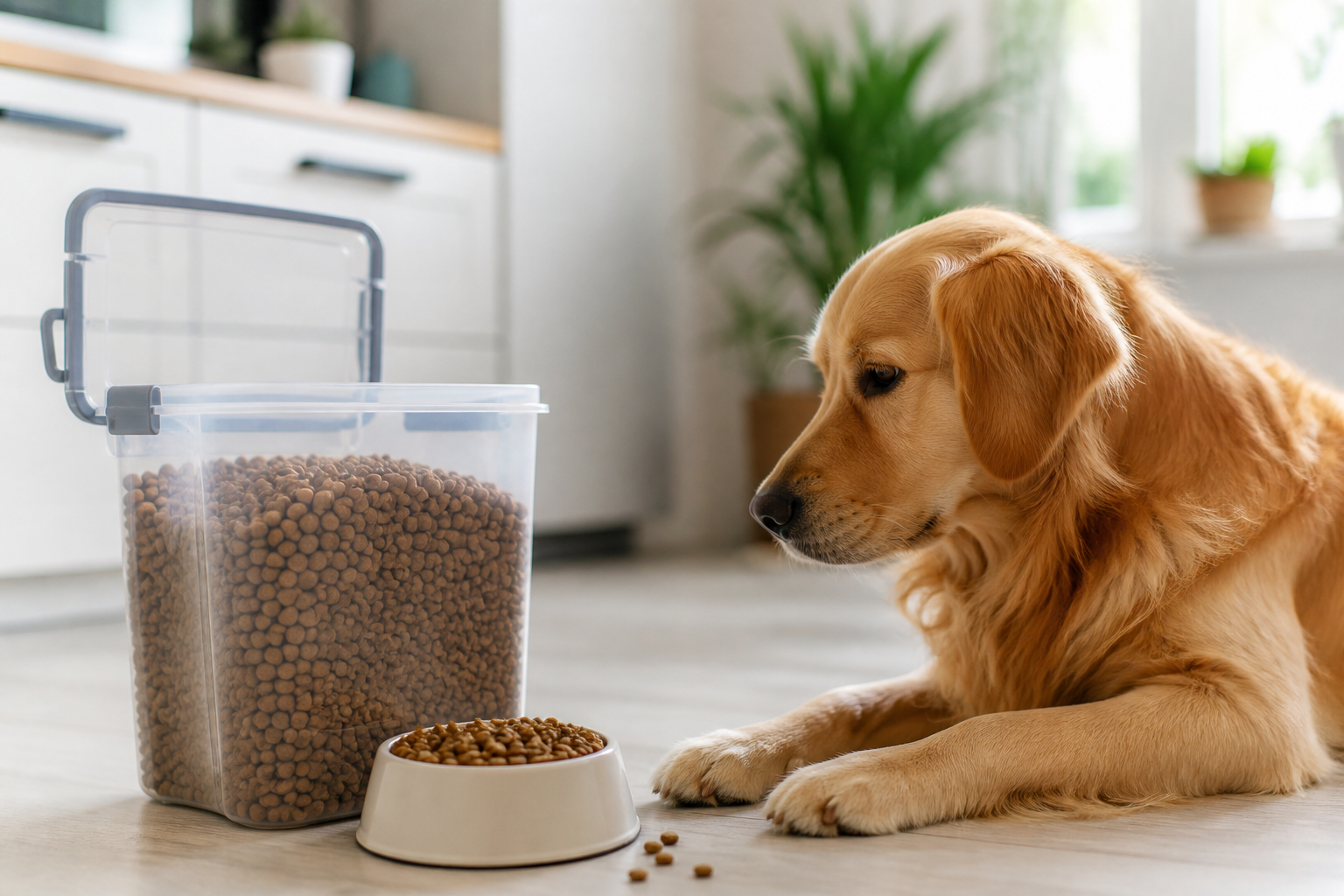
Many people make the mistake of pouring kibble directly into a plastic storage bin. While this looks neat, it can actually make the food go stale faster. Most plastic containers are not truly airtight. Furthermore, the fats and oils from the kibble can seep into the walls of the plastic. These oils become rancid and can contaminate every new batch of food you pour in.
The "Bag-in-Bin" method is the best way to keep food fresh. High-quality pet food bags are designed with specialized liners. These liners act as a barrier to keep fats in and oxygen out. Instead of pouring the food out, place the entire bag inside your storage container. This gives you two layers of protection.
Always seal the bag tightly after every single meal. Use a heavy-duty bag clip to squeeze out as much air as possible before folding the top over. This simple step can add weeks to the shelf life of the kibble. If you use a storage bin, make sure the lid has a rubber gasket to create a proper seal.
Storage Checklist
- Keep the food in its original bag to preserve the barrier lining.
- Place the bag inside an airtight metal or plastic container.
- Store the container in a cool, dark place like a pantry or closet.
- Keep the food off the floor to prevent temperature transfers and pest access.
- Wash your storage bins regularly with hot soapy water and dry them completely.
Key Takeaway: Using the original bag inside a sealed container provides the best protection against oxidation and pests.
Understanding Expiration and Best By Dates
Every bag of dog food features a date stamped somewhere on the packaging. Most manufacturers use a "Best By" date rather than a strict expiration date. This date tells you how long the unopened bag will remain at peak nutritional quality. Once that date passes, the preservatives in the food begin to break down.
Preservatives are necessary in dry food to keep it shelf-stable. Many premium brands carried by us use natural preservatives like tocopherols (Vitamin E) or rosemary extract. These are safer than synthetic chemicals, but they do not last as long. A bag with natural preservatives typically has a shorter shelf life than one with artificial preservatives.
Once you open the bag, the "Best By" date is no longer the primary guide. Most manufacturers recommend using the food within six weeks of opening. Even if the date on the bag is a year away, the clock starts ticking the moment the seal is broken. If you have a small dog, it is often better to buy smaller bags more frequently. Our guide to dry dog food freshness offers another look at opened-bag timelines.
Bottom line: The "Best By" date applies to unopened bags, but opened bags should be consumed within two months.
Managing Your Dog Food Inventory
Buying in bulk can save money, but only if your dog can finish the food before it spoils. A 40-pound bag might be a great deal. However, if it takes your dog four months to eat it, you are feeding stale food for the last two months. Calculate how much your dog eats per day to determine the best bag size for your household. Our dry dog food category makes it easier to compare available food options.
We see many pet owners benefit from our Autoship program. This allows you to schedule smaller, fresher bags to arrive exactly when you need them. It removes the temptation to buy a massive bag that will sit in the garage for too long. Plus, you can earn rewards through the MVP Rewards program on every purchase.
If you do buy a large bag, consider splitting it. You can keep a week's worth of food in a smaller, easy-to-access container. Keep the rest of the large bag tightly sealed in a cool location. This minimizes the number of times the main supply is exposed to fresh air and light.
Steps to Better Food Management
Step 1: Calculate your dog's monthly intake. / Determine if a 5, 15, or 30-pound bag fits your schedule.
Step 2: Check the "Best By" date before buying. / Ensure the date is at least six months in the future.
Step 3: Label the bag with the date you opened it. / Use a permanent marker to write the date clearly on the front.
Step 4: Set up a recurring delivery. / Use a service like Autoship to ensure you never run out of fresh food.
For help estimating daily portions, see our guide to how much dry food to feed a dog.
Conclusion
Keeping your dog's food fresh is an essential part of daily care. While dry kibble is convenient, it is not invincible to the effects of air and heat. By watching for signs of staleness and using the "Bag-in-Bin" storage method, you can ensure your dog enjoys every meal. Remember that a healthy dog starts with high-quality, fresh nutrition. If you are ever unsure about the safety of a bag of food, it is always better to err on the side of caution. Your dog's health and happiness are worth the extra effort of proper storage.
- Stale food loses vital nutrients and can harbor mold or mites.
- Store food in its original bag inside an airtight container.
- Use opened kibble within six to eight weeks for maximum freshness.
- Trust your dog's reaction to their food as a guide for quality.
Bottom line: Proper storage protects your investment and, more importantly, your dog's health.
FAQ
Can I store dog food in the garage?
Storing dog food in a garage is generally not recommended because of temperature swings. Garages can become extremely hot in the summer and damp in the winter. These conditions accelerate the oxidation of fats and increase the risk of mold growth. It is much better to keep the food in a climate-controlled area like a kitchen pantry.
Is it okay to mix old food with new food in the container?
You should avoid pouring new kibble on top of old kibble. The crumbs and oils at the bottom of the container can become rancid and contaminate the fresh batch. Always finish the old bag entirely and wash the storage container with soap and water. Make sure the bin is completely dry before adding a new bag.
Can stale dog food cause skin allergies?
Yes, stale food can sometimes lead to skin issues if storage mites have moved in. These microscopic pests are a common trigger for environmental allergies in dogs. If your dog develops itchy skin or recurrent ear infections, check your food storage habits. You may want to discuss allergy management with your vet and check our pharmacy for support options.
Does freezing dry dog food keep it fresh longer?
Freezing dry dog food can extend its shelf life, but you must be careful about moisture. Use airtight freezer bags and squeeze out all the air to prevent freezer burn. When you take the food out, let it reach room temperature before opening the bag. This prevents condensation from forming on the kibble, which could lead to mold.






