
 Save 15% on your 1st Autoship learn more

 Email us
 Live Chat
 FAQs
FAQs





Introduction
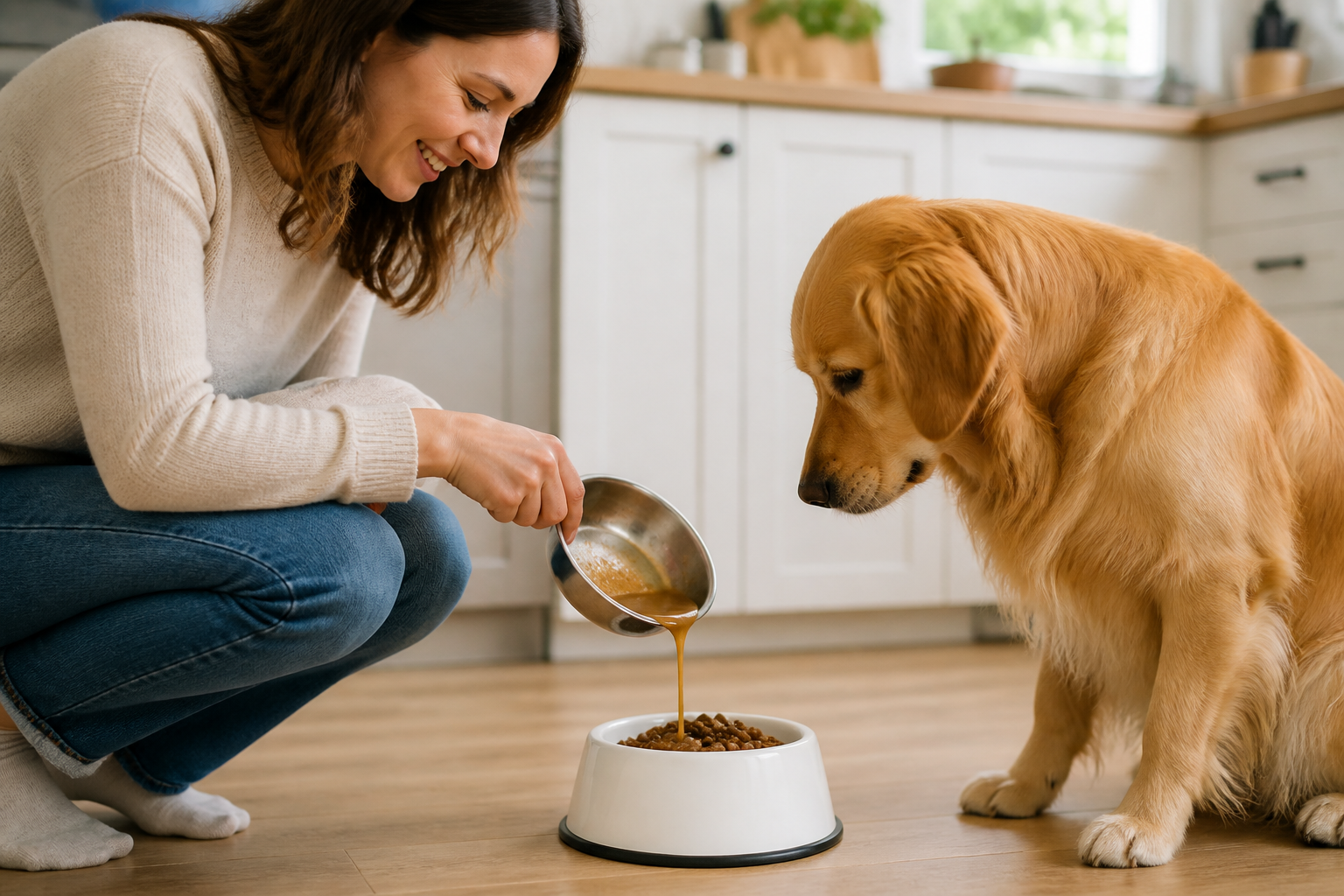
You fill the bowl with high-quality kibble and set it down. Your dog walks over, takes one sniff, and looks up at you with soulful eyes. The food stays in the bowl, untouched, for hours. This moment is frustrating for any pet owner. You want your dog to enjoy their meal, and you might wonder if a splash of savory gravy could solve the problem.
At BaxterBoo, we talk to pet parents every day who are looking for ways to make mealtime more exciting. Adding liquid to dry food is a common strategy to help picky eaters or senior pets. This post covers which types of gravy are safe, the dangers of human food, and how to make healthy toppers at home. We will also look at professional options that support digestive health. Adding gravy can be a healthy choice if you follow the right rules.
Quick Answer: You can add gravy to dry dog food, but it must be specifically formulated for dogs. Human gravy contains high levels of salt, onions, and garlic, which are toxic to canines. Stick to dog-safe broths, commercial pet toppers, or simple homemade recipes.
Why Pet Owners Consider Adding Gravy
Dry kibble is convenient and nutritionally balanced. However, some dogs find the texture or flavor a bit dull. If you have a senior dog, they may have dental issues that make crunching hard kibble difficult. For these dogs, softening the food with gravy makes a big difference. It turns a chore into a treat.
Hydration is another big factor. Some dogs do not drink enough water from their bowls. Adding a moisture-rich topper ensures they get extra fluids with every meal. This is especially helpful for active dogs or those living in warmer climates. You can also explore our dog food category for dry and wet meal options.
Finally, there is the "aroma" factor. A dog’s sense of smell is far more powerful than their sense of taste. Warming up a bit of dog-safe gravy releases scents that trigger their natural appetite. It makes the bowl smell like a fresh-cooked meal.
For more ideas, read our guide to what you can add to dry dog food for better nutrition.
The Dangers of Using Human Gravy
It is very tempting to pour a little leftover Sunday roast gravy over your dog's dinner. You should avoid this. Most recipes made for people are dangerous for pets. The biggest risks come from ingredients that provide flavor to us but act as toxins to them.
High Sodium Content
Human gravy is packed with salt. Dogs only need a tiny amount of sodium to stay healthy. Most commercial dog foods already provide the exact amount they need. If you add salty human gravy, you risk sodium poisoning. This can lead to vomiting, diarrhea, tremors, and even seizures.
Toxic Alliums
Onions, garlic, leeks, and chives are staples in human cooking. All of these belong to the Allium family. They contain compounds that damage a dog's red blood cells. This can cause a condition called hemolytic anemia. Even onion powder or garlic granules found in store-bought gravy mixes are concentrated enough to cause harm.
Fat and Pancreatitis
Traditional gravy is often made from meat drippings. While it tastes great, the fat content is much too high for a dog’s digestive system. High-fat meals can trigger pancreatitis. This is a painful and serious inflammation of the pancreas that often requires a veterinary visit.
| Feature | Human Gravy | Dog-Specific Gravy |
|---|---|---|
| Salt Content | Very High | Low or None |
| Onions/Garlic | Common | None |
| Fat Levels | High | Controlled |
| Thickeners | Flour or Cornstarch | Natural fibers or water-based |
| Nutritional Value | Low for dogs | Often includes vitamins/probiotics |
Benefits of Dog-Safe Gravy
When you use a product designed for pets, the benefits go beyond just taste. High-quality toppers can actually improve the nutritional profile of the meal. At BaxterBoo, we carry brands that focus on functional ingredients.
You can browse our dog food topper collection for broths, powders, and other meal additions.
Improved Digestion
Some commercial gravies, like SuperGravy, include probiotics, prebiotics, and digestive enzymes. These are often called "tri-gestive" blends. They help the gut break down kibble more efficiently. This is great for dogs with sensitive stomachs or those who experience occasional gas and bloating.
Joint and Skin Support
Many dog-safe broths are made from bones and connective tissue. These are naturally high in collagen, glucosamine, and chondroitin. These nutrients support joint health, which is vital for aging dogs. They also provide amino acids that help maintain a shiny coat and healthy skin.
Weight Management
Adding gravy does not have to mean adding a lot of calories. Many water-based dog toppers are very low in fat. If your dog is on a restricted diet but hates their weight-loss kibble, a low-calorie gravy can make the food more palatable. This helps them stay on track with their health goals.
Key Takeaway: Using a pet-specific gravy turns a boring meal into a functional one. It adds hydration and nutrients like probiotics without the risks of salt and toxins.
How to Choose a Commercial Dog Gravy
The pet aisle is full of options. You can find powders, liquids, and pouches. When shopping, you should look for transparency in the ingredient list. Avoid anything with "artificial flavors" or "unspecified meat by-products."
We recommend looking for products that use real meat sources like pork liver, beef, or chicken. Some brands even offer zesty flavors like tomato and veggie blends that mimic human foods like pizza or pasta sauce. These are great for dogs who always beg for a bite of your dinner.
For another approach to mealtime variety, see our guide to mixing wet and dry dog food.
Using Powdered Gravy Mixes
Powdered options are very convenient. They have a long shelf life and let you control the consistency. You can mix one scoop with water to create a light "au jus" or a thicker sauce. These are also cost-effective compared to buying canned food as a topper.
Steps for Using a Powdered Topper
Step 1: Place the recommended amount of dry kibble in your dog's bowl.
Step 2: Add one scoop of the gravy powder directly onto the food.
Step 3: Add about 1/3 to 1/2 cup of warm water.
Step 4: Stir the mixture well so every piece of kibble is coated and hydrated.
Step 5: Let it sit for a minute to allow the flavors to soak in before serving.
Making Homemade Dog Gravy
If you prefer to cook for your pet, you can make a safe gravy at home. This allows you to control every single ingredient. It is a great way to use up meat scraps without wasting food.
Simple Turkey or Chicken Gravy
You can create a basic topper using lean ground meat. Turkey is an excellent choice because it is low in fat.
Step 1: Brown one pound of lean ground turkey or chicken in a pan with a teaspoon of coconut oil.
Step 2: Add two cups of water or unsalted homemade stock to the pan.
Step 3: Simmer the mixture for about 20 minutes on low heat.
Step 4: Let the mixture cool completely.
Step 5: For a smooth consistency, put the mixture into a blender and pulse until it reaches a gravy-like texture.
Making Safe Bone Broth
Bone broth is the "gold standard" of toppers. It is rich in minerals and easy on the stomach.
Step 1: Place marrow bones, chicken feet, or joint bones into a slow cooker.
Step 2: Add enough water to cover the bones completely.
Step 3: Add two tablespoons of apple cider vinegar. This helps pull the minerals out of the bones.
Step 4: Cook on low for 24 hours.
Step 5: Strain the liquid through a fine mesh to remove every single piece of bone.
Step 6: Let it cool in the fridge and scrape off the layer of fat that forms on top.
Vet Tip: Never feed your dog the cooked bones from your broth. Cooked bones become brittle and can splinter. This can cause choking or severe damage to the digestive tract. Always strain your homemade gravy thoroughly.
For additional preparation ideas, read how to wet dry dog food for better digestion and hydration.
Managing Health Conditions with Gravy
Sometimes, adding gravy is part of a larger health plan. If your dog has a chronic condition, their diet is their first line of defense. We partner with Pet's Choice to offer a pharmacy that carries prescription diets for these specific needs.
You can review our pharmacy for dogs when your veterinarian recommends prescription support.
Kidney and Heart Health
Dogs with heart or kidney issues often need very low-sodium diets. Human gravy is strictly off-limits for them. If your dog is on a prescription diet from our pharmacy and is struggling to eat it, talk to your vet. They may suggest a specific, medical-grade topper that won't interfere with their treatment.
Allergies and Sensitivities
Many dogs are allergic to wheat, soy, or specific proteins like beef. When choosing a gravy, read the label for these hidden fillers. Grain-free powders are often the safest bet for dogs with itchy skin or digestive flare-ups.
Weight Management
If your dog is overweight, adding a thick, meaty gravy could make the problem worse. In these cases, look for "au jus" styles. These provide the flavor and scent of meat but are mostly water. It keeps the dog satisfied without adding "empty" calories.
Bottom line: Gravy can be a tool for better health, but always check with your veterinarian if your dog has an existing medical condition.
Helping Your Dog Transition to Gravy
If your dog has a very sensitive stomach, don't pour a full serving of gravy onto their food the first time. Sudden changes in moisture or protein levels can cause loose stools.
Start with a tiny amount. Try just a tablespoon mixed into the kibble. If they handle that well for two or three days, you can slowly increase the amount. Most dogs adjust quickly, but a slow transition is always safer.
If you notice any vomiting, lethargy, or a refusal to eat after adding gravy, stop using it. Some dogs may be sensitive to a specific ingredient in the topper. A quick call to your vet can help you rule out an allergy or a more serious issue.
- Check for onion and garlic on every label.
- Monitor your dog's weight after adding toppers.
- Always provide fresh water alongside the meal.
- Store homemade gravy in the fridge for no more than 5 days.
- Use warm water to boost the aroma of the gravy.
Our guide to mixing dry dog food with water covers another gradual approach to changing your dog's meal texture.
When to See a Veterinarian
A dog who suddenly stops eating may have an underlying health issue. While gravy can help a "picky" dog, it is not a cure for illness. If your dog refuses food for more than 24 hours, you should seek professional advice.
We often see pet parents try to hide medications in gravy. This is a smart trick. However, some medications should not be taken with certain minerals. If your dog is on a long-term prescription from our pharmacy, ask your vet if adding bone broth or commercial toppers is okay. They can help you ensure the nutrients in the gravy don't block the effectiveness of the medicine.
Vet Tip: If your dog is losing weight or seems lethargic while also being a picky eater, do not just try to "flavor" the problem away. Consult your vet to rule out dental pain, kidney issues, or metabolic changes.
Conclusion
Adding gravy to dry dog food is an excellent way to improve hydration and appetite. It makes every meal feel like a special occasion. However, the safety of the topper is the most important factor. Always avoid human gravies that contain salt, onions, and garlic. Instead, choose high-quality commercial powders or make your own simple broth at home.
At BaxterBoo, we want to help you make every meal both delicious and nutritious. Whether you are managing a senior dog's joint health or just trying to spoil a picky puppy, the right topper makes a difference. You can find a wide selection of dog-safe gravies and toppers in our store. If your dog needs a more specialized diet, our pharmacy is here to help with prescription options and health supports.
Bottom line: Choose dog-specific gravies to ensure safety and provide real health benefits like better digestion and hydration.
FAQ
Can I use chicken broth from the grocery store for my dog?
You should only use chicken broth if the label specifically says it has no onions, no garlic, and low or no sodium. Most "standard" broths for humans contain these ingredients even if they are not the main flavor. It is much safer to buy a broth specifically made for pets or make your own at home without any seasoning.
Is it okay to add gravy to every meal?
Yes, it is perfectly fine to add a dog-safe gravy to every meal as long as it fits within their daily calorie needs. If you notice your dog is gaining weight, you may need to reduce their kibble portion slightly to account for the extra calories. For many dogs, the added hydration and probiotics in a daily topper are very beneficial for long-term health.
Can gravy help a dog with dental problems eat kibble?
Yes, gravy is an excellent tool for dogs with missing teeth or sore gums. If you add warm gravy to dry kibble and let it sit for five to ten minutes, the kibble will soften into a mash. This allows the dog to eat without having to crunch hard pieces, making mealtime much more comfortable for them.
What should I do if my dog gets diarrhea after eating gravy?
If your dog has a loose stool after their first serving of gravy, it might be due to a quick change in diet. Stop the gravy and let their stomach settle with plain food for a few days. When you try again, use a much smaller amount to let their digestive system adjust. If the diarrhea persists or is accompanied by vomiting, you should contact your veterinarian immediately.






