
 Save 15% on your 1st Autoship learn more

 Email us
 Live Chat
 FAQs
FAQs





Introduction
You might find yourself staring at a bulk bag of premium kibble or a large batch of raw food and wondering how to make it last. Perhaps your dog is a picky eater who only enjoys the crunch of specialty treats. Or maybe you want to prepare for a long camping trip where lightweight food is a necessity. At BaxterBoo, we hear these questions often from pet parents who want to maximize their food budget while keeping nutrition high. This article covers the practical side of freeze-drying dog food at home versus buying commercial options. We will look at the safety of the process and how to store these meals correctly. Freeze-drying is an excellent way to preserve vitamins and minerals without the heavy processing found in standard kibble.
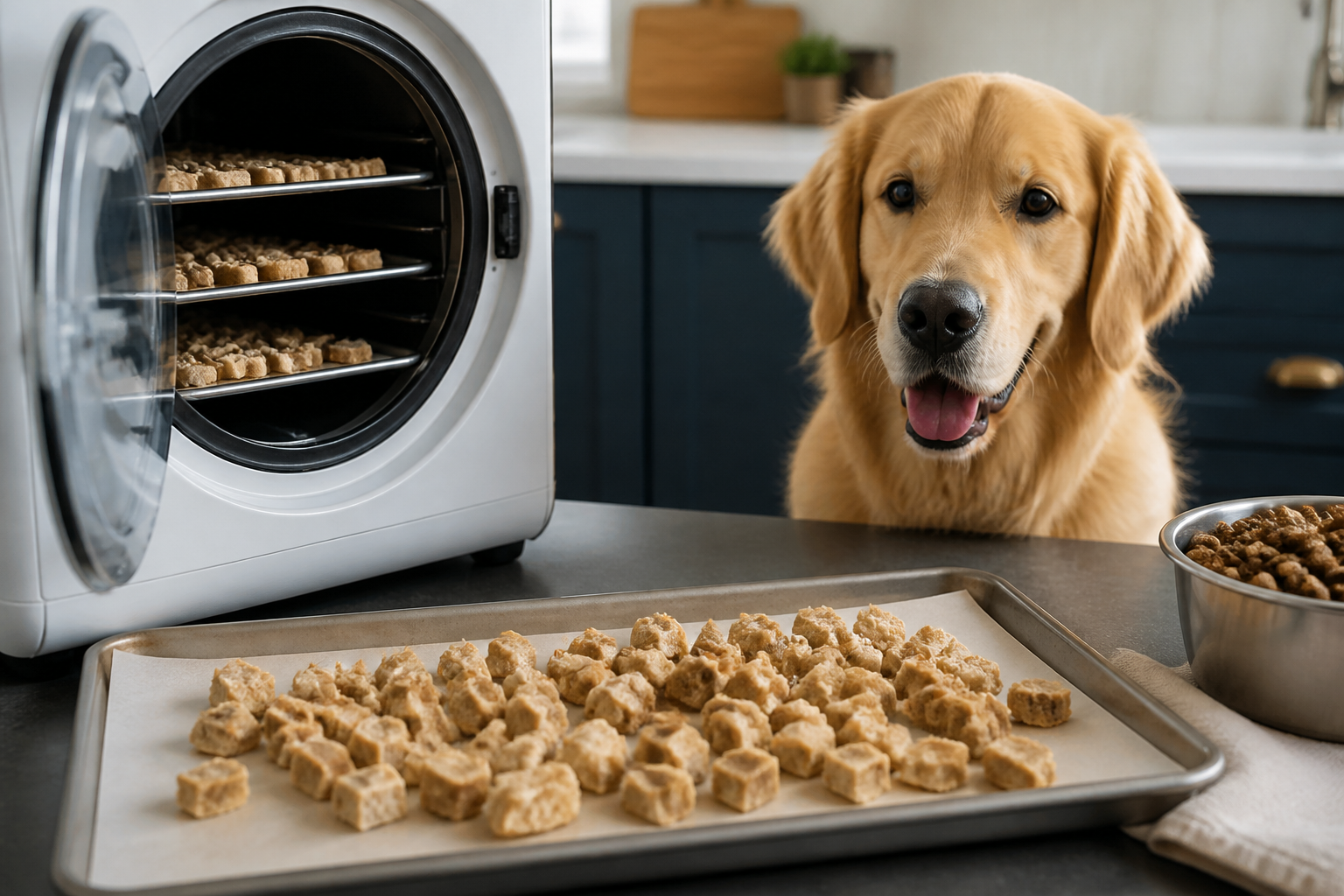
Quick Answer: Yes, you can freeze-dry dog food to extend its shelf life and preserve its nutritional value. The process requires a dedicated freeze-dryer machine to remove moisture through sublimation, resulting in a shelf-stable product that retains its original size and shape.
The Difference Between Freezing and Freeze-Drying
It is a common mistake to think that putting a bag of food in your kitchen freezer is the same as freeze-drying. Standard freezing simply turns the moisture inside the food into ice. This helps slow down spoilage, but it does not make the food shelf-stable. Once you take it out of the freezer, it will thaw and eventually go bad.
Freeze-drying is a more complex scientific process called sublimation. The food is frozen to a very low temperature. Then, a vacuum is created around the food. A small amount of heat is applied which causes the frozen water to turn directly into vapor. This vapor is pulled out of the food. This leaves you with a product that is about 98 percent free of moisture.
This lack of water is what keeps the food from spoiling. Bacteria and mold need moisture to grow. When you remove the water, you essentially stop the clock on spoilage. This is why freeze-dried foods can last for years if they are sealed correctly.
Can You Freeze Dry Any Dog Food?
Most types of dog food can undergo this process. Raw meat is the most common candidate because it is highly perishable. Freeze-drying raw meat allows you to keep the nutritional benefits of a raw diet without the mess of thawing bloody packages every morning. It also makes raw food much safer to handle while traveling.
Kibble can also be freeze-dried, but it is less common. Since kibble is already quite dry, the process does not change much. However, some owners freeze-dry home-cooked meals. If you make a large batch of chicken, rice, and vegetables for your dog, you can freeze-dry the portions. This preserves the flavor and the delicate vitamins that might be lost during high-heat canning or long-term freezing.
What to Avoid Freeze-Drying
- Foods with very high fat content. Fat does not freeze-dry well and can go rancid even if the moisture is removed.
- Large chunks of bone. These are difficult for the machine to process evenly.
- Liquid-heavy soups. These should be reduced or thickened before the process starts.
The Benefits of Freeze-Drying Your Dog's Food
The main reason pet owners choose this method is nutrient retention. Traditional kibble is often cooked at very high temperatures. This heat can destroy sensitive enzymes and vitamins. Many manufacturers have to add synthetic vitamins back into the food after cooking to meet nutritional standards.
Freeze-drying uses very little heat. The ingredients remain largely in their natural state. This means your dog gets the benefits of whole-food nutrition. This is especially helpful for senior dogs or pets with sensitive stomachs who need the most digestible nutrients possible.
Another benefit is the weight. Removing the water makes the food incredibly light. If you are hiking with your dog, carrying a week of freeze-dried food is much easier than carrying heavy cans or bags of wet food. It also takes up much less space in your pantry.
Key Takeaway: Freeze-drying preserves nearly 100 percent of the vitamins and minerals in fresh food while making it lightweight and shelf-stable for long-term storage.
The Reality of DIY Freeze-Drying
While the idea of freeze-drying your own dog food sounds great, there is a hurdle to consider. You cannot freeze-dry food in a regular freezer or a dehydrator. A dehydrator uses heat to evaporate water. This heat can cook the food and change its nutritional profile. It also leaves behind about 10 to 15 percent of the moisture. This means dehydrated food has a shorter shelf life than freeze-dried food.
To do this at home, you need a home freeze-dryer. These machines are quite large and can be expensive. They also require regular maintenance, such as oil changes for the vacuum pump. If you have multiple dogs or feed a strict raw diet, the machine might pay for itself over several years. For most owners, buying professionally freeze-dried brands is more cost-effective. For a closer comparison of these preparation methods, read our guide to freeze-dried versus dehydrated dog food.
Serving Freeze-Dried Dog Food
When it is time to feed your dog, you have two main options. You can serve the food dry or rehydrate it. Many dogs love the "crunch" of freeze-dried nuggets. They can be used as high-value training treats. Since the smell is concentrated, even picky eaters often find them irresistible.
However, most experts recommend rehydrating the food for full meals. Dogs on a dry diet often do not drink enough water to compensate for the lack of moisture in their food. This can lead to dehydration or kidney strain over time. Adding warm water or bone broth back into the food brings it back to its original texture and volume. You can also explore our freeze-dried dog food collection for ready-to-serve options.
How to Rehydrate
- Measure the dry portion into your dog's bowl.
- Add warm water. Usually, a 1:1 ratio works well.
- Wait about 3 to 5 minutes for the food to absorb the liquid.
- Stir the food to ensure there are no dry pockets.
Vet Tip: If your dog has a history of urinary tract issues or kidney disease, always rehydrate freeze-dried food. The extra moisture is vital for flushing the system and maintaining organ health. If you are unsure about changing your dog's diet, consult your veterinarian to ensure the nutrient balance is appropriate for their specific health needs.
Safety and Pathogens in Raw Freeze-Dried Food
There is a common misconception that freeze-drying kills bacteria. This is not true. Freeze-drying puts bacteria into a dormant state. If the food contained Salmonella or Listeria when it was fresh, those pathogens will still be there when it is rehydrated.
Commercial brands often use a process called High-Pressure Processing or HPP. This uses extreme pressure to neutralize pathogens without using heat. When you freeze-dry at home, you do not have access to HPP. This is why you must start with the highest quality, human-grade meats. You must also practice strict hygiene when handling the food. Our article on safe ways to feed freeze-dried dog food covers additional handling considerations.
- Wash your hands after touching freeze-dried raw food.
- Clean your dog's bowl with hot, soapy water after every meal.
- Keep the food away from areas where you prepare human meals.
- Do not let the rehydrated food sit out for more than 30 minutes.
Commercial Freeze-Dried Options at BaxterBoo
If the cost and effort of home freeze-drying seem too high, there are many excellent prepared options. At BaxterBoo, we carry a wide range of freeze-dried dog food that meet strict nutritional standards. Brands like Stella and Chewy's or Open Farm use high-quality animal proteins and organic produce. These brands are formulated to be complete and balanced.
This means they contain the correct ratios of meat, organs, and bone. They also include the necessary vitamins and minerals to meet AAFCO standards. When you freeze-dry at home, it can be difficult to get these ratios exactly right. Using a trusted commercial brand ensures your dog is not missing out on essential nutrients like taurine or calcium.
Storing Your Freeze-Dried Food
Proper storage is the only way to ensure the food stays safe and nutritious. The two biggest enemies of freeze-dried food are oxygen and moisture. If the seal on your container is not perfect, the food will absorb humidity from the air. This will cause it to go soft and eventually grow mold.
We recommend keeping the food in its original packaging if possible. These bags are often designed with high-tech liners that block light and air. You can then place the bag inside a hard plastic or glass airtight container. This provides a second layer of protection against pests and humidity. For more storage guidance, see our tips on keeping dry dog food fresh.
- Store the food in a cool, dark place like a pantry.
- Avoid areas with temperature swings, such as the garage or near the oven.
- Keep the bag tightly zipped at all times.
- Label the container with the date you opened it.
Bottom line: Once a bag of freeze-dried food is opened, try to use it within 30 days to ensure maximum freshness and nutritional potency.
Is Freeze-Dried Food Worth the Cost?
There is no denying that freeze-dried food is more expensive than standard kibble. The process is energy-intensive and takes a long time. However, many owners find the benefits outweigh the price. Because the food is so nutrient-dense, you often feed smaller portions than you would with kibble.
It is also an excellent option for dogs with allergies. Many freeze-dried recipes use limited ingredients. This makes it easier to avoid common triggers like corn, wheat, or soy. If your dog is struggling with itchy skin or digestive upset, a clean freeze-dried diet might provide relief.
If a full freeze-dried diet is too expensive, consider using it as a topper. You can crumble a few nuggets over your regular kibble. This adds a boost of raw nutrition and flavor without breaking the budget. It is a great way to encourage a senior dog with a fading appetite to finish their meal. For portioning ideas, read how much freeze-dried dog food to feed.
When to Talk to Your Veterinarian
Changing your dog's diet is a big decision. This is especially true if you are moving from a cooked kibble to a raw freeze-dried diet. Some dogs may experience digestive upset during the transition. Others may have underlying health conditions that make a high-protein diet unsuitable.
Our pharmacy at BaxterBoo offers a wide range of prescription diets through our partnership with Pet's Choice. If your vet recommends a specific therapeutic diet for a condition like kidney disease or severe allergies, you can often find those specialized options through our pharmacy services. Always talk to your vet before starting a DIY freeze-drying project, especially if you plan to formulate the recipes yourself. They can help you ensure the calcium-to-phosphorus ratio is safe for your dog's bones and joints.
Checklist for Starting Freeze-Dried Food
- Consult your vet about nutritional requirements.
- Choose a high-quality commercial brand for a balanced diet.
- Invest in airtight glass or BPA-free plastic storage containers.
- Buy a dedicated scoop to keep the food clean and measured.
- Have a supply of clean water or bone broth for rehydration.
Final Thoughts on Freeze-Drying
Freeze-drying is a powerful tool for pet health and convenience. Whether you are looking to preserve a home-cooked meal or want the ease of a commercial raw diet, it offers many benefits. It keeps the food fresh, light, and packed with the nutrients your dog needs to thrive. While the equipment for home use is a significant investment, the result is a high-quality meal that dogs absolutely love.
If you are not ready to dive into home machines, exploring the expertly curated selection at BaxterBoo is the perfect next step. We carry the brands we trust for our own pets, ensuring you get quality without compromise. You can even save on your favorite freeze-dried brands by using our Autoship programme, which keeps your pantry stocked while saving you money on every order.
Key Takeaway: Freeze-dried dog food offers the nutritional benefits of raw food with the convenience of dry kibble, making it an ideal choice for health-conscious pet owners.
FAQ
Does freeze-drying dog food kill bacteria like Salmonella?
No, freeze-drying does not kill bacteria; it simply makes them dormant by removing the water they need to grow. If the raw ingredients contain pathogens, those pathogens will remain in the food and can become active again once the food is rehydrated. Commercial brands often use High-Pressure Processing (HPP) before freeze-drying to ensure the food is safe from harmful bacteria.
How long does freeze-dried dog food last?
When kept in an unopened, vacuum-sealed bag, freeze-dried dog food can last for several years, though most manufacturers suggest using it within one to two years for best quality. Once you open the bag and expose the food to oxygen and moisture, you should aim to use it within 30 to 60 days. Always store it in a cool, dry place in an airtight container to prevent spoilage.
Can I use a regular freezer to freeze-dry my dog's food?
No, a regular freezer cannot freeze-dry food because it lacks the vacuum and controlled heating elements required for sublimation. Simply putting food in a freezer will freeze the water into ice, which will eventually lead to freezer burn and spoilage if not kept frozen. To truly freeze-dry food, you must use a specialized machine that removes 98 percent or more of the moisture content.
Do I have to add water to freeze-dried dog food?
While you can serve freeze-dried food dry as a treat or a topper, it is generally better to rehydrate full meals with warm water or broth. Rehydrating the food helps your dog stay hydrated and makes the meal easier to digest, which is especially important for senior dogs or those with kidney issues. If you do feed it dry, make sure your dog has constant access to plenty of fresh drinking water.






