
 Save 15% on your 1st Autoship learn more

 Email us
 Live Chat
 FAQs
FAQs





Introduction
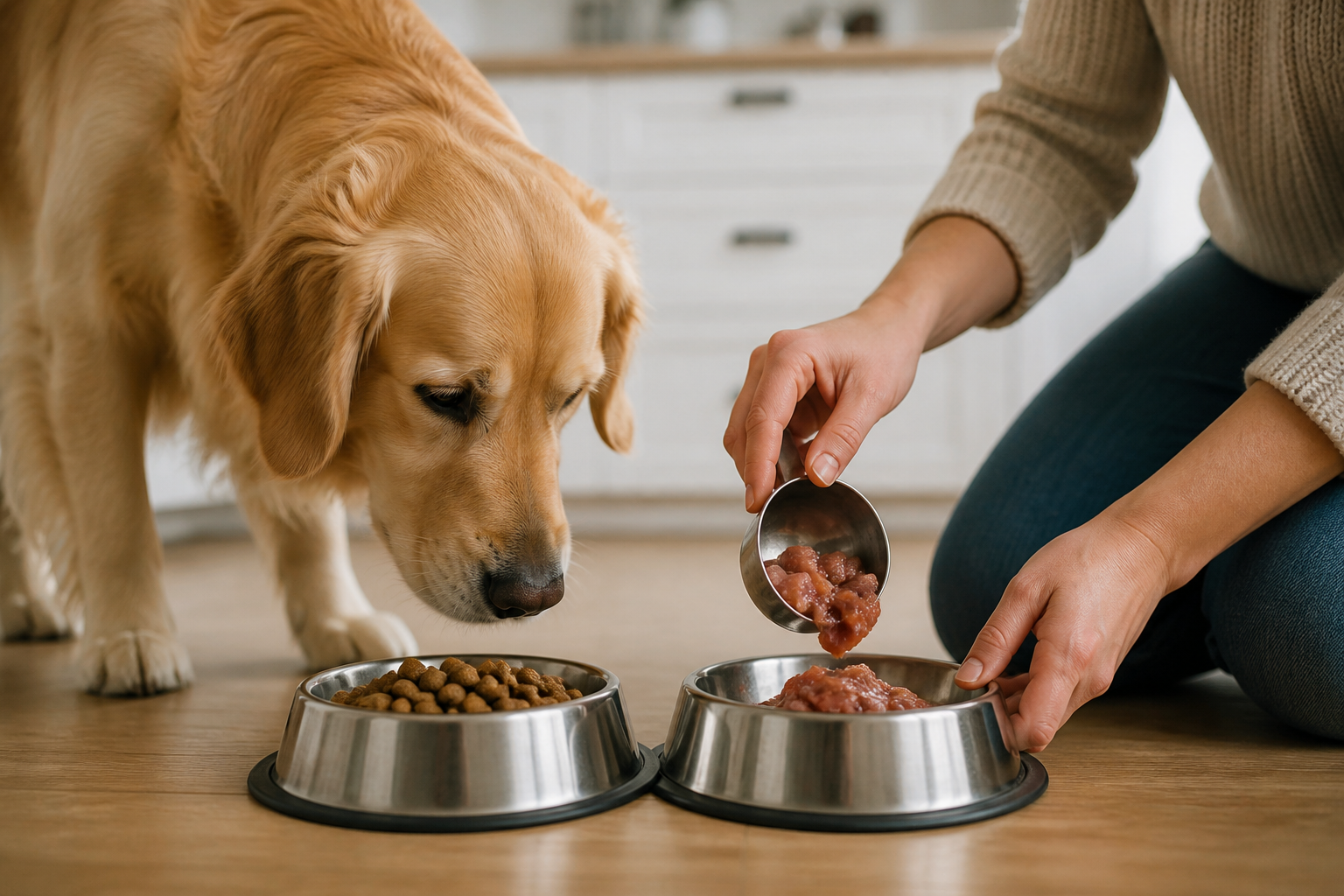
You stand in the kitchen with a bag of kibble in one hand and a can of savory stew in the other. Your dog is waiting at your feet with hopeful eyes. You might wonder if combining these two will upset their stomach or if it is the secret to a happier mealtime. Many pet owners reach for a mix to entice a picky eater or to help a senior dog chew more easily.
At BaxterBoo, we see this question often from owners who want to provide the best nutrition without overcomplicating the daily routine. Mixing wet and dry food is a great way to offer variety and health benefits. This post covers how to balance calories, why hydration matters, and how to transition your dog safely. We want to help you feel confident that every bowl you serve is both delicious and nutritionally sound.
The Benefits of a Mixed Diet
Mixing food types is about more than just flavor. It combines the mechanical benefits of dry food with the nutritional perks of wet food. Most dogs find the intense aroma of canned food much more appealing than dry kibble alone. Our dog food category makes it easy to compare dry and wet options.
Better Hydration
Wet dog food often contains around 75 percent water. Dry kibble usually sits between 10 and 12 percent. By adding a scoop of wet food, you naturally increase your dog's daily water intake. This is helpful for dogs that do not drink enough from their water bowls. Proper hydration supports kidney function and keeps the urinary tract healthy.
Appealing to Picky Eaters
Dogs experience the world through scent. The cooking process for canned food locks in aromas that kibble simply cannot match. If you have a dog that turns their nose up at plain dry food, a little bit of wet food can act as a natural flavor enhancer. It coats the kibble and makes the entire meal more interesting.
Texture and Dental Health
Dry kibble provides a satisfying crunch that some dogs love. While kibble is not a replacement for brushing teeth, the physical action of chewing can help scrape away a small amount of plaque. Wet food is soft and easy to swallow. For senior dogs or those with missing teeth, the softer texture makes eating a comfortable experience rather than a chore.
Quick Answer: Yes, you can mix wet and dry food as long as both are labeled as complete and balanced. This method provides extra hydration and flavor while keeping feeding costs manageable.
Understanding Caloric Balance
One of the biggest risks of mixing food is overfeeding. Wet food and dry food have very different caloric densities. A cup of kibble is much more calorie dense than a cup of wet food because the water in wet food takes up space.
To get the ratio right, you cannot simply add a can of food on top of a full serving of kibble. You must subtract some dry food to make room for the new calories. If you want to replace 25 percent of the meal with wet food, you need to look at the calorie count on both labels. Our guide to how much wet food equals one cup of dry food offers another way to think about caloric swaps.
Many owners use the 75 to 25 rule. This means 75 percent of the calories come from dry food and 25 percent come from wet food. This keeps the diet mostly stable while providing enough wet food to make a difference in taste.
How to Calculate the Mix
Step 1: Determine the total daily calories your dog needs based on their weight and activity level. Step 2: Check the "kcal/kg" or "kcal/cup" on your dry food bag. Step 3: Check the "kcal/can" on your wet food. Step 4: Decide on your ratio and do the math to ensure the total calories remain the same.
Key Takeaway: Always measure by calories rather than volume when mixing different food types. This prevents accidental weight gain and ensures your dog stays at a healthy body condition.
Choosing the Right Products
The quality of the food matters just as much as the format. We recommend looking for brands that meet AAFCO standards for "complete and balanced" nutrition. This ensures that even when you mix them, your dog is getting the right ratio of protein, fats, and minerals.
At BaxterBoo, we carry a wide variety of trusted brands like Stella and Chewy's, Open Farm, and NutriSource. Many of these brands offer both wet and dry versions of the same recipe. Using the same brand for both can make digestion easier because the core ingredients often overlap. You can browse our wet dog food selection when comparing recipes and textures.
If your dog has a sensitive stomach, look for limited ingredient diets. Brands like Koha or Honest Kitchen offer high quality options that minimize the risk of a flare up. When you start mixing, stick to one protein source at first. If the dry food is chicken, try a chicken based wet food to keep things simple for the gut.
Mixing for Life Stages
A puppy has very different needs than a senior dog. Puppies require more protein and minerals like calcium for bone growth. If you mix food for a puppy, both the wet and dry options must be formulated for growth.
Senior dogs often deal with reduced appetites or stiff joints. Adding a wet food with high moisture and added supplements can help. You might look for wet foods that include glucosamine or chondroitin. This is a common feature in brands like Farmina or Royal Canin. For more age-specific guidance, read Should Senior Dogs Eat Wet or Dry Food?.
Vet Tip: If your dog has a chronic health condition like kidney disease or severe allergies, consult your veterinarian before mixing foods. They may need a specific prescription diet from our pharmacy to manage their symptoms safely.
Therapeutic Diets and the Pharmacy
Some dogs require a very specific diet to stay healthy. If your veterinarian has prescribed a therapeutic food for urinary health, skin sensitivities, or weight management, you must be careful. Mixing a prescription dry food with a standard grocery store wet food can ruin the effectiveness of the treatment.
For example, a urinary diet works by carefully balancing minerals to control the pH of the urine. Adding a different type of food can throw that balance off. Our pharmacy offers FDA approved prescription pet foods through our partnership with Pet's Choice. This includes brands like Farmina Vet Life and Royal Canin Veterinary Diet.
If your dog is on a prescription plan, always match the wet food to the dry food within that same prescription line. This ensures the therapeutic benefits remain intact. You can even set up these items on Autoship to make sure you never run out of the specific formulas your dog needs.
The Safe Way to Transition
You should never switch a dog's diet overnight. Even adding a small amount of wet food to dry kibble requires a transition period. A sudden change can lead to gas, diarrhea, or vomiting. For another gradual-transition approach, see How to Switch From Dry to Wet Dog Food.
Follow this five day schedule for a smooth transition:
- Day 1: 90% current dry food, 10% new wet food mix.
- Day 2: 80% current dry food, 20% new wet food mix.
- Day 3: 70% current dry food, 30% new wet food mix.
- Day 4: 60% current dry food, 40% new wet food mix.
- Day 5: Reach your final desired ratio.
Watch your dog's stool during this time. If it becomes soft, slow down the transition. Every dog's digestive system moves at a different pace.
Storage and Hygiene Tips
Wet food is a fresh product once the seal is broken. You cannot leave it in the bowl as long as you can with dry kibble. Bacteria grow quickly in the moisture and proteins of canned food. Our guide to wetting dry dog food includes additional mealtime and freshness considerations.
- Discard uneaten mixed food after 30 minutes.
- Store opened cans in the refrigerator with a silicone lid.
- Use refrigerated wet food within three days.
- Warm up cold food slightly to enhance the aroma before serving.
Do not leave a bag of dry food open either. Oxygen and light can turn the fats in the kibble rancid. Keep your dry food in its original bag inside a sealed container. This preserves the vitamins and keeps the flavor fresh for your dog.
Common Myths About Mixing
Some owners worry that wet food causes more dental issues. While it is true that wet food does not provide the scraping action of kibble, neither food is a substitute for dental care. Regular brushing and professional cleanings are the only ways to truly prevent dental disease.
Another myth is that mixing food is too expensive. While wet food usually costs more per ounce, using it as a topper or a partial replacement can be very cost effective. You get the benefits of premium nutrition without the price tag of a 100 percent wet food diet. This allows you to stretch your budget further while still giving your dog a high quality meal.
Bottom line: Mixing wet and dry food is a safe, flexible, and healthy way to feed your dog as long as you monitor calories and maintain hygiene.
Enhancing the Meal Further
Once you have the mix down, you can look into other ways to boost the bowl. Some owners add a splash of bone broth or a scoop of freeze dried raw pieces. Brands like Stella and Chewy's offer meal mixers that add even more protein and flavor. Our food topper collection includes mixers and toppers for different mealtime preferences.
If your dog needs extra support for their skin or coat, you might add a supplement during the mixing process. Zesty Paws offers many options that blend well with wet food. The moisture in the wet food helps powders and oils distribute evenly so your dog eats every drop.
Remember to keep your dog's activity level in mind. An active dog might need more calories from the dry food side, while a less active dog might benefit from the high volume and low calorie nature of wet food. Monitoring their weight every few weeks will tell you if your ratio is working.
Shopping for Your Mix
When you are ready to start mixing, check out the selection at BaxterBoo. We carry over 500 brands, including many that specialize in high moisture and limited ingredient recipes. Whether you want a simple canned loaf or a chunky stew, we have options for every dog's preference.
Don't forget that our MVP Rewards program lets you earn back on every purchase. If you find a combination your dog loves, putting it on Autoship saves you time and ensures your pantry is always stocked. We also offer a $10 reward for new customers on their first order of $39 or more when signed in at checkout.
Summary of Mixing Best Practices
Mixing food is an easy way to show your dog some extra love at mealtime. It keeps them hydrated and excited to eat. By following a few simple rules, you can make it a permanent part of their health routine.
- Choose AAFCO approved brands for both food types.
- Calculate portions based on calories, not scoops.
- Transition slowly over at least five days.
- Store opened wet food in the fridge and discard leftovers.
- Match prescription brands if your dog is on a therapeutic diet.
Key Takeaway: A mixed diet offers the best of both worlds by combining the hydration of wet food with the convenience and dental benefits of dry kibble.
Our pharmacy is also here to help if your vet recommends a specific medical diet. Through our partnership with Pet's Choice, we provide a wide range of FDA approved foods for various health conditions. This ensures that even dogs with special needs can enjoy a tasty, mixed meal.
FAQ
Is it okay to mix different brands of wet and dry dog food?
Yes, you can mix different brands as long as both are high quality and labeled as complete and balanced. However, if your dog has a sensitive stomach, staying within the same brand can be safer. This is because the ingredients and nutrient profiles are more likely to be compatible, reducing the risk of digestive upset.
How much wet food should I add to my dog's kibble?
A common ratio is 75 percent dry food and 25 percent wet food based on calories. You should avoid simply adding the wet food on top of a full serving of kibble to prevent weight gain. Consult the feeding guides on both packages to determine the exact caloric swap needed for your dog's size.
Can I feed dry food in the morning and wet food at night?
Yes, this is a popular method that provides variety without needing to mix them in the same bowl. It allows your dog to enjoy the crunch of kibble for one meal and the hydration of wet food for another. Just ensure the total daily calories from both meals match your dog's nutritional requirements.
Does mixing wet food into kibble cause tooth decay?
Wet food does not directly cause tooth decay, but it lacks the abrasive texture that can help remove some plaque. Regardless of whether you feed wet, dry, or a mix, regular dental care is necessary. This includes routine brushing at home and professional cleanings by your veterinarian to keep their gums and teeth healthy.






