
 Save 15% on your 1st Autoship learn more

 Email us
 Live Chat
 FAQs
FAQs





Introduction
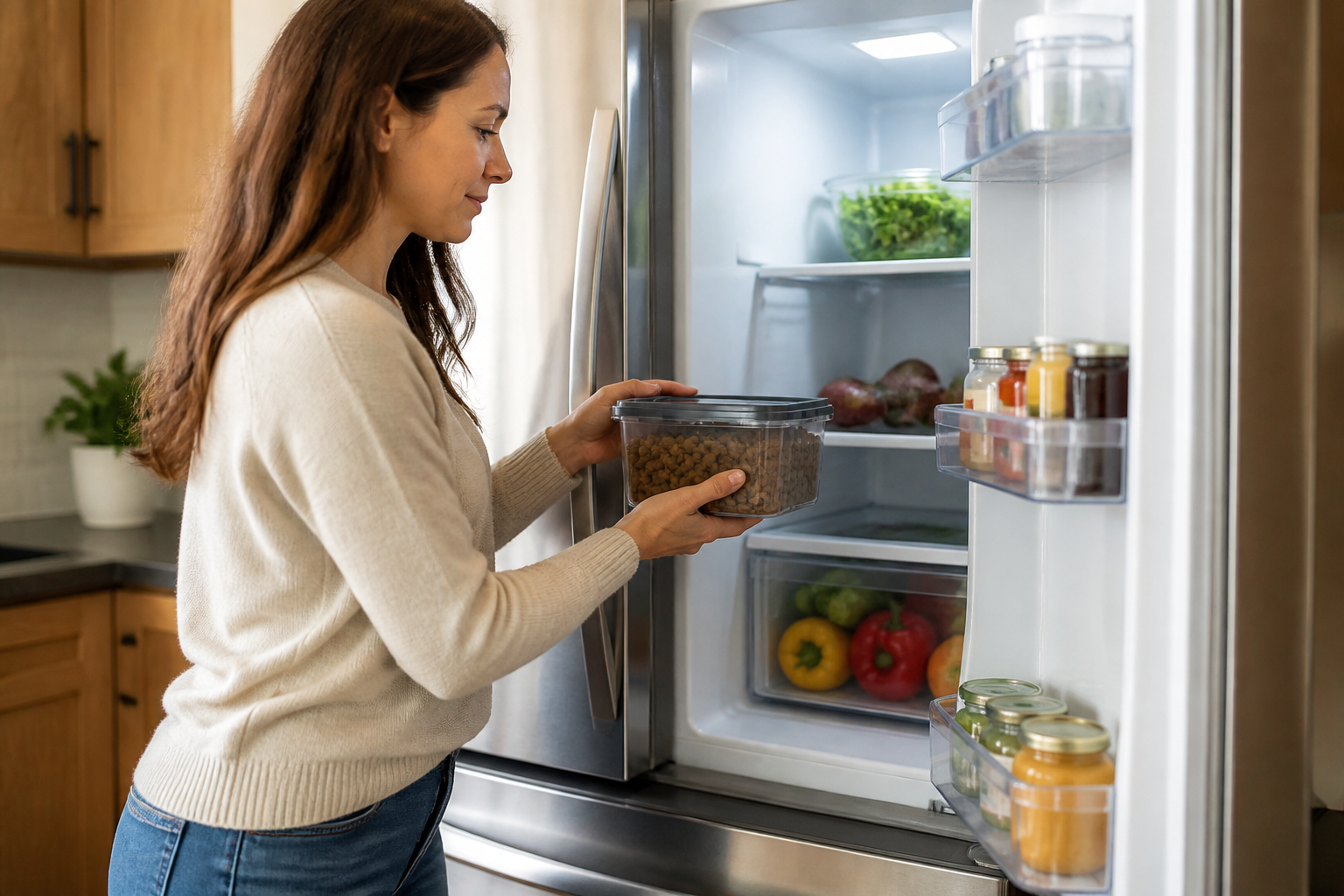
You might find yourself standing in a hot kitchen during a summer heatwave, looking at a large bag of expensive kibble. If the house is warm, you may worry that the natural oils in the food will go rancid. It seems logical to clear a shelf in the refrigerator to keep the food cool. At BaxterBoo, we hear this question often from pet owners who want to protect their investment and their dog's health. While your intentions are good, the refrigerator is usually not the best place for dry kibble. This post covers why temperature stability matters more than coldness and how to store your pet’s food to maintain its nutritional integrity. Proper storage ensures every bowl you serve is as fresh as the day you opened the bag.
Quick Answer: You can technically put dry dog food in the fridge, but it is not recommended. Refrigeration introduces moisture through condensation, which can lead to mold growth and spoilage. It is much better to store kibble in its original bag inside an airtight container in a cool, dry pantry.
Why Refrigerator Storage Is Not Ideal for Kibble
The primary reason to avoid the fridge for food is humidity. Refrigerators are high-moisture environments. Every time you open the door, warm air hits the cold interior and creates condensation. If you put a bag of food inside, that moisture can settle on the surface of the kibble. Dry dog food is designed to have a very low moisture content. When that balance is disrupted, it creates a breeding ground for mold and bacteria.
Another issue is the fluctuation in temperature. Moving the food from the cold fridge to the warm kitchen counter for feeding creates even more condensation inside the bag. This cycle of cooling and warming can cause the fats in the food to break down faster. While you are trying to prevent rancidity, you might actually be accelerating the spoilage process.
The smell is also a factor. Dry kibble is porous. It can easily absorb the scents of other items in your fridge, like onions or leftovers. This can change the taste of the food and make a picky eater refuse their meal. Unless your home stays consistently above 85 degrees Fahrenheit, a dark pantry is a much safer bet. If you are comparing options, explore our dog food category.
The Risks of Moisture and Mold
Mold is the biggest threat when dry food gets damp. Some molds produce mycotoxins, which are toxic substances that can make your dog very sick. These toxins are not always visible to the naked eye. You might not see fuzzy green patches, but the spores could still be present. If your dog consumes moldy food, they may experience vomiting, tremors, or even liver damage.
Bacteria like Salmonella and Listeria also thrive in moist environments. Dry food is processed at high heat to kill these pathogens, but improper storage can reintroduce them. Keeping the food dry is your best defense. If you notice any "clumping" of the kibble or a damp feel to the bag, it is time to throw it out.
Key Takeaway: Moisture is the enemy of dry dog food. High humidity and condensation from a refrigerator can lead to invisible mold growth and bacterial contamination that puts your dog's health at risk.
The Ideal Storage Environment
Dry dog food stays freshest when it is kept in a "high and dry" location. The goal is to keep the food at a consistent room temperature, ideally below 80 degrees Fahrenheit. Excessive heat is the main cause of oxidation. Oxidation is the chemical process where fats and oils in the food turn rancid. Rancid fats lose their nutritional value and develop a sour, metallic smell.
Light is another factor many pet owners forget. If you store food in a clear plastic bin near a window, the sunlight can heat the food and degrade the vitamins. A dark pantry, a kitchen cabinet, or a climate-controlled laundry room are perfect spots. Avoid storing food in the garage or a backyard shed. These areas experience extreme temperature swings and high humidity, which can ruin a bag of food in just a few days.
For additional guidance on shelf life and freshness, read how long dry dog food stays fresh once opened.
Why You Should Keep the Original Bag
It is tempting to pour the whole bag of kibble into a decorative plastic bin. However, the original packaging is actually a high-tech storage tool. Most premium pet food bags are designed with specialized liners. These liners act as an oil barrier to keep the fats from soaking through and to keep oxygen out.
When we select brands for our inventory, we look for quality packaging that protects the product. Keeping the food in the bag also preserves the important information printed on it. If there is ever a product recall or if your dog gets sick, you will need the lot number and expiration date. Without the bag, you lose that traceability.
If you prefer using a plastic or metal bin for convenience, simply place the entire bag inside the bin. This gives you a double layer of protection. It keeps the food in its intended environment while adding an airtight seal against pests and air. You can also browse our dog food storage collection for storage options.
Vet Tip: If your dog develops sudden digestive upset or refuses their usual food, check the bag for a sour smell or signs of moisture. Always consult your veterinarian if your pet stops eating or shows signs of illness like lethargy or vomiting.
How to Use Storage Bins Correctly
If you decide to pour the food directly into a container, you must be diligent about hygiene. Many people make the mistake of "topping off" the bin. They pour a new bag of food on top of the last few inches of the old bag. This is a major mistake. The crumbs and fats at the bottom of the bin can go rancid and contaminate the fresh food immediately.
Follow these steps to keep your storage bin safe:
- Wait until the bin is completely empty.
- Wash the bin thoroughly with hot, soapy water.
- Let the bin dry completely before adding new food. Even a tiny bit of leftover water can cause mold.
- Check the seal on the lid to ensure it is still airtight.
Checklist for proper bin usage:
- Choose a food-grade, BPA-free plastic or stainless steel container.
- Ensure the lid has a rubber gasket for a true seal.
- Store the bin off the floor to prevent temperature transfer from the ground.
- Wipe down the outside of the bin weekly to remove dust.
For more cleaning and handling ideas, see these dry dog food storage tips.
Managing Freshness and Expiration Dates
Every bag of dog food has a "best by" or expiration date. This date refers to how long the unopened bag will maintain its nutritional integrity. Once you break the seal, that clock starts ticking much faster. Most manufacturers recommend using a bag of dry food within six to eight weeks of opening.
If you have a small dog, it might be tempting to buy a 40-pound bag to save money. However, if that bag lasts you four months, the food will likely be stale and less nutritious by the time you reach the bottom. Buying smaller bags more frequently ensures your dog is always eating fresh food. Our Autoship programme is a great way to have fresh bags delivered exactly when you need them so you don't have to overstock.
For help planning portions and purchase timing, read how much dry food to feed a dog.
When the Fridge Is Necessary: Wet Food and Toppers
While dry kibble stays in the pantry, wet food is a different story. Once a can or pouch of wet food is opened, it must be refrigerated. The high moisture content makes it highly perishable. If left at room temperature, wet food can start to grow bacteria within a few hours.
When storing opened wet food in the fridge, use a tight-fitting silicone or plastic lid. This prevents the food from drying out and stops the smell from filling your refrigerator. Most wet food is only good for three days after opening. If your dog does not finish the can within that window, you should discard the remainder.
Key Takeaway: Refrigeration is for wet food only. Keep opened cans sealed tightly and use them within 72 hours to ensure safety and flavor.
If you are weighing different feeding options, explore whether wet or dry food is right for your dog.
Transitioning and Specialized Diets
Some dogs require specialized or prescription diets for health conditions like kidney disease, allergies, or weight management. These foods often contain specific levels of fats or sensitive nutrients that require even stricter storage. Our pet pharmacy carries a variety of FDA-approved prescription pet foods through our partnership with Pet's Choice.
If your vet has prescribed a specific diet, pay close attention to the storage instructions on the label. Prescription kibble is often more expensive, so protecting it from heat and moisture is vital for your budget and your dog’s health. If you are transitioning your dog to a new food, keep both the old and new bags sealed tightly in their original packaging during the one-week transition period.
Identifying Spoiled Dog Food
Sometimes, despite our best efforts, food goes bad. You cannot always rely on your dog to tell you. Some dogs are "food motivated" and will eat spoiled kibble even if it tastes off. Others are more sensitive and will walk away from the bowl. You should perform a "sniff test" every time you open the bag. Fresh kibble usually has a mild, grainy, or meaty scent. Rancid food smells like old paint, sour chemicals, or rotting compost.
Look for these signs of spoilage:
- A greasy or oily film on the inside of the bag.
- Visible insects like weevils or moths.
- Clumping or "fuzz" on the kibble pieces.
- A change in the color of the kibble.
- Your dog suddenly refuses to eat or seems hesitant at mealtime.
For more information, read how to tell if dry dog food has gone bad.
Bottom line: If you have any doubt about the freshness of the food, it is safer to throw it away than to risk a vet visit for food poisoning.
Conclusion
Storing dry dog food correctly is one of the simplest ways to protect your pet's health. While the fridge might seem like a safe haven from heat, the moisture risks far outweigh the benefits. Keep your kibble in its original bag, seal it tightly, and store it in a cool, dark place like a pantry. For wet food or prescription diets, the rules are stricter, so always check the labels. Our team at BaxterBoo wants to help you get the most out of every bag of food you buy. If your dog has specific health needs that require a prescription diet or medication, visit our pet pharmacy to see how our Pet's Choice partnership can help.
FAQ
Is it okay to store dog food in the garage?
It is generally not recommended to store dog food in the garage because of the lack of climate control. Garages experience extreme heat in the summer and freezing temperatures in the winter, which can cause the nutrients to break down and the fats to turn rancid. Additionally, garages are more prone to pests like rodents and insects that can chew through bags and contaminate the food.
Can I freeze dry dog food to make it last longer?
Freezing dry dog food is possible, but it comes with risks. When you thaw the food, condensation will form on the kibble, which can lead to mold if not eaten immediately. If you choose to freeze kibble, do so in small, airtight portions and feed it to your dog as soon as it reaches room temperature.
How long can I leave dry food in my dog's bowl?
Dry food can typically stay in the bowl for up to 24 hours if the environment is cool and out of direct sunlight. However, the food will start to go stale as it is exposed to the air. It is best practice to provide only what your dog will eat in one sitting and to wash the bowl with soap and water daily to prevent bacteria buildup.
What should I do if I find bugs in my dog's food?
If you find insects like weevils or mealworms in the bag, you should immediately seal the bag and dispose of it in an outdoor trash can. Do not try to pick the bugs out, as they may have left eggs or waste throughout the bag. Thoroughly clean your pantry or storage bin to ensure no pests are left behind to infest the next bag.






