
 Save 15% on your 1st Autoship learn more

 Email us
 Live Chat
 FAQs
FAQs





Introduction
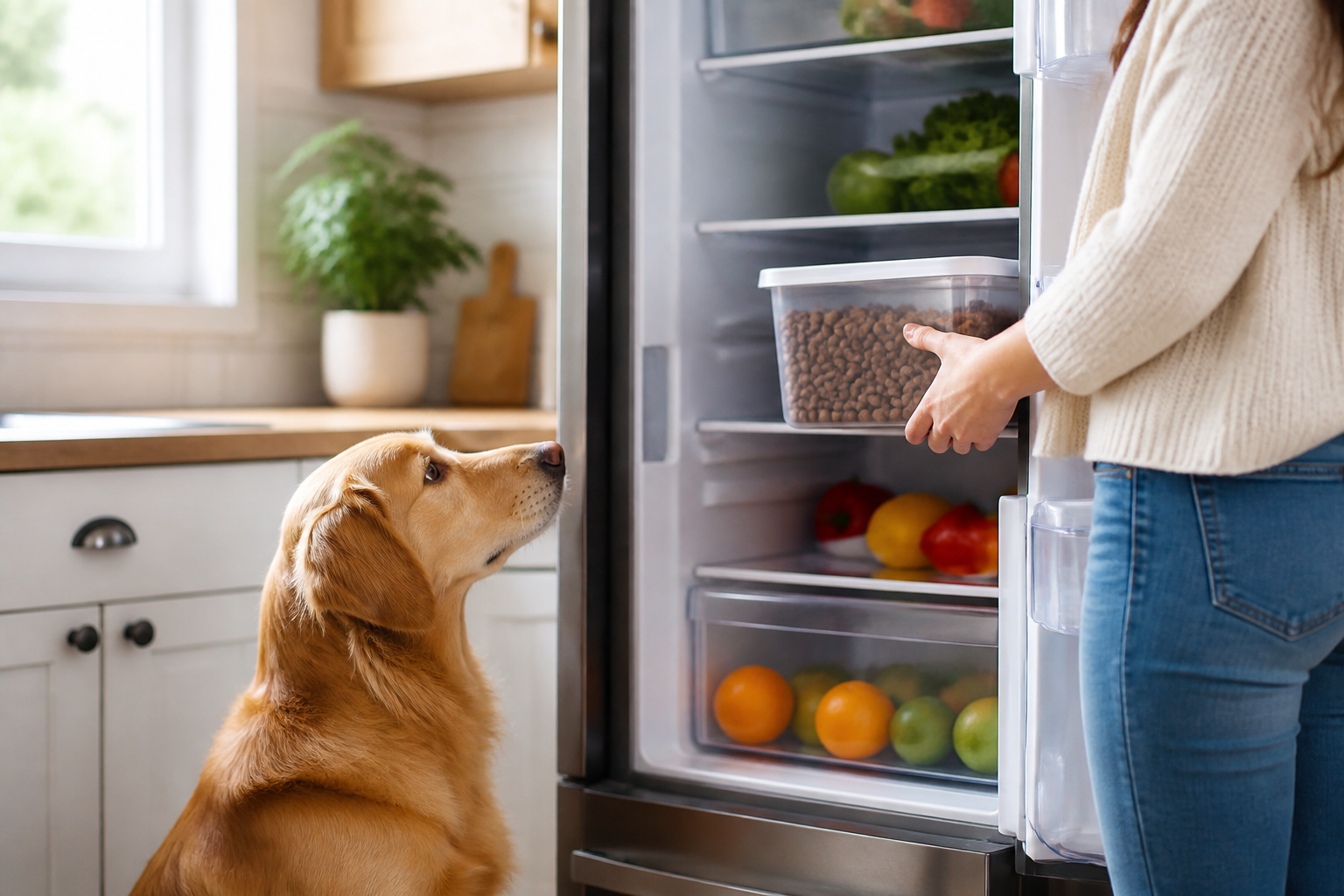
You just hauled a thirty pound bag of premium kibble into your kitchen. It is a humid summer day, and you want to make sure those expensive ingredients stay fresh until the very last scoop. It is natural to look at your refrigerator and wonder if the cold air would help preserve the nutrients and prevent the fats from going rancid. At BaxterBoo, we hear this question often from pet parents who want to get the most value out of their pet food. While refrigerating leftovers is second nature for our own meals, the rules for dry kibble are quite different. This post explains why the refrigerator is usually not the best place for dry food and how you can keep your dog's meals safe and tasty. Moisture and temperature stability are the two most important factors in pet food longevity.
Quick Answer: You should generally not store dry dog food in the fridge because the constant temperature changes create condensation. This moisture can lead to mold growth and cause the kibble to spoil faster than it would in a cool, dry pantry.
The Science of Dry Food Storage
Dry dog food is processed to have a very low moisture content. Most kibble contains between eight and ten percent water. This low moisture level is what allows it to stay shelf stable for months in its original packaging. When you introduce a bag of food to the refrigerator, you change the environment significantly.
The primary concern is condensation. Every time you open the fridge to get a scoop of food, warm air enters and hits the cold surface of the kibble and the bag. This creates tiny droplets of water. Over time, these droplets accumulate. Moisture is the invitation that mold and bacteria need to grow on the surface of the food. Even if you cannot see the mold yet, it can produce mycotoxins that are harmful to your dog.
Fat oxidation is another factor. While cold temperatures slow down the rate at which fats go rancid, the trade-off with moisture risk is rarely worth it. Most high quality brands like NutriSource or Stella and Chewy's use natural tocopherols (Vitamin E) to preserve fats. These are effective at room temperature as long as the food is kept away from direct heat and light.
Why the Refrigerator Might Seem Tempting
There are specific situations where a pet owner might feel the fridge is the only option. If you live in an area with extreme heat and your home does not have air conditioning, your pantry might regularly exceed 80 degrees. Heat is an enemy of nutrition. It causes vitamins to break down and fats to turn sour.
Pest infestations are another common reason people turn to the fridge. If you are dealing with ants, pantry moths, or rodents, the sealed environment of a refrigerator feels like a safe harbor. However, there are better ways to protect your investment without risking mold.
Key Takeaway: Temperature stability is more important than coldness. A consistent 70 degrees in a dry closet is much better for kibble than a fluctuating 40 degrees in a damp refrigerator.
The Better Alternative: Optimal Pantry Storage
The best way to store dry dog food is in a cool, dry place where the temperature stays below 80 degrees. A kitchen pantry, a dedicated mudroom closet, or even a dry basement can work well. The goal is to avoid areas that experience high humidity or heat spikes, such as the space next to your oven or a laundry room.
For more guidance on freshness timelines, read our post about how long dry dog food stays fresh once opened.
Keep the Original Bag
One of the biggest mistakes pet owners make is pouring the kibble directly into a plastic bin. The original bags used by brands like Open Farm or Acana are designed specifically to keep moisture out and fats in. These bags often have specialized liners that prevent the oils in the food from soaking into the packaging and becoming rancid.
If you prefer the look or security of a plastic or metal bin, place the entire bag inside the container. This provides a double layer of protection. It also keeps the bag's information handy. You will need the lot number and expiration date if there is ever a product recall or if your dog has a reaction to a specific batch.
You can compare recipes and bag sizes in our dog food category before choosing the option that best fits your household.
Seal It Tight
Air is the enemy of freshness. Once a bag is opened, the clock starts ticking. Oxygen begins to break down the nutrients. Use a heavy duty bag clip to seal the top of the bag after every meal. If you use a secondary container, ensure it has a high quality gasket or airtight seal.
For additional storage guidance, see our article on keeping dog food dry and protected from moisture.
Practice First In First Out
Never pour new kibble on top of old kibble. This creates a layer of old, potentially rancid fat at the bottom of the container that will contaminate every new bag you buy. Always finish the bag completely. If you are pouring food directly into a bin, wash the bin with warm, soapy water and let it dry completely before adding a new bag.
Vet Tip: If your dog shows a sudden lack of interest in their food or develops digestive upset, check the food for a sour or "off" smell. Spoiled fats or mold can cause significant stomach issues, and you should consult your veterinarian if symptoms persist.
When the Fridge is Necessary: Wet Food and Raw Diets
While dry food belongs in the pantry, wet food is a different story. Once a can of wet food is opened, it must be refrigerated. The high moisture content makes it a breeding ground for bacteria at room temperature.
- Cover opened cans with a tight fitting silicone lid.
- Store opened wet food for no more than three days.
- If your dog does not finish their wet food within 30 minutes, pick up the bowl and refrigerate the leftovers.
- For raw diets, follow the manufacturer's instructions strictly regarding thawing and refrigeration.
For more information about choosing and storing different diets, read what is better, wet or dry food for dogs.
Our pet pharmacy carries a variety of prescription diets from brands like Royal Canin and Farmina Vet Life that may come in both wet and dry formats. These specialized foods are often more expensive and require even more careful storage to maintain their therapeutic benefits. We provide these through our partnership with Pet's Choice to ensure you have access to the exact nutrition your vet prescribes.
Signs Your Dog Food Has Gone Bad
It is not always obvious when kibble has spoiled. Unlike bread, it rarely grows bright green fuzzy mold in the early stages. You have to use your senses and watch your dog's behavior.
- The Sniff Test: Fresh dog food usually has a mild, grain-like, or meaty smell. Spoiled food often smells like old paint, sour gym socks, or chemicals. This is the smell of rancid fats.
- Texture Changes: If the kibble feels oily to the touch or seems "damp," it has likely been exposed to too much heat or humidity.
- Pet Refusal: Dogs have a sense of smell that is thousands of times more sensitive than ours. If your normally hungry dog turns their nose up at the bowl, listen to them. They can likely smell spoilage that you cannot.
- Visible Pests: If you see tiny moths or weevils in the bag, the food is contaminated and should be discarded.
For another look at spoilage warning signs, read does dry dog food go bad.
Bottom line: Trust your dog's nose. If they refuse to eat a fresh bag of food, it may be a sign that the food was stored improperly before it even reached your home or during its time in your pantry.
Handling Large Bags and Bulk Purchases
Buying in bulk is a great way to save money, especially when using our Autoship programme or MVP Rewards. However, a large bag is only a bargain if it stays fresh. If you have a small dog, a 40 pound bag of food might last three or four months. This is longer than most manufacturers recommend keeping an open bag.
If you must buy large bags, consider portioning some of the food into smaller, airtight containers or smaller bags that you keep sealed until needed. This limits the amount of food exposed to air every day. Ensure these smaller containers are also kept in a cool, dark place.
At BaxterBoo, we stock a wide range of bag sizes so you can find the right balance between value and freshness for your specific pet. Most dry foods are best consumed within six to eight weeks of opening the bag. If it takes your dog longer than that to finish a bag, switching to a smaller size may actually save you money by preventing waste.
For more tips about bag size and freshness, read how long dry dog food lasts.
The Impact of Improper Storage on Health
Feeding spoiled or moldy food is not just a matter of bad taste. It can lead to serious health consequences. Mycotoxins are toxic compounds produced by certain molds that can grow on grains and nuts. These toxins are stable and are not destroyed by heat. Ingesting them can lead to chronic illness or acute poisoning.
Rancid fats are also problematic. They can lead to vitamin deficiencies because the oxidation process destroys vitamins A, D, and E. Over time, feeding rancid food can cause skin issues, a dull coat, and a weakened immune system.
If your pet manages to eat spoiled food and shows signs of lethargy, vomiting, or tremors, seek veterinary care immediately. For ongoing health management or medications related to digestive health, our pharmacy provides FDA approved options that can be delivered right to your door. We work closely with Pet's Choice to make sure prescription needs are met with the same care as our retail products.
Summary of Storage Best Practices
To keep your dog's food as fresh as the day it was bagged, follow these simple steps:
- Keep the kibble in its original bag to protect against fat oxidation.
- Place the bag inside an airtight container for extra protection.
- Store the container in a location that is cool (under 80 degrees) and dry.
- Avoid the refrigerator to prevent condensation and mold.
- Wash your dog's food bowl daily to prevent the buildup of old fats and bacteria.
By taking these steps, you ensure that every meal provides the full nutritional profile intended by the manufacturer. It protects your pet's health and ensures you aren't throwing money away on spoiled supplies.
Key Takeaway: The refrigerator is a high humidity environment that creates mold risks for dry food. A cool pantry is the gold standard for kibble storage.
Conclusion
While it is tempting to think the refrigerator will keep dry dog food fresher, the risk of moisture and mold makes it a poor choice for kibble. The best storage solution is keeping the food in its original packaging, tightly sealed, and placed in a cool, dry pantry. This maintains the flavor, preserves the essential vitamins, and prevents the fats from turning rancid. Proper storage is one of the easiest ways to support your dog's long term health and ensure they enjoy every bite. If you are looking for high quality food or specialized storage gear, we invite you to browse our curated selection of over 500 brands. You can also save on every order by joining our MVP Rewards program or setting up an Autoship delivery for your favorite brands.
FAQ
Is it okay to freeze dry dog food?
Freezing dry dog food is safer than refrigerating it because the sub zero temperatures prevent mold growth. However, you must be extremely careful when thawing the food, as condensation will form quickly once it hits room temperature. If you choose to freeze kibble, portion it into small freezer bags and only take out what your dog will eat for one meal to avoid repeated temperature changes.
How long does dry dog food stay fresh after the bag is opened?
Most manufacturers recommend consuming dry dog food within six to eight weeks after opening the seal. While the "best by" date on the bag applies to unopened food, the nutrients and fats begin to degrade as soon as the food is exposed to oxygen. Proper storage in an airtight container can help stretch this window, but the food will be most nutritious and tasty in the first two months.
Can I store dog food in the garage?
Storing dog food in a garage is generally not recommended unless the space is climate controlled. Garages often experience extreme temperature swings and high humidity, which can cause the food to spoil rapidly. Additionally, garages are more prone to pests like rodents and insects that can chew through bags and even some plastic containers to reach the food.
Does the type of bag material affect how I should store the food?
Yes, the materials used in modern pet food bags are often high tech laminates designed to provide a barrier against oxygen and moisture. Paper bags without liners are the least protective and should always be placed inside an airtight bin. High end brands often use foil lined or heavy plastic bags with "hook and loop" closures that offer excellent protection on their own.






