
 Save 15% on your 1st Autoship learn more

 Email us
 Live Chat
 FAQs
FAQs





Introduction
You are standing in your kitchen with a bag of lightweight, crunchy nuggets that smell surprisingly like real meat. You might be transitioning your dog from kibble to a raw diet or looking for a high quality topper to entice a picky eater. The bag feels almost weightless because the moisture is gone, which leads to a common question for many pet owners. Do you need to add water back into this food before your dog eats it? At BaxterBoo, we have helped pet parents navigate nutrition choices since 2006. We know that how you prepare your dog's meal can be just as important as the ingredients inside the bag. This article explains the benefits of rehydration, when you can skip it, and how to safely serve freeze dried meals. Proper preparation ensures your dog gets the most out of every nutrient dense bite.
Quick Answer: While you can technically feed freeze dried dog food dry, most manufacturers and experts recommend rehydrating it. Adding water or broth aids digestion, prevents dehydration, and makes the food much more palatable. If you use it as a full meal, rehydration is the safest and most beneficial method for your dog.
What Exactly Is Freeze Dried Dog Food?
To understand why rehydration matters, you first need to understand how the food is made. Freeze drying is a preservation process called sublimation. The food is frozen at extremely low temperatures and then placed in a vacuum. This causes the ice in the food to turn directly into water vapor without ever becoming a liquid. Because the food never reaches high temperatures, the natural enzymes and nutrients remain intact.
This process is different from traditional dehydration or the high heat extrusion used for kibble. Dehydration often uses heat that can slightly cook the ingredients. Freeze drying keeps the meat raw but makes it shelf stable. This means your dog gets the nutritional profile of a raw diet with the convenience of a bag that sits in your pantry. For more background on the preparation process, read our guide to how to make freeze dried dog food.
The Moisture Gap in Pet Diets
Moisture is a critical component of canine health. Most traditional kibble contains about 10 percent moisture. Fresh raw food or canned wet food usually sits around 70 to 75 percent moisture. Freeze dried food is unique because it often contains only 2 to 3 percent moisture.
When a dog eats food this dry, their body must provide the moisture for digestion. If they do not drink enough water to compensate, it can lead to chronic low level dehydration. This is especially important for dogs with kidney issues or those prone to urinary tract stones. By rehydrating the food yourself, you ensure the moisture is present the moment it hits their stomach. You can compare different meal formats in our dog food category.
Key Takeaway: Freeze dried food is nearly devoid of water. Rehydrating it mimics the moisture content of a natural raw diet and supports healthy organ function.
Benefits of Rehydrating Your Dog's Meal
Adding liquid to freeze dried food does more than just wet the nuggets. It changes the entire eating experience for your dog.
Improved Digestion
Dogs are designed to eat food with a high moisture content. When you add water back into freeze dried nuggets, the texture becomes soft and easy to chew. This pre-digestion step allows the stomach to break down the proteins and nutrients more efficiently. It can also reduce the risk of bloat or gas in dogs that tend to gulp their food too quickly. For another perspective on moistening dry food, see our guide to wetting dry dog food for better digestion and hydration.
Enhanced Aroma and Palatability
Freeze drying locks in flavor, but rehydration releases it. Warm water or broth makes the meat smell much more intense. For a senior dog or a dog recovering from an illness, this extra scent can be the difference between a skipped meal and a finished bowl. Many owners find that even the pickiest eaters are more likely to accept freeze dried food once it has been soaked.
Weight Management and Satiety
Water adds volume to the food without adding calories. A rehydrated meal looks and feels much larger than a handful of dry nuggets. This can help dogs on a weight loss plan feel more full and satisfied after they eat. We carry several premium brands like Stella & Chewy's or Open Farm that work beautifully when soaked to help manage a dog's appetite.
Vet Tip: If your dog has a history of kidney disease or urinary issues, rehydration is not just a preference but a necessity. Always consult your veterinarian before switching to a raw or freeze dried diet if your dog has an ongoing health condition. Our pet pharmacy carries prescription diets for these specific needs if a standard freeze dried food is not appropriate.
When Is It Okay to Feed It Dry?
There are specific situations where you do not have to rehydrate freeze dried dog food. It is helpful to know these exceptions so you can use the food's versatility to your advantage.
- Training Treats: Small pieces of freeze dried liver or heart make excellent high value rewards. Because these are given in small quantities throughout the day, they do not pose a dehydration risk.
- Meal Toppers: If you are only crumbling a small amount of freeze dried food over a bowl of wet food or kibble, rehydration is usually unnecessary. The moisture in the wet food is often enough.
- Short Term Travel: If you are on a hike or a quick road trip, feeding a dry meal once or twice is generally fine. Just ensure your dog has access to plenty of fresh water immediately after eating.
Step-by-Step Guide to Rehydrating
Rehydrating is a simple process, but doing it correctly ensures the food has the right texture. Most brands have specific ratios on the bag, but you can adjust based on your dog's preferences.
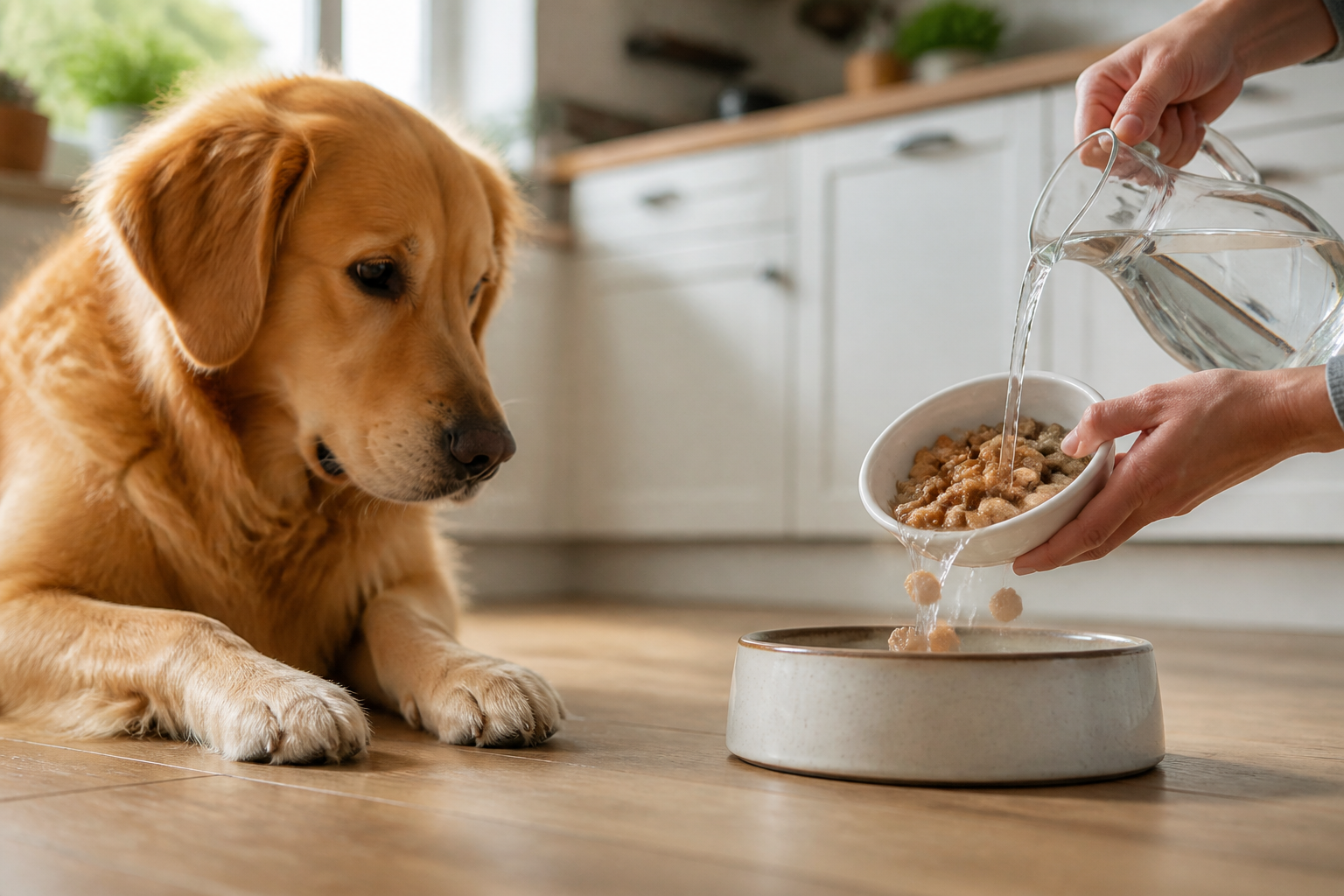
Step 1: Measure the food. / Place the recommended amount of nuggets or patties into your dog's clean bowl.
Step 2: Break it up. / Use a fork or your hands to crumble the nuggets. Increasing the surface area helps the food absorb moisture faster.
Step 3: Add the liquid. / Pour warm (not boiling) water or broth over the food. A common ratio is two parts food to one part liquid.
Step 4: Wait and stir. / Let the food sit for 3 to 5 minutes. Stir it once more to ensure there are no dry pockets in the middle.
Bottom line: Breaking the food into smaller pieces before adding water significantly speeds up the rehydration process.
Creative Liquid Options for Extra Nutrition
You do not have to stick to plain tap water. You can use different liquids to provide a nutritional boost or to help with specific health goals.
- Bone Broth: This is packed with collagen and amino acids that support joint health and digestion. Ensure you use a pet safe broth without added salt, onions, or garlic.
- Goat Milk: Often called universal milk, goat milk is easy for dogs to digest. It provides probiotics that support a healthy gut.
- Warm Water: Simple and effective. Warm water helps release the natural fats and aromas in the meat.
If your dog is managing joint stiffness or senior health concerns, you might consider adding supplements during the rehydration process. Our dog healthcare category includes options that can often be served alongside a high quality freeze dried meal.
Safety and Handling for Freeze Dried Raw
Because most freeze dried food is raw, you must handle it with the same care you would use for raw meat from the grocery store. The freeze drying process does not always kill all bacteria. Some companies use High Pressure Processing (HPP) as a safety step, while others rely on strict testing.
Always wash your hands after handling the dry nuggets. Your dog's bowl should be washed with hot, soapy water after every single meal. If your dog does not finish their rehydrated food within 30 minutes, you should discard the leftovers. Once moisture is added back to the food, it can grow bacteria just like any other fresh meat. Our article on adding water to dry dog food covers similar serving and spoilage considerations.
Storage Tips
- Keep the bag sealed tightly to prevent moisture from the air from getting inside.
- Store the food in a cool, dry place like a pantry rather than under the sink.
- Check the expiration date regularly, though freeze dried food typically has a very long shelf life.
Transitioning to a Freeze Dried Diet
If you are moving from kibble to freeze dried food, do not make the switch overnight. A sudden change in protein or fat levels can cause an upset stomach. Start by replacing about 25 percent of their old food with rehydrated freeze dried food. Over the course of 7 to 10 days, slowly increase the amount of freeze dried food while decreasing the old food. Our guide to how much freeze dried dog food to feed offers another helpful resource for planning portions.
Keep an eye on your dog's stool during this time. It is normal for a dog on a freeze dried diet to have smaller, firmer stools because they are absorbing more of the nutrients in the food. However, if you notice diarrhea or vomiting, slow down the transition and consult your vet.
Key Takeaway: A slow transition allows your dog's digestive enzymes to adapt to the rich nutrient profile of a raw, freeze dried diet.
Choosing the Right Brand at BaxterBoo
We pride ourselves on carrying over 500 trusted brands to ensure every pet owner finds exactly what they need. Our warehouse in Vernon Hills is stocked with premium options like Stella and Chewy's, Vital Essentials, and Ziwi Peak. Whether you are looking for a complete meal or a simple topper, we select products based on ingredient quality and safety standards.
Our hybrid model allows you to shop online for home delivery or visit us in person. We also offer our Autoship programme that saves you money on recurring orders. This is a great way to ensure you never run out of your dog's favorite freeze dried meals while earning rewards through our MVP program.
Conclusion
Rehydrating freeze dried dog food is the best way to ensure your pet stays hydrated and digests their meal properly. While feeding it dry is acceptable for treats or quick snacks, adding water or broth restores the food to its natural state. This simple step supports kidney health, improves taste, and makes mealtime more enjoyable for your dog.
- Rehydration aids in digestion and prevents chronic dehydration.
- Always use warm water or pet safe broths to enhance the flavor.
- Practice safe handling and clean bowls after every meal.
- Consult your vet for dogs with specific health conditions or prescription needs.
Bottom line: For a healthier, more satisfied dog, take the extra five minutes to rehydrate their freeze dried meals every day.
Explore our full collection of freeze dried dog food today to find the perfect protein for your companion.
FAQ
Can I rehydrate freeze dried food with cold water?
You can use cold water, but warm water works much faster and releases more of the food's natural aroma. Warm water helps to soften the fats in the meat, making it more appealing to picky eaters. Avoid using boiling water, as extreme heat can damage some of the sensitive enzymes and vitamins that freeze drying is meant to preserve.
How long can rehydrated freeze dried food sit out?
Once you add water to freeze dried food, it should be treated like fresh raw meat. You should not leave it in the bowl for more than 30 to 60 minutes. If your dog does not finish the meal in that timeframe, throw the leftovers away and wash the bowl thoroughly. Bacteria can begin to grow quickly once the food is moist and at room temperature.
Is it cheaper to feed freeze dried food than kibble?
Freeze dried food is generally more expensive than traditional kibble because the processing takes longer and uses higher quality ingredients. However, because it is so nutrient dense, you often feed smaller portions than you would with kibble. Many owners find a balance by using freeze dried food as a topper rather than a full meal to manage costs while still providing a nutritional boost.
Does rehydrating freeze dried food help with dental health?
Feeding freeze dried food dry provides a bit of a crunch, but it does not actually clean teeth like many people believe. Rehydrated food is soft and does not scrape away plaque. For true dental health, it is better to rely on regular brushing or dental chews like Greenies. Focus on rehydration for the digestive and internal health benefits it provides.






