
 Save 15% on your 1st Autoship learn more

 Email us
 Live Chat
 FAQs
FAQs





Introduction
You are standing in the pet food aisle or staring at a bag in your pantry. You need to know how long that food will last or how much you are actually paying per meal. It is a common moment for every dog owner. You might be trying to plan your next order or helping your dog lose a few pounds. At BaxterBoo, we hear this question frequently from pet parents who want to be precise about their dog’s nutrition.
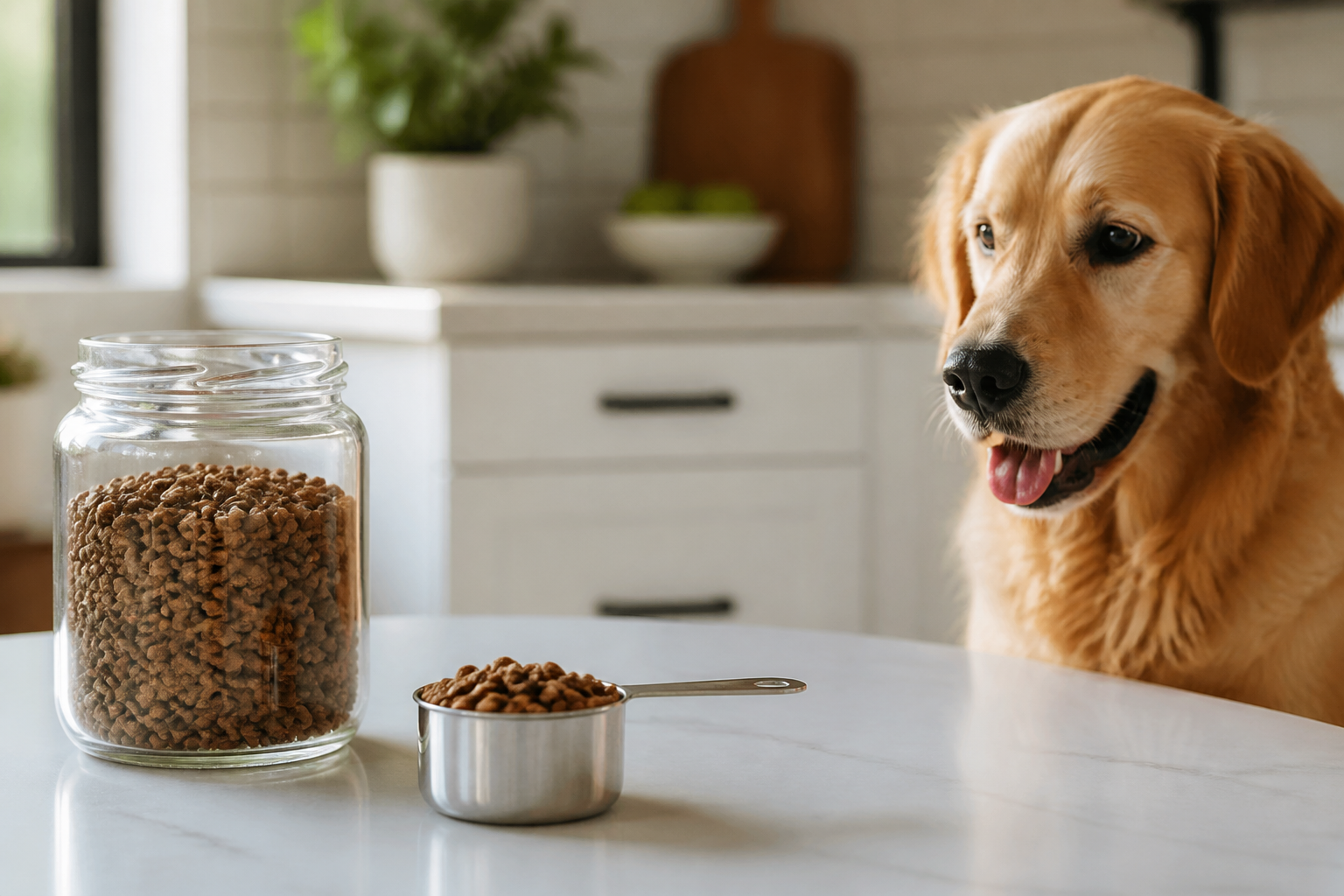
Understanding the relationship between weight and volume is the first step toward better portion control. This post explains how many cups are in a pound of kibble and why that number changes between brands. We will provide conversion charts, measurement tips, and guidance on managing your dog's weight. By the time you finish reading, you will be able to calculate exactly how many days of food are left in your current bag.
Quick Answer: On average, one pound of dry dog food contains about 4 cups of kibble. This estimate can range from 3 to 5 cups depending on the density and size of the specific kibble.
The Basic Math of Dog Food Portions
Most standard dry dog foods weigh about 4 ounces per cup. Since there are 16 ounces in a pound, the math usually works out to 4 cups per pound. This is a helpful rule of thumb when you are standing in the store. If you buy a 5-pound bag, you can expect to get roughly 20 cups of food out of it.
However, this is just a starting point. Not all dog food is created equal. Some kibble is light and airy. Other brands are heavy and dense. If you are feeding a high-protein, grain-free food like many of the premium options in our dry dog food category, the kibble might be heavier. In that case, you might only get 3 or 3.5 cups per pound.
If you are feeding a "weight management" or "light" formula, the kibble is often puffed up with extra fiber and air. This helps your dog feel full without eating too many calories. You might find that these formulas give you 5 cups per pound because the individual pieces are less dense.
Why Kibble Measurements Vary
It is frustrating when one bag of food lasts six weeks and the next only lasts five. This variation happens because of how the food is manufactured. Most dry dog food is made through a process called extrusion. The ingredients are mixed and cooked under pressure, then pushed through a die to create shapes.
Kibble Shape and Air Space
The shape of the kibble affects how much air sits in the measuring cup. Large, triangular kibble pieces do not fit together tightly. They leave big gaps of air between them. Small, round kibble pieces roll into the corners of the cup and pack down.
If you fill a cup with large chunks, you are actually feeding less food by weight than if you fill it with small pellets. This is why some dogs seem hungry even when you give them the "correct" number of cups. They might be getting more air and less actual food.
Ingredient Density
The ingredients also play a massive role in weight. Meat meal is very dense. Grains like corn or wheat can be processed to be very light. If a food uses a lot of heavy animal fats and proteins, a single cup will weigh more.
Key Takeaway: Always check the calorie count per cup on the back of the bag. Two different foods might both recommend "one cup," but one could have 100 more calories than the other.
Dog Food Bag Conversion Chart
Use this chart as a general guide for standard kibble. These numbers assume an average density of 4 cups per pound. Your specific brand may vary by a few cups.
| Bag Weight (Pounds) | Total Cups (Approximate) | How Long It Lasts (1 Cup/Day) |
|---|---|---|
| 5 lbs | 20 Cups | 20 Days |
| 10 lbs | 40 Cups | 40 Days |
| 15 lbs | 60 Cups | 2 months |
| 20 lbs | 80 Cups | 2.5 months |
| 30 lbs | 120 Cups | 4 months |
| 40 lbs | 160 Cups | 5 months |
Note: For larger bags, we generally recommend finishing the food within 6 to 8 weeks of opening. This keeps the fats from going rancid and ensures the vitamins stay potent.
For another practical comparison, see our guide to how many cups are in 24 pounds of dry dog food.
The Problem with Measuring Cups
Most of us use a plastic scoop or a coffee mug to measure dog food. Scientists have actually studied how dog owners measure food. These studies show that humans are surprisingly bad at it. Most people overfill the cup or use the wrong type of measuring tool.
A liquid measuring cup with a spout is not accurate for dry kibble. You should use a nested dry measuring cup. Even then, your "cup" might be different from your neighbor's "cup." One person might scoop a "heaping" cup while another levels it off with a knife. This small difference can add up to hundreds of extra calories over a week.
Transitioning to a Scale
If your dog is struggling with weight, consider using a kitchen scale. Weighing food in grams or ounces is the only way to be 100 percent accurate. If the bag says a cup is 115 grams, you can weigh out exactly 115 grams every single time. This removes the guesswork. It also makes it much easier to adjust portions by small amounts if your vet recommends a slight reduction in calories.
For more detail, read how many grams are in a cup of dry dog food.
Calculating Your Dog's Specific Needs
Every dog is an individual. A 50-pound dog that sleeps on the couch all day needs fewer calories than a 50-pound dog that goes for five-mile runs. The chart on the back of your dog food bag is just a suggestion. It is based on an average, active adult dog.
Factors That Change the Cup Count
- Age: Puppies are growing fast and need more calories per pound of body weight. Seniors often have slower metabolisms and need less.
- Activity Level: Working dogs or agility dogs burn through energy quickly. They may need significantly more cups than the bag suggests.
- Spay/Neuter Status: Dogs that are fixed generally have a lower metabolic rate. They often need about 20 percent fewer calories than intact dogs.
- Weather: Dogs that spend a lot of time outside in cold weather use energy to stay warm. You might need to increase their food in the winter.
Step 1: Check the bag for the daily recommendation.
Step 2: Divide that total by the number of meals you feed.
Step 3: Monitor your dog's ribs and waistline.
Step 4: Adjust the portion size by 10 percent if you notice weight gain or loss.
For additional portion guidance, read how many cups of dry dog food to feed your dog per day.
Weight Management and Your Dog's Health
We know that extra weight puts a lot of stress on a dog’s body. It can lead to joint pain, heart issues, and a shorter lifespan. If your dog is consistently gaining weight even with careful measuring, it might be time for a change in diet.
Many dogs benefit from prescription weight management foods. Our pet pharmacy offers FDA-approved medications and prescription pet foods through our partnership with Pet's Choice. These specialized diets are designed to help dogs feel satisfied while consuming fewer calories. If your vet has prescribed a specific diet like Farmina Vet Life or Royal Canin, you can fulfill that prescription through us.
Vet Tip: Always consult your veterinarian before starting a strict weight loss plan. Rapid weight loss can be dangerous. Your vet can help you calculate the exact number of calories your dog needs based on their target weight.
How to Keep Kibble Fresh
Once you know how many cups are in your bag, you can plan how to store it. If you have a small dog and bought a 40-pound bag to save money, that food might be open for several months. Oxygen and light cause the fats in the food to break down. This can make the food taste bad and may even cause digestive upset.
We recommend keeping the kibble in its original bag. Those bags are designed with special liners to keep the food fresh. You can place the entire bag inside a plastic or metal airtight container. This provides a double layer of protection against pests and air.
If you find that a bag is lasting too long, consider our Autoship program. You can set up smaller, more frequent deliveries. This ensures your dog is always eating fresh food. Plus, you get savings on your first order and a free MVP Gold membership.
The Cost Per Cup Factor
When you are comparing two different brands, the price per pound can be misleading. A "cheaper" bag of food might require you to feed three cups a day. A "premium" bag might only require two cups because it is more nutrient-dense.
To find the true cost, calculate the cost per cup:
- Find the total number of cups in the bag (Bag weight x Cups per pound).
- Divide the total price of the bag by the total number of cups.
- Multiply the cost per cup by the number of cups your dog eats daily.
You might be surprised to find that the more expensive bag actually costs less per day to feed. This is because your dog is getting more nutrition in every bite. Brands like Open Farm, Stella and Chewy's, and Orijen often have higher calorie counts per cup than grocery store brands.
If you are comparing dense formulas, browse our selection of Stella & Chewy's products.
Treats and the Daily Cup Count
Do not forget that treats have calories too. If you are giving your dog several large biscuits or dental chews, you need to subtract those calories from their daily kibble portion. Treats should never make up more than 10 percent of your dog's total diet.
If you use a lot of treats for training, try using a portion of your dog's daily kibble instead. You can also look for low-calorie treats like green beans or carrots. Keeping a consistent daily calorie intake is the best way to prevent the "creeping weight gain" that happens as dogs age.
Managing Dietary Transitions
When you switch to a new brand, the cups per pound will likely change. Never switch foods overnight. This can cause significant stomach upset. Instead, use a slow transition over 7 to 10 days.
- Days 1-3: 75% old food, 25% new food.
- Days 4-6: 50% old food, 50% new food.
- Days 7-9: 25% old food, 75% new food.
- Day 10: 100% new food.
Pay close attention to the cup measurements during this time. If the new food is denser, the volume in the bowl will look smaller. Do not be tempted to "fill the bowl" to the old level. Trust the measurements on the new bag and monitor your dog’s energy and weight.
For related guidance, read how much dry food to feed a dog for daily health.
Summary of Feeding Success
Getting the portion right is one of the most important things you can do for your pet. It saves you money, reduces waste, and keeps your dog at a healthy weight. Remember that the "4 cups per pound" rule is a helpful estimate, but the scale is your best friend for accuracy.
Check your dog's body condition regularly. You should be able to feel their ribs easily under a thin layer of fat. If you cannot feel the ribs, it is time to reduce the portion slightly. If the ribs are poking out, they likely need a bit more.
Bottom line: Accuracy in measuring kibble is the foundation of long-term health and weight management for your dog.
Conclusion
Knowing how many cups are in a pound of dry dog food makes you a more informed shopper and a better pet parent. Most bags provide about 4 cups per pound, but density and kibble size can change that number significantly. Use our conversion charts to plan your purchases and ensure your dog never misses a meal. If you are managing a health condition or need a specific weight-loss diet, our pharmacy and Pet's Choice partnership are here to help with prescription options. Consistency is the key to a healthy weight.
- Standard kibble is roughly 4 cups per pound.
- High-density foods may be closer to 3 cups per pound.
- Light or weight-management foods may be 5 cups per pound.
- Always use dry measuring cups or a kitchen scale for accuracy.
Ready to simplify your routine? Our Autoship program ensures your dog's favorite food arrives right when you need it so you never have to guess how many cups are left in the bag.
FAQ
Does one pound of dog food always equal four cups?
No, it is a general average. The actual number of cups depends on the size of the kibble and the ingredients used. High-protein foods are often denser and have fewer cups per pound, while fiber-rich weight-loss foods may have more cups per pound.
How many cups of food are in a 30 lb bag of dog food?
On average, a 30-pound bag contains approximately 120 cups of kibble. If your dog eats 2 cups per day, this bag will last about 60 days. Always check your specific brand as the total can range from 100 to 140 cups depending on density.
Is it better to measure dog food by weight or by volume?
Measuring by weight with a kitchen scale is much more accurate than measuring by volume with a cup. Factors like how tightly the kibble packs or how high you heap the scoop can cause a 20 percent difference in the amount of food you are actually giving.
How long does a bag of dry dog food stay fresh after opening?
Most manufacturers recommend using the food within 6 to 8 weeks of opening the bag. After this time, the fats in the food can begin to oxidize and vitamins may lose their potency. Store the food in its original bag inside an airtight container for the best results.






