
 Save 15% on your 1st Autoship learn more

 Email us
 Live Chat
 FAQs
FAQs





Introduction
You are standing in your kitchen with a fresh five pound bag of premium kibble. Your dog is waiting patiently by their bowl. You might be wondering if this bag will last through the end of the month or if you will be back at the store in three days. Understanding the volume of your dog's food is about more than just storage. It is about maintaining a healthy weight and staying on budget. At BaxterBoo, we see pet owners every day who want to balance quality nutrition with practical planning. This guide will help you determine exactly how many cups are in that 5-pound bag. We will look at why measurements change between brands and how to ensure your dog gets the perfect portion every time. Knowing your numbers helps you become a more confident and informed pet parent.
Quick Answer: A 5-pound bag of dry dog food typically contains between 15 and 22 cups of kibble. This wide range exists because different brands have different kibble sizes, shapes, and densities.
The Standard Calculation for Dog Food Volume
Most people assume that weight and volume are the same. In the world of pet food, they are very different. A pound of lead weighs the same as a pound of feathers, but they take up different amounts of space. The same rule applies to kibble. A heavy, dense kibble will take up less space in a measuring cup than a light, airy one.
The general rule of thumb used by many manufacturers is that one pound of standard dry dog food equals about 4 cups. If you multiply that by five, you get 20 cups. However, this is just a baseline. High-protein foods with a lot of meat meal tend to be heavier. This means there are fewer cups in a pound. Conversely, many "light" or weight-management formulas are puffed with air or fiber. These might give you 4.5 or 5 cups per pound.
If you are trying to plan your next order, it is safest to estimate on the lower side. Assuming 17 or 18 cups for a 5-pound bag ensures you do not run out of food unexpectedly. This is especially helpful if you use our Autoship programme to keep your pantry stocked.
Why Kibble Size and Shape Matter
Kibble is not a uniform product. If you look at brands like Royal Canin, you will see specific shapes for specific breeds. Some are small rounds, while others are large triangles or X-shapes. These shapes create different amounts of "air space" in your measuring cup.
Small Kibble vs. Large Kibble
Small, round kibble packs together tightly. There is very little space between the pieces. When you scoop a cup of small kibble, you are getting a lot of actual food. If you have a 5-pound bag of small-breed kibble, it might only yield 15 or 16 cups because each cup is quite heavy.
Large, chunky kibble for big dogs has the opposite effect. Because the pieces are large and irregular, they do not fit together perfectly. There are many gaps of air in the cup. This makes the cup weigh less. You might find that a 5-pound bag of large-breed food yields 22 cups or more.
Dense vs. Puffed Formulations
The ingredients also play a role in density. We carry brands like Ziwi Peak and Stella and Chewy's that focus on nutrient density. These foods often have a higher weight-to-volume ratio. A tiny scoop of a dense food might have the same calories and weight as a large scoop of a budget brand. For more options, browse our dry dog food category.
Key Takeaway: Always check the calorie count per cup on the back of the bag. A bag with more cups is not always a better value if your dog needs to eat more of it to stay full.
How Long Does a 5-Pound Bag Last?
A 5-pound bag is a common size for small dog owners or people trying out a new brand like Open Farm or NutriSource. To learn more about portion planning, read our guide to daily dry food portions. To know how long it will last, you need to know your dog's daily portion.
For Small Dogs
Small dogs usually eat between 1/2 cup and 1 cup of food per day. If your dog eats 3/4 of a cup daily, a 5-pound bag containing 20 cups will last about 26 days. This is almost a full month of food. It is a very convenient size for owners of Chihuahuas, Pomeranians, or Yorkies.
For Medium and Large Dogs
A medium dog weighing 30 to 40 pounds might eat 2 cups of food per day. In this case, that same 5-pound bag only lasts 10 days. For a giant breed eating 4 or 5 cups a day, the bag will be gone in less than a week. This is why many owners of larger dogs prefer 25 or 30-pound bags for their primary food supply.
Using 5-Pound Bags for Freshness
One benefit of smaller bags is freshness. Once a bag of dog food is opened, the fats begin to oxidize and the vitamins can lose potency. If you have a single small dog, a giant bag might go stale before they finish it. We often recommend smaller bags for households with one small pet to ensure the food stays as fresh as possible. For additional storage guidance, see these dry dog food freshness tips.
Bottom line: A 5-pound bag lasts nearly a month for a toy breed but serves as only a short-term supply for a large dog.
The Importance of Using an Actual Measuring Cup
One of the biggest mistakes pet owners make is using a random coffee mug or a plastic stadium cup to measure food. These are rarely exactly 8 ounces. A "cup" of food in a coffee mug might actually be a cup and a half.
Research has shown that even small errors in measuring can lead to significant weight gain over time. If you overfeed by just 10 percent every day, your dog could become overweight within a year. For a 10-pound dog, an extra ounce of food is a huge percentage of their daily intake.
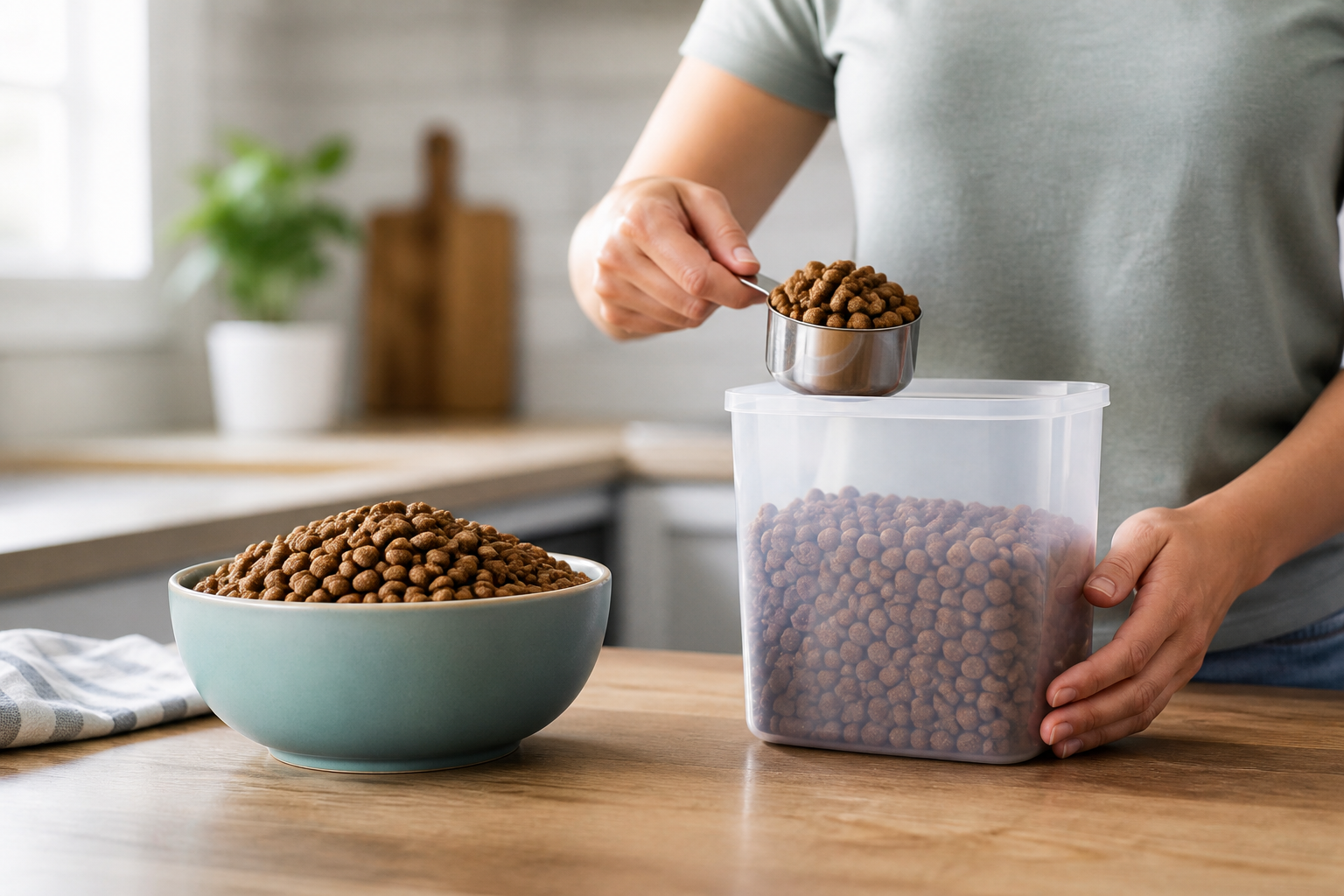
Always use a standard dry measuring cup. These are the sets that nest inside each other. Fill the cup and level it off with a flat edge. Do not use "heaping" scoops unless your vet specifically tells you to. Consistency is the key to managing your dog's health. You can also review how much a cup of dry dog food weighs when comparing different formulas.
Transitioning and Measuring for New Foods
When you switch brands, you cannot assume the measurements are the same. If you move from a grain-heavy food to a high-protein brand like Orijen or Acana, the new food is likely much denser. For more guidance, read our guide to measuring dry dog food in grams.
- Check the calorie count. Look for the "kcal/cup" listing on the new bag.
- Compare it to the old food. If the new food has 500 calories per cup and the old one had 350, you must feed less.
- Use a scale if possible. If you want the most accuracy, weigh the food in grams. This removes all the guesswork of kibble shape and air space.
Step 1: Check the label. / Find the feeding instructions on the back of your new BaxterBoo food bag. Step 2: Start slow. / Mix 25 percent of the new food with 75 percent of the old food for a few days. Step 3: Watch the weight. / Monitor your dog's body condition over the next two weeks and adjust the portion if they seem too hungry or are gaining weight.
Weight Management and Your Dog's Health
Obesity is a growing problem for pets in the United States. It can lead to joint pain, diabetes, and heart issues. Knowing how many cups are in your bag is the first step toward calorie control. If your dog is struggling to maintain a healthy weight, the solution often starts with more precise measuring.
Sometimes, a standard diet is not enough for a dog with a slow metabolism or medical issues. Our pharmacy offers FDA-approved prescription diets through our partnership with Pet's Choice. These specialized foods, such as the Farmina Vet Life range, are formulated to help dogs lose weight safely while still feeling full.
Vet Tip: If your dog is consistently gaining weight despite you following the bag's feeding guide, talk to your veterinarian. They can help you calculate the exact number of calories your dog needs based on their activity level and age.
Storage Tips for 5-Pound Bags
Because 5-pound bags are small, they are easy to store incorrectly. Keeping the food fresh is vital for your dog's health. For a broader overview, read how long dry dog food stays good.
- Keep it in the bag. The original bag is designed to keep out moisture and light. It also has the lot number and expiration date if there is ever a recall.
- Use a clip. A simple bag clip or a heavy-duty clothespin can keep the top sealed tight.
- Place the bag in a bin. If you use a plastic storage bin, put the entire bag inside it. This provides a double barrier against pests and air.
- Avoid the garage. Temperature swings in a garage or basement can cause the oils in the kibble to go rancid. Keep the food in a cool, dry pantry.
Planning Your Inventory with Autoship
Managing your dog's food supply should not be a weekly chore. Once you know that a 5-pound bag lasts your dog exactly 20 days, you can plan your shopping. We offer an Autoship programme that allows you to schedule your deliveries so you never run out.
By setting up a recurring order, you also save on your first order and receive a free MVP Gold membership. This is a great way to stay organized. If you know your dog goes through two 5-pound bags a month, you can set your delivery for every 30 days and forget about it. It ensures your pet always has fresh food without you having to haul heavy bags home from the store last minute.
Comparing Bag Sizes: Is 5 Pounds Right for You?
While we focus on the 5-pound bag here, it is helpful to see how it compares to larger sizes. This helps you decide if you are getting the best value.
| Bag Size | Estimated Cups | Best For |
|---|---|---|
| 5 Pounds | 15 - 22 Cups | Toy breeds, trial periods, or travel |
| 15 Pounds | 45 - 65 Cups | Small to medium dogs |
| 30 Pounds | 90 - 130 Cups | Large dogs or multi-pet homes |
If you have the storage space and your dog will finish the food within six weeks, a larger bag is usually more cost-effective. However, for a single small dog, the 5-pound bag is the gold standard for maintaining freshness and quality.
Key Takeaway: Don't buy a bag so large that it takes more than two months to finish. The nutritional quality declines the longer the bag stays open.
Understanding the "Ounce" Confusion
One reason pet owners struggle with this math is the word "ounce." In the United States, an ounce can measure weight (how heavy something is) or volume (how much space it takes up).
A standard measuring cup is 8 fluid ounces of volume. However, a cup of dog food almost never weighs 8 ounces. Most kibbles weigh between 3 and 4 ounces per cup. If a bag says it contains 80 ounces (5 pounds), you do not divide 80 by 8 to get 10 cups. You have to account for the density of the food. This is why the cup count is usually much higher than people expect.
If you ever feel confused, remember that the "cup" mentioned on the feeding chart is always the volume measurement. Use your plastic measuring cup, not a kitchen scale, unless the chart specifically gives you a measurement in grams or ounces.
Conclusion
Determining how many cups are in 5 pounds of dry dog food is the best way to take control of your pet's nutrition. Whether you are getting 15 cups or 22 cups, the most important thing is consistency. Measure carefully, store the food in a cool place, and monitor your dog's body condition. At BaxterBoo, we want to make sure you have the right tools and information to keep your dog thriving. Whether you prefer the convenience of small bags for freshness or the value of larger bags, we are here to help.
- A 5-pound bag typically yields 15 to 22 cups.
- Kibble shape and density change how much fits in a cup.
- Small dogs can get nearly a month of meals from a 5-pound bag.
- Always use a dedicated dry measuring cup for accuracy.
Bottom line: Accuracy in feeding leads to a longer, healthier life for your dog.
If you are ready to find the perfect food for your pup, visit our Dog Food collection to browse 500+ trusted brands.
FAQ
How many cups of food are in a 5lb bag of Royal Canin?
For most Royal Canin formulas, you can expect between 18 and 21 cups. Because they use very specific kibble shapes, the volume can vary slightly between their breed-specific formulas. Small-breed versions tend to be on the higher end of that range because the kibble is so small.
Is it cheaper to buy 5-pound bags of dog food?
Generally, the price per pound is higher on a 5-pound bag than on a 30-pound bag. However, it can be cheaper in the long run if it prevents you from throwing away stale food. If you have a tiny dog, the 5-pound bag ensures they get the full nutritional value of the food before the vitamins degrade.
Why does my dog seem hungry even when I feed the right amount?
Some kibbles are very dense, meaning the volume in the bowl looks small even if the calories are high. If your dog is a fast eater or seems unsatisfied, you can try adding a little warm water to the kibble. This increases the volume and helps them feel more full without adding extra calories.
Can I just use a scoop that came with the food?
Some brands include a plastic scoop inside the bag, but these are not always a standard 1-cup measurement. Always check the markings on the scoop against a real measuring cup from your kitchen. If the scoop is actually 1.5 cups and you think it is 1 cup, you will overfeed your dog by 50 percent every day.






