
 Save 15% on your 1st Autoship learn more

 Email us
 Live Chat
 FAQs
FAQs





Introduction
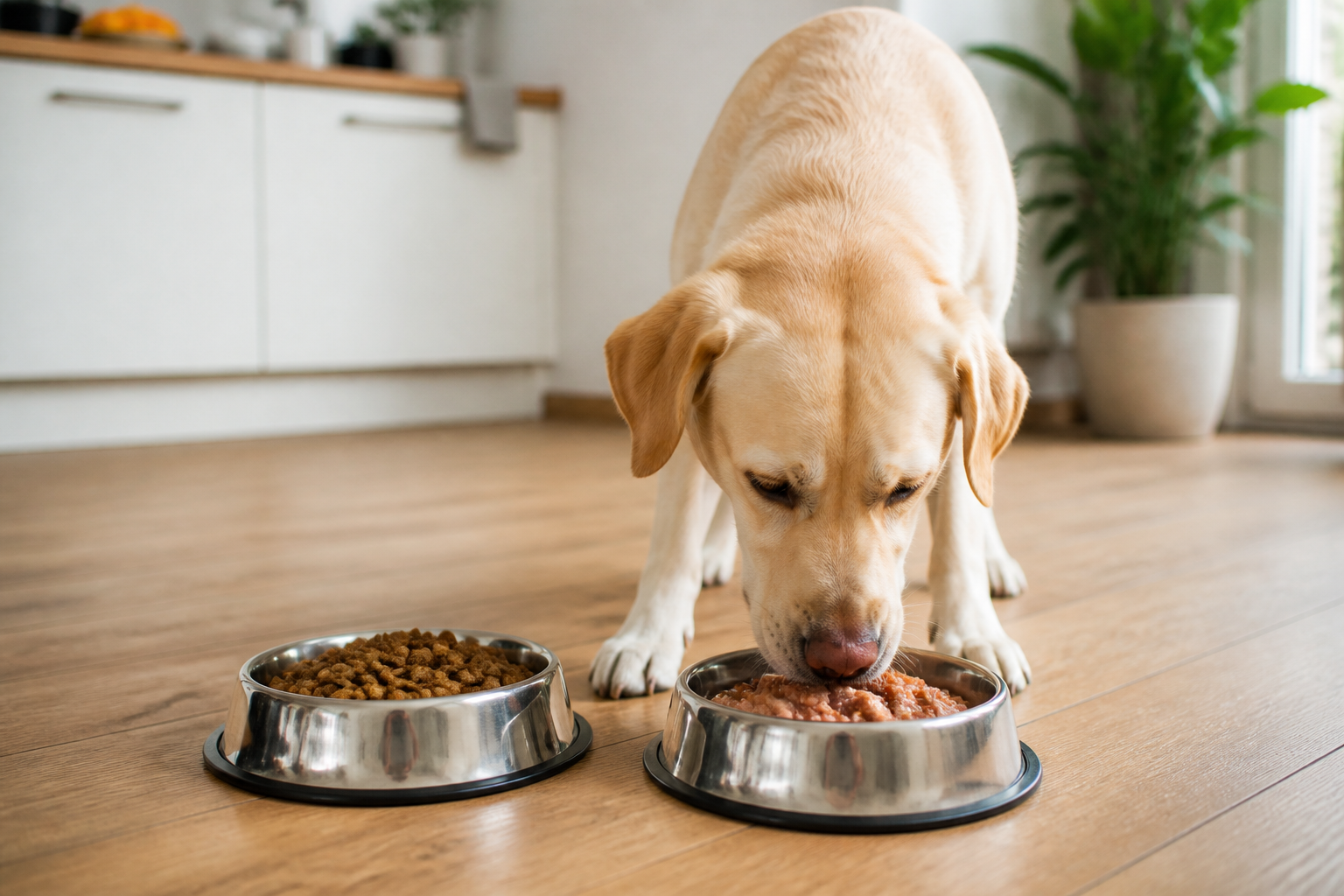
You are standing in the kitchen with a scoop in one hand and a can opener in the other. Your dog is watching every move with high expectations. You know that mixing kibble with wet food offers great benefits like better hydration and variety. However, figuring out the exact portions can feel like a math project. At BaxterBoo, we help pet parents navigate these nutritional puzzles every day in our warehouse store and online. Getting the balance right ensures your dog stays at a healthy weight while enjoying their meals. This guide covers how to calculate the perfect ratio based on your dog's weight, age, and activity level. Finding the right balance for how much dry and wet food for dog health is the best way to support a long and active life.
The Benefits of Mixing Dry and Wet Food
Many dog owners choose a mixed feeding routine to give their pets the best of both worlds. Dry kibble is convenient and helps scrape away plaque as your dog chews. It is also more calorie-dense, which means you can feed smaller volumes. Wet food provides much-needed moisture. This is especially helpful for dogs that do not drink enough water on their own.
Mixed feeding also adds variety to a dog’s life. Some dogs become bored with the same texture every day. Adding a topper of wet food can make a meal much more enticing for a picky eater. It also allows you to provide different protein sources. You might use a chicken-based kibble but add a small amount of beef or lamb wet food for a flavor boost.
For more guidance on combining textures, read our guide to mixing dry and wet dog food.
Key Takeaway: Mixing food types combines the dental benefits of kibble with the hydration and palatability of wet food.
Factors That Influence Feeding Amounts
Every dog is an individual. You cannot simply follow a generic rule for every pet in your neighborhood. Several key factors change how many calories your dog needs to consume each day.
Current Weight and Body Condition
Your dog's weight is the most obvious factor. However, you should look at their body condition rather than just the number on the scale. A dog might be the "correct" weight for their breed but still carry too much body fat. We carry brands like Farmina and Royal Canin that offer specific formulas for different body types. If your dog is overweight, you will need to feed them based on their target weight, not their current weight.
Activity Level
A dog that runs three miles with you every morning needs more fuel than a dog that naps on the couch. Working dogs or high-energy breeds like Border Collies require significantly more calories. If your dog is mostly sedentary, you must be careful with portion sizes. Even a small amount of extra food can lead to weight gain over time.
Age and Life Stage
Puppies are growing rapidly and require more protein and fat. They need more frequent meals and higher caloric density. Senior dogs often have slower metabolisms. They may also be less active due to joint stiffness. Feeding a senior dog the same amount you fed them as a three-year-old will likely lead to obesity.
For additional portion guidance by age and size, see how many cups of dry dog food your dog may need.
Vet Tip: Always consult your veterinarian before making major changes to your dog's diet, especially if they have underlying health conditions. A vet can help you determine a precise caloric target.
Understanding Caloric Density
The biggest challenge in mixed feeding is that dry and wet foods have different energy levels. Dry kibble is concentrated. It has had most of the water removed. Wet food is often 75 percent to 80 percent water. This means a cup of kibble has many more calories than a cup of wet food.
When you look at the labels, you will see "kcal/kg" or "kcal/cup." This tells you the energy content. You cannot simply swap one cup of dry food for one cup of wet food. If you do that, your dog will receive far fewer calories than they need. You must account for this difference when you start mixing the two.
You can compare different formulas in our dog food category.
Quick Answer: To mix dry and wet food, calculate the total daily calories your dog needs. Then, assign a percentage to each food type and convert that into measurements based on the product labels.
How to Calculate the 50/50 Split
A common way to mix food is the 50/50 split. This means half of the daily calories come from kibble and half come from wet food. It is easier to calculate than it sounds.
Step 1: Determine the total daily amount.
Check the feeding chart on your dry food bag for your dog's weight. Note how many cups they should eat if they only ate dry food. Do the same for the wet food cans.
Step 2: Divide each amount by two.
If the bag says your dog needs 2 cups of dry food per day, half of that is 1 cup. If the cans say your dog needs 2 cans per day, half of that is 1 can.
Step 3: Combine the portions.
Your daily total for a 50/50 mix would be 1 cup of dry food and 1 can of wet food. You can serve this all at once or split it into two meals. Many owners give half a cup of dry with half a can of wet in the morning, then repeat in the evening.
Creating a 75/25 Mixed Feeding Plan
Some owners prefer to use wet food mostly as a topper. In this case, a 75/25 split is a popular choice. This means 75 percent of the calories come from dry kibble and 25 percent come from wet food.
To do this, take the total daily dry food recommendation and multiply it by 0.75. Then, take the total daily wet food recommendation and multiply it by 0.25. If your dog usually eats 2 cups of kibble, 75 percent of that is 1.5 cups. If they usually eat 2 cans of wet food, 25 percent of that is half a can. Your new daily total is 1.5 cups of kibble and half a can of wet food.
For more information about choosing between food types, read should dogs eat dry or wet food.
Bottom line: Always use the feeding charts on the specific products you are using, as calorie counts vary widely between brands.
The Importance of Precise Measurement
Guessing your dog's portions is a common mistake. A "scoop" is not a universal measurement. A slightly heaping scoop of kibble can add 10 percent more calories than a level scoop. Over a week, those extra calories add up.
Use a standard measuring cup for dry food. For wet food, you can use the lines on the side of the can or a kitchen scale for even better accuracy. If you use a scale, you can measure in grams. This is the most accurate way to ensure your dog is getting exactly what they need. We recommend keeping a dedicated measuring set in your pet food bin.
- Use a level measuring cup for kibble.
- Check the weight of the wet food can, usually 5.5oz or 13oz.
- Account for treats in the daily calorie total.
- Adjust portions if you notice weight gain.
Managing Weight and Prescription Needs
If your dog is struggling with their weight, portion control becomes even more vital. Obesity in dogs can lead to joint pain, heart issues, and diabetes. Sometimes, standard retail food is not enough to manage a specific health condition.
Our pharmacy carries FDA-approved prescription pet foods through our partnership with Pet's Choice. These specialized diets are formulated for weight management, kidney health, or allergy relief. If your vet prescribes a specific diet, the feeding instructions may be even more precise. You can fulfill these prescriptions through us to ensure your dog gets the exact nutrition they need for their condition.
Vet Tip: If your dog is losing or gaining weight unexpectedly on a calculated plan, see your vet. There may be an underlying metabolic issue or a need for a prescription diet.
Life Stage Adjustments: Puppies and Seniors
Feeding a puppy is a full-time job. They have small stomachs but huge energy needs. Most puppies do best with a mix that is high in protein and healthy fats. You may need to feed them three or four times a day. As they grow, you will constantly adjust the "how much" part of the equation. Check their weight every two weeks during the first six months.
Senior dogs often need a different balance. They might benefit from wet food if they have dental issues or missing teeth. Since they move less, the calorie count should come down. However, the quality of the protein should remain high to maintain muscle mass. Many senior specific wet foods include added joint support like glucosamine.
For another perspective on life-stage feeding, explore how to switch from dry to wet dog food.
Monitoring Your Dog's Progress
No chart is perfect. The recommendations on the bag are starting points based on an "average" dog. Your dog might have a faster or slower metabolism than the average. You must monitor their body condition regularly.
You should be able to feel your dog's ribs easily under a thin layer of fat. If you have to press hard to find the ribs, they are likely overweight. When looking from above, your dog should have a visible waistline. If they look like a solid rectangle, it is time to trim the portions. If the ribs are visible to the eye, you may need to increase the food.
- Perform a "rib check" once a week.
- Look for a tucked-in waistline from the side.
- Monitor energy levels during walks.
- Watch for changes in coat quality or stool consistency.
Feeding Schedules and Storage
Consistency helps your dog's digestion. Most adult dogs do well with two meals per day. This keeps their blood sugar stable and prevents them from getting too hungry. If you mix dry and wet food, try to keep the timing the same.
Storing wet food requires a bit of care. Once a can is opened, it must be refrigerated. Use a silicone lid to keep it airtight and prevent it from drying out. Most wet food should be used within two to three days of opening. If you only use a small amount as a topper, consider buying smaller cans to ensure freshness. Dry food should be kept in its original bag inside an airtight container. This protects the fats in the kibble from going rancid.
Summary of Feeding Steps
Getting the right amount of food does not have to be stressful. By following a few simple steps, you can create a healthy routine. We carry over 500 trusted brands to help you find the perfect match for your dog's needs.
- Identify your dog's target weight.
- Consult the feeding charts for both the dry and wet food.
- Decide on your mixing ratio, 50/50 or 75/25.
- Do the math to split the daily portions.
- Use a standard measuring cup or scale.
- Monitor your dog's body condition and adjust as needed.
Key Takeaway: Start with the package guidelines, but let your dog's body condition be the ultimate guide for portion adjustments.
Why Quality Matters in Portions
Not all calories are created equal. High-quality foods often use better protein sources that are more digestible. When a food is highly digestible, your dog's body uses more of the nutrients. This often means you can feed a smaller volume of food compared to lower-quality brands.
When you choose brands like Stella and Chewy's, Acana, or Orijen, you are giving your dog nutrient-dense meals. This can result in smaller stools and better energy. While these foods might seem more expensive per bag, the cost per feeding is often comparable because you do not have to feed as much. This is a great way to provide value without compromising on health.
Using the BaxterBoo MVP Rewards Program
Buying quality food for a mixed diet can add up over time. We want to make it easier for you to provide the best nutrition. Our MVP Rewards program allows you to earn up to 5 percent back on your purchases. This includes all your favorite dry and wet food brands.
If you find a combination your dog loves, you can use our Autoship program. This ensures you never run out of kibble or cans. You also save on your first order and get a free MVP Gold membership. It is a practical way to manage your dog's diet while saving money. Between our warehouse experience in Illinois and our online convenience, we are here to support your pet's health journey.
Bottom line: Proper portioning combined with high-quality ingredients and a smart shopping plan like Autoship keeps your dog healthy and your budget in check.
FAQ
How do I calculate the calories if the brands have different recommendations?
The easiest way is to look for the "kcal per cup" and "kcal per can" on the labels. Determine how many total calories your dog needs daily based on their weight and activity level. Then, allocate those calories between the two food types. For example, if your dog needs 600 calories, you could provide 300 from kibble and 300 from wet food.
Can I mix dry and wet food in the same bowl?
Yes, most dogs enjoy having their food mixed together in one bowl. The wet food coats the kibble, making it more flavorful. However, if your dog is a very slow eater, the kibble may get soggy. In that case, you can serve them side by side or in separate meals during the day.
Is wet food better than dry food for older dogs?
Wet food is often better for seniors because it is easier to chew and provides more hydration. Many older dogs suffer from kidney issues or dental pain, making wet food a safer and more comfortable choice. However, a mix is still beneficial if the dog can handle the crunch of kibble for dental health.
How much wet food equals one cup of dry food?
There is no universal answer because every brand is different. Generally, it takes about three to four ounces of wet food to match the calories in just one-quarter cup of dry kibble. Always check the specific calorie counts on your product packaging to be sure your math is correct.






