
 Save 15% on your 1st Autoship learn more

 Email us
 Live Chat
 FAQs
FAQs





Introduction
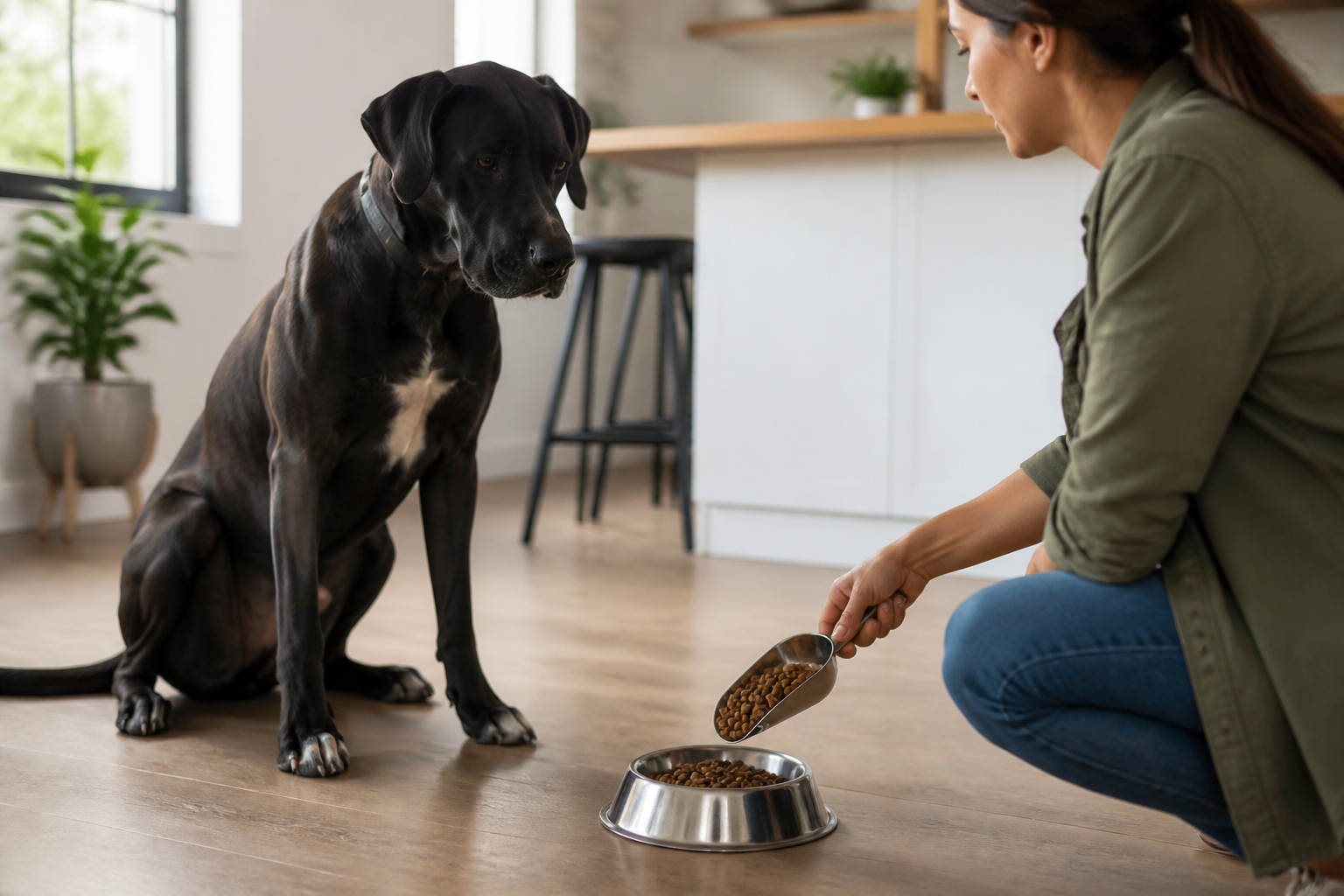
Standing over a massive bag of kibble with a measuring cup in hand can feel like a guessing game. If you share your home with a 100 lb dog, you know that their appetite is often as large as their personality. Feeding a giant breed correctly is a delicate balance. Give them too much and you risk putting extra strain on their joints. Give them too little and they may lack the energy to thrive. At BaxterBoo, we see these big pups every day in our warehouse and know how much their owners care about getting the nutrition right. This guide will help you move past the vague suggestions on the back of the bag. We will cover how to calculate exact portions based on activity, age, and calorie density. Our goal is to ensure your large breed companion stays lean, healthy, and satisfied.
Quick Answer: A 100 lb adult dog typically needs between 3.25 and 4.5 cups of dry food per day. This amount varies significantly based on the calorie count of the specific kibble and the dog's daily activity level.
The Basic Calculation for Large Breeds
Determining the right amount of food starts with a baseline. Most standard adult dog foods contain between 350 and 450 calories per cup. For a 100 lb dog with a moderate activity level, the general requirement is roughly 1,400 to 1,600 calories per day. If your dog is a couch potato, that number might drop toward 1,200. If they are a working dog, it could soar above 2,000.
You should always start by looking at the specific calorie count on your bag of food. This is usually listed as "kcal/cup" in the nutritional information. Do not rely solely on the volume of the food. One brand might be very dense and require only three cups. Another brand might be airy and require five cups to reach the same caloric goal. Our dry dog food selection includes formulas with different calorie densities.
Using a standard measuring cup is essential. Using a random plastic cup or a coffee mug often leads to overfeeding. A few extra kibbles at every meal can add up to several pounds of weight gain over a year. For a 100 lb dog, even a five percent weight gain puts significant pressure on the hips and elbows. For more accurate portions, review this guide to measuring dry dog food.
Key Takeaway: Always calculate portions based on calories per cup rather than just the volume of the food. Small inaccuracies in measuring can lead to significant weight gain in large breeds.
Factors That Change the Daily Scoop
No two 100 lb dogs are identical. A lean Great Dane has different needs than a sturdy Alaskan Malamute. Several biological and lifestyle factors will dictate whether you stay at the low or high end of the feeding spectrum.
Activity Levels and Energy Output
The difference between a dog that walks once a day and one that hikes five miles is massive. Sedentary dogs require fewer calories to maintain their weight. If your dog spends most of the day napping, you should lean toward the lower end of the feeding chart. Working dogs or those engaged in active sports like agility will need a much higher caloric intake. We often suggest increasing food slightly during active summer months and scaling back during the winter.
Metabolism and Neutering Status
Spaying and neutering can change a dog's metabolic rate. Studies often show that altered dogs require about 20 percent fewer calories than intact dogs. This change happens because the body no longer uses energy for reproductive functions. If your 100 lb dog was recently fixed, watch their waistline closely. You may need to reduce their daily intake to prevent them from filling out too much.
Age and Life Stage
Puppies that will grow to be 100 lbs have very specific needs. They require controlled growth to prevent bone and joint issues. Senior dogs usually have slower metabolisms and may be less active due to arthritis. A senior 100 lb dog often needs a diet that is lower in calories but higher in specific nutrients like glucosamine. Owners of growing dogs can also explore dry puppy food options when choosing an age-appropriate formula.
Understanding Calorie Density
The variety of dog food brands available at BaxterBoo means there is a wide range of calorie densities. For example, a "weight management" formula might have only 300 calories per cup. A "performance" or "sport" formula could have over 500 calories per cup.
If you feed four cups of the performance food, you are giving your dog 2,000 calories. If you feed four cups of the weight management food, you are only giving them 1,200 calories. This is why we emphasize reading the label every time you switch brands.
When you choose a high-quality brand like Royal Canin or Farmina, the ingredients are often more digestible. This usually means you can feed less volume while providing better nutrition. High-quality proteins and fats are more "bioavailable," meaning the dog's body can use them more efficiently.
For a specific large-breed option, NutriSource Large Breed Beef & Rice Recipe Dry Dog Food lists 420 kcal per cup, showing why checking the product label matters.
Vet Tip: If your dog seems constantly hungry but is at their ideal weight, consider a food with higher fiber content. Fiber helps them feel full without adding extra calories that lead to weight gain.
The Danger of Obesity in Large Dogs
Obesity is a major health crisis for large and giant breeds. A 100 lb dog carrying an extra 10 lbs is technically obese. This excess weight acts as a constant stressor on the skeletal system. It can accelerate the progression of hip dysplasia and osteoarthritis.
Extra body fat also produces inflammatory hormones. These hormones can make joint pain worse and contribute to other health issues like heart disease or diabetes. Keeping your dog lean is the most effective way to extend their lifespan. You should be able to feel your dog's ribs easily without a thick layer of fat covering them. When looking down from above, your dog should have a visible waistline. Our guide to pet weight management covers additional ways to assess and manage body condition.
If your dog is already overweight, a gradual reduction in food is necessary. Never put a dog on a crash diet. We recommend working with your veterinarian to determine a safe weight loss goal. Sometimes a prescription diet is the best way to achieve results. Our dog pharmacy category carries FDA-approved prescription pet foods through our partnership with Pet's Choice. These diets are specifically formulated to help dogs lose weight while still feeling satisfied.
Feeding Frequency and Bloat Prevention
For large breeds, how you feed is just as important as how much you feed. We strongly recommend against feeding a 100 lb dog only once a day. Consuming a large volume of food in one sitting can increase the risk of Gastric Dilatation-Volvulus, commonly known as bloat. Learn more about dog breeds prone to bloat.
The Two-Meal Minimum
Dividing the daily portion into at least two meals is standard practice. Some owners of giant breeds prefer three smaller meals. This keeps the stomach from becoming too heavy and distended. It also helps maintain steady blood sugar levels throughout the day.
Slowing Down the Gulping
Many large dogs act like they have not eaten in weeks. If your dog inhales their food in seconds, they are swallowing air. This also contributes to bloat risk. You can use slow-feeder bowls or puzzle toys to force them to take smaller bites.
Step 1: Divide the total daily cups by the number of meals. Step 2: Use a level measuring cup to ensure accuracy. Step 3: Place the food in a slow-feeder or puzzle toy. Step 4: Monitor your dog for 30 minutes after eating to ensure they remain calm.
Bottom line: Splitting meals and slowing down the eating process are vital safety measures for dogs weighing 100 lbs or more.
Monitoring Your Dog’s Body Condition
The feeding chart on the bag is only a starting point. It is a suggestion based on an average dog. Your dog might have a faster or slower metabolism than that average. You must become an expert at assessing your dog's body condition.
Check your dog’s weight every two to four weeks. Many local pet stores, including our warehouse in Vernon Hills, have scales you can use. If you see the weight creeping up, reduce the food by ten percent. If the dog looks too thin or their energy is low, increase it by ten percent.
A healthy 100 lb dog should have:
- Ribs that are easily felt but not protruding.
- A clear tuck in the abdomen when viewed from the side.
- A visible waist behind the ribs when viewed from above.
- Consistent energy levels during exercise.
If you notice sudden weight loss or gain despite no changes in food, consult your veterinarian. This can sometimes signal an underlying metabolic issue like thyroid dysfunction.
Large Breed Nutritional Essentials
When choosing a dry food for a 100 lb dog, look for formulas specifically designed for large or giant breeds. These foods are not just about kibble size. They are balanced to meet the unique physiological needs of heavy dogs.
Large breed formulas often contain:
- Controlled calcium and phosphorus levels to support bone health.
- Added L-carnitine to help maintain a lean body mass.
- Glucosamine and chondroitin for joint support.
- Higher levels of Omega-3 fatty acids to reduce inflammation.
Brands like NutriSource and Open Farm offer excellent large breed options that focus on these requirements. These recipes use high-quality protein sources like chicken, lamb, or fish to maintain muscle mass without excessive calories.
Key Takeaway: Large breed specific formulas provide the skeletal and joint support that standard adult kibble may lack.
Transitioning to a New Amount or Brand
If you realize you have been overfeeding or if you want to switch to a higher-quality kibble, do it slowly. The digestive system of a large dog can be sensitive. Sudden changes often lead to upset stomachs or loose stools.
When changing the amount of food, do it over several days. If you are reducing the portion, cut back by a small amount each day until you reach the target. When switching brands, follow a seven-day transition plan. This dog food transition guide offers another approach to changing formulas gradually.
- Days 1-2: 75% old food, 25% new food.
- Days 3-4: 50% old food, 50% new food.
- Days 5-6: 25% old food, 75% new food.
- Day 7: 100% new food.
This slow introduction allows the gut bacteria to adjust. It also helps you monitor if the new food agrees with your dog's skin and coat.
Managing Health through Nutrition and Pharmacy
Sometimes, a standard diet is not enough to manage the health of a 100 lb dog. Large breeds are prone to specific issues like chronic joint pain, skin allergies, or heart conditions. In these cases, nutrition becomes a part of their medical treatment.
If your vet recommends a specific therapeutic diet, we can help. Our pharmacy offers a streamlined way to get prescription foods and medications delivered to your door. Through our partnership with Pet's Choice, we carry FDA-approved options for various conditions. This includes prescription diets for mobility, weight management, and kidney health. Using these specialized foods can often reduce the need for higher doses of medication.
Always consult your veterinarian before starting any therapeutic diet. They can provide a precise diagnosis and ensure the food choice is safe for your dog's specific health profile.
Treats and Extra Calories
It is easy to forget that treats have calories too. For a 100 lb dog, a few large biscuits can equal half a cup of food. If you use treats for training or rewards, you must factor them into the daily total.
We recommend the "10 Percent Rule." No more than 10 percent of your dog's daily calories should come from treats. If you give a lot of treats one day, reduce the amount of kibble in their dinner bowl. You can also use pieces of their regular kibble as training rewards to keep the calorie count stable.
Healthy low-calorie treat options include:
- Green beans (fresh or frozen).
- Carrot slices.
- Apple chunks (no seeds).
- Dehydrated lung or liver (in small amounts).
The Importance of Water
Large dogs drink a significant amount of water. Proper hydration is essential for digestion and kidney function. A 100 lb dog may drink up to a gallon of water a day, especially if they eat dry kibble. Always ensure they have access to a clean, full water bowl. If you notice your dog is suddenly drinking much more or much less than usual, it is time for a vet visit.
Conclusion
Feeding a 100 lb dog is a big responsibility that goes beyond just filling a bowl. By focusing on calorie density, activity levels, and proper measuring, you can keep your large companion in peak condition. Remember that the numbers on the bag are only a guide. Your dog's body condition is the ultimate indicator of success. We are proud to offer over 500 brands at BaxterBoo to help you find the perfect match for your pet's needs. For the best value and convenience, consider our Autoship program. It ensures you never run out of food and includes a free MVP Gold membership for extra savings. Keeping your big dog healthy and lean is one of the best ways to ensure many more happy years together.
FAQ
Is 4 cups of food too much for a 100 lb dog?
It depends entirely on the calorie count of the food and your dog's activity level. For many high-quality kibbles, 4 cups provide roughly 1,600 calories, which is appropriate for a moderately active 100 lb adult. However, if the food is very calorie-dense or the dog is sedentary, 4 cups could lead to weight gain.
How do I know if my 100 lb dog is overweight?
You should be able to feel your dog's ribs easily by running your hands along their side. If you have to press hard to find the ribs, they are likely overweight. You should also see a visible "waist" when looking at them from above and an upward tuck of the belly when looking from the side.
Should I use a raised feeder for my large dog?
The use of raised feeders is a debated topic among veterinarians regarding bloat risk. While they can be more comfortable for dogs with arthritis or neck pain, some studies suggest they might increase the risk of bloat in certain breeds. It is best to discuss your dog's specific risk factors with your veterinarian.
What should I do if my large dog refuses to eat dry food?
If your dog is usually a good eater and suddenly stops, consult a vet to rule out dental pain or illness. If they are just picky, try adding a small amount of warm water or a high-quality wet food topper to the kibble. This enhances the aroma and makes the texture more appealing without drastically changing the nutritional balance.






