
 Save 15% on your 1st Autoship learn more

 Email us
 Live Chat
 FAQs
FAQs





Introduction
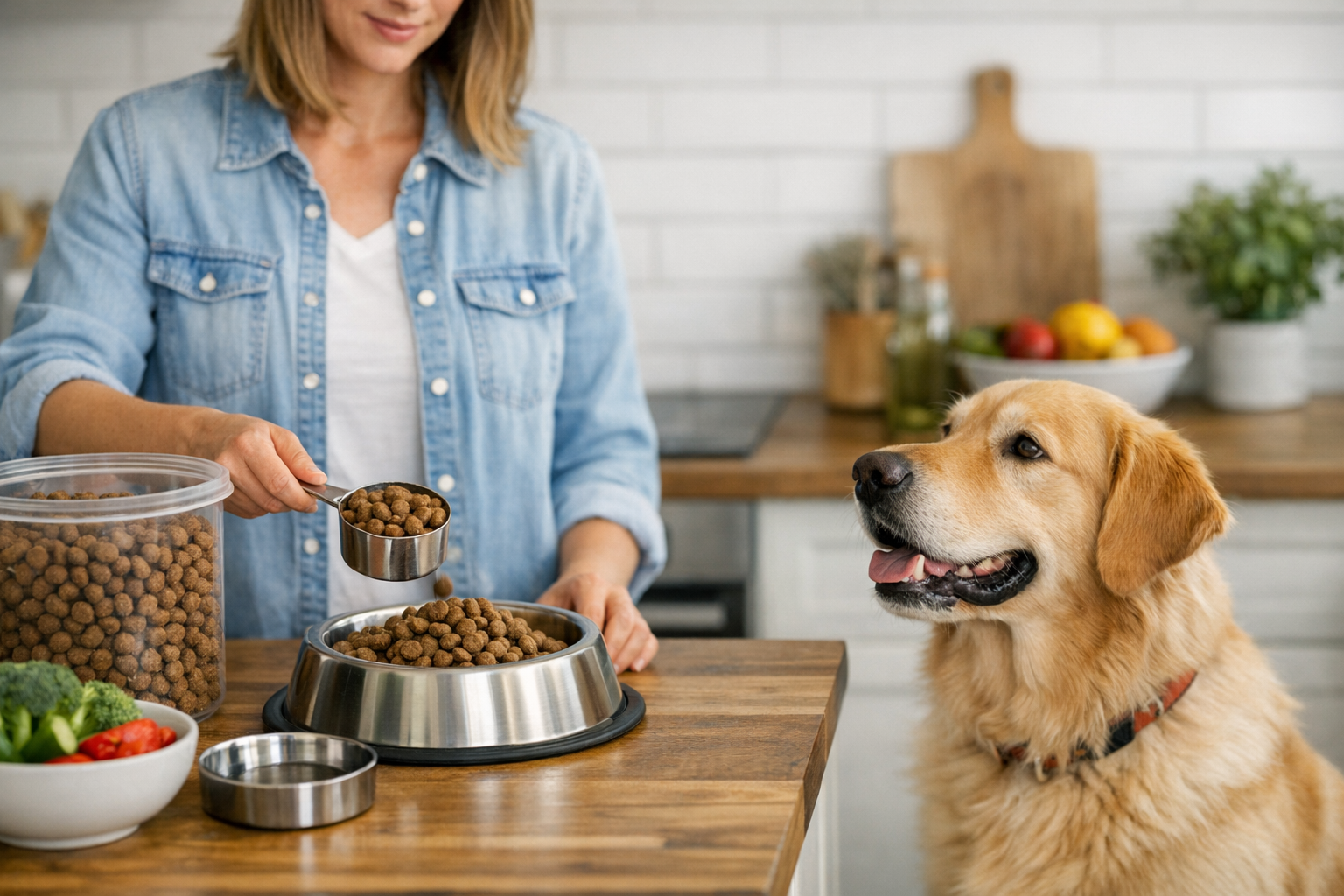
You are standing over a large bag of kibble with a plastic scoop in hand, wondering if that extra half cup is a reward or a health risk. It is a moment of uncertainty that many of us at BaxterBoo have experienced with our own large dogs. When your companion weighs 70 pounds, even small errors in daily portions can lead to significant weight changes over time. Getting the amount right is about more than just filling a bowl. It is about supporting long-term joint health, maintaining energy, and preventing obesity. This article covers the essential variables that determine the ideal meal size for a 70 lb dog, including calorie density and activity levels. We will help you move past the vague suggestions on the bag to find a portion that works for your specific dog. If you are looking for a broader starting point, our dog food category is a helpful place to begin.
Quick Answer: Most 70 lb dogs require between 3 and 4 cups of dry food per day. This usually totals roughly 1,200 to 1,600 calories. The exact amount depends heavily on the calorie density of your specific kibble and your dog's daily activity level.
Understanding the Calorie Connection
The volume of food in the bowl is often less important than the energy it contains. Every brand of dry dog food has a different caloric density. One premium brand might pack 450 calories into a single cup. Another weight management formula might only have 300 calories per cup. This explains why a 70 lb dog might thrive on three cups of one food but lose weight on three cups of another. For shoppers comparing nutrient-dense recipes, our selection of NutriSource products is a useful reference point.
Energy requirements for dogs are measured in kilocalories, or kcal. For most adult dogs, the baseline energy needs start with the Resting Energy Requirement. This is the energy used for basic bodily functions like breathing and heart function. For a 70 lb dog, the baseline is approximately 1,000 calories per day. However, dogs do not just rest. They play, walk, and guard the house.
Activity multipliers adjust this baseline for real world living. A typical, neutered adult dog with moderate activity needs about 1.4 to 1.6 times their baseline. This brings the daily total to roughly 1,400 to 1,600 calories. If your dog is older or spends most of the day napping, that multiplier drops. If they are an active hiker, it climbs significantly. If you want a more detailed breakdown of portions by body weight, our dry dog food feeding guide goes deeper into the math.
Estimating Daily Calorie Needs
- Inactive or Senior Dog: 1,000 to 1,200 kcal per day.
- Typical Adult Dog: 1,400 to 1,600 kcal per day.
- Active or Working Dog: 1,800 to 2,100 kcal per day.
Key Takeaway: Always check the kcal per cup measurement on your specific bag of food. This allows you to translate calorie needs into actual portions accurately.
Factors That Influence Your Dog's Daily Scoop
Life stage plays a massive role in metabolic speed. A young 70 lb dog that is still filling out may require more calories than a ten year old dog of the same weight. Senior dogs often experience a slowing metabolism. For these older companions, reducing portions slightly can prevent the joint strain associated with carrying extra weight. If you are feeding an older dog, our senior dog food collection is worth exploring.
Spay or neuter status also affects caloric needs. Hormonal changes after these procedures can lower a dog's metabolic rate. Studies often suggest that neutered dogs require about 20 percent fewer calories than intact dogs. If you have recently had your dog fixed, keep a close eye on their waistline. You may need to trim back the scoop size to prevent sudden weight gain.
Environmental factors like temperature can change how much a dog eats. In the winter, dogs use more energy to maintain their body temperature if they spend significant time outdoors. Conversely, in the heat of summer, a dog may become more lethargic and require less fuel. Adjusting portions seasonally is a hallmark of a proactive pet owner. For a related look at long-term weight control, our guide to pet weight management is a useful next read.
Vet Tip: If your 70 lb dog is consistently acting hungry despite eating the recommended amount, consult your veterinarian. They can check for underlying metabolic issues or suggest a high fiber diet to help your dog feel fuller.
How to Read a Dog Food Label Like a Pro
You should ignore the marketing on the front of the bag and look directly at the back. The feeding chart is your most valuable starting tool, but it is not a set rule. Most manufacturers tend to be generous with their recommendations. They often calculate for the most active version of that weight class.
Find the calorie count per cup. This number is usually near the ingredient list or the guaranteed analysis. If your 70 lb dog needs 1,400 calories and your food has 350 kcal per cup, the math is simple. Your dog needs 4 cups a day. If you switch to a high performance food with 460 kcal per cup, you would need to drop down to about 3 cups. For brand comparisons, our selection of Royal Canin products is another helpful place to compare formula styles.
The quality of ingredients also matters for satiety. Foods with high quality protein and fiber sources help your dog feel full longer. If a food is packed with filler carbohydrates, your dog might experience energy spikes and crashes. This often leads to more begging between meals even if they are technically getting enough calories. We carry expertly curated brands like Farmina and Royal Canin that prioritize nutrient density.
Label Checklist
- Locate the "kcal/kg" or "kcal/cup" statement.
- Find the weight range for a 70 lb dog on the feeding chart.
- Verify the primary protein source is a named meat.
- Check for added fiber sources like beet pulp or pumpkin for satiety.
Monitoring Your Dog's Body Condition
The scale is only part of the story. While 70 pounds is the number on the chart, how that weight is distributed matters more. You should be able to feel your dog's ribs without a thick layer of fat over them. When looking from above, your dog should have a visible waistline that narrows behind the ribcage.
The side view test is a quick way to check health. When standing, your dog's abdomen should be tucked up rather than hanging level with the chest. If your 70 lb dog looks like a rectangular block from the side, they are likely carrying too much weight. Even a five pound weight gain on a large dog can increase the risk of hip dysplasia and heart issues. For related nutritional support, our dog health digestive care page is a practical next stop.
If you notice your dog is gaining weight, do not slash their food in half suddenly. This can lead to nutritional deficiencies and a very grumpy pet. Instead, reduce the daily total by about 10 percent. Monitor them for two weeks before making further changes. Consistency is the most important factor when managing a dog's weight.
Key Takeaway: Use your hands to check your dog's ribs weekly. This is the most reliable way to catch weight gain before it becomes a health problem.
Managing Health Conditions Through Nutrition
For some 70 lb dogs, standard kibble is not enough to manage specific health needs. Large breeds are prone to joint issues, allergies, and sensitive stomachs. In these cases, a prescription diet may be necessary. These diets are formulated with precise nutrient ratios to support medical conditions like kidney health or mobility.
Our pharmacy offers a streamlined way to access these specialized foods. Through our partnership with Pet's Choice, we provide FDA approved medications and prescription pet foods for chronic conditions. If your veterinarian recommends a specific therapeutic diet for weight loss or joint support, you can easily fulfill that need through our warehouse services.
Prescription weight management foods often work differently than over the counter "lite" foods. They may contain higher protein levels to maintain muscle mass while your dog loses fat. They also frequently include therapeutic levels of glucosamine and chondroitin for joint support. This is particularly vital for a 70 lb dog where the skeleton is under constant pressure. If your dog needs a prescription-only diet, our senior dog feeding article also covers when to consider therapeutic options.
Creating a Consistent Feeding Routine
Timing matters as much as quantity. Feeding your dog at the same time every day helps regulate their digestion and their expectations. Most veterinarians recommend splitting the daily total into two meals. This usually means one meal in the morning and one in the evening.
Splitting meals is particularly important for large dogs to reduce the risk of bloat. Bloat is a life threatening condition where the stomach fills with gas and twists. Feeding one giant meal a day can increase this risk. By dividing the 4 cups into two 2 cup servings, you keep the stomach from becoming overly distended. If you want a deeper look at that risk, our bloat guide for large breeds is worth reading.
Using a consistent measuring tool is also vital. A "scoop" is not a standard unit of measurement. If you use a random coffee mug, you might be overfeeding by 20 percent every day. Use a standard 8 ounce dry measuring cup for every meal. This ensures your 70 lb dog receives exactly what they need to maintain their ideal weight.
Steps for Transitioning to a New Amount
Step 1: Determine the target calorie count / Consult your vet or a calorie calculator to find the goal. Step 2: Measure your current scoop / Use a standard measuring cup to see exactly what you are currently feeding. Step 3: Adjust by 10 percent / Increase or decrease the amount gradually over a week. Step 4: Observe and adjust / Check the body condition score after two weeks and refine the portion.
Bottom line: Consistent timing and precise measurement are the foundations of a healthy feeding plan for a large dog.
The Role of Treats and Human Food
Many owners forget to count treats as part of the daily calorie total. If you are feeding a 70 lb dog 4 cups of food and then giving several large biscuits, you are likely overfeeding. Treats should never make up more than 10 percent of your dog's total daily calories. For a dog needing 1,500 calories, that means only 150 calories should come from treats.
Large dental chews or pig ears can contain 100 to 200 calories each. If you give one of these every day, you need to reduce the amount of dry food in the bowl. We suggest using low calorie training treats or even fresh vegetables like green beans. These provide the crunch dogs love without the heavy calorie load. If you want to browse lower-calorie reward options, our dog treats category is a smart place to start.
If your dog is managed on a prescription diet for allergies or weight, even a small piece of human food can disrupt their progress. We recommend keeping a small jar of their daily kibble allowance aside to use as "treats" throughout the day. This keeps the calorie count predictable and prevents digestive upset.
Special Considerations for Large Breed Seniors
As your dog enters their senior years, their nutritional needs shift significantly. A 70 lb dog is generally considered a senior around age seven or eight. At this stage, muscle mass can begin to decrease while fat increases. Senior specific formulas often contain fewer calories but higher quality protein to help preserve that muscle.
Joint support becomes the top priority for aging large dogs. You may want to look for foods that include Cosequin or other joint supplements. If your senior dog is struggling with mobility, we carry a wide range of supplements and orthopedic aids in our Medical & Mobility section to help them stay comfortable.
Monitoring kidney and heart health also becomes more critical. Senior dogs may benefit from lower phosphorus levels or added taurine. Regular vet visits are essential during this life stage to catch changes in organ function early. Your vet may suggest a transition to a prescription senior diet available through our pharmacy partnership.
Vet Tip: Senior dogs may lose their sense of smell or taste. If your older 70 lb dog is losing interest in dry food, try adding a little warm water to the kibble to enhance the aroma before considering a total change in diet.
Why Quality and Curation Matter
At BaxterBoo, we do not just stock every product that hits the market. We take pride in being a specialty pet retailer that handpicks our inventory. This curation is especially important for large breed nutrition. Every brand we carry, from Stella and Chewy's to NutriSource, is selected by people who genuinely care about animal health.
Whether you visit our warehouse superstore in Vernon Hills, Illinois, or order online for home delivery, you are getting products we trust for our own pets. We have been operating since 2006, focusing on value without compromising on quality. For owners of 70 lb dogs, this means access to the best flea and tick protection, supplements, and premium foods in one place.
Managing a large dog can be expensive, so we offer programs to help you save. Our MVP Rewards programme allows you to earn up to 5 percent back on your purchases. We also offer a Frequent Buyer Program on participating brands. If you find a food that works perfectly for your 70 lb companion, our Autoship programme ensures you never run out while saving you money on every order.
Bottom line: Choosing a curated retailer ensures that the food you scoop into the bowl meets high standards for safety and nutrition.
Conclusion
Finding the right amount of dry food for your 70 lb dog is an ongoing process of observation and adjustment. Start with a baseline of 3 to 4 cups, but always refine this based on the calorie density of your specific brand. Remember that activity levels, age, and health conditions will shift your dog's needs over time. By using standard measuring cups and monitoring their body condition, you can help your dog live a longer, more active life. If your dog has specific health requirements or needs a prescription diet, we invite you to explore our pharmacy and premium food collections. Consider setting up an Autoship order today to keep your pantry stocked with the nutrition your dog deserves.
FAQ
Is 4 cups of food too much for a 70 lb dog?
For many 70 lb dogs, 4 cups is an appropriate daily amount, especially if the food is moderately calorie-dense. However, if the food is high in fat and calories, 4 cups might lead to weight gain. Always check the kcal per cup on the bag and monitor your dog's waistline to see if they need more or less.
How many calories does a 70 lb dog need to lose weight?
To lose weight safely, a 70 lb dog usually needs to drop to about 80 percent of their current maintenance calories. This often means aiming for roughly 1,000 to 1,200 calories per day, depending on their starting point. It is vital to consult your veterinarian before starting a weight loss plan to ensure you are not cutting calories too drastically.
How often should I feed my 70 lb adult dog?
Most veterinarians recommend feeding an adult dog of this size twice per day. Splitting the food into a morning and evening meal helps maintain steady energy levels and supports better digestion. It also significantly reduces the risk of bloat, which is a major concern for larger breeds.
Can I just follow the feeding chart on the back of the dog food bag?
The feeding chart is a helpful starting point, but it is often based on averages that may not apply to your dog. Many charts overestimate the needs of the average house pet who is not a working animal. Start with the chart's recommendation for a 70 lb dog, then adjust up or down based on your dog's actual body condition and energy level.






