
 Save 15% on your 1st Autoship learn more

 Email us
 Live Chat
 FAQs
FAQs





Introduction
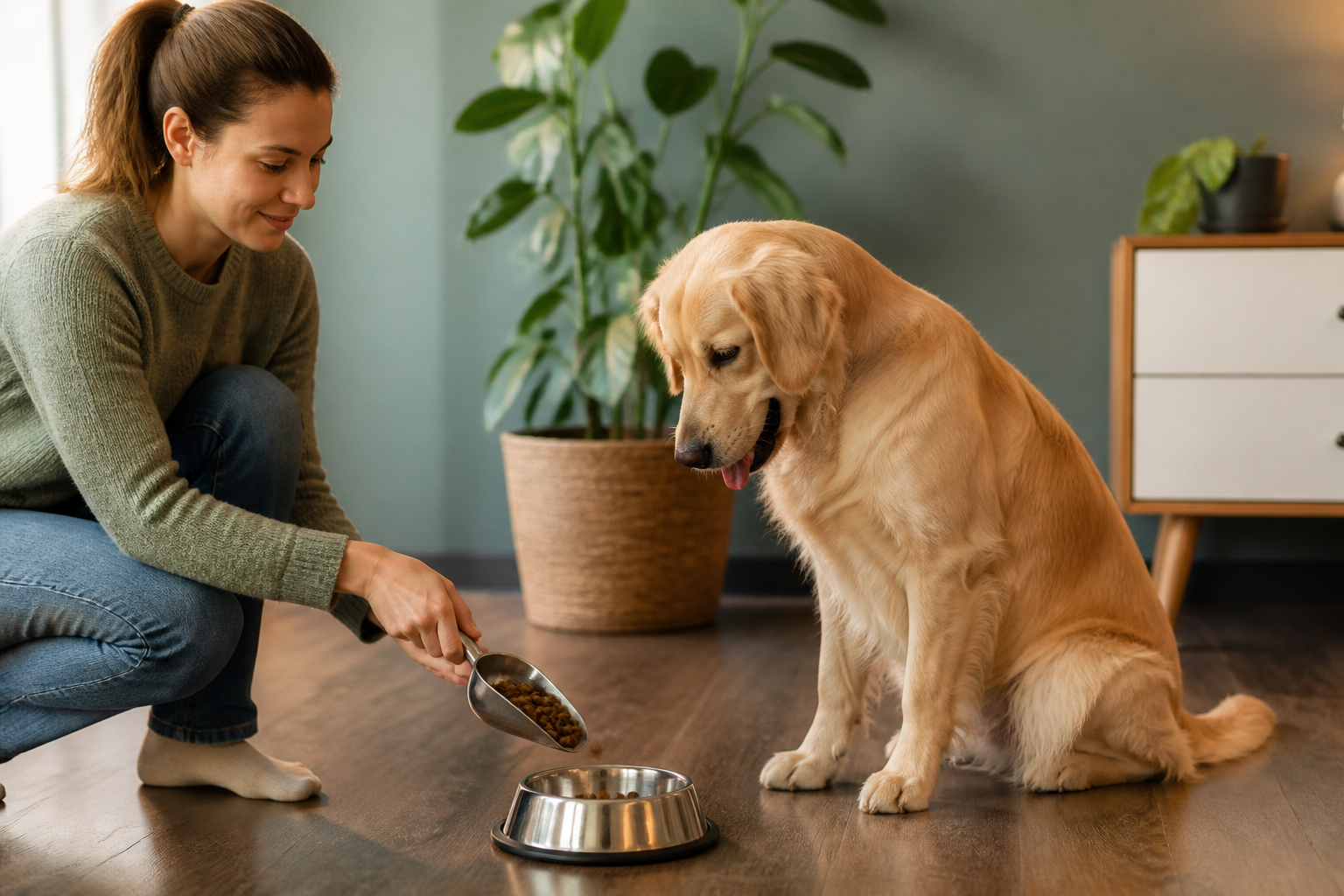
You are standing in your kitchen with a measuring cup in one hand and a bag of kibble in the other. Your dog is sitting at your feet, looking up with those expectant eyes that suggest they haven't eaten in a decade. It is a daily moment every pet owner knows well. You want to make sure they are full and satisfied, but you also know that even a little too much food can lead to health struggles. At BaxterBoo, we talk to pet owners every day who feel overwhelmed by the conflicting advice on portion sizes. This guide will help you move past the guesswork to find the exact right amount for your unique dog. We will cover how to read labels, adjust for activity levels, and recognize the signs that your dog is at their ideal weight.
Quick Answer: Most adult dogs need between one and four cups of dry food per day, divided into two meals. The exact amount depends on their weight, age, and activity level, so you should always start with the feeding chart on your specific bag of food and adjust based on your dog's body condition.
The Basic Factors of Dog Nutrition
Determining how much dry food to feed your dog is not a one-size-fits-all calculation. A tiny Chihuahua and a massive Great Dane have different caloric needs, but even two dogs of the same breed can have very different requirements. Several internal and external factors play a role in how much energy your dog burns and how much they need to take in.
For more options while comparing formulas, browse our dog food category.
Age and Life Stage
A dog's nutritional needs change significantly as they move from puppyhood to their senior years. Puppies are growing at an incredible rate. Their bodies require more protein, fat, and minerals like calcium and phosphorus to build bone and muscle. Because they are so active and growing so fast, they often need more calories per pound of body weight than adult dogs.
Adult dogs have reached their full size and simply need to maintain their weight. Their metabolism is steady. Senior dogs often experience a slowing metabolism and decreased activity. They might need fewer calories to avoid weight gain, but they may require higher quality protein to maintain muscle mass.
Activity Level
Consider how your dog spends their day. A working dog that spends hours running in a field or a pup that goes on five-mile hikes every weekend will need more fuel. On the other hand, a dog that prefers lounging on the sofa and only goes for short walks around the block has much lower energy demands.
Metabolism and Breed
Some breeds are naturally more prone to weight gain than others. Labs and Beagles are famous for their love of food and their tendency to pack on pounds quickly. Other breeds, like Greyhounds or many toy breeds, have high metabolic rates and might need more food than you expect for their size.
Understanding the Feeding Chart on the Bag
Every bag of high-quality dry food contains a feeding chart. This is the best place to start. These charts are regulated by the Association of American Feed Control Officials (AAFCO) and provide a baseline for daily intake.
However, it is important to remember that these numbers are just a starting point. Most charts provide a range based on the dog's weight. These ranges are usually calculated for an active, intact adult dog. If your dog is spayed or neutered, their caloric needs may be up to 25 percent lower than what the bag suggests.
For a broader explanation of portion calculations, read our guide to how many cups of dry dog food to feed per day.
How to Read the Chart
The chart will usually list weight ranges in pounds or kilograms and a corresponding amount of food in cups or grams. Note that "cups" refers to a standard 8-ounce measuring cup, not a random scoop or a large plastic cup you found in the cabinet. Using a consistent measuring tool is the only way to ensure you are being accurate.
Calorie Density Matters
Not all dry foods are created equal. One cup of a high-calorie, grain-free performance food might contain 450 calories. A cup of a weight-management or "lite" food might only contain 280 calories. This is why you cannot simply switch brands and keep the same measurement. Always check the "kcal/kg" or "kcal/cup" information on the bag whenever you change formulas.
When comparing nutrient-dense recipes, explore our selection of Open Farm products.
Key Takeaway: Feeding charts are estimates based on average activity levels. Use them as a baseline, but be prepared to adjust the amount by 10 to 20 percent based on your dog's individual metabolism and body condition.
The Importance of Body Condition Scoring
Since every dog is an individual, the most accurate way to tell if you are feeding the right amount is to look at your dog. Veterinarians use a system called the Body Condition Score (BCS) to evaluate a dog's fat cover and muscle mass.
For another look at daily feeding factors, see our guide to feeding a dog for daily health.
The Rib Test
You should be able to feel your dog's ribs easily without pressing hard. They should feel like the back of your hand. If they feel like your knuckles when you make a fist, the dog may be too thin. If they feel like your palm, your dog is likely carrying too much weight.
The Waistline Check
Look at your dog from above. You should see a noticeable tuck at the waist behind the ribs. From the side, the abdomen should slope upward from the ribcage toward the hind legs. If your dog looks like a solid rectangle from above, it is time to trim back the portions.
Adjusting the Portions
If your dog is looking a bit round, do not make drastic changes overnight. Start by reducing their daily intake by 10 percent. Wait two weeks and reassess. Small, gradual changes are safer and more effective for long-term health.
Feeding Puppies for Healthy Growth
Puppies require a specialized approach to feeding. Because their stomachs are small but their energy needs are high, they cannot eat their entire daily requirement in one or two sittings.
For puppy-specific feeding guidance, read our article on how much dry food to feed a puppy.
Frequency of Meals
Young puppies should typically eat three to four times per day. This helps maintain their blood sugar levels and prevents digestive upset. As they reach six months of age, you can usually transition to two meals per day.
Large Breed Considerations
If you have a large or giant breed puppy, such as a Lab, German Shepherd, or Great Dane, you must be especially careful. Feeding these puppies too much can cause them to grow too fast. Rapid growth puts immense stress on developing joints and can lead to lifelong mobility issues.
Vet Tip: For large breed puppies, it is vital to use a dry food specifically formulated for large breed growth. These formulas have controlled levels of calcium and phosphorus. Consult your veterinarian to ensure your puppy is growing at a steady, healthy rate rather than as fast as possible.
Senior Dog Nutrition and Wellness
As dogs age, their internal systems change. Their kidneys may become less efficient, their joints may stiffen, and their digestion might slow down. This life stage often requires a shift in how much and what you feed.
For another perspective on senior feeding choices, read our guide to whether senior dogs should eat wet or dry food.
Weight Management in Seniors
Weight gain is a significant risk for senior dogs. Extra pounds put unnecessary pressure on aging joints. If your senior dog is slowing down, you may need to reduce their dry food portion or switch to a senior-specific formula that is lower in calories but higher in fiber to help them feel full.
Supporting Senior Health
Many senior dogs benefit from specific supplements. Glucosamine and chondroitin are excellent for joint support. We carry several brands like Cosequin and Zesty Paws that offer these ingredients.
If your senior dog has a chronic health condition, your vet might recommend a prescription diet. Our pet pharmacy works with Pet's Choice to provide FDA-approved medications and prescription pet foods. This is a practical resource for managing conditions like kidney disease or heart issues through specific nutrition.
Feeding Schedules and Consistency
Dogs thrive on routine. Feeding your dog at the same time every day helps regulate their digestion and can even make house training easier.
Twice-Daily Feeding
For most adult dogs, two meals a day is the standard. This keeps their energy levels stable throughout the day and prevents the "hangry" behavior that can lead to begging or counter-surfing.
The Danger of Free-Feeding
Free-feeding, or leaving a bowl of food out all day, is generally discouraged. It makes it nearly impossible to track exactly how much your dog is eating. In multi-pet households, it often leads to one dog becoming overweight while the other may not get enough. Scheduled mealtimes also allow you to notice immediately if your dog loses their appetite, which is often the first sign of illness.
The Role of Treats and Toppers
It is easy to forget that treats have calories too. If you are training a new dog and using a lot of rewards, those calories add up fast.
The 10 Percent Rule
Treats should never make up more than 10 percent of your dog's daily caloric intake. If you give a lot of treats one day, you should reduce their dry food portion at dinner to compensate.
Healthy Alternatives
If you want to give your dog something extra without the high calorie count of processed treats, consider fresh vegetables. Many dogs love crunchy green beans, carrots, or apple slices (without the seeds). These provide fiber and vitamins with very few calories.
When to Consult Your Veterinarian
While feeding charts and body condition checks are great tools, they do not replace professional medical advice. There are several situations where you should definitely talk to your vet about your dog's diet.
- Sudden Weight Loss: If your dog is eating the same amount but losing weight, this can indicate an underlying health issue like parasites or metabolic disease.
- Persistent Hunger: If your dog seems ravenous despite eating a proper portion, they may not be absorbing nutrients correctly.
- Allergy Symptoms: Itching, ear infections, and red paws can sometimes be linked to food sensitivities.
- Life Transitions: Before moving from puppy to adult food or adult to senior food, ask your vet for a recommendation.
If your vet determines that your dog needs a specific therapeutic diet, remember that we can help. Our partnership with Pet's Choice allows us to fulfill prescriptions for brands like Royal Canin and Farmina Vet Life, delivering them right to your door.
Bottom line: Your dog's nutritional needs are dynamic and will change throughout their life, so regular check-ins with a professional ensure they stay on the right track.
Choosing the Right Dry Food Brand
The quality of the ingredients in the dry food determines how much nutrition your dog actually absorbs. At BaxterBoo, we carefully curate the brands we carry to ensure they meet high standards for safety and nutrition.
High-Quality Proteins
Look for brands that list a specific meat source, like chicken, beef, or lamb, as the first ingredient. Brands like Stella and Chewy's, Open Farm, and Orijen focus on high-protein recipes that mimic a dog's natural diet. These nutrient-dense foods often require smaller portions than lower-quality "filler" foods.
Digestibility and Fillers
Inexpensive foods often rely on corn, wheat, or soy to bulk up the bag. While these are not necessarily harmful, they are less digestible than high-quality proteins and complex carbohydrates like sweet potatoes or oats. When a food is highly digestible, your dog produces less waste, and you can feed smaller portions.
Transitioning to a New Food
If you decide to change your dog's dry food based on their needs, do not do it all at once. A sudden change can cause diarrhea, gas, and vomiting.
Step 1: Mix 25 percent of the new food with 75 percent of the old food for two to three days.
Step 2: Increase to a 50/50 mix for another two to three days.
Step 3: Move to 75 percent new food and 25 percent old food for the final two to three days.
Step 4: Feed 100 percent of the new food.
Watch your dog's stool during this time. If it becomes soft, slow down the transition and give their digestive system more time to adapt.
For additional transition guidance, read our guide to switching a dog to a new food.
Monitoring Results Over Time
Feeding your dog is an ongoing process of observation and adjustment. Once you have settled on a portion size, keep a simple log for a few weeks. Note how much you fed, how many treats they had, and how their energy levels seemed.
Seasonal Adjustments
Don't forget that activity levels change with the seasons. A dog that plays outside for hours in the summer might spend most of the winter curled up by the heater. You may find that you need to reduce their dry food portions during the colder months to prevent winter weight gain.
Using Technology and Tools
If you struggle with measuring accurately, consider a digital food scale. Measuring by weight in grams is far more accurate than measuring by volume in a cup. This is especially helpful for small dogs where an extra ten kibbles can represent a significant percentage of their daily calories.
BaxterBoo Programs to Help You Save
We know that keeping your dog healthy can be an investment. We have designed several programs to help you get the best value on the brands you trust.
- Autoship: Never run out of your dog's favorite dry food. Our Autoship programme offers savings on your first order and ensures your pet's essentials arrive on a schedule that works for you. Plus, you get a free MVP Gold membership.
- MVP Rewards: The MVP Rewards programme lets you earn rewards on purchases. These points add up quickly and can be used on future orders of food, treats, or gear.
- Frequent Buyer Program: Many of the premium brands we carry, like NutriSource and Primal, participate in our Frequent Buyer Program. When you buy a certain number of bags, you get one for free.
By choosing the right food and the right portion, you are giving your dog the best chance at a long, active life. Whether you are visiting our warehouse in Vernon Hills or ordering online for home delivery, we are here to support you in every stage of your pet's journey.
FAQ
How do I know if I am feeding my dog too much?
The most obvious sign of overfeeding is the loss of a visible waistline and difficulty feeling the ribs. You may also notice your dog becoming more lethargic or panting more easily after minor exercise. If their stools are consistently soft, this can also be a sign that their digestive system is being overloaded with too much food.
Can I trust the feeding guidelines on the dog food bag?
The guidelines on the bag are a helpful starting point, but they are not absolute rules. They are based on averages for active adult dogs and do not account for individual metabolism, neuter status, or specific health conditions. Always start with the recommended amount and adjust up or down based on your dog's body condition and weight stability.
Should I feed my dog once or twice a day?
Most veterinarians recommend feeding adult dogs twice a day, usually once in the morning and once in the evening. This helps keep their blood sugar levels stable and prevents them from becoming overly hungry, which can lead to begging or digestive upset. Puppies often require three or four smaller meals per day to support their rapid growth and smaller stomach capacity.
What should I do if my dog is always acting hungry?
If your dog is at a healthy weight but still acts hungry, try adding low-calorie "fillers" like plain canned pumpkin or green beans to their meal. These add volume and fiber to help them feel full without adding significant calories. However, if your dog is losing weight despite eating well, you should consult your veterinarian to rule out medical issues like parasites or malabsorption.






