Save 15% on your 1st Autoship learn more

 Email us
 Live Chat
 FAQs
FAQs





Introduction
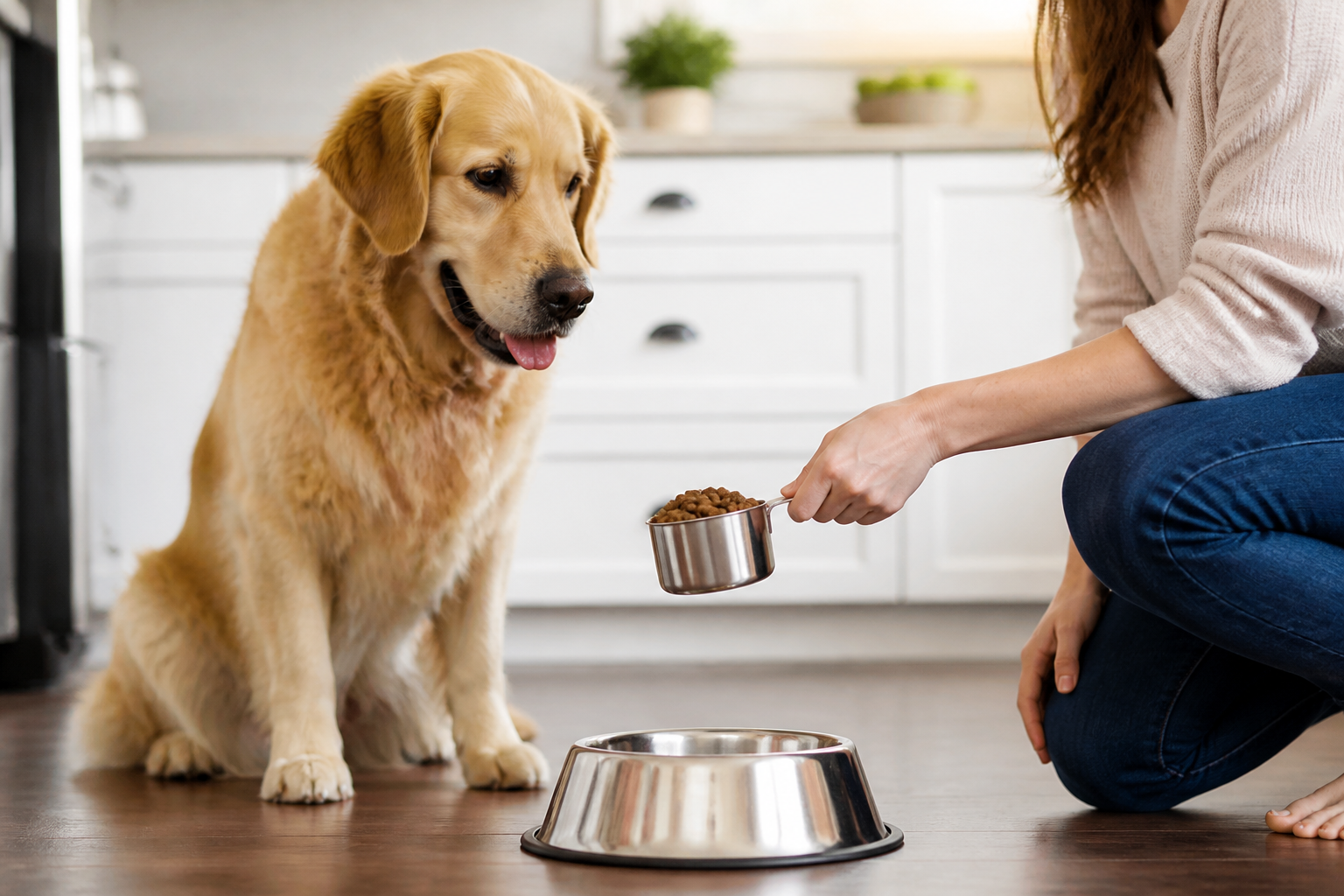
You are standing in the kitchen with a measuring cup in hand. You look at your dog and then at the bag of kibble. You might wonder if the generic range printed on the packaging actually fits your specific pet. At 50 pounds, your dog sits right on the line between a medium and large breed. This weight class includes a wide variety of shapes and energy levels. It covers everything from lean, athletic Border Collies to sturdy, muscular Bulldogs.
At BaxterBoo, we understand that nutrition is not a one-size-fits-all calculation. We have helped thousands of owners find the right balance for their pets since 2006. Getting the portion right is about more than just satisfying hunger. It is the most effective way to manage joint health and long-term wellness. This guide will help you move past the guesswork. We will break down calorie requirements, activity levels, and how to read the fine print on your dog food label.
The General Baseline for 50 lb Dogs
Most people want a simple answer like two cups or three cups. The reality is that the volume of food depends entirely on the calorie density of the specific brand you buy. For a 50-pound adult dog with a moderate activity level, the daily requirement usually falls between 1,100 and 1,300 calories.
Dry dog foods vary significantly in their calorie counts. A standard cup of kibble might contain anywhere from 300 to 500 calories. If you are feeding a nutrient-dense brand like NutriSource or Open Farm, your dog will need a smaller volume. If the food has more fiber or "air," the volume will increase.
Quick Answer: A typical 50 lb adult dog needs between 2 to 2 2/3 cups of dry food per day. This assumes the food contains about 375 to 400 calories per cup and the dog has moderate activity levels.
Calories vs. Volume
It is helpful to think in calories rather than scoops. If your vet suggests your dog needs 1,200 calories a day, you must look at the bag for the kcal/cup listing. This number is usually found near the ingredient list or the feeding chart.
- Divide your dog’s total calorie goal by the kcal/cup on the bag.
- If the goal is 1,200 and the food is 400 kcal/cup, the total is 3 cups.
- If the food is 480 kcal/cup, the total drops to 2.5 cups.
For more guidance on measuring food by weight, read how much a cup of dry dog food weighs.
Factors That Influence the Daily Scoop
Every dog has a unique metabolic rate. Several specific factors will determine if your 50-pound dog needs the high end or the low end of the recommended range.
Activity Levels
This is the biggest variable in the equation. A dog that goes for a three-mile run every morning burns significantly more fuel than a dog that spends most of the day on the sofa.
Low activity dogs include those who get less than 30 minutes of intentional exercise per day. These dogs often need 10 percent to 20 percent less than the "average" recommendation. High activity dogs include working breeds or canine athletes who are active for several hours. They may need 1,500 calories or more to maintain their muscle mass.
Age and Life Stage
Metabolism slows down as dogs age. A two-year-old 50-pound dog is still building muscle and burning energy at a fast rate. A senior dog of the same weight might be more prone to putting on fat. Senior-specific formulas, such as those from Royal Canin, are often designed with fewer calories but higher quality protein to support aging muscles without causing weight gain.
Spay and Neuter Status
It is a well-documented fact that spaying or neutering can lower a dog's metabolic rate. This does not mean your dog is destined to be overweight. It simply means you need to be more precise with their portions. Many owners find they need to reduce total daily food by about 10 percent after these procedures to maintain a lean body.
Vet Tip: If your dog is struggling to lose weight despite portion control, consult your veterinarian to rule out thyroid issues. Our pharmacy carries medications for chronic health conditions when your vet identifies an underlying medical need.
The Problem with the Measuring Cup
We often talk about feeding in terms of "cups" because it is convenient. However, a cup is a measure of volume, not weight. This is where many well-meaning owners run into trouble.
The size and shape of the kibble matter. Small, dense kibble packs more calories into a cup than large, airy kibble. If you switch from a large-breed formula to a regular formula but use the same scoop, you might inadvertently overfeed.
Furthermore, "scooping" is notoriously inaccurate. Depending on how you dip the scoop into the bag, you might be getting 10 percent more or less food every single time. Over a week, those small inconsistencies add up. For the most accuracy, many experts recommend using a kitchen scale to weigh the food in grams.
For additional portion guidance, see how many cups of dry dog food per day.
Key Takeaway: Always check the calorie count (kcal) per cup when switching brands. A single cup of one brand can have as many calories as a cup and a half of another.
How to Determine if the Amount is Working
The numbers on the back of the bag are just a starting point. The best way to know if you are feeding the right amount is to look at your dog’s body. Pet professionals use a Body Condition Score to evaluate a dog's weight. You can do a simple version of this at home.
The Rib Test
Place your hands on your dog's ribcage. You should be able to feel the ribs easily with a slight layer of fat over them. It should feel like the back of your hand. If you have to press hard to find the ribs, your dog is likely carrying extra weight. If the ribs are highly visible and feel like your knuckles, your dog may be underweight.
The Waist and Tuck
Look at your dog from above. They should have a noticeable waist behind the ribs. When you look from the side, the stomach should "tuck" up toward the hind legs rather than hanging low or appearing straight across.
- Feel the ribs for a light fat covering.
- Check for a visible waist from an overhead view.
- Observe the abdominal tuck from a side view.
For more information about portion adjustments, read how much dry food to feed a dog for daily health.
Bottom line: Your dog's body condition is a better guide than the feeding chart on the bag.
The Role of Treats and Toppers
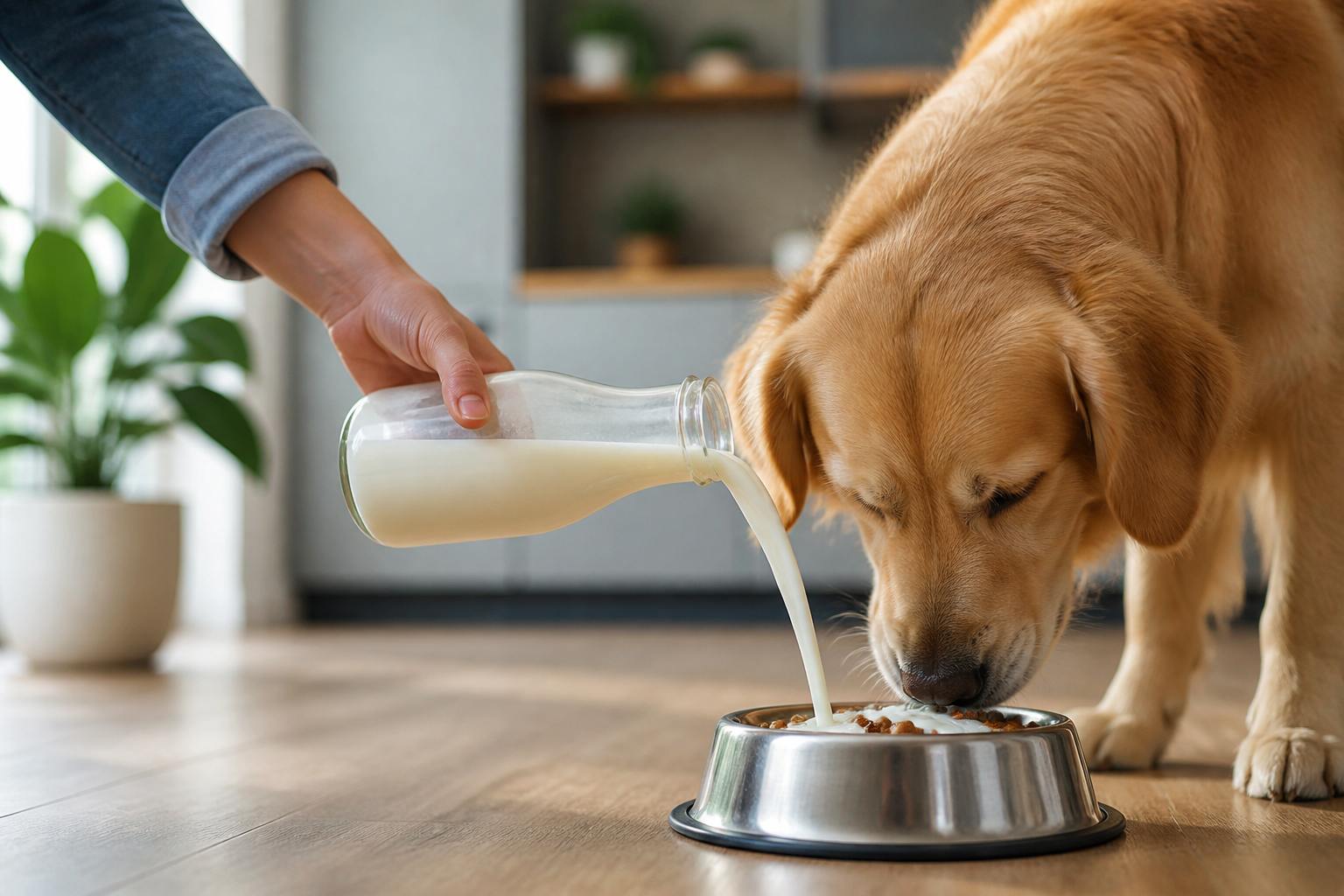
It is easy to forget that treats are food. If you are training your 50-pound dog with high-value treats or adding a spoonful of wet food as a topper, those calories count.
We recommend the 10 percent rule. Treats should never make up more than 10 percent of your dog's total daily calories. If your dog is allotted 1,200 calories, 120 of those can come from treats. If you give them a large dental chew that contains 100 calories, you must subtract a corresponding amount of kibble from their dinner bowl.
Using high-quality treats like those from Stella and Chewy's or Zesty Paws can provide nutritional benefits. However, even healthy treats contribute to the daily total. If you use toppers like Tiki Cat or Caru, always check the label for the calorie count to adjust the dry food portion accordingly.
Explore our dog treats category for options that can fit into your dog’s daily calorie budget.
Managing Weight and Special Diets
Weight management is critical for 50-pound dogs. At this size, even five extra pounds can put significant pressure on the hips and knees. If your dog has already reached an unhealthy weight, simple portion control might not be enough.
Veterinarians often suggest prescription weight management diets for dogs who are significantly overweight. These foods are formulated to help dogs feel full while consuming fewer calories. Our pharmacy can help fulfill prescriptions for specialized diets when recommended by your veterinarian.
For additional ideas about managing portions and treats, read what is the best dry dog food for overweight dogs.
Step 1: Consult your vet for an ideal target weight.
Step 2: Calculate the calories based on that target weight, not the current weight.
Step 3: Measure every meal with a level measuring cup or scale.
Step 4: Limit all table scraps and high-calorie treats.
Establishing a Feeding Routine
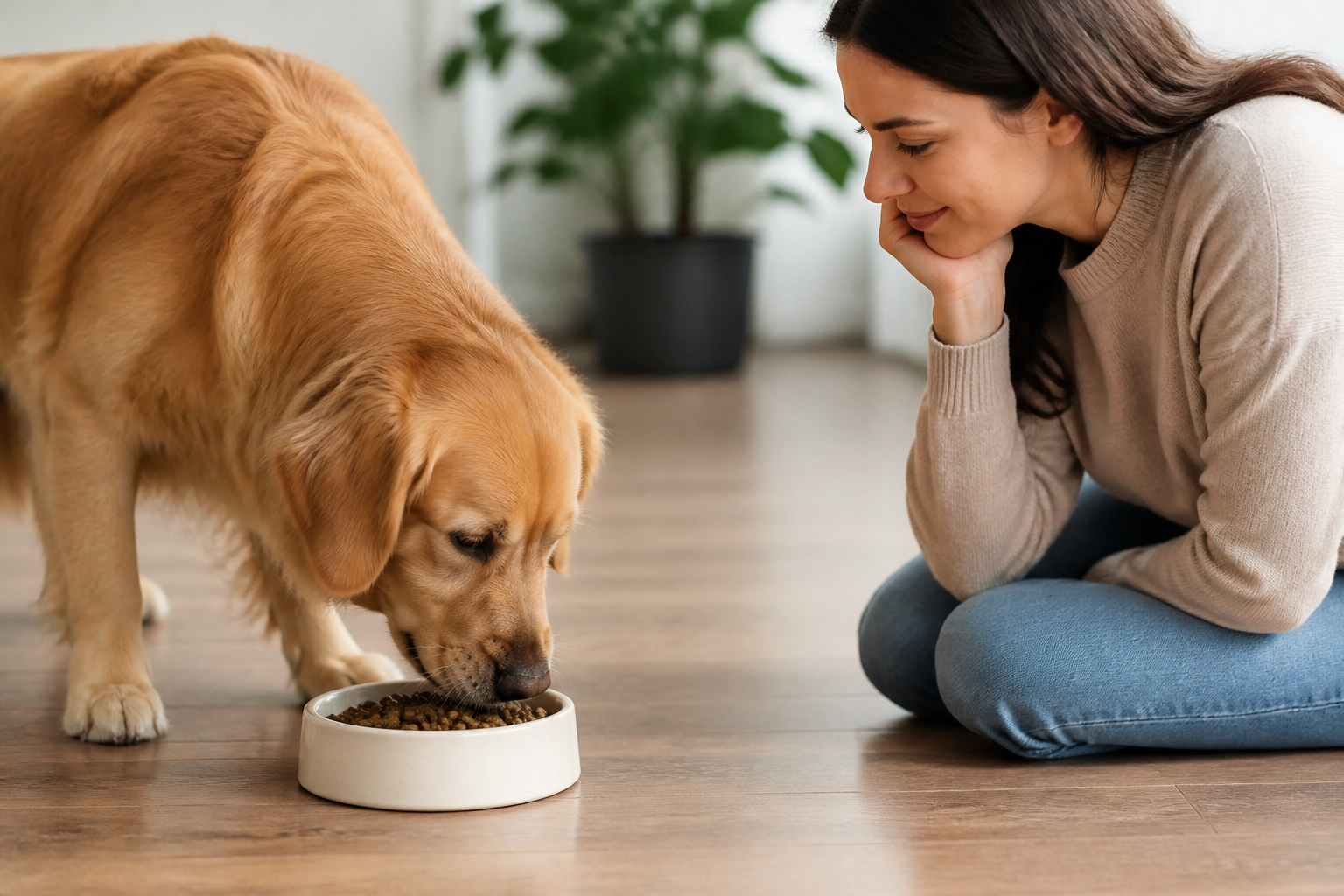
Dogs thrive on predictability. Feeding your dog at the same time every day helps regulate their digestion and metabolic rhythm. Most 50-pound dogs do best with two meals per day. This keeps their blood sugar stable and prevents them from becoming overly hungry.
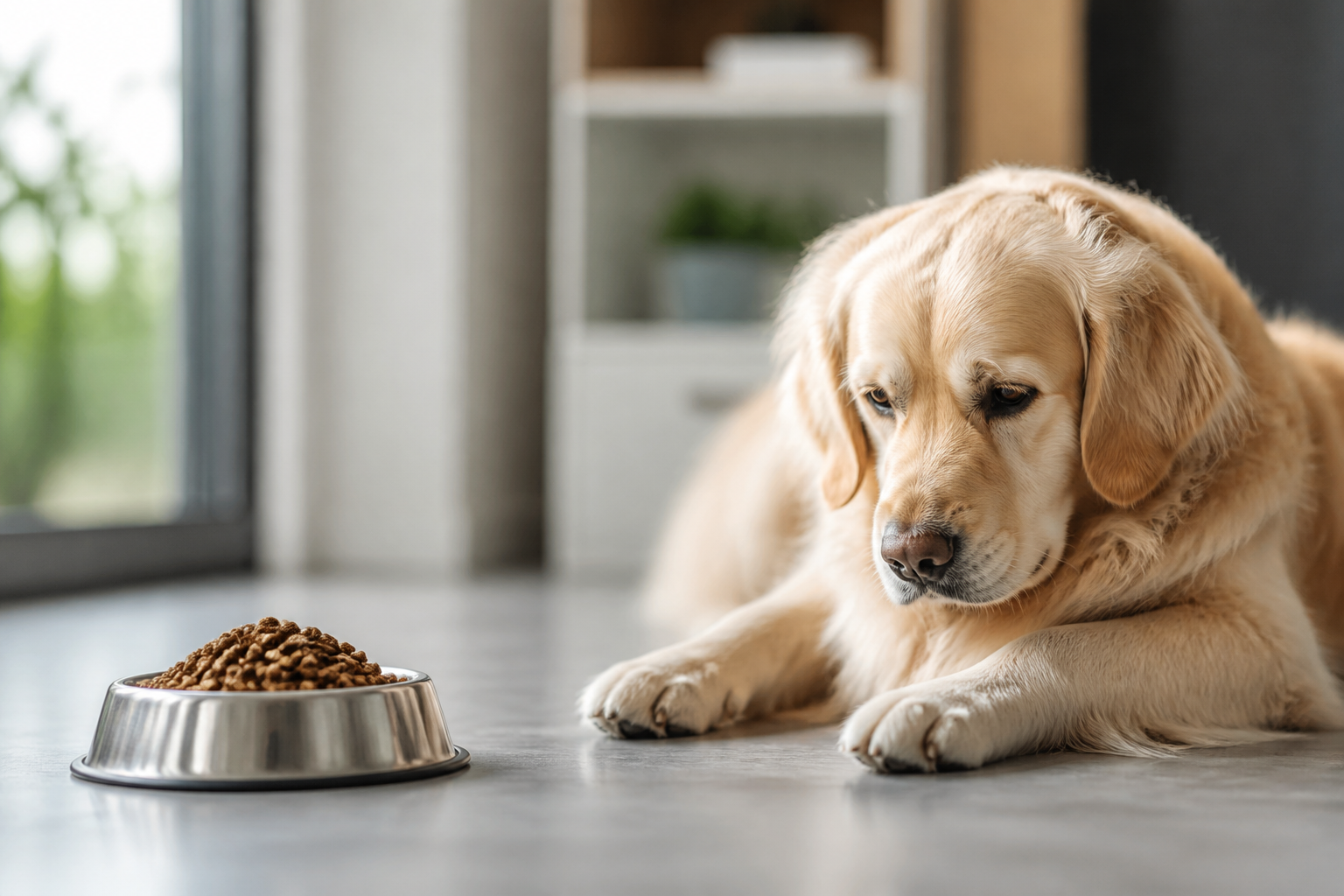
A consistent routine also helps you spot health issues quickly. If your dog is usually excited for breakfast but suddenly leaves half their meal, you know something is wrong. When dogs are "free-fed" or have food available all day, it is much harder to notice subtle changes in appetite.
We recommend using a stainless steel or ceramic bowl to prevent chin acne and bacteria buildup. If your dog eats too quickly, a slow-feeder bowl or a food-dispensing toy like those from Kong can provide mental stimulation while slowing down the meal.
Switching to a New Dry Food
If you decide to change your dog's food based on their nutritional needs, do it slowly. A sudden change in diet can lead to stomach upset or refusal to eat. We suggest a seven-day transition period to allow their digestive system to adjust to the new ingredients and calorie density.
- Days 1-2: 75% old food, 25% new food.
- Days 3-4: 50% old food, 50% new food.
- Days 5-6: 25% old food, 75% new food.
- Day 7: 100% new food.
During this time, monitor your dog's stool consistency and energy levels. If you notice any persistent digestive issues, consult your veterinarian. Our pharmacy carries various digestive supports and probiotics to help with sensitive transitions.
For more detail, read how to transition your dog to a new food.
Key Takeaway: A slow transition is the best way to prevent the "upset tummy" that often follows a brand change.
The BaxterBoo Difference in Nutrition
We handpick every brand we carry to ensure your pet gets the best possible nutrition. Whether you are looking for a grain-free option from Acana or a specialized formula from Royal Canin, we focus on quality ingredients.
Our team knows that pet owners want value without compromising on health. That is why we offer programs like our Frequent Buyer Program on participating brands. You can also save time and money by using our Autoship service. This ensures you never run out of your dog’s favorite food and gives you a free MVP Gold membership for additional savings.
BaxterBoo has been serving the pet community since 2006. We are not just an online store. We are a team of people who love pets and understand the importance of every scoop. From our warehouse in Illinois to your front door, we provide the tools you need for a healthy, happy dog.
Conclusion
Feeding your 50-pound dog is a balance of science and observation. While 2 to 2 2/3 cups is a standard starting point, your dog's activity level and the specific calorie count of the food are the true guides. By monitoring their body condition and adjusting for life stages, you can ensure they stay at a healthy weight for years to come. Consistency in measuring and a solid routine are the best gifts you can give your pet.
- Measure food by calories, not just volume.
- Adjust for activity levels and age.
- Use the rib test to check body condition.
- Transition to new foods slowly over one week.
Bottom line: Start with the bag's recommendation, but let your dog's waistline be the final word.
If you are ready to stock up on premium food or need to fill a prescription for a specialized diet, visit our dog food category or check out our dog healthcare category for your pet's health needs.
FAQ
Is 3 cups of dry food too much for a 50 lb dog?
It depends on the calorie density of the food and the dog's activity level. If the food is low-calorie (around 300 kcal/cup) and the dog is very active, 3 cups might be appropriate. However, for a standard kibble and a moderately active dog, 3 cups often leads to weight gain.
How many calories does a 50 lb dog need to maintain weight?
An average, neutered adult dog weighing 50 pounds typically needs between 1,100 and 1,300 calories per day. Active working dogs or intact dogs may require more, while seniors or very sedentary dogs might need as few as 900 calories. Always consult your vet to find a target based on your dog's body condition score.
Should I feed my 50 lb dog once or twice a day?
Most veterinarians recommend feeding adult dogs twice per day. Splitting the daily portion into a morning and evening meal helps maintain stable blood sugar levels and prevents the dog from becoming overly hungry. It can also reduce the risk of bloat in some breeds.
Does breed matter when deciding how much to feed a 50 lb dog?
Yes, breed and genetics play a significant role in metabolism. For example, a 50-pound Border Collie likely has a much higher metabolic rate and energy output than a 50-pound Basset Hound. Working breeds generally require more calories per pound of body weight than breeds known for being more sedentary.