
 Save 15% on your 1st Autoship learn more

 Email us
 Live Chat
 FAQs
FAQs





Introduction
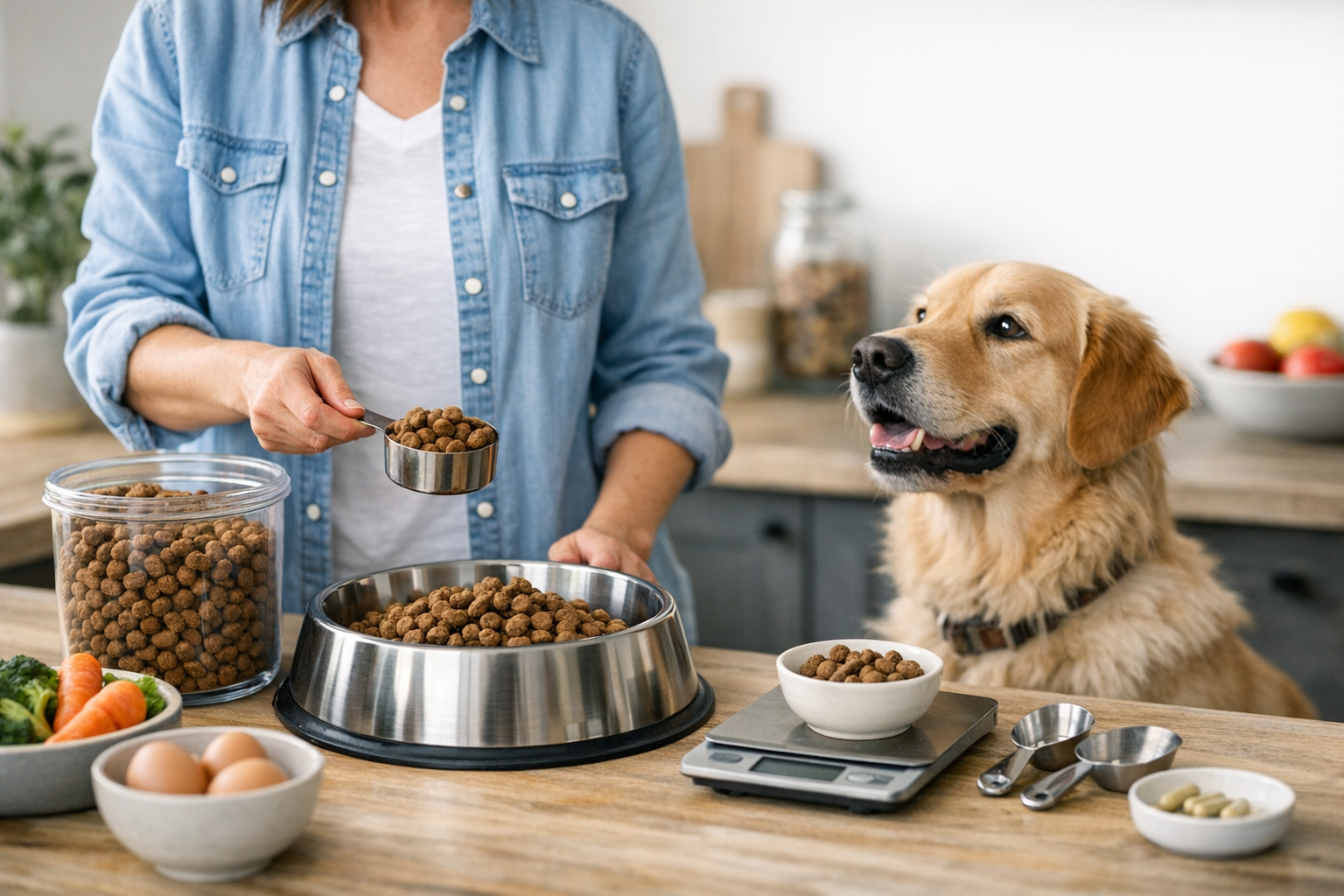
You are standing in the kitchen with a measuring scoop in one hand and your dog staring up at you with soulful eyes. It is a scene that plays out in millions of homes every morning. You want to provide enough energy for their daily adventures but avoid the health risks that come with extra weight. Determining the right amount of kibble is one of the most important daily decisions you make for your pet. At BaxterBoo, we know that every dog is an individual with unique nutritional needs. While the bag provides a baseline, several factors determine the exact portion your pup requires. This guide will help you navigate feeding charts, life stages, and activity levels to find the perfect balance. Proper portioning is the foundation of a long and healthy life for your canine companion. If you want to compare options, start with our dog food category.
Why Portions Matter for Your Dog
Feeding your dog the right amount of food is about more than just satisfying their hunger. It is a critical component of their overall health and longevity. When a dog receives the correct number of calories, their body can maintain essential functions. This includes supporting their immune system, maintaining muscle mass, and keeping their coat healthy.
Overfeeding is a common mistake that leads to canine obesity. Even a few extra pounds can put significant stress on a dog's joints and heart. This often leads to chronic conditions that decrease their quality of life. Conversely, underfeeding can lead to nutritional deficiencies and a lack of energy. Your goal is to find the "Goldilocks" zone where your dog maintains a steady weight and high energy.
Quick Answer: Most adult dogs require about 25 to 30 calories per pound of body weight to maintain their current size. You should start with the recommendations on your specific dog food bag and adjust based on your pet's activity level and body condition.
The Factors That Influence Feeding Amounts
No two dogs have the identical caloric requirements. Even two dogs of the same breed and weight may need different amounts of food. Understanding these variables helps you customize their diet.
Age and Life Stage
Puppies are in a state of constant growth and development. They require significantly more calories and protein per pound than adult dogs. Their bodies are building bone, muscle, and organ tissue at a rapid pace. As they transition into adulthood, their metabolism slows down, and their calorie needs stabilize.
Senior dogs often experience another shift. Many older dogs become less active and lose muscle mass. Their metabolism may slow down further. This often means they need fewer calories to avoid weight gain. However, some seniors may need more easily digestible proteins to maintain their strength.
Activity Level
An active dog that goes for long hikes or plays fetch daily burns more fuel than a dog that prefers the couch. Working dogs or those involved in agility training have the highest caloric demands. If you have an active weekend but a quiet week, you might even need to adjust portions slightly to match the energy output.
Metabolism and Breed
Some breeds are naturally more energetic and have higher metabolic rates. For example, many terriers and herding breeds burn calories quickly. Other breeds, like English Bulldogs or Basset Hounds, may have slower metabolisms. Genetics play a large role in how a dog processes food and stores fat.
Reproductive Status
Spaying or neutering a dog changes their hormonal balance. This often leads to a slight decrease in their metabolic rate. Research suggests that altered dogs may require about 20 percent fewer calories than intact dogs of the same size. If your dog was recently fixed, keep a close eye on their waistline.
Key Takeaway: Every dog is a unique individual. Use the feeding chart as a starting point, but stay ready to adjust based on your dog's specific lifestyle and physical changes.
How to Read a Dog Food Feeding Chart
Every bag of dry dog food includes a feeding chart. These charts are regulated, but the format can vary between brands. Most charts list the dog's weight on one side and the recommended total daily feeding amount on the other.
It is important to remember that the amount listed is usually for the entire 24-hour period. If you feed your dog twice a day, you must divide that total number by two. Many owners make the mistake of giving the full amount at every meal. This effectively doubles the calories the dog needs.
Understanding Caloric Density
Not all dry foods are created equal. One cup of a high-protein, grain-free food like our NutriSource selection or our Stella & Chewy's selection might contain 450 calories. A standard grocery brand might only have 320 calories per cup. This is why you must check the chart every time you switch brands or formulas.
Sample Adult Dog Feeding Table
The following table provides a general idea of daily feeding amounts for a standard adult maintenance dry food. This assumes a calorie count of approximately 350-400 kcal per cup.
| Dog Weight (lbs) | Daily Feeding Amount (Cups) |
|---|---|
| 3 to 10 lbs | 1/3 to 1/2 cup |
| 11 to 20 lbs | 1/2 to 1 1/4 cups |
| 21 to 50 lbs | 1 1/4 to 2 1/2 cups |
| 51 to 75 lbs | 2 1/2 to 3 1/2 cups |
| 76 to 100 lbs | 3 1/2 to 4 1/4 cups |
| Over 100 lbs | 4 1/4 cups + 1/4 cup for every 10 lbs over 100 |
Vet Tip: Use a standard measuring cup rather than a random kitchen scoop. Accuracy matters when you are dealing with small portions. A small overage every day can lead to a pound of weight gain over a few months.
Assessing Your Dog's Body Condition
Since charts are only estimates, you must learn to read your dog's body. Veterinarians use a Body Condition Score (BCS) to determine if a dog is at a healthy weight. You can perform a similar check at home.
The Rib Test
Run your hands along your dog's sides. You should be able to feel the ribs easily under a thin layer of fat. If you have to press hard to find them, your dog may be overweight. If the ribs are visible from a distance, they might be underweight.
The Waistline Check
Look at your dog from above. They should have a visible waistline behind the ribs. When viewed from the side, the abdomen should tuck up toward the hind legs. A straight line from the chest to the back legs often indicates that the dog is carrying too much weight.
Managing Special Dietary Needs
Sometimes, a standard maintenance diet is not enough. Dogs with specific health conditions require a more tailored approach to feeding. This is where specialized nutrition and professional guidance become essential.
Weight Management
If your dog has already reached an unhealthy weight, a simple reduction in their current food might not be the best solution. Simply feeding less of a standard food can leave a dog feeling hungry and unsatisfied. Weight management formulas are often higher in fiber to help them feel full while consuming fewer calories.
Prescription Diets and the Pharmacy
Chronic health issues like kidney disease, diabetes, or severe allergies require precise nutrition. In many cases, your veterinarian will prescribe a specific therapeutic diet. These foods are formulated with exact nutrient levels to manage disease symptoms.
Through our dedicated pharmacy service, we make it easier to manage those ongoing needs. If your vet has recommended a specific diet for a medical condition, our pharmacy can help you handle those requirements with less hassle. We aim to make it easy for you to get the specialized nutrition your dog needs delivered right to your door.
Key Takeaway: Health conditions change how your dog processes nutrients. Always work with your veterinarian to determine if a prescription diet or specific supplement is necessary for your dog's long-term wellness.
How Often Should You Feed Your Dog?
Timing is just as important as quantity. Most veterinarians recommend a consistent feeding schedule to regulate digestion and energy levels.
Puppies (Under 6 Months)
Puppies have small stomachs and high energy needs. They usually do best with three or four small meals spread throughout the day. This helps prevent drops in blood sugar and keeps their energy consistent.
Adult Dogs
For most adult dogs, two meals a day is the standard. One in the morning and one in the evening works well for most household schedules. Some owners prefer once-a-day feeding, but this can lead to hunger-induced behaviors or digestive upset in some dogs.
Seniors
Many senior dogs continue with a twice-a-day schedule. However, if your senior dog is managing health issues like cognitive decline or decreased appetite, smaller and more frequent meals might be more appealing.
Transitioning to a New Food
When you determine that your dog needs a different amount or type of food, do not make the change overnight. A sudden shift can cause significant digestive distress, including vomiting or diarrhea.
Step 1: Mix 25% of the new food with 75% of the old food for two days. Step 2: Move to a 50/50 mix for the next two days. Step 3: Feed 75% new food and 25% old food for two days. Step 4: Transition to 100% of the new food.
Watch your dog's stool consistency and energy levels during this time. If you notice any issues, slow down the transition. For a related step-by-step refresher, see our guide to transitioning a dog to a new food.
Tips for Success with Dry Food
- Store food properly: Keep dry food in its original bag inside an airtight container. This preserves the fats and prevents them from going rancid.
- Account for treats: Treats should never make up more than 10% of your dog's total daily calories. If you give a high-value treat, reduce the dinner portion slightly.
- Provide fresh water: Dry food has very little moisture. Always ensure your dog has access to clean, fresh water to stay hydrated.
- Be consistent: Feed at the same times every day. This helps your dog's internal clock and makes potty breaks more predictable.
Bottom line: Monitoring your dog's weight and adjusting their kibble accordingly is a lifelong commitment that pays off in better health.
Using Gear to Help with Portions
If your dog eats too fast, they may not realize they are full. This can lead to overeating or bloating. Slow feeder bowls are excellent tools for extending mealtime. They force the dog to work around obstacles, which improves digestion.
Additionally, consider using a digital kitchen scale for the most accurate portioning. Measuring by weight (grams) is far more precise than measuring by volume (cups). This is especially helpful for small breeds where an extra tablespoon of food represents a large percentage of their daily intake.
Conclusion
Finding the right amount of dry food for your dog is a process of observation and adjustment. Start with the guidelines on the package, but remember that your dog's activity, age, and health status are the true deciding factors. Regularly checking their body condition will tell you if you are on the right track. At BaxterBoo, we are committed to helping you provide the best care possible. Whether you are looking for premium kibble from brands like NutriSource and Stella and Chewy's or need prescription support through our pharmacy, we have the resources to help.
Checklist for your next mealtime:
- Confirm the dog's current weight.
- Check the feeding chart for your specific brand.
- Use a proper measuring cup or scale.
- Assess your dog's current activity level.
- Subtract calories for any treats given that day.
For more savings on your dog's favorite dry food, consider joining our Autoship programme. You will save on your first order and receive a free MVP Rewards membership to earn rewards on every purchase. For more ways to save on recurring purchases, you can also explore our dry dog food freshness guide and our guide to feeding a puppy dry food.
FAQ
How can I tell if my dog is still hungry or just begging?
Many dogs are highly food-motivated and will beg even when they have had enough calories. If your dog is at an ideal weight and has steady energy, they are likely just looking for a tasty snack. You can try adding low-calorie "fillers" like green beans or canned pumpkin to their meal to help them feel fuller without adding significant calories.
Does the breed of my dog change how much I should feed them?
Yes, breed can influence metabolism and energy levels significantly. For example, a working breed like a Border Collie may need more calories than a more sedentary breed of the same weight. It is best to use breed-specific guidelines as a general reference but focus primarily on your individual dog's body condition and activity level.
Should I change the amount of food I feed my dog in the winter?
It depends on your dog's lifestyle. If your dog spends a lot of time outside in the cold, they may burn more calories just to stay warm. However, many house pets actually become less active in the winter because walks are shorter. Monitor your dog's weight during seasonal changes and adjust their portions by about 10% if you notice any gains or losses.
What should I do if my dog stops eating their dry food?
A sudden loss of appetite can be a sign of dental pain, illness, or stress. If your dog skips more than two meals, it is important to consult your veterinarian to rule out medical issues. If they are just being picky, you can try adding a small amount of warm water or a topper to the kibble to enhance the aroma and flavor. For more ideas, our guide to hydrating kibble and our wet vs. dry dog food guide can help you decide what works best for your dog.






