
 Save 15% on your 1st Autoship learn more

 Email us
 Live Chat
 FAQs
FAQs





Introduction
You know that specific smell when you open a brand new bag of high quality kibble. It is rich, meaty, and inviting. Your dog certainly knows it too. They probably hear the crinkle of the bag from three rooms away and come running for dinner. However, halfway through a large bag, you might notice that aroma starting to fade. At BaxterBoo, we hear from pet owners every day who are worried that their expensive dog food is losing its crunch or its nutritional value. Storing food correctly is about more than just convenience. It is about protecting the healthy fats and vitamins your dog needs to stay active. This guide covers the best ways to keep kibble fresh, how to spot spoilage, and why your storage location matters. We want to help you make every meal as nutritious as the first one.
Quick Answer: To keep dry dog food fresh, keep the kibble inside its original bag and place that entire bag into an airtight container. Store the container in a cool, dry place off the ground and aim to use the food within six weeks of opening.
The Science of Kibble Freshness
Dry dog food looks like it should last forever, but it is more perishable than many people realize. Most premium dog foods contain high levels of animal fats and oils. These fats provide energy and keep your dog's coat shiny. Unfortunately, fats are highly sensitive to oxygen. When oxygen hits the surface of the kibble, a process called oxidation begins. This causes the fats to turn rancid over time.
Rancid fat does not just taste bad to your dog. It can also destroy the vitamins and antioxidants in the food. If your dog is eating food that has oxidized, they are not getting the full nutritional profile promised on the label. This is why a bag that has been open for three months is significantly less healthy than a fresh one. Moisture is another major enemy. Humidity in the air can lead to mold growth that is often invisible to the naked eye. Keeping air and water away from the food is the most important part of storage. For more guidance, read our article on how long dry dog food stays fresh once opened.
Why the Original Bag Is Best
It is tempting to buy a beautiful plastic bin and pour the entire bag of kibble directly into it. While this looks organized, it is actually one of the most common storage mistakes. The bags that premium dog food comes in are highly engineered. They are often made with multiple layers of plastic, paper, and foil designed specifically to keep oxygen and moisture out.
When you pour the food out of the bag and into a plastic bin, you expose every single piece of kibble to a massive amount of oxygen. This jumpstarts the oxidation process for the entire batch. Furthermore, plastic bins can develop tiny scratches over time. These scratches can harbor old fats and bacteria that contaminate each new bag of food you pour in.
Benefits of Keeping the Bag
- The bag acts as a secondary barrier against pests and air.
- You keep the "Best By" date and lot number handy in case of a recall.
- The inner liner is designed to resist oil seepage and keep the food stable.
- It saves you the time and mess of pouring 30 pounds of kibble.
Key Takeaway: Always keep your dog's food inside its original packaging. Roll the top down tightly after every meal and secure it with a sturdy bag clip.
Choosing the Right Airtight Container
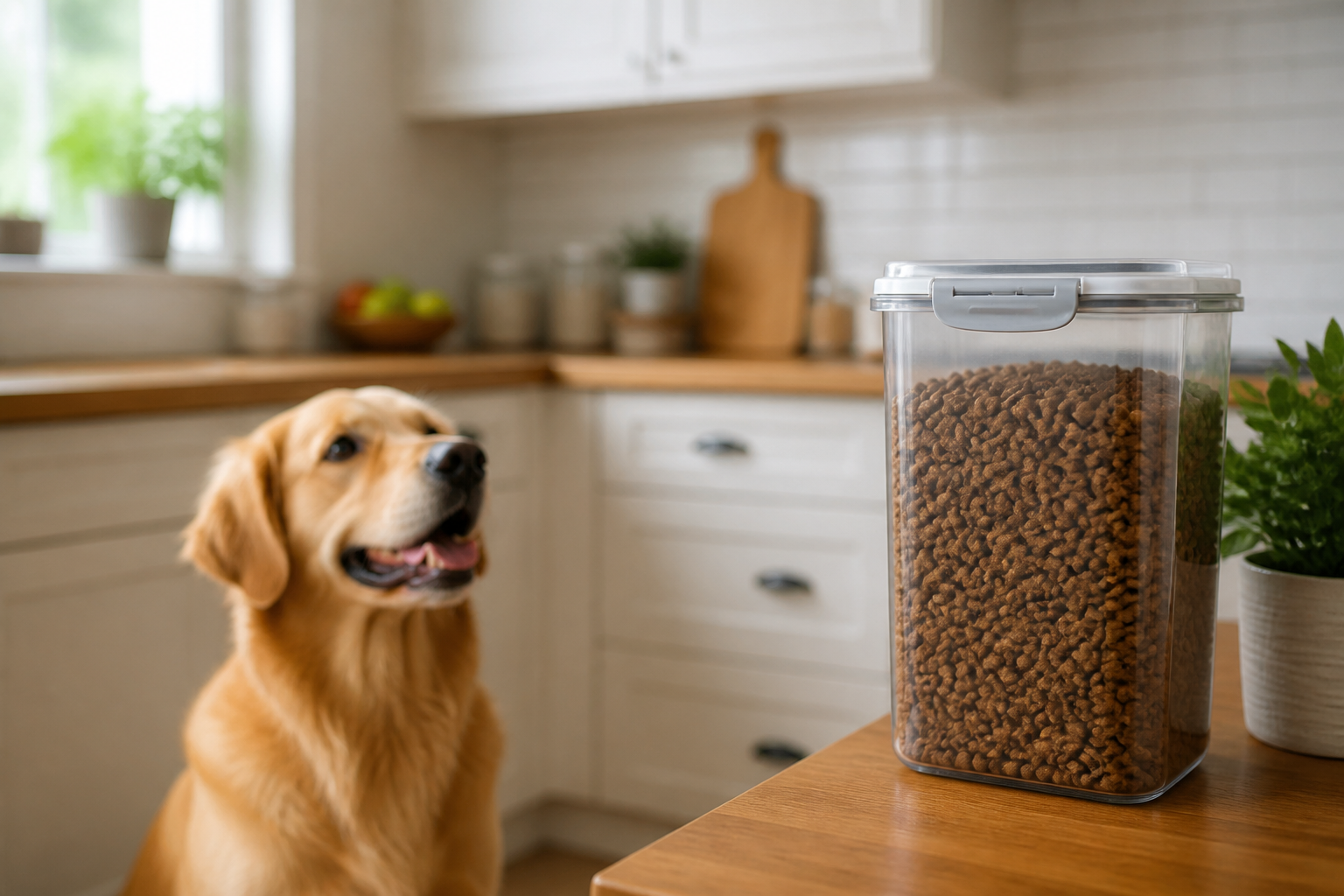
Even though you should keep the food in its original bag, you still need a secondary container. A good storage bin provides a physical barrier against rodents, ants, and curious dogs who might try to help themselves to a midnight snack. It also helps stabilize the environment around the bag. Browse our dog food storage and accessories for containers, scoops, and related supplies.
Look for a container with a true airtight seal. These usually have a rubber gasket or a screw top lid. Simple flip top bins often let in enough air to cause the food to go stale within weeks. If you are using a plastic bin, make sure it is food grade and BPA free. This ensures that no harmful chemicals leach into the bag or the food itself.
Step 1: Buy a container that is slightly larger than your usual bag of dog food. / This ensures the bag fits easily without you having to force it or tear the paper.
Step 2: Place the unopened bag into the bin. / Once it is settled, open the top of the bag carefully.
Step 3: Fold the top of the bag over several times after each use. / This removes excess air from the bag before you seal the outer container.
Step 4: Close the bin lid tightly. / Make sure the seal is fully engaged to prevent any air exchange.
The Perfect Storage Environment
Where you put the food is just as important as what you put it in. Many owners keep their dog food in the garage or on a back porch to save space in the kitchen. However, these areas are prone to extreme temperature swings and high humidity. For additional outdoor-storage guidance, see our article on keeping dog food dry outside.
Heat is a primary driver of spoilage. If dog food reaches temperatures above 80 degrees Fahrenheit, the chemical breakdown of the ingredients accelerates. This is especially true for foods that use natural preservatives like Vitamin E instead of synthetic chemicals. Humidity is equally dangerous. Even a small amount of condensation inside a bag can lead to a mold outbreak.
Ideal Storage Conditions
- Temperature: Keep the food in a climate controlled area under 75 degrees.
- Humidity: A dry pantry or a closet is much better than a laundry room or basement.
- Height: Store the container off the floor to prevent moisture from wicking up through the bottom.
- Light: Keep the food in a dark place. Light can degrade certain vitamins and speed up the oxidation of fats.
Bottom line: The best place for dog food is a cool, dark, dry pantry inside your home.
Understanding the Six Week Rule
Most manufacturers provide a "Best By" date on the bag. This date only applies to unopened bags stored in ideal conditions. Once you break the seal, the clock starts ticking much faster. A good rule of thumb is to use the entire bag within six weeks of opening it. Our guide to how long dry dog food lasts offers more information about freshness timelines.
If you have a small dog but prefer to buy 40 pound bags to save money, you might be sacrificing your pet's health for a few dollars. By the time you get to the bottom of that bag, the food has likely lost its nutritional potency. It is often better to buy smaller bags more frequently. This ensures the food is always at its peak freshness. You can compare options in our dog food category.
Vet Tip: If your dog suddenly stops eating a food they usually love, check the freshness. Dogs have a much better sense of smell than we do and can detect rancid fats long before humans can. If the refusal continues, consult your veterinarian to rule out underlying health issues or dental pain.
Identifying Spoiled Dog Food
Sometimes, despite our best efforts, a bag of food goes bad. It is important to know the warning signs so you can dispose of it before your dog gets sick. Feeding spoiled food can lead to digestive upset, vomiting, or long term health complications. Our article on whether dry dog food can go bad covers additional signs to watch for.
The nose is your best tool. Fresh dog food should smell like grain, meat, or vegetables. If you open the bag and get a whiff of something sour, musty, or paint like, the fats have likely gone rancid. You should also look for physical changes. Kibble that feels oily or "sweaty" to the touch is a sign that the fats are breaking down.
- Check for mold: Look for white, green, or black fuzz on the kibble or inside the bag.
- Watch for pests: Tiny webs, larvae, or beetles indicate a pantry moth or weevil infestation.
- Notice the texture: If the kibble feels soft or crumbles easily, it has absorbed too much moisture.
- Observe your dog: If they hesitate to eat or have a sudden bout of diarrhea, the food is the first thing to investigate.
Cleaning and Maintenance
Even if you keep the food in the bag, you still need to maintain your storage gear. Crumbs and dust can accumulate at the bottom of your storage bin. These small particles are the perfect breeding ground for mold and bacteria.
Every time you finish a bag of food, take a moment to clean your storage container. Wash it with hot, soapy water and a clean sponge. The most critical step is to let the container dry completely. Even a few drops of water left in the bottom can ruin the next bag of food you put inside. If you use a scoop, wash it at least once a week. Your hands have oils and bacteria that can transfer to the scoop and then to the food. For a related organization guide, read our article on pet home goods and organization.
Cleaning Checklist
- Empty all crumbs and dust from the bin.
- Wash with mild dish soap and hot water.
- Rinse thoroughly to remove all soap residue.
- Air dry for at least several hours until bone dry.
- Wipe down the outside of the bin to remove pet hair and dust.
Special Considerations for Health Needs
At BaxterBoo, we know that many dogs require specific diets to manage health conditions. If your veterinarian has prescribed a specialized food through our pharmacy partnership with Pet's Choice, storage is even more vital. Prescription diets for skin allergies, kidney health, or weight management often have unique ingredient balances. Our pet pharmacy provides dog medications and pharmacy products for veterinarian-guided care.
For example, foods designed for skin and coat health are frequently packed with Omega-3 and Omega-6 fatty acids. These specific fats are extremely fragile and oxidize very quickly. If you are using a prescription diet for a chronic condition, any loss in nutritional quality can affect your dog's progress. Always treat these medical foods with extra care by keeping them in a strictly climate controlled environment.
If your dog is struggling with sudden digestive issues or refuses to eat their specialized diet, it is important to talk to your vet. Our pharmacy offers a wide range of FDA approved medications for allergies and stomach issues if the problem persists. Keeping your dog's food fresh is the first line of defense in their overall wellness plan.
The Role of Rewards and Autoship
Managing a fresh food supply can be a lot of work. To make it easier, we offer an Autoship programme that delivers fresh food right to your door on a schedule you choose. This prevents the temptation to buy massive bags that sit around for months. Instead, you can receive smaller, fresher bags every four weeks.
Our Autoship customers also get a free MVP Gold membership. This helps you save money while ensuring your dog never has to eat stale kibble. By timing your deliveries to match your dog's eating habits, you guarantee that the food in the bowl is always high quality and full of the nutrients they need to stay healthy.
Conclusion
Keeping dry dog food fresh is a simple but effective way to support your dog's health. By understanding how oxygen, heat, and moisture affect kibble, you can prevent spoilage and save money on wasted food. Remember to keep the food in its original bag, use an airtight container, and store it in a cool, dry place inside your home. These small habits ensure that your dog enjoys every meal and gets the full benefit of their nutrition.
- Keep kibble in the original bag to maintain the engineered barrier.
- Use an airtight container with a rubber seal to block out pests and air.
- Store food in a climate controlled room, never in a hot garage.
- Wash your storage bins and scoops regularly to prevent bacterial buildup.
- Aim to finish every bag within six weeks for peak nutritional value.
If you are looking for the best storage solutions or want to start a fresh delivery schedule, visit our selection of premium dog foods and storage gear. We are here to help you provide the very best care for your furry family members.
Key Takeaway: Fresh food is the foundation of pet health. Proper storage protects the expensive ingredients you pay for and ensures your dog stays excited for mealtime.
FAQ
Is it safe to store dog food in plastic containers?
Yes, it is safe as long as the container is made from food-grade, BPA-free plastic. However, you should still keep the food inside its original bag rather than pouring it directly into the bin. This prevents the plastic from absorbing fats that can go rancid and contaminate future batches of food.
How can I tell if my dog's dry food has gone bad?
The most common sign of spoiled dog food is a sour or rancid smell, similar to old paint or used cooking oil. You might also see physical signs like mold growth, an oily sheen on the kibble, or an infestation of small insects. If your dog suddenly refuses to eat or has an upset stomach, the food could be the culprit.
Can I store dog food in the garage if it is in an airtight bin?
It is not recommended to store dog food in the garage even if the bin is airtight. Garages experience high heat and humidity levels that can cause the food to degrade much faster. High temperatures can cause the nutrients to break down and the fats to turn rancid, even if the container is sealed.
Should I wash my dog food storage container between every bag?
Yes, you should wash and thoroughly dry your storage container every time it becomes empty. Old crumbs and oil residue can build up at the bottom of the bin and become a breeding ground for bacteria and mold. Always ensure the container is completely dry before placing a new bag inside to avoid moisture traps.






