
 Save 15% on your 1st Autoship learn more

 Email us
 Live Chat
 FAQs
FAQs





Introduction
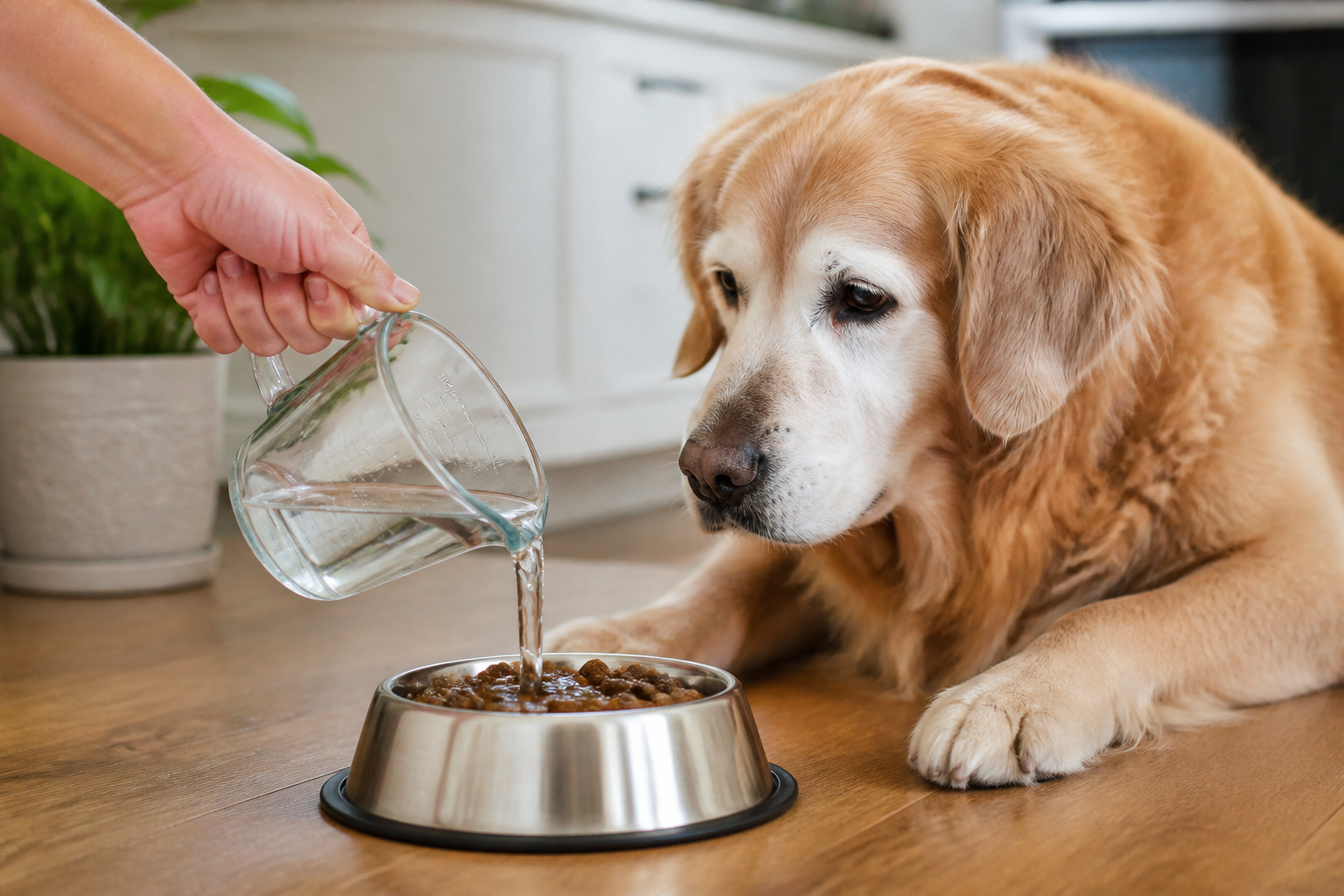
You might notice your senior dog standing over their bowl, looking hungry but hesitating to take a bite. The crunchy kibble they once loved now seems like a chore to chew. This is a common moment for many owners as their pets enter their golden years. At BaxterBoo, we know that keeping a senior dog interested in mealtime is about more than just flavor. It involves adjusting textures to match their changing physical needs. This guide covers the best ways to moisten kibble, the benefits of added hydration, and how to support your dog’s aging body. Softening dry food can turn a difficult meal back into the highlight of your dog's day.
Quick Answer: The most effective way to soften dry dog food is by adding warm water or low-sodium broth to the bowl and letting it sit for ten minutes. You can also mix in canned wet food or use moisture-rich toppers to improve the texture and aroma.
Why Senior Dogs Struggle With Hard Kibble
As dogs age, their bodies go through significant changes that affect how they interact with their food. Understanding these changes helps you choose the right softening method.
Dental Health and Sensitivity
Dental issues are the primary reason older dogs stop eating dry food. Over time, many seniors develop gingivitis, cracked teeth, or losing enamel. Chewing hard kibble can cause sharp pain in these sensitive areas. If you see your dog dropping pieces of food or chewing only on one side, dental discomfort is likely the cause. You can explore our dog dental care category for supplies that support an at-home oral care routine.
Decreased Senses
A dog's sense of smell and taste can dull as they get older. Dry kibble does not have a very strong scent on its own. Softening the food, especially with warm liquids, releases the aromas trapped inside the biscuits. This makes the meal much more enticing for a dog whose appetite has slowed down.
Digestive Efficiency
Digestion starts in the mouth. If a dog cannot chew their kibble properly, they swallow large, hard chunks. These pieces are harder for the stomach to break down. Softening the food before it even reaches the bowl helps the digestive tract process nutrients more effectively. For more ideas, read our guide to mixing dry dog food with water.
Vet Tip: If your senior dog suddenly stops eating or shows signs of intense pain while chewing, consult your veterinarian immediately. While softening food helps, it does not cure underlying dental infections or broken teeth that may require professional treatment.
The Best Methods to Soften Dry Dog Food
There are several ways to change the consistency of your dog’s meals. You can choose the method that best fits your schedule and your dog's preferences.
The Warm Water Method
This is the simplest and most cost-effective way to soften kibble. It requires no special ingredients and works with any brand of dry food.
Step 1: Measure your dog’s normal portion of kibble into a heat-safe bowl.
Step 2: Add roughly one-quarter cup of warm water for every cup of food. The water should be warm but never boiling.
Step 3: Cover the bowl and let it sit for 10 to 15 minutes. This allows the kibble to soak up the moisture.
Step 4: Stir the food. If it still feels hard, add a little more water and wait five more minutes.
For additional preparation tips, see our guide to wetting dry dog food.
Using Pet-Safe Broths
If your dog is a picky eater, replacing water with broth can make a huge difference. Broth adds a punch of savory flavor that most dogs find irresistible.
- Use only low-sodium options.
- Avoid any broth containing onions or garlic, as these are toxic to dogs.
- Look for specific "pet broths" or bone broths formulated for animals.
- Bone broth is particularly good for seniors because it contains natural collagen.
Mixing With Wet Food
Combining dry kibble with canned wet food provides a variety of textures. The moisture from the wet food will naturally seep into the dry pieces over time. Our wet dog food selection offers options for mixing into softened meals.
Step 1: Reduce the amount of dry food slightly to account for the extra calories in the wet food.
Step 2: Mix in a few tablespoons of a high-quality canned food like Tiki Cat or Stella and Chewy’s.
Step 3: Stir thoroughly so every piece of kibble is coated.
Step 4: Let it sit for five minutes before serving.
Key Takeaway: Using warm liquids is the fastest way to soften food because heat helps the moisture penetrate the dense center of the kibble more quickly.
Nutritional Benefits of Softened Food
Changing the texture of the food does more than just make it easier to chew. It also offers specific health advantages for aging pets.
Improved Hydration
Many senior dogs do not drink enough water on their own. This can lead to kidney strain or urinary tract issues. By adding liquid directly to their food, you ensure they are getting a significant amount of their daily hydration needs met during mealtime. This is especially helpful for dogs on certain medications that may cause dehydration. Our senior dog food collection can help you compare age-focused meal options.
Easier Weight Management
Older dogs often have slower metabolisms. If they find it hard to eat, they might lose weight too quickly, which results in muscle wasting. Softened food ensures they can finish their entire portion comfortably. Conversely, if a dog needs to lose weight, adding water to the kibble increases the volume of the meal. This helps them feel fuller while consuming fewer calories.
Enhanced Nutrient Absorption
When food is pre-soaked, the digestive enzymes in the stomach can get to work faster. For a senior dog with a sensitive stomach, this reduces the chances of bloating or gas. It also means they are getting the most out of the high-quality proteins and fats in their diet. For more senior nutrition guidance, read our guide to choosing dog food for senior pets.
Using Toppers and Supplements
Sometimes a senior dog needs an extra incentive to finish their bowl. Toppers are a great way to add both moisture and targeted nutrition.
Liquid Toppers
Products like Honest Paws or Zesty Paws often offer liquid supplements that can be drizzled over kibble. These might include fish oils for coat health or liquid glucosamine for joint support. These liquids add a bit of moisture while helping to manage common senior ailments.
Dehydrated and Freeze-Dried Options
Brands like The Honest Kitchen or Stella and Chewy’s offer dehydrated foods that you rehydrate with water. These often turn into a soft, oatmeal-like consistency. You can use these as a full meal or mix them into existing kibble to soften the overall texture.
Specific Ingredients to Look For
When choosing toppers or mixers for a senior dog, look for these beneficial ingredients:
- Omega-3 Fatty Acids: Supports brain health and reduces joint inflammation.
- Glucosamine and Chondroitin: Essential for maintaining cartilage in aging joints.
- Probiotics: Helps maintain a healthy balance of gut bacteria for better digestion.
- High-Quality Fiber: Prevents constipation, which is common in less active seniors.
For mobility-focused options, browse our hip and joint care category.
Bottom line: Adding moisture to kibble is a simple way to increase your dog's daily water intake and support their vital organ function.
When to Consider a Prescription Diet
Sometimes, simply softening regular kibble is not enough. If your dog has a chronic health condition, your veterinarian might recommend a prescription diet. These foods are formulated to manage specific issues like kidney disease, heart problems, or severe food allergies.
Our pharmacy at BaxterBoo carries a wide range of FDA-approved prescription pet foods. Through our partnership with Pet's Choice, we provide access to specialized diets like Farmina Vet Life and Royal Canin. These diets are often available in both dry and wet versions. Even with prescription dry food, you can still use the warm water method to make it more palatable for your senior pet. For another perspective on special diets and softened meals, read our article about wet and dry food for senior dogs.
Vet Tip: Never switch your dog to a prescription diet without consulting your vet first. These foods contain specific nutrient balances that are only intended for dogs with certain medical diagnoses.
Transitioning Your Senior Dog to Soft Food
Even if you are using the same brand of dry food, adding moisture is a change to your dog's routine. It is important to introduce any dietary changes slowly.
Watch for Digestive Sensitivity
Some dogs have very sensitive stomachs. If you add too much water or a new broth too quickly, they might experience loose stools. Start with just a small amount of liquid and increase it over the course of a week. For more practical preparation advice, read our tips for adding water to dry dog food.
Monitor Dental Changes
While soft food is easier to eat, it does not provide the "scrubbing" action that hard kibble can offer for teeth. If you switch entirely to soft food, you may need to increase how often you brush your dog's teeth. We carry various dental care supplies to help keep their gums healthy even on a soft diet.
Routine Matters
Dogs thrive on a schedule. Try to feed your senior dog at the same time every day. If you are soaking the food, start the process 15 minutes before their scheduled mealtime. This ensures the food is ready and at the right temperature when they expect to eat.
Managing Portions
It is easy to overfeed when you start adding toppers and wet food. Always check the caloric content on the packaging. If you add a topper, reduce the amount of dry kibble accordingly. Most experts recommend that treats and toppers make up no more than 10% of a dog's daily calories.
Creating a Comfortable Eating Environment
For a senior dog, the physical act of eating can be taxing beyond just the chewing. Making small adjustments to their environment can help them enjoy their softened food even more.
Elevated Feeders
Bending down to reach a bowl on the floor can be painful for dogs with arthritis in their neck or front legs. Using an elevated feeder allows them to stand in a more neutral position. This can also help with digestion by allowing the food to travel more easily to the stomach.
Non-Slip Mats
Senior dogs often have trouble standing on slippery tile or hardwood floors. If they feel their paws sliding while they eat, they might rush through their meal or give up early. Placing a yoga mat or a non-slip rug under their feeding station provides the stability they need to feel confident.
Quiet Feeding Areas
As dogs age, they can become more easily startled or stressed. Make sure their eating area is in a quiet spot away from the hustle and bustle of the house. This allows them to take their time and focus on their meal without distractions.
How BaxterBoo Supports Senior Dog Owners
We have been helping pet owners care for their companions since 2006. We understand that senior dogs require a little extra patience and specialized care. Our warehouse in Vernon Hills is stocked with over 500 trusted brands to ensure you find exactly what your dog needs.
Savings and Convenience
Managing a senior dog's needs can be a full-time job. Our Autoship program is designed to make things easier. You can set up recurring deliveries of your favorite senior kibble, wet food, or toppers. This saves you money on your first order and grants you a free MVP Gold membership.
Rewards for Every Purchase
Through our MVP Rewards program, you can earn up to 5% back on the supplies you buy most. Whether you are buying Cosequin for joint support or high-quality food from NutriSource or Open Farm, those points add up. This makes it more affordable to provide the premium nutrition your senior dog deserves.
Professional Support
Our partnership with Pet's Choice allows us to be more than just a retail store. Having a pharmacy means we can support your dog's health from the inside out. From flea and tick protection to chronic condition management, we are here to provide the medications your vet prescribes.
Conclusion
Helping an older dog enjoy their food again is one of the kindest things you can do for them. By taking a few extra minutes to soften their kibble with warm water or broth, you remove the barrier of dental pain and stimulate their appetite. Remember to make changes gradually and monitor your dog for any significant shifts in weight or behavior. Our selection of senior-focused foods and supplements at BaxterBoo is here to help your pet stay strong and satisfied. Whether you visit us in Vernon Hills or order online for home delivery, we are committed to helping your dog live their best life.
Key Takeaway: Softening kibble is a simple, effective way to address dental pain, dehydration, and decreased appetite in senior dogs.
FAQ
Can I soften dog food with cold water?
Cold water will eventually soften kibble, but it takes much longer than warm water. Warm water helps break down the fats and starches in the food, releasing the aroma and making it more enticing. If you are in a rush, warm water is always the better choice.
Is it okay to leave softened dog food out all day?
No, you should not leave moistened food out for long periods. Once you add water or broth to dry kibble, it begins to grow bacteria much like wet canned food. If your dog does not finish their bowl within 30 minutes, you should pick it up and discard the leftovers to prevent spoilage.
Will softening food make my dog's teeth worse?
Soft food does not provide the same mechanical cleaning action as hard kibble, which can lead to faster plaque buildup. However, for many seniors, the benefit of painless eating outweighs the dental risks. You can compensate by using pet-safe toothpastes or dental wipes to maintain their oral hygiene.
Can I use human canned soup to soften my dog's food?
It is generally not a good idea to use human canned soups. Most of them contain high levels of sodium, onions, garlic, or other seasonings that are harmful to dogs. Always stick to plain water, pet-specific broths, or low-sodium commercial broths that list only dog-safe ingredients.






