
 Save 15% on your 1st Autoship learn more

 Email us
 Live Chat
 FAQs
FAQs





Introduction
You just arrived home from the store or received a delivery with a large bag of premium kibble. It is tempting to simply slide that heavy bag into a corner of the pantry or pour the contents into a decorative bin and throw the packaging away. However, how you handle that food in the first few minutes can determine if your dog stays healthy or ends up with a stomach ache. At BaxterBoo, we know that high quality nutrition is an investment in your pet's long term wellness. Storing dry dog food correctly protects the vitamins, minerals, and fats that keep your dog thriving. This post covers the best environments for kibble, why the original bag is your best friend, and how to spot food that has gone bad. Proper storage ensures every bowl is as nutritious as the first.
The Importance of the Original Packaging
Many pet owners prefer to pour kibble directly into a plastic or metal bin. While this looks tidy, it is often the first mistake in food storage. The original packaging used by premium brands is specifically engineered to keep food fresh. These bags often feature oxygen barriers and oil resistant linings that prevent the fats in the food from soaking into the material and becoming rancid.
Why the Bag Material Matters
High quality dog food brands use multi-layered bags to protect the contents from the environment. These layers serve as a shield against light and oxygen. When you pour food out of the bag and into a plastic bin, you expose the kibble to a massive amount of air. You also lose the protective lining provided by the manufacturer. Plastic containers can also develop tiny scratches over time. These small grooves trap fats and food particles that can spoil and contaminate the new food you pour inside.
Tracking Important Safety Data
The original bag contains information that is vital for your dog's safety. This includes the brand name, the specific formula, the best by date, and the lot number. If there is ever a product recall or if your dog has an adverse reaction to a specific batch, you will need the lot number to report the issue.
Key Takeaway: Keeping kibble in its original bag provides a double barrier of protection when placed inside a storage bin and ensures you have all necessary safety information for recalls.
Selecting the Right Storage Location
The environment where you keep your dog's food is just as important as the container itself. Most pet owners choose a spot based on convenience, but kibble is sensitive to its surroundings. For more information about freshness timelines, read our guide to how long dry dog food stays good.
Temperature Control
Dry dog food should be stored in a cool, dry place. The temperature should ideally remain below 80 degrees Fahrenheit. Excessive heat is the primary cause of nutrient breakdown. It causes the vitamins to lose their potency and accelerates the oxidation of fats. Avoid storing food in a garage, a laundry room that gets humid, or a shed. These areas experience wild temperature swings that can ruin a fresh bag of food in a matter of days.
Avoiding Humidity and Moisture
Moisture is the enemy of dry dog food. If the storage area is damp, the kibble can absorb moisture from the air. This creates a perfect breeding ground for mold and bacteria. Even a small amount of condensation inside a bin can lead to the growth of mycotoxins, which are dangerous to dogs. Keep the food off the floor, especially on concrete surfaces in basements where moisture can seep through the bag. You can also review these tips for keeping dog food dry when choosing a storage area.
Vet Tip: If you notice any signs of mold, a fuzzy coating, or a damp feel to the kibble, discard the entire bag immediately. Do not attempt to salvage the parts that look okay, as microscopic spores may have spread throughout the container.
Using Airtight Storage Containers Correctly
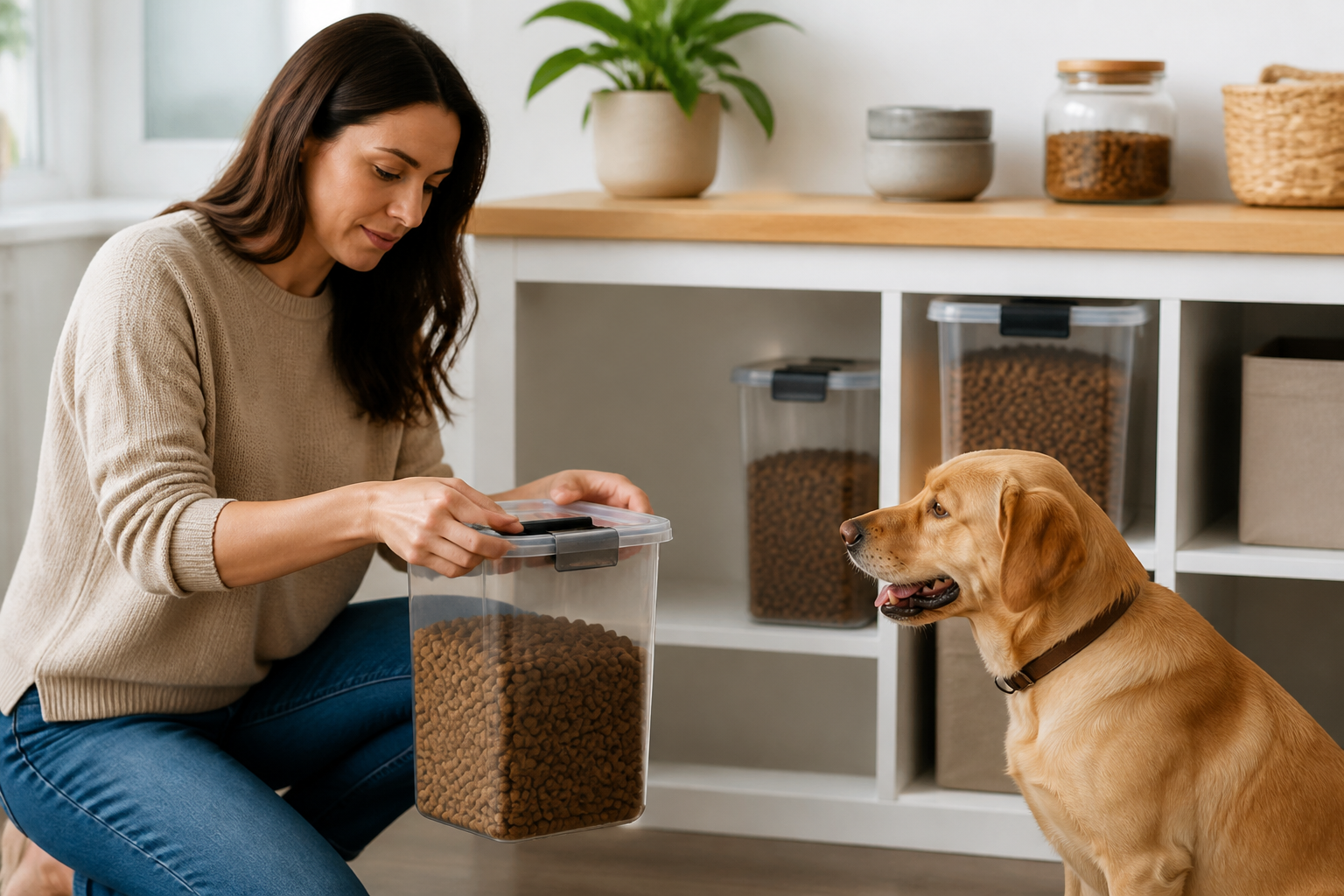
If you want to use a storage bin, the best method is the "bag-in-bin" approach. This means you place the entire original bag inside the storage container. This keeps the food in its engineered environment while adding a secondary layer of protection against pests and air. For storage accessories suited to this purpose, explore our dog food storage collection.
The Bag-in-Bin Method
When you use the bag-in-bin method, you get several benefits. The bin provides an airtight seal that the original bag might lack once opened. It also prevents curious dogs or clever cats from breaking into the bag for an extra meal. By keeping the food in the bag, you avoid the need to wash the entire bin every time you buy a new bag of food. You only need to wipe down the bin if a spill occurs.
Choosing the Right Material
If you must pour food directly into a container, choose your materials carefully.
- Glass containers are excellent because they are non-porous and do not absorb odors or fats.
- Stainless steel is also a great option as it is easy to sanitize and does not scratch easily.
- If you use plastic, ensure it is food-grade and BPA-free.
Avoid using large trash cans or utility buckets that were not designed for food storage. These can leach chemicals into the kibble over time. A purpose-built option, such as the JoJo Modern Pets 3 Piece Canister Dog Food Storage Set, is designed for organized food storage.
Managing Freshness and Shelf Life
Dry dog food does not stay fresh forever once the seal is broken. Most manufacturers recommend using a bag of dry food within six to eight weeks of opening. This is why buying the largest bag possible to save money is not always the best choice for a single, small dog. For another perspective on opened-bag freshness, see how long dry dog food stays fresh once opened.
Understanding Best By Dates
The "best by" date on the bag refers to the unopened product. Once you open the bag, the clock starts ticking much faster. Oxygen begins to react with the ingredients immediately. If you have a small dog, consider buying smaller bags more frequently. This ensures that the food remains at its peak nutritional value. At BaxterBoo, we offer our Autoship programme that allows you to schedule regular deliveries of smaller bags so you always have fresh food on hand without having to store massive amounts for months.
Spotting Spoiled Food
You should always use your senses before scooping food into your dog's bowl. Fresh kibble has a mild, nutty, or meaty aroma. If the food smells sour, musty, or like old paint, the fats have likely gone rancid. Rancid fat is not just unappealing; it can cause digestive upset and long term health issues.
Quick Answer: Dry dog food typically lasts 6 to 8 weeks after opening if stored in a cool, dry place. Always keep the food in its original bag and seal it tightly with a clip to prevent air exposure and fat oxidation.
Daily Hygiene and Handling Habits
The way you handle the food every day contributes to its safety. Cross-contamination is a real risk that many pet owners overlook. If you are comparing feeding styles, our guide to dry and wet dog food offers a related look at food handling.
Washing Bowls and Scoops
You should wash your dog's food bowl with hot, soapy water after every meal. Residual fats and saliva can lead to bacterial growth. Similarly, the scoop you use to measure the food should be washed regularly. If you use the same scoop for weeks without washing it, you are transferring old, oxidized fats into the fresh bag every time you reach inside.
Step 1: Use a dedicated measuring cup or pet food scoop. / This ensures your dog gets the exact portion they need for their weight.
Step 2: Wash the scoop at least once a week. / Use hot water and dish soap to remove all oily residue.
Step 3: Dry the scoop completely. / Never put a wet scoop back into a bag of dry food, as this introduces moisture.
Safe Handling for Humans
Pet food can sometimes carry bacteria like Salmonella or Listeria. While many premium brands have rigorous testing, it is still a best practice to wash your hands after handling dog food or treats. This is especially important in households with young children or people with weakened immune systems.
Identifying and Preventing Pest Infestations
Dry dog food is a magnet for pests like ants, weevils, and rodents. These intruders do more than just eat the food; they can leave behind waste and carry diseases.
Sealing Out Insects
Ants can find their way through the smallest gaps in a pantry. An airtight container with a silicone seal is the best defense. If you notice small moths or beetles in the food, it is likely infested with grain pests. These often arrive in the form of nearly invisible eggs and hatch in warm, humid conditions. This is another reason why keeping the food in a cool environment is essential.
Rodent Prevention
Rodents can chew through paper and thin plastic bags with ease. If you store food in a mudroom or pantry where mice might be a concern, a heavy duty plastic bin or a galvanized metal container is necessary. Ensure the lid latches securely. A dog that can smell their food through a flimsy bag will also try to chew their way in, leading to overeating and potential choking hazards from the packaging.
Health Concerns Related to Improper Storage
Feeding spoiled or contaminated food can lead to serious health problems. If your dog suddenly refuses to eat their favorite food, do not force them. They can often smell rancidity or mold long before we can.
Digestive Upset and Mycotoxins
Consuming rancid fats can lead to vomiting, diarrhea, and a lack of appetite. In more severe cases, moldy food can contain mycotoxins which can cause tremors, seizures, and liver damage. If your dog shows these symptoms after eating, you should contact your veterinarian immediately.
The BaxterBoo Pharmacy Connection
For dogs with sensitive stomachs or those who have developed chronic issues due to dietary sensitivities, a specific prescription diet might be necessary. Our pet pharmacy offers FDA-approved prescription pet foods and medications through our partnership with Pet's Choice. If your vet prescribes a specialized diet for gastrointestinal health or allergies, you can fulfill that prescription through us with the same convenience as your standard orders. Managing a chronic condition is easier when you have a reliable source for both your pet's regular supplies and their medical needs.
Bottom line: Proper storage is a simple but essential part of pet health that prevents digestive issues and preserves the expensive nutrients in premium kibble.
Storing Specialty and Prescription Diets
If you are feeding a prescription diet or a high-fat performance food, storage is even more critical. These formulas often contain higher levels of fish oils or specific fats that are highly prone to oxidation.
Prescription Kibble
Prescription diets are often more expensive and formulated for very specific health goals. If the nutrients in these foods break down due to heat or air exposure, the food may no longer provide the therapeutic benefit your dog needs. Follow the same "bag-in-bin" rules strictly for these items.
Freeze-Dried and Air-Dried Raw
While technically dry, freeze-dried and air-dried foods have different storage requirements than standard kibble. These items are extremely sensitive to moisture. Even the humidity from a kitchen can cause them to soften and spoil. Always keep these in their resealable pouches and ensure the seal is completely closed after every use. You can browse our freeze-dried pet food selection when comparing specialty food options.
Summary of Best Practices
To get the most out of your dog food, follow these consistent steps every time you bring a new bag home.
- Check the "best by" date before purchasing.
- Store the food in a room that stays below 80 degrees.
- Keep the food in its original bag.
- Use a clip to seal the bag after every meal.
- Place the bag inside an airtight container.
- Wash the food bowl daily and the scoop weekly.
- Purchase a bag size that your dog can finish in about six weeks.
Following these steps will save you money by reducing waste and protect your dog from the risks of spoiled food. It ensures that the high quality ingredients you choose actually make it into your dog's system in their most potent form.
Conclusion
Taking the time to store dry dog food correctly is one of the easiest ways to support your dog's health. By protecting the food from heat, air, and moisture, you ensure that every meal provides the nutrition your dog needs to stay active and happy. Remember to keep that original bag for its protective layers and important safety information. If you ever notice your dog hesitating to eat or showing signs of a sensitive stomach, it is a good idea to check your storage habits and consult your vet.
We invite you to explore our dry dog food category and our storage solutions. For the best value and to ensure your pet never runs out of fresh food, consider joining the MVP Rewards programme or signing up for Autoship to save on every order. Our warehouse in Vernon Hills is always stocked with the brands you trust to keep your pets healthy.
FAQ
Is it okay to pour dog food into a plastic bin?
It is better to keep the food in its original bag and place the entire bag inside the bin. Pouring food directly into plastic can lead to fat oxidation, and the plastic can trap bacteria in small scratches over time. If you do pour it in, make sure the bin is food-grade, airtight, and washed thoroughly between every bag.
How long does dry dog food stay fresh after opening?
Once a bag of dry dog food is opened, it should ideally be consumed within six to eight weeks. After this point, the nutritional value begins to decline as vitamins break down and fats become rancid. If you have a small dog, buy smaller bags to ensure the food stays fresh until the bottom of the bag.
Can I store my dog's food in the garage?
It is not recommended to store dog food in a garage because temperature fluctuations and humidity can ruin the food. Heat accelerates the spoilage of fats and the breakdown of vitamins, while humidity can lead to mold growth. A climate-controlled pantry or kitchen closet is a much safer choice for maintaining freshness.
How can I tell if my dog's food has gone bad?
The most common sign of spoiled kibble is a sour, metallic, or "off" smell, which indicates rancid fats. You might also see signs of mold, a change in the texture of the kibble, or an insect infestation. Additionally, if your dog suddenly refuses to eat a food they usually love, it may be because they smell spoilage that you cannot yet detect.






