
 Save 15% on your 1st Autoship learn more

 Email us
 Live Chat
 FAQs
FAQs





Introduction
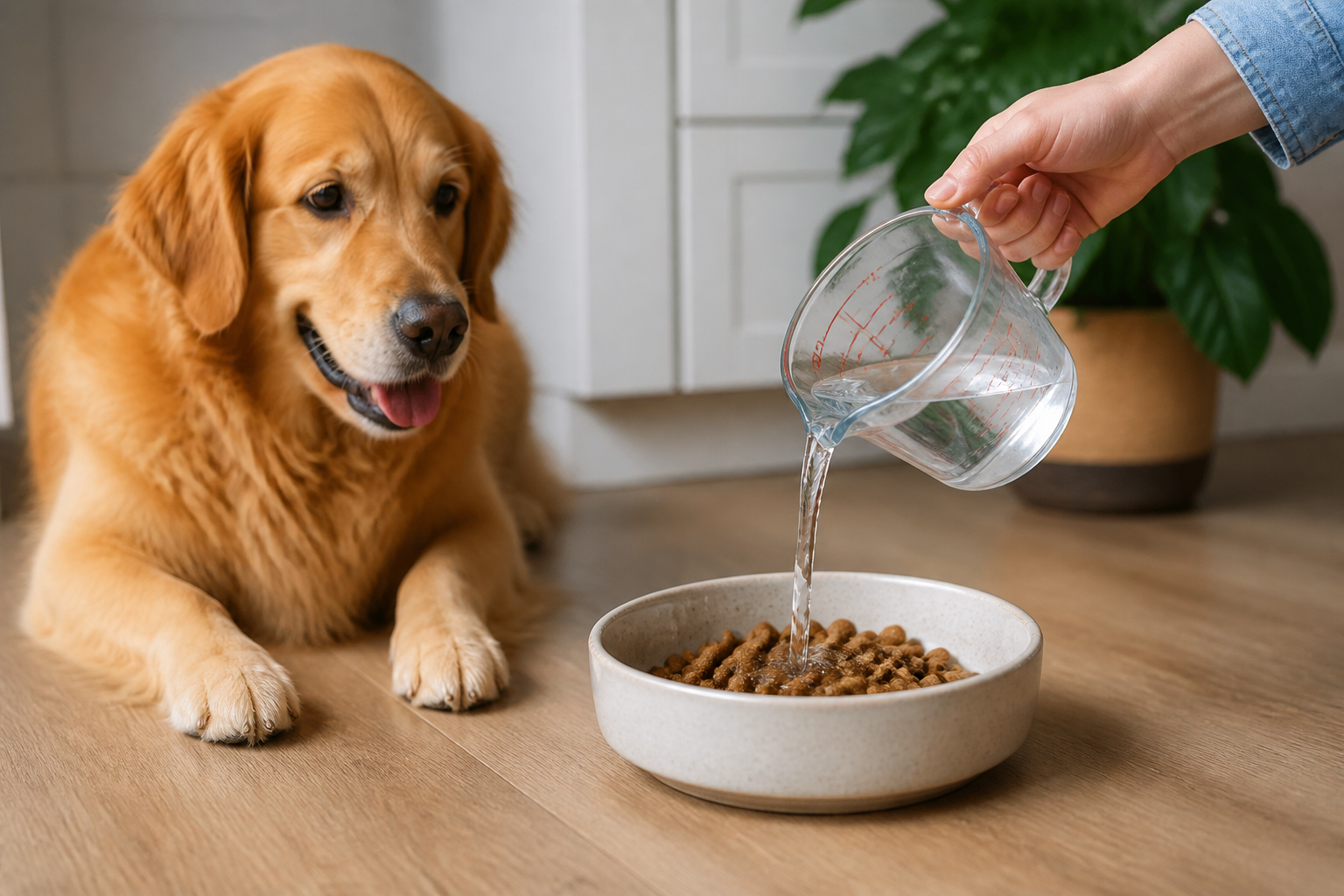
Your dog stands over the bowl and looks up at you with a clear lack of interest. Perhaps they are recovering from a recent dental cleaning, or maybe they have simply decided that plain kibble is no longer exciting. This is a common hurdle for many pet owners. At BaxterBoo, we know that mealtime should be the highlight of your dog's day. Learning how to turn dry dog food into wet dog food is a practical way to boost hydration, improve flavor, and make eating easier for senior pets. This guide covers the safest ways to rehydrate kibble using pantry staples and specialized supplements. You will learn the exact ratios and timing needed to transform a hard crunch into a soft, savory meal.
Quick Answer: To turn dry dog food into wet food, combine equal parts kibble and warm water or low-sodium broth. Let the mixture sit for 15 to 30 minutes until the liquid is absorbed, then mash it with a fork to your desired consistency.
Why You Should Consider Softening Your Dog's Food
There are several physical and nutritional reasons to move away from a strictly dry diet. While high-quality kibble provides excellent nutrition, its hard texture and low moisture content are not ideal for every life stage. Our dog food category offers a range of dry and wet options for different feeding routines.
Improved Hydration and Kidney Support
Many dogs do not drink enough water from their bowls. This can lead to minor dehydration, which often shows up as lethargy or a dull coat. By adding liquid directly to their food, you ensure they get a significant boost of fluids with every meal. This is particularly important for kidney health and urinary tract function.
Better Palatability for Picky Eaters
Dry kibble can feel repetitive for dogs with discerning palates. The process of adding warm liquid releases the natural aromas of the fats and proteins in the food. When the meal smells stronger, even the most stubborn eaters are often more willing to dive in. For more mealtime ideas, read our guide on mixing wet and dry dog food.
Dental and Digestive Ease
For senior dogs or those recovering from oral surgery, hard kibble can be physically painful to chew. Turning that dry food into a soft, pate-style consistency allows them to eat without discomfort. Pre-moistened food is also easier for the digestive system to process. The stomach does not have to work as hard to break down hard pieces of compressed carbohydrates and proteins.
Vet Tip: If your dog suddenly stops eating hard kibble, consult your veterinarian to rule out dental disease or fractured teeth. We offer a variety of dog dental care supplies and prescription diets through our pharmacy if your vet recommends a specific medical food.
The Step-by-Step Guide to Hydrating Kibble
Transforming kibble is not just about pouring a bit of water over a bowl. It requires specific timing and the right temperature to achieve a texture that mimics canned food. If you are comparing preparation methods, our article on wetting dry dog food for better digestion and hydration offers another helpful overview.
Step 1: Measure your portion accurately.
Start with the exact amount of dry food your dog usually eats. Do not increase the amount of kibble. Adding liquid will increase the volume of the meal significantly.
Step 2: Choose your liquid.
Warm water is the most common choice, but you can also use unsalted bone broth or goat's milk. The liquid should be warm to the touch but never boiling. Boiling water can damage heat-sensitive vitamins and probiotics found in premium dog foods.
Step 3: Combine and wait.
Use a 1:1 ratio of liquid to kibble as a starting point. Pour the liquid over the food in a deep bowl and let it sit. For a slightly softened crunch, 5 minutes is enough. For a full wet food transformation, wait 20 to 30 minutes.
Step 4: Mash to the desired consistency.
Once the liquid is absorbed and the kibble is soft, use a fork or a potato masher to break up the pieces. You can leave it chunky or mash it into a smooth paste depending on what your dog prefers.
Step 5: Serve immediately.
Freshly hydrated food is most appealing when it is still slightly warm and the texture is consistent.
Texture and Timing Reference Table
| Desired Consistency | Liquid Ratio | Wait Time | Result |
|---|---|---|---|
| Slightly Soft | 1 part liquid : 2 parts kibble | 5-10 Minutes | Softened edges with a crunchy center |
| Thick Gravy | 1 part liquid : 1 part kibble | 15 Minutes | Kibble sitting in a flavorful sauce |
| Wet Food/Pate | 1.5 parts liquid : 1 part kibble | 30 Minutes | Fully expanded, mashable consistency |
Selecting the Right Liquids for Rehydration
While plain water is the easiest option, it is not the only way to add moisture. Choosing different liquids can provide variety and extra health benefits. For another perspective on adding water, see our guide to mixing dry dog food with water.
Warm Water
This is the gold standard for most households. It is free, readily available, and perfectly safe. Using warm water rather than cold helps the kibble absorb moisture faster. It also brings out the scent of the food, making it more appetizing for a dog that has lost interest in their meals.
Low-Sodium Bone Broth
Bone broth is packed with collagen and amino acids that support joint health and digestion. However, you must be careful to use a broth specifically made for pets. Human-grade broths often contain onions, garlic, or excessive salt, all of which are toxic to dogs. Our selection at BaxterBoo includes many dog-safe broths and mixers from The Honest Kitchen and Caru.
Goat's Milk
Raw or fermented goat's milk is often called a universal milk because it is highly digestible for most dogs. It is a great source of probiotics, which can help dogs with sensitive stomachs. Adding a splash of goat's milk to dry kibble is an excellent way to turn a standard meal into a nutritional powerhouse.
Plain Pumpkin Puree Mixed with Water
If your dog has digestive issues, mixing a tablespoon of 100 percent plain pumpkin puree with warm water creates a thick soup. This can be poured over kibble to soften it while providing extra fiber to regulate their system.
Key Takeaway: Always prioritize warm liquid over hot. Using boiling liquid can damage the nutritional integrity of the kibble and poses a burn risk to your dog's mouth.
Managing the Routine and Freshness
One of the biggest differences between dry and wet food is how long it can safely sit out. Dry kibble is shelf-stable, but the moment you add moisture, the clock starts on bacterial growth. Our article on switching from dry to wet dog food also covers storage and transition considerations.
The 30-Minute Rule
Once you have added liquid to your dog's food, you should treat it like fresh food. Do not leave the moistened kibble sitting in the bowl at room temperature for more than 30 to 60 minutes. If your dog has not eaten it by then, it is best to discard it. This avoids any risk of an upset stomach from bacteria that thrive in moist environments.
Batch Prepping and Storage
If you have a busy schedule, you can prep wet food in advance. You can hydrate a large batch of kibble, mash it, and store it in an airtight container in the refrigerator for up to 48 hours. This is a great way to save time during hectic mornings. When you are ready to serve, you can add a tiny splash of warm water to take the chill off the food.
Cleaning the Bowl
Moistened kibble leaves behind a residue that dry food does not. You will need to wash your dog's bowl thoroughly with soap and water after every single meal. If you use a slow feeder or a bowl with ridges, ensure you get into all the crevices where mashed food might hide and spoil.
- Discard uneaten wet kibble after 30 minutes.
- Store pre-soaked food in the fridge for no more than 2 days.
- Wash bowls with hot, soapy water after every use.
- Never add fresh liquid to old, partially eaten food.
Special Considerations for Life Stages
The needs of a puppy are very different from those of a senior dog. How you soften their food should reflect those differences.
Puppies and Transitioning to Solids
When puppies move from nursing to solid food, their teeth are small and their jaws are weak. Turning dry puppy kibble into a soft mash is an essential part of the weaning process. It allows them to get the concentrated nutrition of kibble without the physical struggle of chewing hard pellets.
Senior Dogs and Dental Health
As dogs age, they often develop dental sensitivities. Missing teeth or receding gums can make the mechanical action of chewing dry food painful. Softening their current kibble allows them to stay on the same protein and fat ratios they are used to while making the physical act of eating much more comfortable.
Managing Medical Needs and Prescription Diets
Some dogs require specific prescription diets for conditions like urinary stones, weight management, or heart health. These foods are often only available in dry form through a veterinarian. If your dog needs a prescription diet but prefers wet food, you can use the soaking method to make it more palatable. Our pharmacy allows you to have prescription foods delivered directly to your door. This makes it easy to manage your dog's long-term health while still providing the texture they enjoy.
Bottom line: Hydrating your dog's current kibble is often safer and more cost-effective than switching to a new brand of canned food, as it prevents the digestive upset caused by sudden ingredient changes.
Enhancing the Meal Experience
Softening the food is the first step, but you can also add toppers to make the meal even better. Mixing in a small amount of high-quality canned food from brands like Wellness or Stella and Chewy's can add different textures.
Texture Variety
Some dogs enjoy a mix of textures. You can soak half of the kibble until it is a mash and leave the other half slightly crunchy. This provides mental stimulation and mimics the variety they might find in a natural diet.
Scent and Temperature
The temperature of the food plays a massive role in how much a dog enjoys it. Warming the liquid before adding it to the kibble helps volatilize the fats. This creates a stronger scent that appeals to a dog's primary sense of smell. If you are using refrigerated pre-soaked food, let it sit at room temperature for a few minutes or add a spoonful of warm broth before serving.
Using Toppers for Added Nutrition
If you are turning dry food into wet food to help a dog gain weight or recover from illness, consider adding a high-calorie topper. Products like Honest Paws or Zesty Paws offer supplements that can be easily mixed into a softened kibble mash. This ensures the dog gets their vitamins and minerals in a form that is easy to swallow and digest. For additional ideas, read about healthy ways to mix wet and dry dog food.
Common Mistakes to Avoid
While the process is simple, there are a few common errors that can lead to spoiled food or an unhappy pet. Our guide to adding water to dry dog food explores several of these concerns in more detail.
Adding Too Much Liquid
If you add too much water or broth, the food becomes a soup. Some dogs enjoy this, but others find the lack of texture off-putting. Start with less liquid than you think you need. You can always add more, but you cannot take it away once the kibble has disintegrated.
Using Cold Liquid
Cold liquid takes a long time to penetrate the hard outer shell of a kibble nugget. This results in a bowl of hard pellets floating in cold water, which is not appetizing. Always use warm liquid to ensure the moisture reaches the center of the kibble.
Neglecting Oral Hygiene
There is a common belief that dry food cleans teeth. While the mechanical action of chewing helps slightly, it is not a substitute for dental care. When you switch to a softened diet, it is even more important to maintain a regular brushing routine or provide dental chews. We carry a wide range of dental toys and enzymatic toothpastes to help keep those gums healthy.
Key Takeaway: Transitioning to softened food requires a commitment to cleaning. Wet food particles stick to teeth and bowl surfaces much more easily than dry kibble.
Conclusion
Turning dry dog food into wet food is a simple yet effective way to improve your pet's quality of life. Whether you are helping a senior dog eat without pain, encouraging a picky puppy to finish their bowl, or simply trying to increase hydration, the soak and mash method is a reliable tool. By using warm water or dog-safe broths, you can transform ordinary kibble into a flavorful feast. Remember to maintain strict cleanliness and discard any uneaten food to keep your dog safe from bacteria.
For all your feeding needs, from premium kibble brands like Farmina and Orijen to specialized pet broths and supplements, we have you covered at BaxterBoo. If your dog has specific medical requirements, our pharmacy partnership offers a convenient way to manage their prescription needs. You can also save on every meal by joining our Autoship programme, which ensures you never run out of your dog's favorite food.
FAQ
How long can I leave soaked dog food in the bowl?
You should not leave moistened dog food out for more than 30 to 60 minutes at room temperature. The moisture creates a perfect environment for bacterial growth, which can lead to digestive upset or more serious illness. If your dog does not finish the meal within this window, discard the leftovers and wash the bowl thoroughly.
Does soaking kibble change its nutritional value?
Soaking kibble does not change the calorie count or the basic nutritional profile of the food. However, using boiling water can break down certain heat-sensitive vitamins and probiotics. As long as you use warm water and your dog eats the entire portion, they will receive the same nutrients as they would from dry food.
Can I use human chicken broth to soften my dog's food?
It is best to avoid standard grocery store broths intended for humans. These often contain high levels of sodium, as well as onions and garlic, which are toxic to dogs even in powder form. Always choose a broth specifically formulated for pets or make your own at home using only dog-safe ingredients.
Will my dog get more dental issues if I stop feeding dry food?
Dry food only provides minimal dental cleaning through mechanical scraping. If you switch to a softened diet, you should compensate by being more diligent with dental care. Use dog-safe enzymatic toothpaste, dental wipes, or specific dental chews to manage plaque and tartar buildup on your dog's teeth.






