
 Save 15% on your 1st Autoship learn more

 Email us
 Live Chat
 FAQs
FAQs





Introduction
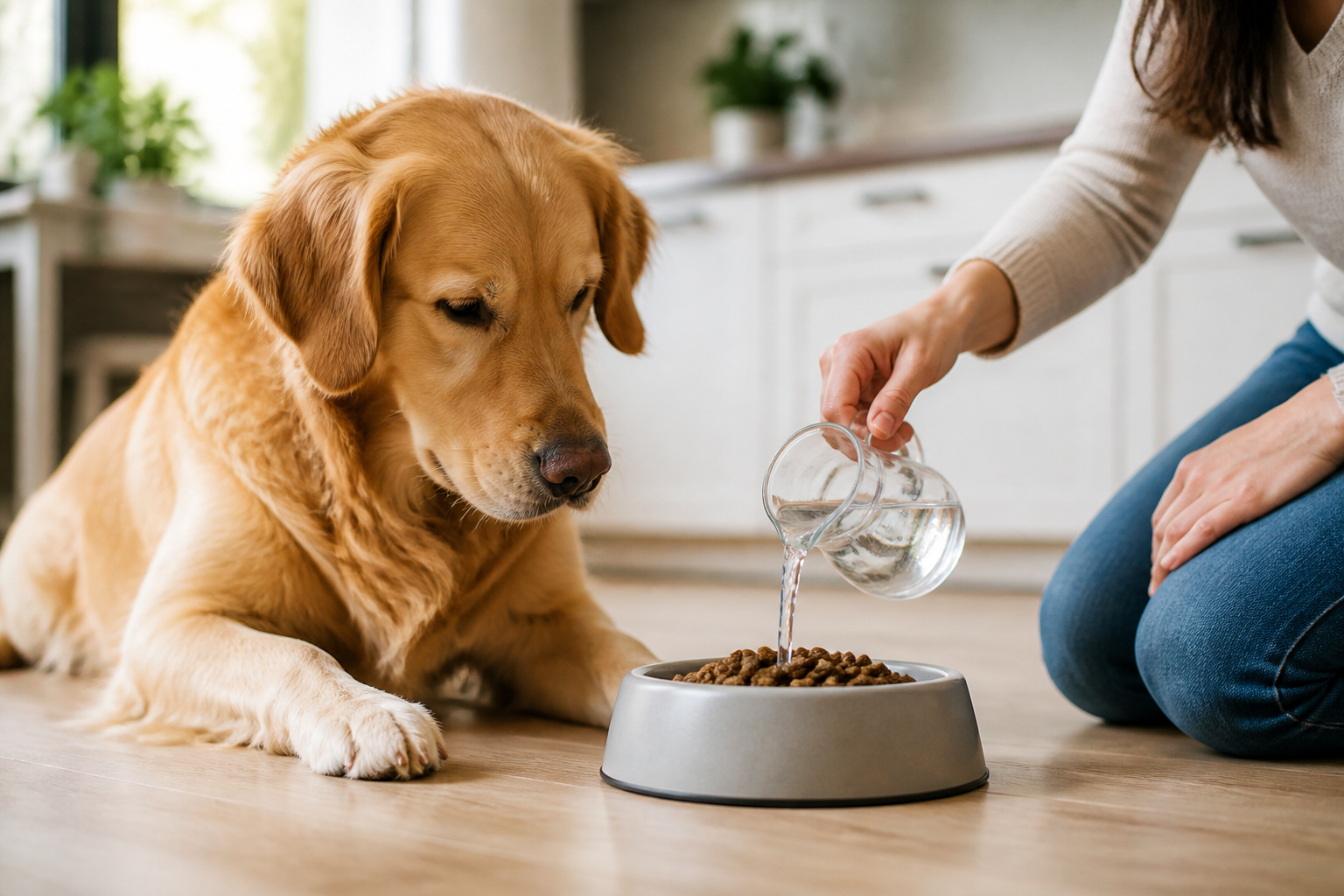
You are standing in your kitchen, measuring out a scoop of kibble, and you wonder if it looks a little too dry. Maybe your dog has started drinking massive amounts of water immediately after every meal, or perhaps they seem less excited about their bowl than they used to be. At BaxterBoo, we hear these questions often from pet parents who want to optimize mealtime for their companions. While dry kibble is popular for its convenience and shelf stability, adding a bit of liquid can transform a standard bowl of food into a more hydrating and aromatic experience. This post explains why you might consider soaking kibble, which dogs benefit most, and the safety steps you must take to prevent spoilage. Adding moisture is a simple way to support your dog's overall wellness.
Quick Answer: Moistening dry dog food is often beneficial for hydration, dental comfort, and digestion. It can make meals more appealing to picky eaters and safer for dogs prone to eating too quickly.
The Physical Benefits of Adding Moisture
The primary reason to add water to kibble is to increase your dog's daily fluid intake. Most dry dog foods contain only about 10 percent moisture. In contrast, wet or canned foods often contain upwards of 75 percent. By adding water or broth to the bowl, you help bridge that gap.
Proper hydration is essential for every major bodily function. It helps the kidneys filter toxins and supports healthy urinary tract function. For dogs that do not drink much from their water bowl, "eating" their water is an effective way to stay hydrated. This is especially helpful during hot summer months or after vigorous exercise.
Moistened food is also much easier on the digestive system. When a dog eats dry kibble, their body must provide the moisture to break it down in the stomach. Pre-soaking the food starts that breakdown process early. This can lead to less gas and more efficient nutrient absorption. Our dog food category includes dry, wet, freeze-dried, and other meal options.
Key Takeaway: Increasing moisture in dry food supports kidney health and makes the digestion process more efficient for your dog's body.
Improving Palatability for Picky Eaters
If your dog has started turning their nose up at their dinner, moisture might be the solution. Dry kibble relies on a coating of fats and flavors to remain appealing. When you add warm water to the bowl, it releases these aromas. A warm, smelly meal is much more enticing to a dog's powerful sense of smell.
This is a helpful trick for dogs recovering from an illness. Often, a sick dog loses their appetite. The increased aroma from moistened food can jumpstart their interest in eating. You can also use unsalted bone broth or goat milk to add even more flavor. Brands like Stella and Chewy's offer mixers specifically designed to be rehydrated for this purpose. You can compare food toppers and broth-based meal additions for this approach.
For dogs that are particularly stubborn, mixing in a small amount of wet food with water creates a savory gravy. This coats every piece of kibble, making it impossible for the dog to pick out the "good stuff" and leave the dry bits behind. For additional ideas, read about adding nutritious ingredients to dry dog food.
Support for Different Life Stages
Your dog's nutritional and physical needs change as they age. Moistening food can help at both ends of the age spectrum.
Puppies and the Weaning Process
Young puppies transitioning from milk to solid food often struggle with hard kibble. Their tiny teeth and sensitive gums are not ready for heavy crunching. Soaking puppy kibble until it reaches a "mushy" consistency makes the transition easier. It also ensures they stay hydrated during a period of rapid growth. Our puppy food selection can help you explore age-appropriate options.
Seniors and Dental Health
Older dogs frequently face dental challenges. Missing teeth, gum sensitivity, or periodontal disease can make chewing hard kibble painful. If your senior dog is eating slowly or dropping food, the texture might be the problem. Softening the food with warm water allows them to eat without discomfort.
For more guidance on food texture and senior nutrition, see whether senior dogs should eat wet or dry food.
Vet Tip: If your senior dog suddenly stops eating dry food or seems to struggle with chewing, schedule a dental checkup. While moistening food helps with comfort, underlying dental disease often requires professional treatment.
Managing Specific Health Concerns
Certain health conditions make moisture intake a priority rather than a preference. If your dog has a history of urinary crystals or kidney issues, your veterinarian has likely emphasized hydration. Our pet pharmacy carries a variety of prescription diets, such as those from Farmina Vet Life, through our partnership with Pet's Choice. These formulas are often designed to work alongside increased water intake to manage chronic conditions.
Bloat and Digestive Safety
Bloat, or Gastric Dilatation-Volvulus (GDV), is a life-threatening condition where the stomach fills with air and twists. Large, deep-chested breeds are most at risk. Some studies suggest that dogs who "bolt" their food and then drink large amounts of water immediately after are at higher risk. Moistening the food can slow down their eating pace. It also prevents the kibble from expanding rapidly in the stomach after a dog drinks a lot of water.
Weight Management
If your dog is on a weight loss plan, they might feel hungry between meals. Adding water to kibble increases the volume of the food without adding calories. This helps your dog feel fuller for longer. We carry weight management formulas from brands like Royal Canin that can be easily paired with extra moisture to help your pet feel satisfied while they slim down.
How to Properly Moisten Dry Dog Food
Adding moisture is not as simple as just pouring water into the bowl and walking away. You must follow a few steps to ensure the meal is safe and effective.
Step 1: Choose your liquid. / Clean, filtered water is the easiest choice. You can also use low-sodium bone broth specifically made for pets or rehydrated goat milk for extra nutrients.
Step 2: Check the temperature. / Use warm water rather than cold or boiling water. Warm water releases aromas best. Boiling water can destroy some heat-sensitive vitamins and may burn your dog's mouth.
Step 3: Determine the ratio. / Start with a 1:4 ratio of liquid to kibble. For every cup of food, add a quarter cup of liquid. You can increase this if your dog prefers a soupier consistency.
Step 4: Allow time to soak. / Let the food sit for 10 to 15 minutes. This allows the moisture to reach the center of the kibble. If you have a puppy or a senior with dental issues, you may need to wait longer or mash the food with a fork.
Bottom line: Using warm liquid and allowing a short soak time creates the best texture and aroma for your dog.
Safety and Hygiene Considerations
One of the biggest risks of moistening dry food is bacterial growth. Dry kibble is designed to stay stable at room temperature for hours. Once you add water, that stability disappears. Moisture creates the perfect environment for mold and bacteria like Salmonella or Listeria to thrive.
You must treat moistened kibble like wet canned food. Do not leave the bowl out all day. If your dog does not finish their meal within 30 to 60 minutes, you should discard the leftovers. This is particularly important if you live in a warm climate or during the summer months.
Cleaning the bowl is also non-negotiable. Even if your dog licks the bowl clean, a film of moisture and food particles remains. This residue can quickly grow bacteria that might make your dog sick at their next meal. Wash the bowl with hot, soapy water after every use. Stainless steel or ceramic bowls are best because they do not have the microscopic pores found in plastic where bacteria can hide.
Alternatives to Plain Water
While water is the most cost-effective option, other liquids can provide functional benefits. We stock several products that serve as excellent rehydration agents.
- Bone Broth: High in collagen and amino acids, bone broth supports joint health and gut integrity. Ensure any broth you use is free of onions, garlic, and excessive salt.
- Goat Milk: Often called a "universal milk," goat milk is easy to digest and packed with probiotics. Brands like Open Farm offer high-quality options.
- Green Lipped Mussel Powder: You can mix joint support powders with a little water to create a functional "gravy" for senior dogs.
- Prescription Liquids: For dogs with specific medical needs, our pharmacy offers various supplements and medications that can be mixed into a moistened meal for easier administration.
Note: Always introduce new liquids or toppers gradually to avoid digestive upset. Start with a tablespoon and monitor your dog's stool over the next few days.
Potential Drawbacks to Consider
Moistening food is not the right choice for every household. The most significant drawback is the loss of convenience. If you have a "grazer" who likes to snack on their food throughout the day, moistening kibble is difficult. You will need to switch to a scheduled feeding routine to prevent the food from spoiling.
There is also a long-standing debate about dental health. Some believe the crunching of dry kibble helps scrape plaque from teeth. While the abrasive action of kibble provides a small benefit, it is not a substitute for regular brushing. If you choose to moisten your dog's food, you should be even more diligent about their dental care routine. We carry a wide selection of dental chews and enzymatic toothpastes to help keep their teeth clean regardless of how they eat their kibble. Our guide to pet dental care tips offers additional routine ideas.
Finally, consider the mess. Softened kibble can get stuck in the facial hair of long-haired breeds or those with beards. You might find yourself doing more face-cleaning after meals if you switch to a moistened diet.
Making the Transition
If you decide to start moistening your dog's food, do not feel pressured to do it all at once. Start by adding just a splash of water to their regular meal. Observe how they react to the change in texture. Some dogs love it immediately, while others may be suspicious of the new consistency.
If your dog is hesitant, try using a topper or a small amount of canned food mixed with water first. This adds a familiar scent and flavor that can help them accept the change. As they get used to the new texture, you can increase the amount of liquid until you reach the desired consistency.
For owners of dogs with chronic health conditions, we recommend discussing any major dietary changes with your veterinarian. This is especially true if you are managing conditions like diabetes, where the speed of digestion can affect blood sugar levels. If your vet prescribes a specific diet, you can easily fulfill those needs through our pharmacy services and the Pet's Choice partnership.
For puppies, a gradual transition can be especially important. This guide explains when puppies can eat dry dog food.
Summary of the Moistening Process
- Use warm, filtered water or pet-safe broth.
- Follow a 1:4 liquid-to-kibble ratio.
- Soak for 10 to 15 minutes before serving.
- Discard any uneaten food after one hour.
- Wash the bowl thoroughly after every meal.
Conclusion
Moistening dry dog food is a simple and effective way to improve your dog's hydration, digestion, and mealtime enjoyment. Whether you are helping a senior dog with dental issues, encouraging a picky eater, or supporting a dog with urinary health needs, a little bit of liquid goes a long way. At BaxterBoo, we want to help you make every meal as nutritious as possible. By following safe handling practices and using high-quality liquids like bone broth or goat milk, you can provide your pet with a gourmet experience that supports their long-term health. If you are looking for specific toppers or need to refill a prescription diet, our pharmacy and premium dog food options are here to help.
Bottom line: Adding moisture to kibble is a highly beneficial practice for most dogs, provided you maintain strict bowl hygiene and discard leftovers promptly.
FAQ
Does soaking kibble help with dog bloat?
Soaking kibble can help prevent bloat by slowing down dogs that eat too quickly and preventing the food from expanding rapidly in the stomach after eating. It also reduces the chance of a dog drinking a large volume of water immediately after a dry meal, which is a known risk factor for deep-chested breeds. However, you should still use slow-feed bowls and limit vigorous exercise around mealtime.
Will moistening my dog's food cause their teeth to rot?
Moistening food removes the slight abrasive benefit of dry kibble, but dry food alone is not enough to prevent dental disease. Most dental health is managed through regular brushing, dental treats, and professional cleanings. If you choose to moisten your dog's food, simply ensure you are staying consistent with a dedicated dental care routine.
How long can I leave moistened dog food out?
You should never leave moistened dog food out for more than 30 to 60 minutes. Once water is added to dry kibble, the risk of bacterial growth increases significantly, especially in warm environments. If your dog does not finish their meal within this timeframe, discard the leftovers and wash the bowl with hot, soapy water.
Can I use cow's milk to moisten my dog's dry food?
It is best to avoid cow's milk because many dogs are lactose intolerant, which can lead to diarrhea and gas. Instead, use plain water, unsalted bone broth, or goat milk. Goat milk contains smaller fat globules and different proteins that are much easier for the canine digestive system to handle while providing extra probiotics.






