
 Save 15% on your 1st Autoship learn more

 Email us
 Live Chat
 FAQs
FAQs





Introduction
You are standing in the pet food aisle or scrolling through a massive online catalog and the options feel endless. You might be holding a scoop of kibble and wondering if your dog is getting everything they need from those crunchy brown nuggets alone. It is one of the most common questions we hear at BaxterBoo from well-meaning pet parents who want to do right by their companions. You want to know if an all-dry diet is a healthy, long-term choice or if your dog is missing out on vital hydration and flavor.
The short answer is that most healthy dogs can thrive on a high-quality dry food diet. However, there are specific situations where adding wet food or making a total switch might be better for your pet's health. In this post, we will look at the pros and cons of dry food, the benefits of moisture, and how to decide what belongs in your dog's bowl.
Quick Answer: Yes, you can feed your dog only dry food as long as it is nutritionally complete and balanced for their life stage. While kibble is convenient and good for dental health, some dogs benefit from the added moisture and aroma found in wet food.
The Reality of an All-Dry Diet
Dry dog food, commonly known as kibble, has been the standard for decades. Most dogs in the United States eat a diet consisting primarily of dry pellets. These formulas are designed to be "complete and balanced," which means they contain every vitamin, mineral, and nutrient a dog needs to survive and thrive.
When you look at a bag of food from brands like Royal Canin or NutriSource, you are seeing the result of decades of nutritional science. These foods are formulated to meet standards set by the Association of American Feed Control Officials. This ensures that even if your dog never eats a scrap of "human food" or a can of wet food, their basic biological needs are met. You can compare formulas in our selection of NutriSource products.
Kibble is made through a process called extrusion. Ingredients are mixed into a dough, cooked under pressure, and pushed through a die to create specific shapes. After the kibble is dried, it is often sprayed with fats and vitamins to make it taste better and ensure it stays nutritious. This process makes the food shelf-stable and easy to handle.
The Benefits of Staying Dry
Many pet owners choose dry food for its sheer practicality. It is easy to store, easy to measure, and generally more affordable than canned alternatives. There are several functional benefits to an all-dry diet that go beyond your own convenience. Browse our dog food category to compare dry and wet options.
Dental Health and Hygiene
One of the biggest arguments for dry food is the mechanical cleaning action it provides. As a dog crunches down on a hard piece of kibble, the friction helps scrape away a small amount of plaque from the tooth surface. This is not a substitute for regular teeth brushing or professional cleanings, but it is a helpful daily boost for oral hygiene.
Weight Management
It is much easier to precisely measure dry food than it is to eyeball a portion of a messy canned loaf. For dogs that need to lose a few pounds, kibble allows for exact calorie control. You can use a standard measuring cup to ensure your dog gets the same amount of energy every single day.
Enrichment and Mental Stimulation
Dry food is far more versatile than wet food when it comes to "brain games." You can put kibble into a puzzle toy, a snuffle mat, or a slow feeder. This turns mealtime into a hunting activity that burns mental energy. Wet food is difficult to use in these types of toys without creating a massive mess.
Key Takeaway: Dry food is a nutritionally sound, cost-effective, and convenient option that provides basic dental benefits and easy portion control for most healthy dogs.
Why Moisture Matters
While kibble is nutritionally complete, it is very low in water. Most dry foods contain only about 10 percent moisture. In contrast, wet dog food is often 75 to 80 percent water. This difference is significant for several reasons. For another perspective, read our guide to whether wet or dry food is better for dogs.
Dogs that eat only dry food must drink significantly more water to stay hydrated. Some dogs have a naturally low thirst drive and might not drink enough from their bowl to compensate for a dry diet. Over time, chronic low-level dehydration can put stress on the kidneys and the urinary system.
If your dog has a history of bladder stones or crystals, a vet might recommend a high-moisture diet. This helps flush the urinary tract and keeps everything functioning smoothly. We offer a variety of prescription diets through our pharmacy partnership with Pet's Choice that are specifically formulated for urinary and kidney support. These often come in both wet and dry versions to give you flexibility.
Vet Tip: If your dog is a "lazy drinker" and only eats dry food, try adding a splash of warm water or low-sodium bone broth to their kibble as described in our guide to adding water to dry dog food. This increases hydration without the cost of a full canned diet.
The Senses: Smell vs. Taste
To understand why some dogs turn their noses up at dry food, we have to look at how they experience a meal. Humans have about 9,000 taste buds. Dogs only have about 1,700. This means they do not experience flavors with the same complexity that we do.
However, dogs have a sense of smell that is tens of thousands of times more sensitive than ours. While we focus on how a steak tastes, a dog focuses on how it smells. Wet food is naturally much more aromatic than dry kibble. When you open a can, the smell of the proteins and fats is released immediately.
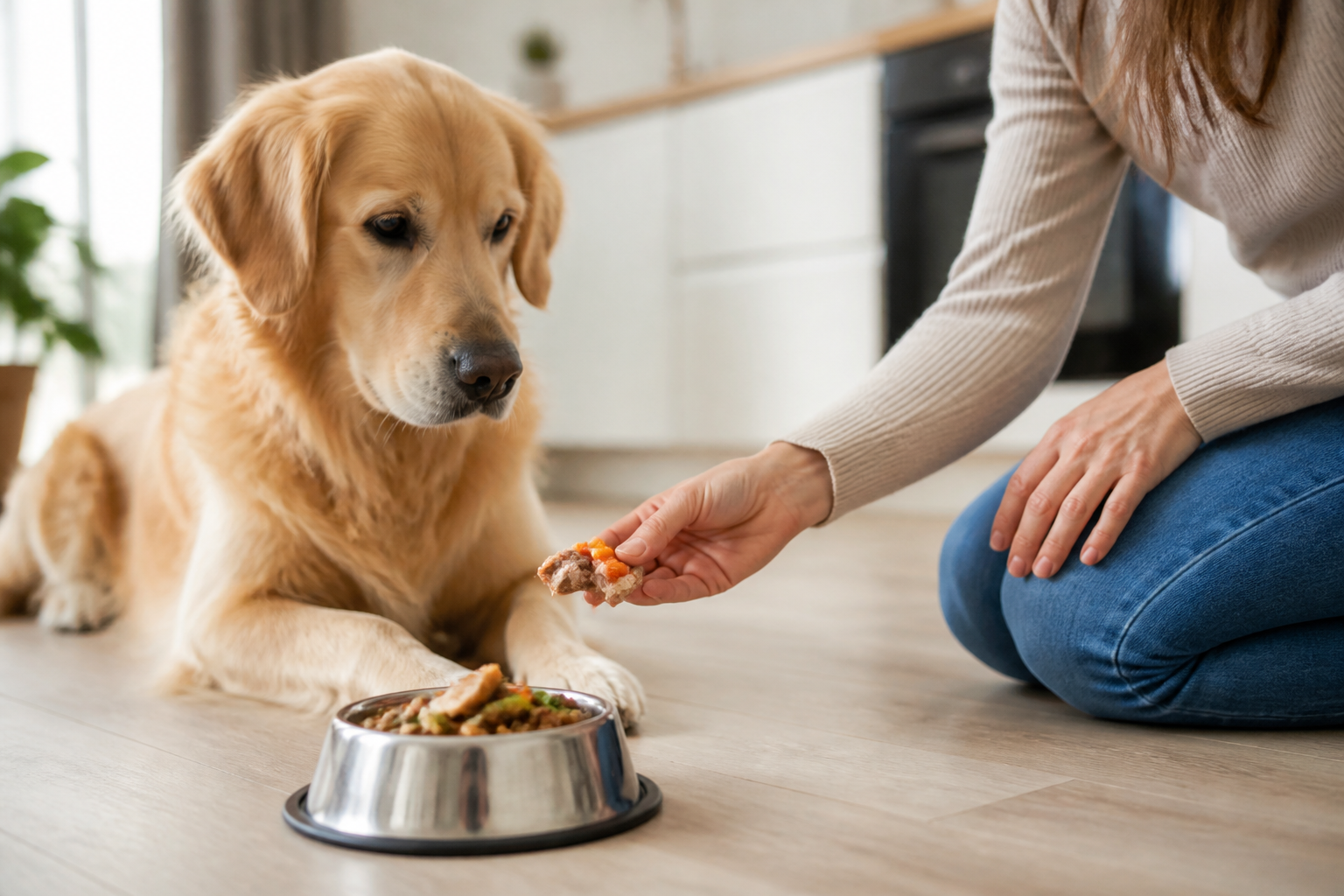
For a senior dog whose senses are fading, dry food can become unappealing. It simply doesn't smell like much to them. Adding a bit of wet food can act as a "flavor booster" that encourages an aging or sick dog to keep eating. You can also review our guide to switching from dry to wet dog food before making a change.
When to Consider Mixing or Switching
You do not have to choose between 100 percent dry or 100 percent wet. Many pet parents find that a "mixed" diet provides the best of both worlds. This usually involves a base of high-quality kibble with a tablespoon or two of wet food mixed in as a topper.
Signs Your Dog Might Need More Than Just Dry Food
- Pickiness: If your dog walks away from their bowl and waits for something better, they might be bored with the texture and low aroma of kibble.
- Dental Pain: If a senior dog is dropping kibble or chewing on only one side, the hard texture might be causing pain. Wet food is much easier on sensitive gums.
- Low Energy: Sometimes a lack of interest in food can be a sign of dehydration or underlying health issues.
- Weight Loss: If a dog needs to gain weight, wet food is often more calorie-dense and palatable.
Transitioning Between Food Types
If you decide to move away from an all-dry diet, you must do it slowly. A dog's digestive system is sensitive to sudden changes in fat and moisture content. Our guide to mixing dry and wet dog food offers another look at gradual transitions.
- Start by replacing about 25 percent of the dry food with the new wet food.
- Watch for signs of upset stomach or loose stools over the next three days.
- If everything looks good, move to a 50/50 mix.
- Continue this gradual process over 7 to 10 days until you reach your desired ratio.
Common Myths About Dry Food
There is a lot of misinformation online about dog nutrition. One common myth is that dry food "stays in the gut" and causes bloat. While certain large breeds are prone to bloat, the choice of dry food itself is rarely the sole cause. Another myth is that dry food is "junk food." In reality, premium brands like Farmina or Orijen use high-quality meats and whole ingredients in their kibble.
Another misconception is that kibble is enough to keep a dog's teeth perfectly clean. While the crunch helps, it is not a replacement for dental care. We carry a wide range of dental treats and water additives that work alongside dry food to keep your dog's breath fresh and their gums healthy.
Key Takeaway: Don't feel guilty about feeding dry food. Modern high-quality kibble is a scientific achievement that provides excellent nutrition. The "best" food is the one that your dog enjoys, can digest easily, and fits your budget.
Special Dietary Needs and the Pharmacy
Some dogs cannot eat standard over-the-counter dry food due to medical conditions. Allergies, chronic kidney disease, and severe digestive issues often require a specific type of nutrition. In these cases, a veterinarian might prescribe a therapeutic diet.
Our pharmacy at BaxterBoo provides access to these specialized foods and medications. Through our partnership with Pet's Choice, we can help you manage your dog's chronic conditions with FDA-approved treatments and prescription diets. Whether your dog needs a hydrolyzed protein kibble for skin allergies or a low-phosphorus wet food for kidney support, we can deliver it right to your door. Explore our dog pharmacy when your veterinarian recommends specialized nutrition.
Vet Tip: Always consult your veterinarian before switching to a prescription diet or adding supplements for a specific health condition. They can help you determine the correct caloric intake to prevent obesity while managing the illness.
Practical Tips for Dry Food Feeders
If you decide to stick with an all-dry diet, there are ways to make it better for your dog. Proper storage and handling are key to keeping the food fresh and the nutrients intact. For additional storage guidance, see our tips for keeping dry dog food fresh.
- Keep the bag: Don't pour the kibble directly into a plastic bin. The original bag is designed to keep out light and air. Place the entire bag inside a sealed container.
- Check the date: Dry food does expire. The fats in the food can go rancid after the bag has been open for more than six weeks.
- Wash the bowl: Oils from the kibble can build up on the bowl and become a breeding ground for bacteria. Wash the food dish daily.
- Watch the water: Since dry food provides almost no hydration, ensure your dog has multiple sources of fresh, clean water throughout the house.
Conclusion
Feeding your dog only dry food is a safe and healthy choice for the vast majority of pets. It offers convenience, dental support, and complete nutrition. However, every dog is an individual. Some will thrive on a crunch-only diet, while others need the hydration and aroma of wet food to stay their healthiest. Listen to your dog and watch their body condition. If their coat is shiny, their energy is high, and their stools are firm, your choice of dry food is likely doing its job.
For those looking to keep their pantry stocked without the hassle, our Autoship program is a great way to save. You can have your favorite dry or wet food delivered on a schedule that works for you. Plus, you will earn rewards through the MVP Rewards program with every purchase. Check out our full selection of dog food to find the perfect match for your pup's bowl.
FAQ
Can I mix wet and dry food together?
Yes, mixing wet and dry food is a great way to increase hydration and make meals more exciting. Just be sure to adjust the portions of both to ensure you are not overfeeding your dog. You can calculate the total calories by checking the labels on both the bag and the can.
Is dry food better for my dog's teeth than wet food?
Dry food does provide a mechanical scraping action that can help reduce plaque buildup. However, it is not a complete dental solution. Most kibble pieces are small enough that a dog may swallow them whole or only crunch them once, which limits the cleaning effect.
Why does my dog seem less interested in dry food as they get older?
As dogs age, their sense of smell and taste can decline, making dry food seem bland. Additionally, senior dogs often develop dental issues or gum sensitivity that makes chewing hard kibble painful. Transitioning to a softer diet or adding warm water to the kibble can help.
Does dry food go bad if I leave it in the bowl all day?
Dry food is much more stable than wet food and can safely sit out for several hours. This makes it a better choice for "grazers" who like to eat small amounts throughout the day. However, you should still discard any uneaten food at the end of the day to keep it fresh.






