
 Save 15% on your 1st Autoship learn more

 Email us
 Live Chat
 FAQs
FAQs





Introduction
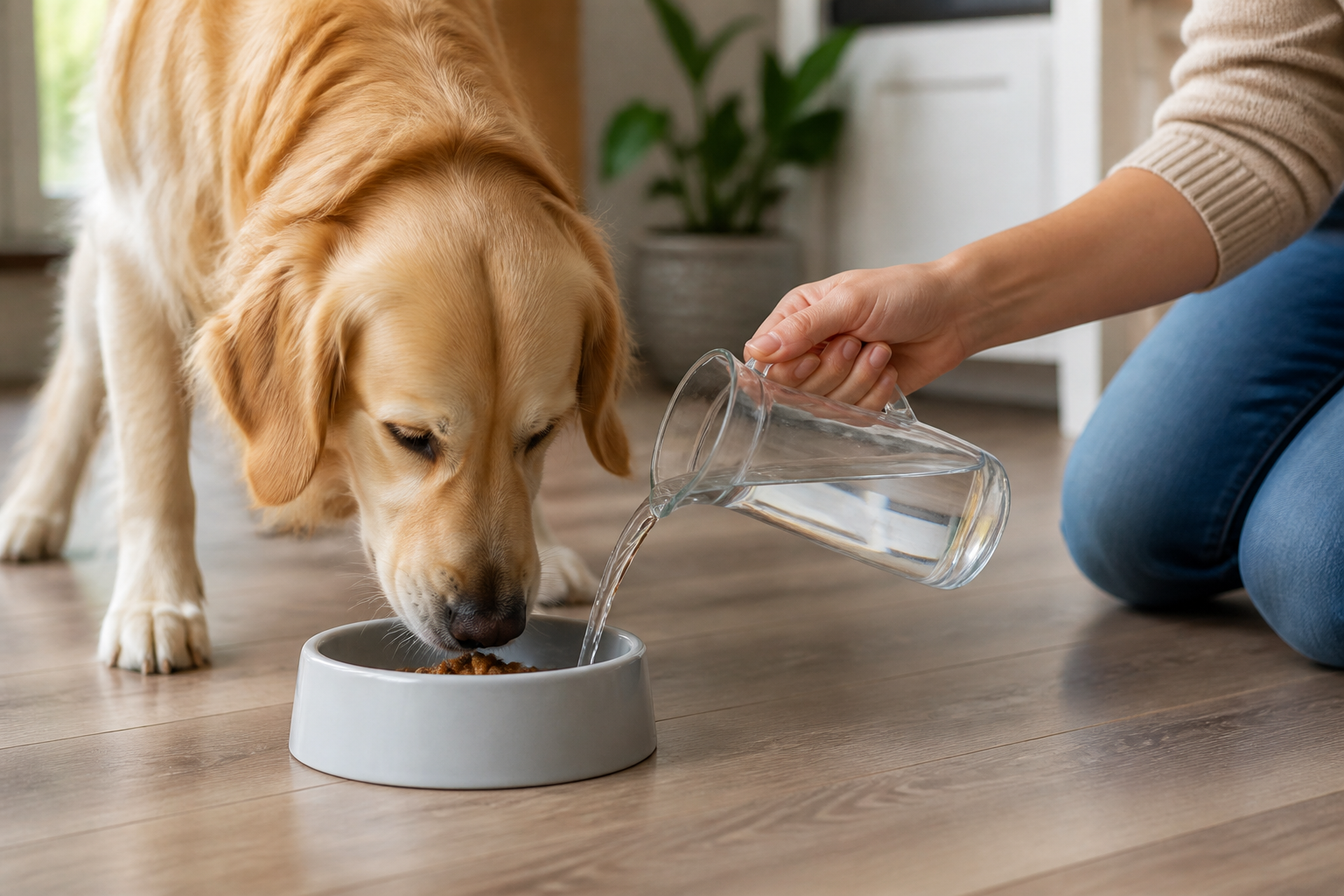
You stand in the kitchen while your dog watches every move. You reach for the bag of kibble and hear that familiar rattle. As you pour the dry pellets into the bowl, you might wonder if they would be better with a little water. It is a common question we hear at BaxterBoo from owners who want to make mealtime more enjoyable. Some dogs bolting their food too fast or older pets struggling with hard textures can benefit from a change. This post covers the health benefits of adding moisture to kibble and how to do it safely. We will also discuss when you should reach out for professional advice regarding your dog’s nutrition. Adding water can improve hydration and digestion for many pets.
The Main Benefits of Soaking Dry Dog Food
Many owners choose to soak kibble to solve specific feeding challenges. Dry food is very nutrient dense but it often lacks the moisture content dogs would find in a natural diet. Adding liquid changes the texture and the experience for your dog. Explore our dog food selection when comparing foods that may work well for soaking.
Improved Hydration
Many dogs do not drink enough water from their bowls during the day. This is especially true for dogs that spend a lot of time outdoors or those with a low thirst drive. When you soak their dry food, you ensure they take in extra fluid with every bite. This extra moisture supports kidney function and keeps the urinary tract healthy. It is a simple way to help prevent dehydration in warmer weather.
Easier Digestion
Dry kibble must break down in the stomach before the body can absorb the nutrients. When you pre-soak the food, you are essentially starting the digestive process early. The softened pellets are easier for the stomach to process. This can be very helpful for dogs with sensitive stomachs that often experience gas or indigestion after eating. For another perspective on this topic, read how to wet dry dog food for better digestion and hydration.
Better Satiety and Weight Management
If your dog is always acting hungry, soaking their food might help. Dry kibble expands significantly when it absorbs liquid. By soaking it before it reaches the stomach, the food takes up more volume. This helps your dog feel full faster without adding extra calories to their diet. It is a useful trick for pets on a weight loss plan who seem unsatisfied with smaller portions.
Quick Answer: You should soak dry dog food if your pet needs extra hydration, has dental issues, or eats too quickly. Adding warm water or broth can also make the food more appealing to picky eaters.
Helping Dogs Through Different Life Stages
A dog's nutritional needs change as they age. What works for a young adult might not be ideal for a puppy or a senior. Soaking food is a tool that can be adjusted for these different stages.
Weaning Puppies
Puppies transitioning from mother's milk to solid food cannot handle hard kibble right away. Their tiny teeth and developing digestive systems need something soft. We recommend soaking puppy kibble until it has a mushy consistency. This makes it easy for them to lap up the food. As they grow, you can slowly reduce the amount of water until they are comfortable with dry pieces. Our puppy food selection can help you compare age-appropriate options.
Supporting Senior Dogs
Senior dogs often face dental challenges. They may have missing teeth, gum sensitivity, or weaker jaw strength. Crunching through hard kibble can be painful for them. At BaxterBoo, we often suggest soaking food for older pets to keep them interested in eating. If a senior dog stops eating, it is often because the physical act of chewing has become too difficult. For more feeding guidance, see should senior dogs eat wet or dry food.
Managing Dental Issues
Even younger dogs can have dental problems or recover from oral surgery. If your vet has recently extracted teeth, soft food is a requirement. Soaking their regular dry food allows them to stay on their familiar diet without the pain of chewing. You can also browse our dog dental care collection for products that support an everyday oral-care routine.
Vet Tip: If your dog suddenly stops eating dry kibble or seems to struggle with chewing, schedule a dental exam. While soaking food helps, it does not treat underlying dental disease or infections that require veterinary care.
Addressing Serious Health Concerns
Soaking food is not just about convenience. It can also play a role in managing or preventing certain health conditions.
Reducing the Risk of Bloat
Bloat, or Gastric Dilatation-Volvulus, is a life threatening condition where the stomach fills with gas and twists. Large, deep chested breeds are at a higher risk. Some believe that dry kibble expanding rapidly in the stomach can contribute to gas buildup. By soaking the kibble first, it reaches its full size before the dog eats it. This may help reduce the amount of air and gas in the stomach during digestion. For additional information about moistening kibble, read should water be added to dry dog food.
Kidney and Urinary Health
Dogs prone to crystals or kidney issues need as much water as possible. For these pets, we often suggest a "kibble soup" approach. This ensures their system stays flushed. Our pet pharmacy carries prescription diets specifically for these conditions. Through our partnership with Pet's Choice, you can get FDA approved medications and prescription foods delivered to your door. If your dog has a diagnosed health condition, always follow your vet's specific feeding instructions.
Picky Eaters and Inappetence
When dogs are sick or just picky, they lose interest in dry food. Warming up the kibble with water releases the fats and aromas in the food. This makes the meal smell much more enticing to a dog. It is a simple way to encourage an ailing pet to get the calories they need. If you are considering a broader food change, how to switch from dry to wet dog food offers related transition guidance.
Key Takeaway: Soaking kibble is an effective way to increase water intake and make meals easier to eat for puppies, seniors, and dogs with health issues.
How to Soak Dog Food Properly
Doing this correctly ensures the food remains safe and nutritious. You do not want to just leave a bowl of soggy food out all day.
Choosing the Right Liquid
Water is the easiest and most common choice. However, you can also use bone broth designed specifically for dogs. Brands like The Honest Kitchen or Zesty Paws offer toppers and broths that add nutrients like collagen and glucosamine. Avoid human broths which often contain high levels of sodium, onions, or garlic. These ingredients can be toxic to dogs. Our dog food toppers and supplements include options for adding flavor and moisture to meals.
Temperature Matters
Use warm water rather than boiling or cold water. Warm water speeds up the softening process and brings out the smell of the food. Boiling water can actually destroy some of the heat sensitive vitamins and probiotics in premium kibble. Cold water works but takes much longer to penetrate the center of the kibble.
The Soaking Process
Follow these steps for the best results:
- Measure your dog's standard portion of kibble into a clean bowl.
- Add roughly half a cup of warm liquid for every cup of dry food.
- Let the bowl sit for 10 to 15 minutes.
- Check the consistency. For puppies, you may want it very soft. For adults, a slightly crunchy center is usually fine.
- Stir the mixture to distribute the moisture evenly.
Bottom line: Use warm water or dog-safe broth and let it sit for about 15 minutes to reach an ideal consistency.
Safety and Sanitation Guidelines
Adding water to dry food creates an environment where bacteria can grow. You must treat soaked kibble more like wet canned food than dry food.
The 30 Minute Rule
Once you add moisture to kibble, you should not leave it out for more than 30 to 60 minutes. Bacteria thrive in damp, room temperature environments. If your dog does not finish the bowl within an hour, throw the leftovers away. Do not leave soaked food out for "graze" feeding.
Cleaning the Bowl
Even if your dog licks the bowl clean, there is still residue left behind. Moist food sticks to the sides of the bowl more than dry food. This residue can quickly grow mold or bacteria. Wash your dog's bowl with hot, soapy water after every single meal.
Storage Precautions
Never add water directly into the large bag of dog food. This will cause the entire bag to mold and spoil within days. Only soak the specific portion you are serving for that meal. If you want to prep meals in advance, you can soak a portion and keep it in a sealed container in the refrigerator for up to 24 hours.
Potential Drawbacks to Consider
While soaking is mostly beneficial, there are a few things to keep in mind. Understanding these helps you decide if this routine is right for your home.
Impact on Dental Health
There is a long standing belief that dry kibble helps clean teeth. The idea is that the hard texture scrapes away plaque. While many vets now agree that regular kibble is not a substitute for brushing, soaking it does remove that mild abrasive action. If you switch to soaked food, you may need to be more diligent with dental treats or tooth brushing.
Mess and Convenience
Soaked food is messier. If your dog has a long beard or floppy ears, they might end up with soggy food stuck to their fur. It also requires more planning than just scooping and serving. You have to account for the 15 minute wait time before every meal.
Transitioning Your Dog
If your dog is used to a crunch, they might be confused by the new texture. Some dogs may even refuse to eat it at first. Start by adding just a tablespoon or two of water and gradually increase it over a week. This helps their palate and their digestive system adjust to the change. For more transition ideas, read how to switch from dry to wet dog food.
- Start with a small amount of water to test their interest.
- Monitor their stool for any changes in consistency.
- Ensure they still have access to a separate bowl of fresh, clean water.
- Check their face and ears after eating to prevent skin irritation from stuck food.
Using the BaxterBoo Pharmacy for Special Needs
Sometimes soaking food is part of a larger health plan. If your dog is struggling with chronic conditions like kidney disease, diabetes, or severe allergies, their diet is a medical tool. We provide more than just standard kibble and toys. Our pharmacy offers prescription diets from brands like Farmina Vet Life and Royal Canin.
Through our partnership with Pet's Choice, we can help you manage your dog's long term health. This includes prescription heart medications, allergy treatments, and specialized nutrition. If your veterinarian recommends a specific feeding routine or a prescription diet, you can easily set that up through our site. This ensures you never run out of the food your dog needs to stay healthy.
Key Takeaway: For dogs with medical needs, the BaxterBoo pharmacy provides a convenient way to access prescription diets that are often designed to be palatable when moistened.
Choosing the Best Food for Soaking
Not all kibble is created equal when it comes to absorbing water. High quality brands often hold their shape better while softening. We carry over 500 brands, including NutriSource, Acana, and Open Farm, which are excellent for this practice.
Look for High Quality Ingredients
When you soak food, you are often trying to improve the smell for a picky eater. Foods with real meat as the first ingredient will smell better to your dog once they are warmed up. Avoid foods with excessive fillers or artificial colors, as these can create a messy, unappealing sludge when wet.
Air Dried and Freeze Dried Options
If you want the benefits of moisture without the wait time of traditional kibble, consider air dried or freeze dried foods. Brands like Stella and Chewy's or Ziwi Peak are designed to be rehydrated. They absorb water much faster than standard baked or extruded kibble. These options are often a great middle ground for owners who want the convenience of dry food with the nutrition of a raw or wet diet. You can compare freeze-dried food options when considering alternatives.
Vet Tip: If your dog is on a specialized weight management or prescription diet, consult your vet before adding toppers or broths. These additions can change the nutritional balance or calorie count of the meal.
Conclusion
Soaking dry dog food is a simple, low cost way to improve your pet’s life. It helps with hydration, makes eating easier for seniors, and can even help with weight management. While it requires a bit more cleanup and timing, the health benefits often outweigh the extra work. Remember to keep things sanitary and never leave soaked food out too long.
If you are ready to try this with your pet, consider starting with a high quality kibble or a dog safe bone broth. You can also join the MVP Rewards programme to earn points on every food purchase. For those who want to make sure they never run out, our Autoship programme offers savings and ensures your dog's favorites arrive right on time.
- Soaking increases hydration and supports kidney health.
- Softened food is essential for puppies and seniors with dental issues.
- Always use warm water or dog-safe broth, never human soup.
- Clean bowls immediately to prevent bacterial growth.
If your dog has specific health needs, check out our pet pharmacy for prescription diets and medications through our Pet's Choice partnership. Your dog's health starts with what goes into their bowl.
FAQ
How long can I leave soaked dog food out?
You should not leave soaked dog food out for more than 30 to 60 minutes. Once water is added to the dry kibble, it becomes a breeding ground for bacteria and mold. If your dog does not finish the meal in that timeframe, it is best to discard the leftovers and wash the bowl.
Does soaking dog food help with bloat?
Many veterinarians suggest that soaking kibble can help reduce the risk of bloat in large breeds. By allowing the food to expand fully before the dog eats it, you prevent it from expanding rapidly inside the stomach. This may help minimize gas buildup and the discomfort that can lead to more serious issues.
Can I use hot water to soak the kibble?
It is best to use warm water rather than hot or boiling water. Very hot water can break down some of the essential vitamins, minerals, and probiotics found in high quality dog food. Warm water is sufficient to soften the food and release the aromas without damaging the nutritional value.
Will soaking my dog's food cause dental problems?
Soaking food removes the crunch that some believe helps scrape plaque from a dog's teeth. However, kibble alone is rarely enough to maintain oral health. If you switch to soaked food, simply ensure you are keeping up with other dental care like regular brushing, dental chews, or vet approved water additives.






