
 Save 15% on your 1st Autoship learn more

 Email us
 Live Chat
 FAQs
FAQs





Introduction
You are standing in front of a massive wall of dog food or scrolling through hundreds of options on our website. You see bags of crunchy kibble on one side and stacks of colorful cans on the other. Every brand makes big promises about health and vitality. This is a moment of choice that every dog owner faces. At BaxterBoo, we know that choosing the right fuel for your dog is one of your most important jobs.
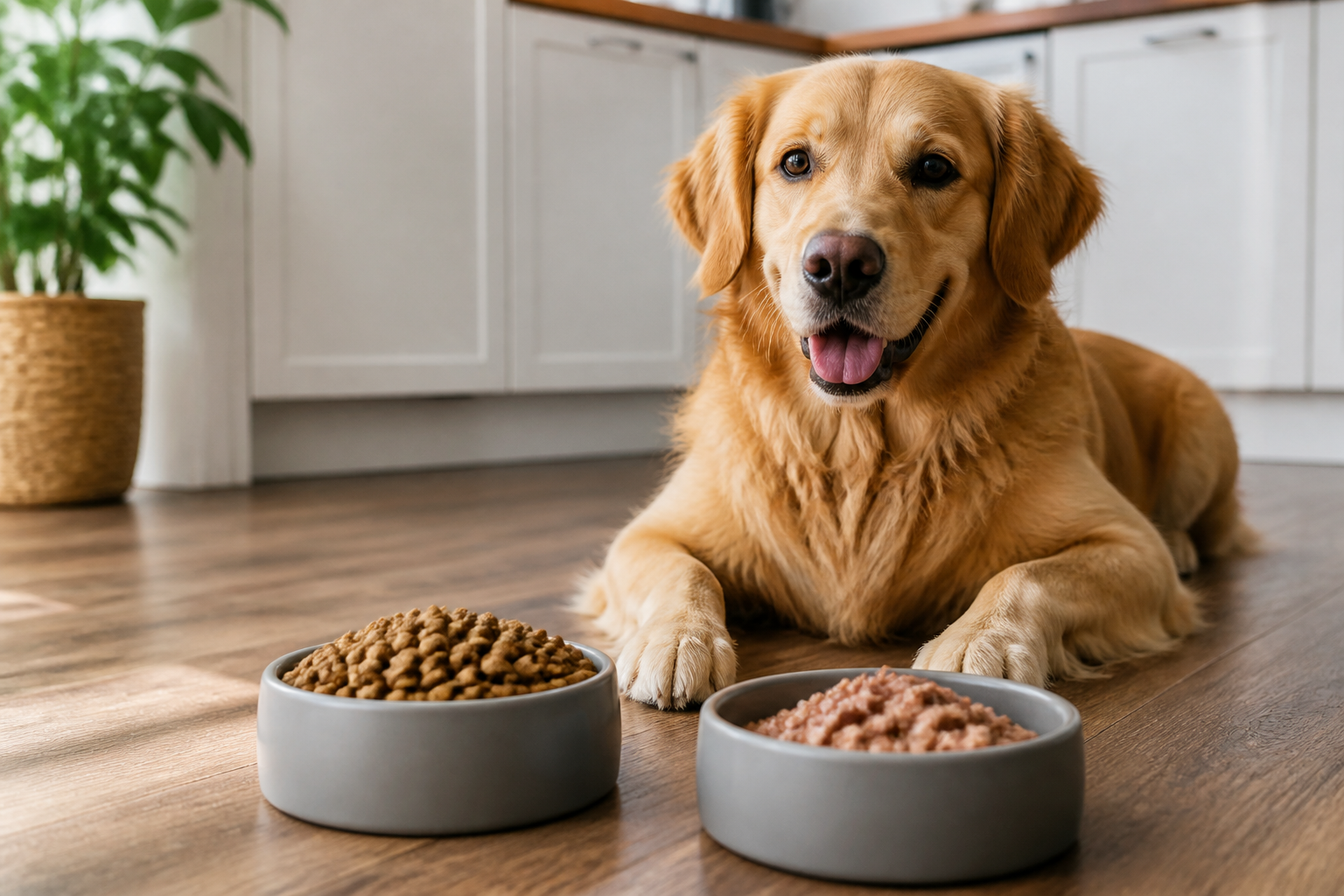
This guide will explore the practical differences between dry and wet dog food. We will look at how each type is made and the specific health benefits they offer. You will learn how to read labels and how to mix both types for the best results. Ultimately, the best diet for your dog depends on their age, activity level, and unique health needs.
The Main Differences in Processing
The biggest difference between dry and wet dog food is moisture. Most dry kibble contains about 10 percent water. In contrast, wet food is usually 75 to 80 percent water. This difference comes from how the food is manufactured.
Dry food starts as a dough. We carry many brands in our dog food category that use a process called extrusion. The dough is heated under pressure and pushed through a shaped die. These small pieces are then dried to remove moisture. Finally, they are sprayed with fats and vitamins to ensure they taste good and stay nutritious.
Wet food undergoes a different process. The ingredients are mixed with a gravy or gel that contains vitamins and minerals. This mixture is sealed in cans or pouches. The containers are then heated to high temperatures to kill bacteria and preserve the food. This process creates a shelf-stable product with a soft texture.
Quick Answer: Both dry and wet dog foods provide complete nutrition if they meet AAFCO standards. Dry food is convenient and budget-friendly. Wet food offers better hydration and is often more appetizing for picky eaters.
Why Many Owners Choose Dry Dog Food
Kibble remains the most popular choice for dog owners in the United States. It offers a level of convenience that is hard to beat. You can buy a large bag and store it easily for several weeks.
Convenience and Cost
Dry food is generally more affordable than wet food when you look at the cost per meal. It has a higher calorie density. This means your dog needs to eat a smaller volume of kibble to get the energy they need. If you have a large breed dog, feeding only wet food can become very expensive.
Kibble also allows for free-feeding. You can leave a bowl of dry food out all day for dogs that like to graze. It will not spoil or attract pests as quickly as wet food. This is a great benefit for busy owners who may not be home for every mealtime.
Dental Health Benefits
The crunchy texture of kibble serves a physical purpose. As your dog chews, the hard pieces scrape against the teeth. This mechanical action can help reduce the buildup of plaque and tartar. Some specialized dental diets use larger kibble sizes to force more chewing.
However, dry food is not a substitute for regular dental care. Even dogs on a kibble diet need their teeth brushed. Many owners find that adding dental treats or water additives helps. We offer a wide range of these products in our dog healthcare collection to supplement your dog's oral health routine.
Mental Enrichment
Kibble is the perfect tool for training and mental stimulation. You can easily use individual pieces of kibble as rewards during a walk. You can also hide kibble in snuffle mats or puzzle toys. These activities keep your dog’s brain active and prevent boredom. Wet food is much harder to use in these types of interactive toys.
The Benefits of Wet Dog Food
While dry food is convenient, wet food offers several biological advantages. Many dogs find it much more satisfying to eat.
Hydration and Urinary Health
Water is the most important nutrient for any living thing. Some dogs do not drink enough water from their bowls. This can lead to dehydration or urinary tract issues. Wet food provides a significant boost to your dog’s daily water intake.
This extra moisture is especially helpful for dogs with a history of kidney stones or bladder infections. It helps flush the system more effectively than a dry-only diet.
Vet Tip: If your dog has a history of urinary crystals or kidney disease, talk to your vet about a high-moisture diet. They may suggest specific prescription wet foods to support organ function.
Helping Picky Eaters
Dogs rely heavily on their sense of smell. Wet food is much more aromatic than dry kibble. When you open a can of food, the scent is immediate. This can entice a dog that has lost its appetite due to illness or age.
The texture of wet food is also closer to a dog's natural diet. It comes in varieties like paté, stews, or chunks in gravy. If your dog turns their nose up at dry kibble, adding a spoonful of wet food can make a world of difference.
Weight Management and Satiety
It might seem strange, but wet food can actually help with weight loss. Because it is mostly water, wet food has fewer calories per gram than dry food. Your dog can eat a larger portion of wet food without consuming more calories. This helps them feel full and satisfied.
If your dog is constantly begging for more food, switching a portion of their diet to wet food can help. It allows them to have a "big" meal while keeping their weight in check.
Comparing Nutrition Labels: Dry vs. Wet
Reading a dog food label can be confusing. You might notice that a bag of kibble says it has 25 percent protein. A can of wet food might only say 8 percent. This does not mean the wet food is low in protein.
To compare them fairly, you must look at the "dry matter basis." This means you remove the water from the equation. When you do the math, many wet foods actually have higher protein levels than dry foods. This is because they do not require as many carbohydrates to hold their shape.
- Check the first ingredient. It should always be a named protein like chicken or beef.
- Look for the AAFCO statement. This ensures the food is complete and balanced.
- Compare the fiber content if your dog has digestive issues.
- Check for added probiotics in dry foods to support gut health.
Key Takeaway: Never compare protein percentages between wet and dry food directly. Always convert to a dry matter basis to see the true nutritional value.
Mixing Wet and Dry Dog Food
Many pet parents choose a hybrid approach. This is often called "mixed feeding." It gives your dog the dental benefits of kibble and the hydration of wet food. It is also a great way to save money while still providing a flavorful meal.
You can use wet food as a "topper" on top of the dry kibble. This adds aroma and moisture without the high cost of an all-wet diet. Brands like The Honest Kitchen and Stella and Chewy's offer excellent mixers and toppers that are easy to add to any bowl.
- Measure both portions carefully to avoid overfeeding.
- Mix the two types thoroughly if your dog tries to eat only the wet food.
- Consider adding a little warm water to the kibble to create a natural gravy.
Bottom line: Mixing wet and dry food provides variety and hydration while remaining budget-friendly for most households.
For more ideas, read our guide to mixing dry dog food with wet food.
Choosing Based on Life Stage
Your dog's nutritional needs will change as they grow. What works for a puppy may not be ideal for a senior.
Puppies and Young Dogs
Puppies have tiny teeth and a lot of energy. They need calorie-dense food to support their rapid growth. Many owners start with wet food during the weaning process. As the puppy gets older, you can slowly introduce dry kibble.
Small breed puppies often struggle with large kibble sizes. If you choose dry food, look for a small-breed formula. These pieces are easier for their small jaws to break down.
Senior Dogs
As dogs age, their senses often dull. They may not smell or taste their food as well as they once did. A senior dog might also have dental pain or missing teeth. For these reasons, wet food is often the best choice for older pets.
If your senior dog is losing weight, the high palatability of wet food can encourage them to eat. If they are prone to constipation, the extra moisture can help keep their digestion moving.
For an age-specific comparison, see Should Senior Dogs Eat Wet or Dry Food?.
Specialized Diets and the BaxterBoo Pharmacy
Some health conditions require more than just standard retail food. If your dog has severe allergies, kidney disease, or obesity, your vet might recommend a prescription diet. These formulas are specifically designed to manage medical conditions.
Our pet pharmacy provides access to prescription foods and medications. We carry prescription lines like Farmina Vet Life and Royal Canin.
If your dog is showing signs of a health struggle, a change in diet is often the first step. Common signs that your dog might need a specialized diet include:
- Chronic skin itching or ear infections
- Frequent vomiting or diarrhea
- Sudden weight gain or loss
- Stiff joints and difficulty moving
Always consult your veterinarian before making a change to a therapeutic diet. They can provide a formal diagnosis and a specific feeding plan. Our pharmacy makes it easy to manage these ongoing needs once you have a prescription.
How to Transition Your Dog to a New Food
If you decide to switch from dry to wet, or vice versa, do not do it overnight. A sudden change can cause an upset stomach. Your dog's gut bacteria need time to adjust to the new ingredients and texture.
We recommend a 10 day transition period. This slow process helps prevent diarrhea and vomiting.
Step 1: Days 1 to 3 / Mix 25 percent of the new food with 75 percent of the old food.
Step 2: Days 4 to 6 / Mix 50 percent of the new food with 50 percent of the old food.
Step 3: Days 7 to 9 / Mix 75 percent of the new food with 25 percent of the old food.
Step 4: Day 10 / Feed 100 percent of the new food.
Watch your dog closely during this time. If they have soft stools, slow down the transition. Stay at the current ratio for a few extra days until their digestion stabilizes.
For a detailed schedule, read How to Switch From Dry to Wet Dog Food.
Storage and Safety Tips
Proper storage is vital to keep your dog's food safe and nutritious.
Storing Dry Food
Kibble should stay in its original bag. These bags are designed to protect the food from light and air. You can place the entire bag inside an airtight plastic or metal container. Store the container in a cool, dry place like a pantry. Avoid storing dog food in a garage where temperatures can fluctuate.
Once opened, a bag of kibble should be used within six weeks. After that, the fats in the food can begin to oxidize and go rancid.
Storing Wet Food
Unopened cans of wet food can last for a long time in a cool cupboard. Once you open a can, the clock starts ticking. You must cover the unused portion and put it in the refrigerator immediately.
Most wet food will stay fresh in the fridge for about three days. If your dog does not eat the whole can in that time, you can freeze small portions in ice cube trays. This is a great way to save money and reduce waste.
- Always check the "best by" date on the packaging.
- Wash your dog's bowl daily, especially if you feed wet food.
- Discard any wet food left in the bowl for more than two hours.
For additional freshness guidance, see How Long Can You Keep Dry Dog Food for Peak Freshness.
Summary of Choice
There is no single "perfect" food for every dog. Dry food offers incredible value and ease of use. It helps keep teeth clean and is perfect for enrichment toys. Wet food provides vital hydration and a flavor that most dogs cannot resist.
For many owners, the best solution is a mix of both. This ensures your dog gets the moisture they need while keeping your budget under control. No matter what you choose, prioritize high-quality ingredients and a formula that matches your dog's life stage.
If you are looking for a specific brand or need to set up a recurring order, we are here to help. Our Autoship programme offers extra savings and ensures you never run out of your dog's favorite meal. You can also earn points on every purchase through our MVP Rewards program.
FAQ
Can I mix different brands of wet and dry food?
Yes, you can mix different brands as long as both are high-quality and complete diets. Many owners use a standard kibble as the base and a premium wet food as a topper. Just be sure to monitor your dog for any signs of digestive upset when introducing a new brand.
Is wet food more likely to cause weight gain?
Wet food is actually less calorie-dense than dry food because of its high water content. However, because it is so tasty, dogs may eat more of it if you do not measure the portions. As long as you follow the feeding guidelines for your dog’s weight, wet food can be an excellent tool for weight management.
Does my dog really need wet food for hydration if they drink water?
While many dogs drink enough water, others are "lazy" drinkers. Dogs with a history of kidney issues or urinary tract infections benefit greatly from the extra moisture in wet food. It provides a constant source of hydration that doesn't rely on the dog visiting the water bowl.
Is kibble really better for my dog's teeth than wet food?
Kibble provides a mechanical scraping action that can help reduce plaque, but it is not a cure for dental disease. Some dogs swallow kibble whole, which provides no dental benefit at all. The best way to maintain oral health is a combination of crunchy food, dental treats, and regular toothbrushing.






