
 Save 15% on your 1st Autoship learn more

 Email us
 Live Chat
 FAQs
FAQs





Introduction
You stand in the kitchen while your dog dances around your feet. You pour the dry kibble into the bowl, and it makes that familiar clinking sound. You might wonder if those hard pellets are too dry or if your dog is getting enough moisture. Many pet owners reach for the sink to add a splash of water to the bowl. This simple habit can change the texture, smell, and health benefits of the meal. At BaxterBoo, we know that every dog has different needs when it comes to their dinner. This post will look at why you might want to add water, the potential risks, and the best ways to do it. We will help you decide if a wet meal is the right move for your canine companion.
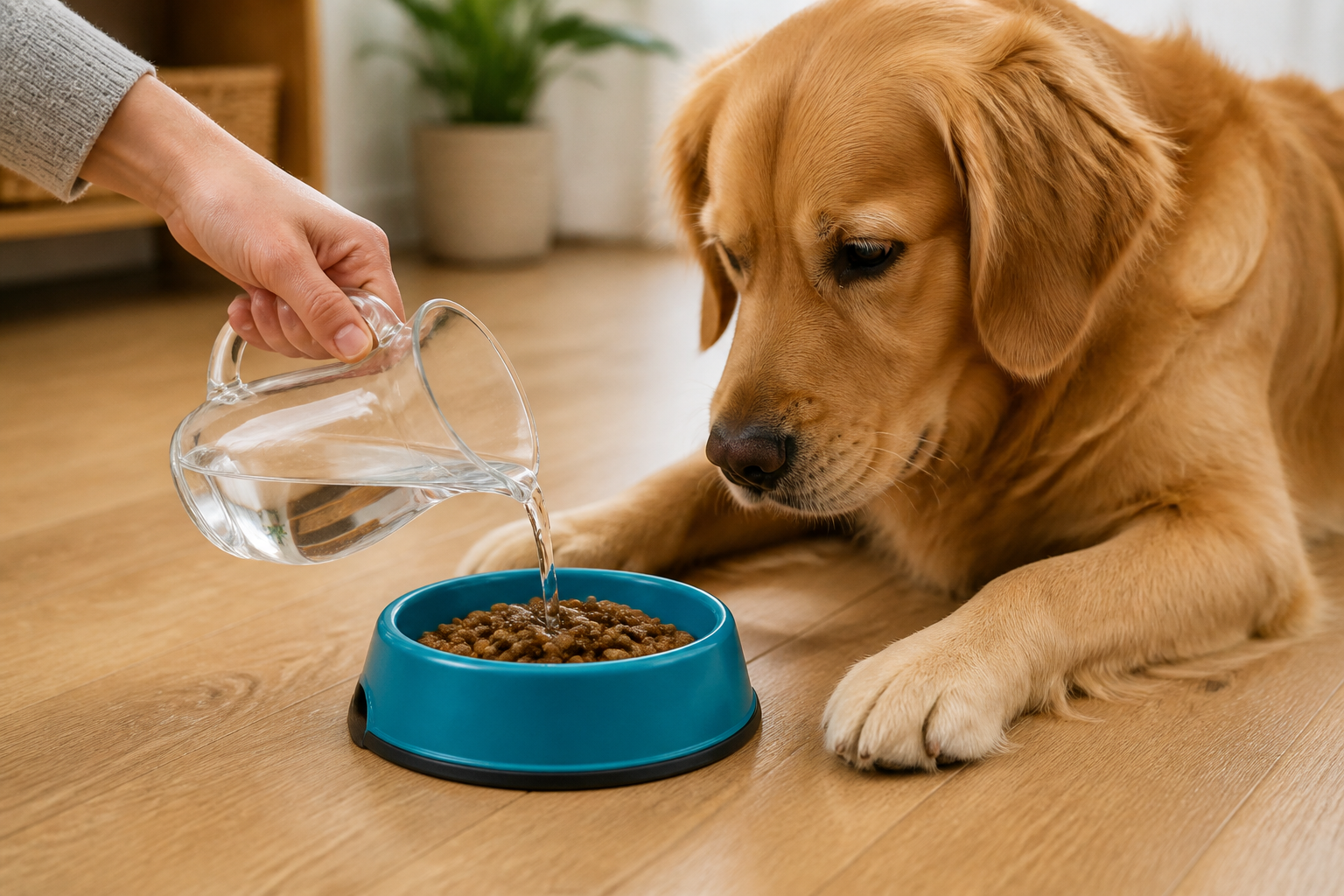
Quick Answer: Yes, you can mix dry dog food with water to improve hydration, palatability, and ease of chewing. It is a safe and helpful practice for most dogs, provided you serve the food immediately and do not leave it out to spoil.
The Major Benefits of Adding Water to Kibble
Adding water to dry food is more than just a way to change the texture. It serves several functional purposes that can improve your dog's daily life. Most commercial kibble is very low in moisture, usually containing only about 10 percent water. In contrast, fresh meat or canned food can contain upwards of 70 percent moisture. Adding water helps bridge this gap.
Boosting Daily Hydration
Many dogs do not drink enough water from their bowls throughout the day. This is especially common in the winter when the air is dry or in the summer when they are more active. If your dog is a lazy drinker, adding water to their food ensures they get a significant amount of fluids with every meal.
Proper hydration is vital for kidney and bladder health. It helps flush out toxins and can prevent the formation of urinary crystals or stones. For dogs with a history of urinary tract issues, this extra moisture is not just a preference: it is a necessity.
Enhancing the Aroma and Flavor
Dogs experience the world through their noses. Dry kibble is shelf-stable and convenient, but it does not always smell like a gourmet meal to a picky eater. Adding warm water to the bowl releases the fats and aromas trapped inside the pellets.
When the food smells stronger, it becomes much more enticing. This is a great trick for dogs that have lost their appetite due to age, stress, or a recent illness. If your dog is turning their nose up at plain dry food, a little warm water can make the meal smell like a fresh, home-cooked dinner. For more ideas, read our guide to getting your dog interested in dry food.
Making Food Easier to Chew
Not every dog has a set of perfect, strong teeth. Puppies that are transitioning from milk to solids often struggle with the hard "crunch" of adult kibble. Similarly, senior dogs often suffer from gum disease, missing teeth, or jaw pain.
Soaking the kibble for a few minutes turns those hard rocks into soft, manageable bites. This allows your dog to eat without discomfort. It also reduces the risk of your dog accidentally inhaling a hard piece of food and choking.
Key Takeaway: Adding water to kibble is a simple way to increase hydration and make meals more appealing to picky eaters or dogs with dental pain.
Helping with Digestion and Weight Management
The way a dog digests their food can be influenced by moisture levels. Most kibble is made through a process called extrusion. This involves high heat and pressure, which creates a very dense product. When this dense food hits the stomach, it absorbs the dog's internal fluids to break down.
Gentle on the Stomach
By adding water to the food before it is eaten, you are essentially pre-digesting it. The kibble expands in the bowl rather than expanding rapidly in your dog's stomach. This can lead to less gas and bloating for many pets.
If your dog often has a "heavy" feeling or seems lethargic after eating, a softer meal might help. The moisture helps the digestive tract move the food along more smoothly. This often results in better nutrient absorption and more consistent stool quality. For another perspective on mealtime moisture, see how wet food compares with dry food for senior dogs.
Volume Without the Calories
For dogs that need to lose a few pounds, adding water can be a helpful tool. When you add a cup of water to a cup of kibble, the meal looks and feels much larger. The dog feels fuller because their stomach is physically more distended by the volume of the water.
This allows you to stick to a strict portion size without your dog feeling like they are being cheated. It is a healthy way to manage hunger in food-obsessed breeds like Labradors or Beagles.
Vet Tip: If your dog has chronic digestive issues, a sensitive stomach, or a prescription for a therapeutic diet, consult your veterinarian before making major changes. Our pharmacy offers many prescription diets that can be managed with professional guidance.
Understanding the Potential Drawbacks
While adding water is generally a good thing, it does come with some responsibilities for the owner. You cannot treat wet kibble the same way you treat dry kibble.
The Risk of Bacterial Growth
Dry kibble is resistant to bacteria because it is so dry. Once you add water, you create a warm, moist environment. This is exactly where bacteria like Salmonella and Listeria love to grow.
If your dog is a "grazer" who likes to take a few bites and come back two hours later, adding water is a bad idea. Moistened food should be picked up after 30 to 60 minutes. If it sits out longer than that, especially in a warm room, it can spoil and make your dog sick.
Loss of Dental Benefits
There is a long-standing belief that dry kibble helps clean a dog's teeth by scraping off plaque. While this is only partially true, the mechanical action of chewing something hard does provide some benefit. When you soak the food, you lose that "crunch."
If you decide to switch to a wet-kibble diet, you should be more diligent about other forms of dental care. This might include:
- Brushing your dog's teeth with pet-safe toothpaste
- Providing dental chews or toys
- Using water additives designed to reduce tartar
For additional options, explore our dental and breath care collection. You can also read these dog dental care tips for ideas that fit your routine.
The Mess Factor
Let's be honest: wet kibble is messy. Dogs with long ears or "beards" will likely end up with soggy food stuck to their fur. You might find splatters on the floor or the wall near the feeding station. If you value a pristine kitchen, you may want to use a feeding mat or a deep bowl to contain the splash.
How to Properly Mix Water and Dry Food
Doing it the right way ensures your dog gets the most benefit with the least risk. You do not want to just drown the food and serve it immediately if you are trying to help a dog with dental issues.
Step 1: Measure your dry food. / Use your standard measuring cup to ensure you are not overfeeding. Place the kibble in a clean bowl.
Step 2: Add warm water. / Use filtered water if possible. The water should be warm to the touch but never boiling. Boiling water can destroy some of the vitamins and probiotics added to the food.
Step 3: Choose your ratio. / Start with a 1:4 ratio. This means one part water to four parts kibble. If your dog likes it, you can move toward a 50/50 mix for a soupier consistency.
Step 4: Let it soak. / For older dogs or puppies, let the bowl sit for 10 to 15 minutes. This gives the kibble time to absorb the moisture and soften completely.
Step 5: Stir and serve. / Give the mixture a quick stir to distribute the moisture and any "gravy" that has formed. Serve it immediately to your dog.
For more preparation guidance, read this step-by-step guide to wetting dry dog food.
Bottom line: Controlled soaking with warm water is the safest and most effective way to transition your dog to a moistened diet.
Alternatives to Plain Water
If you want to provide even more nutrition, you do not have to stick to plain tap water. There are many liquid "toppers" that can enhance the meal. We carry many of these options in our dog food supplement collection to help you customize your dog's nutrition.
Bone Broth for Dogs
Bone broth is packed with collagen, glucosamine, and amino acids. It is excellent for joint health and gut health. Brands like Open Farm or Stella and Chewy's offer bone broths specifically formulated for pets. These are different from human broths because they do not contain onions, garlic, or high levels of salt, which are toxic to dogs.
The Brutus Bone Broth Dog Food Topper - Chicken is one option for adding flavor and moisture to a meal.
Goat Milk
Raw or fermented goat milk is often called "universal milk." It is very easy for dogs to digest and provides a massive boost of probiotics. This is a great choice for puppies or dogs with sensitive stomachs. It adds a creamy texture that most dogs find irresistible.
Canned Food Toppers
If you want the hydration of water with more protein, try mixing in a spoonful of canned food. This creates a variety of textures in the bowl. It is a middle ground between a strictly dry diet and an expensive fully-wet diet. Browse our dog food selection to compare dry and wet meal options.
Specific Recommendations for Different Needs
- For Puppies: Use warm water or goat milk to create a mushy consistency. This helps their small teeth and provides extra calories for growth.
- For Senior Dogs: Use bone broth to support aging joints. The extra moisture also helps their kidneys, which often work harder in older age.
- For Overweight Dogs: Use plain water. It provides the volume they crave without adding the calories found in milk or rich broths.
- For Active Dogs: Adding water with a pinch of electrolytes (if recommended by a vet) can help them recover after a long day of hiking or playing.
Managing Health and Professional Guidance
While adding water is a simple home fix for many issues, it is not a cure for underlying medical conditions. If your dog is suddenly refusing food, losing weight, or showing signs of extreme thirst, a trip to the veterinarian is necessary.
We provide a wide range of support for owners managing chronic conditions. Our pharmacy carries FDA-approved medications for heart health, thyroid issues, and more. If your vet prescribes a specific food or medication to be taken with meals, adding water can make it much easier to hide pills or mix in powdered supplements.
Through our partnership with Pet's Choice, we make it easy to get the supplies you need delivered to your door. You can even set up an Autoship order for your favorite bone broths or wet food toppers. This ensures you never run out and helps you save money on every order.
Vet Tip: Always mention changes in diet to your vet during checkups. They can monitor your dog's weight and dental health to ensure the new routine is working well for them.
Keeping the Feeding Area Clean
Since moisture increases the risk of mold and bacteria, your cleaning routine must be strict. If you are mixing water with kibble, you must wash your dog's bowl after every single meal.
A quick rinse is not enough. Use hot, soapy water to break down the fats that stick to the sides of the bowl. Stainless steel or ceramic bowls are better than plastic because they do not have microscopic scratches where bacteria can hide.
- Wash bowls daily with soap and water.
- Wipe down the floor or mat after feeding.
- Store dry kibble in a cool, airtight container to keep it fresh before you add water.
- Discard any uneaten moistened food after an hour.
Why Quality Matters
Not all kibble reacts to water the same way. High-quality brands like NutriSource, Acana, or Orijen use better proteins and fewer fillers. These foods tend to hold their shape better when wet, creating a nice gravy rather than turning into a grey paste.
When you choose a premium food from us, you are starting with a better foundation. These brands are expertly curated by our team to ensure they meet high standards for nutrition. Whether you are feeding a Chihuahua or a Great Dane, the quality of the base kibble determines how much they will benefit from that extra splash of water.
Conclusion
Mixing dry dog food with water is a practical, low-cost way to improve your dog's health and happiness. It solves common problems like poor hydration, picky eating, and dental discomfort. While it requires a bit more cleanup and attention to food safety, the benefits for your dog's kidneys, digestion, and appetite are significant.
Key Takeaways for Your Routine:
- Use warm, filtered water for the best aroma.
- Never leave moistened food out for more than an hour.
- Clean bowls thoroughly after every meal to prevent bacteria.
- Consider bone broth or goat milk for an extra nutritional punch.
If you are ready to upgrade your dog's mealtime, consider trying one of our premium bone broths or signing up for our MVP Rewards program to save on your next bag of high-quality kibble. Your dog will thank you for the extra flavor and the hydration boost.
FAQ
Can I use hot water to soak my dog's kibble? You should use warm water, but never boiling or very hot water. Boiling water can actually cook out some of the delicate nutrients, vitamins, and probiotics that manufacturers add to the food after the extrusion process. Warm water is safer for your dog's mouth and is just as effective at releasing the food's natural aromas.
Does adding water to dog food cause bloat? There is no scientific consensus that simply adding water to food causes bloat. In fact, for some dogs, it may help by preventing them from eating too quickly or having the food expand rapidly in the stomach. However, if your dog is a breed prone to bloat, like a Great Dane or a German Shepherd, you should always talk to your vet about the safest feeding methods.
How long can I leave moistened dog food in the bowl? You should remove any uneaten food that has been mixed with water after 30 to 60 minutes. Because the moisture creates a perfect environment for bacteria to grow, leaving it out all day can lead to food poisoning or digestive upset. If your dog hasn't finished it in an hour, it is safest to throw the leftovers away and wash the bowl.
Can I mix dry food with milk instead of water? While some dogs enjoy milk, many adult dogs are actually lactose intolerant. Using cow's milk can lead to diarrhea, gas, and stomach pain. If you want to use a milk-based liquid, goat milk is a much safer option because it is easier for dogs to digest and contains beneficial probiotics. Always introduce new liquids slowly to see how your dog reacts.






