
 Save 15% on your 1st Autoship learn more

 Email us
 Live Chat
 FAQs
FAQs





Introduction
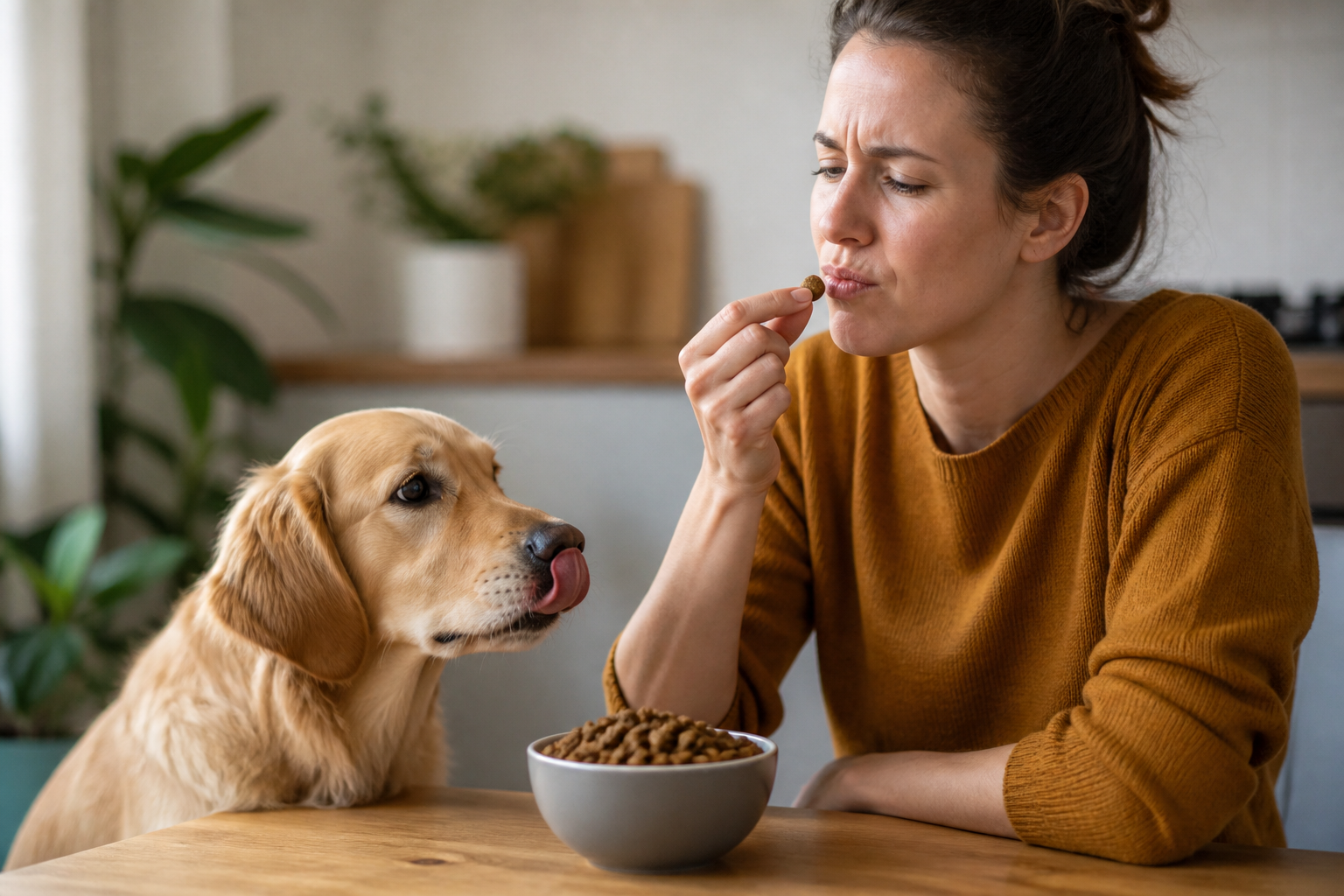
You are standing in the kitchen and pouring a fresh bowl of kibble. The smell hits you immediately. It might be meaty or slightly grainy to your nose, but your dog is already performing a frantic dance of joy. At BaxterBoo, we hear this question often from curious owners who want to understand why their pets are so obsessed with certain bags of food. You might wonder if it tastes like the "Savory Beef" promised on the label or if it is just bland, crunchy pellets. This post covers the science of canine taste buds, the human experience of tasting kibble, and how to tell if your dog actually enjoys their meals. Understanding the world through your dog’s palate is the first step toward better nutrition and a happier mealtime for your furry family member.
Quick Answer: To humans, dry dog food tastes bland, unsalted, and slightly metallic or grainy because it lacks the seasonings and salt we crave. To dogs, it tastes like a rich, savory feast because their sense of smell enhances the flavor and their tongues have specialized receptors for meat and water.
The Human Experience of Tasting Kibble
If you have ever been tempted to take a tiny nibble of your dog’s food, you are not alone. Many pet owners have tried a piece of kibble out of pure curiosity. The consensus among those who have tried it is that dry dog food is surprisingly bland. While it smells like a rich Sunday roast, the actual flavor on the tongue is much flatter than the aroma suggests.
Human food is packed with salt, garlic, onions, and various spices that act as flavor enhancers. These ingredients are either unnecessary or dangerous for dogs. Without salt to provide that "pop," meat proteins and vegetable fillers taste dull to a human palate. Most people describe the taste as an unsalted, earthy, or slightly metallic cracker. The texture is often the most striking part. It is dense, crunchy, and can feel grainy or dusty as it breaks down.
Key Takeaway: Humans find dog food tasteless because our palates are adapted to high levels of salt and seasoning that are absent in pet nutrition.
The Role of Salt and Seasoning
Dogs do not have a strong biological drive for salt. Their ancestors primarily ate meat, which is naturally high in sodium. Because their evolutionary diet already met their sodium needs, they never developed the intense "salty" craving that humans have. This is why manufacturers do not load kibble with salt. For a human, this lack of seasoning makes the food feel unfinished or flavorless.
Texture and Mouthfeel
The way kibble feels in the mouth also dictates how we perceive its taste. Many dry foods use a process called extrusion. This creates a porous, crunchy texture. To a human, this feels like eating a very hard, dry cereal without any milk. This texture is designed to help scrape plaque off a dog's teeth, but it does nothing to help the flavor appeal to humans.
How Dogs Experience Flavor
To understand why your dog treats a bowl of kibble like a gourmet delicacy, we have to look at their biology. There is a massive gap between how we taste and how they taste. Humans are the champions of the tongue. We possess roughly 9,000 taste buds. In contrast, dogs only have about 1,700.
Because they have fewer taste receptors, dogs do not experience the same nuanced layers of flavor that we do. They cannot appreciate the subtle difference between "herbed" chicken and "hickory-smoked" chicken in the way a human chef might. However, they have biological traits that change how they perceive their meals.
The Power of the Nose
For a dog, flavor is mostly smell. Humans have about 6 million olfactory receptors in our noses. Dogs have upwards of 300 million. When a dog eats, they are tasting the aromatic molecules released as the food is warmed and chewed. This is why "stinky" food is usually the most popular. The stronger the smell, the more intense the flavor is for your dog.
Specialized Water Receptors
Interestingly, dogs have specialized taste buds at the tip of their tongues designed specifically to taste water. These receptors become more sensitive after a dog eats salty or sugary foods. This sensation lets them know they need to stay hydrated. While water tastes flavorless to us, it has a distinct "taste" to your dog that enhances their overall feeding experience.
Bottom line: Dogs may have fewer taste buds than humans, but their incredible sense of smell makes up for it by creating a vivid, aromatic flavor profile.
What Flavors Can Dogs Actually Detect?
While their range is limited, dogs can identify several key flavor categories. Their preferences are rooted in their history as scavengers and hunters.
- Sweet: Dogs have a strong preference for sweet flavors. This helped their ancestors identify calorie-dense fruits and vegetables in the wild.
- Sour: Dogs are generally indifferent to sour tastes, though very strong sour flavors can be a deterrent.
- Bitter: This is a survival mechanism. Many toxic plants and substances are bitter, so dogs naturally avoid this flavor.
- Savory (Umami): This is the most important flavor for a dog. It signals the presence of meat and protein.
| Flavor Profile | Typical Source | Canine Appeal |
|---|---|---|
| Savory/Umami | Beef, Lamb, Venison | Very High |
| Sweet | Sweet Potato, Carrots | High |
| Poultry | Chicken, Turkey, Duck | High |
| Fishy | Salmon, Whitefish | Moderate to High |
Why They Love Meat Fats
The fats and oils used to coat dry kibble are highly appetizing to dogs. Manufacturers often spray a layer of rendered fat or "palatants" on the outside of the kibble after it is cooked. This coating is what provides the immediate hit of flavor when the dog first starts chewing. These fats carry the meat aromas that trigger a dog's desire to eat.
The Difference Between Dry and Wet Food Taste
Most dogs will choose wet food over dry food if given the choice. This is not necessarily because the ingredients are better. It is because wet food is more aromatic. The moisture in canned food helps release scent molecules into the air.
Dry food is more "stable" and has less surface moisture. This means it does not smell as strong until the dog starts crunching on it. However, high-quality dry brands like Farmina or Orijen use high meat inclusions to ensure the kibble remains tasty even in its dry form.
Temperature and Taste
Temperature plays a big role in how food tastes to a dog. In the wild, a meal would be body temperature. Cold kibble straight from a bag in a chilly garage will not taste as good as food kept at room temperature. Warming dry food can actually make it taste "better" to a dog because it releases those hidden fat aromas.
Identifying Quality in Tasty Dog Food
Every brand we carry at BaxterBoo is vetted for quality, but "tasty" is subjective for every dog. To find a food your dog loves, you should look at the first few ingredients on the label. Our dog food category makes it easier to compare recipes and protein sources.
- Look for named meat sources: Avoid "meat by-products" and look for specific names like deboned chicken or lamb meal.
- Check for animal fats: Look for "chicken fat" or "salmon oil" rather than "vegetable oil."
- Note the inclusion of organ meats: Ingredients like chicken liver are incredibly flavorful for dogs.
- Avoid heavy fillers: Too much corn or wheat can dilute the meaty flavor dogs crave.
The Role of Freshness
Even the best-tasting dog food will lose its appeal if it goes stale. Once a bag of kibble is opened, the fats begin to oxidize. This can lead to a rancid taste that humans might not notice but dogs will definitely detect. Keeping food in an airtight container is essential for maintaining that fresh, meaty flavor. For more storage guidance, see our guide to how long dry dog food stays fresh.
Vet Tip: If your dog suddenly stops enjoying a food they used to love, check the expiration date and smell the bag for a sour or "off" scent. If the food is fresh and they still refuse to eat, consult your veterinarian to rule out dental issues or underlying health concerns.
How to Make Dry Food Taste Better for Picky Eaters
If you have a dog that turns their nose up at dry kibble, you can use science to your advantage. You do not always need to switch brands to get them excited about mealtime. For additional ideas, read our guide to dry dog food for picky eaters.
Add Warm Water
Adding a splash of warm water to kibble is the easiest way to enhance the taste. The heat releases the fat aromas, and the water creates a savory "gravy" that coats the kibble. This also softens the texture for senior dogs who might have sensitive teeth. Our guide to wetting dry dog food explains how to add moisture safely.
Use Toppers and Rotations
Mixing in a small amount of freeze-dried raw food or a spoonful of wet food can provide a variety of textures. Brands like Stella and Chewy's offer meal mixers that are designed specifically to boost the flavor of standard kibble. You can explore dog food toppers when looking for ways to vary the bowl.
The Power of Herbs
Some herbs are safe for dogs and can add a new dimension to their food. Small amounts of dried parsley or oregano can provide a scent boost. However, never use onions, garlic, or excessive salt, as these are toxic to dogs.
Key Takeaway: Enhancing dry food with moisture or high-value toppers can satisfy even the most discerning canine palate.
Why Your Dog Might Not Like the Taste
Sometimes a dog’s refusal to eat has nothing to do with the flavor of the food itself. It is important to distinguish between a "picky" dog and a dog with a medical need.
Dental Health Concerns
If a dog has a cracked tooth or inflamed gums, crunching down on hard dry food can be painful. They might want to eat the food but avoid it because of the physical discomfort. If you notice your dog dropping kibble or chewing on only one side of their mouth, it is time for a dental check-up. Our article on dental chews for dogs offers another helpful dental-care resource.
Allergies and Sensitivities
Some dogs associate certain foods with feeling unwell. If a specific protein like chicken causes them stomach upset or itchy skin, they may eventually refuse to eat it. In these cases, switching to a limited ingredient diet or a different protein source like venison or salmon can help.
The "Owner Training" Trap
Dogs are smart. If they realize that refusing their dry food results in you giving them a piece of chicken from your dinner plate, they will continue to wait for the "better" option. Consistency is key when managing a dog that is simply holding out for treats.
The Role of Prescription Diets
There are times when a dog needs a specific type of food for their health, even if it is not their favorite flavor. Prescription diets for kidney issues, urinary health, or weight management are formulated with very specific nutrient ratios. These can sometimes be less aromatic than standard kibble.
If your vet has recommended a specific diet, the pet pharmacy is a great resource. We offer a range of prescription foods and medications through our partnership with Pet's Choice. If your dog finds a new prescription diet unappealing, talk to your vet about safe ways to enhance the flavor without compromising the medical benefits.
Bottom line: While flavor is important, nutritional health and medical requirements must always come first in your dog's diet.
Transitioning to a New Flavor
If you decide to switch your dog's food because they seem bored with the current taste, do it slowly. Their digestive systems are sensitive to sudden changes in protein and fat levels.
Step 1: Mix 25% of the new food with 75% of the old food for two days.
Step 2: Increase to a 50/50 mix for the next two days.
Step 3: Move to 75% new food and 25% old food for another two days.
Step 4: Switch completely to the new food on day seven.
This gradual change helps prevent diarrhea and allows your dog's taste buds to adjust to the new flavor profile. You can also read about switching from dry to wet dog food for another transition approach.
Summary Checklist for a Tastier Mealtime
- Store food in an airtight container to prevent fats from going rancid.
- Add warm water or low-sodium broth to release scent molecules.
- Look for kibble with "named" animal fats on the label.
- Rotate protein sources (like switching from chicken to beef) every few months to prevent boredom.
- Keep a consistent feeding schedule to discourage "begging" for human food.
Finding the Right Balance
At the end of the day, what dry dog food tastes like to you is very different from what it tastes like to your dog. While we might find it bland and unappealing, our dogs see a bowl of high-quality kibble as a sensory event. By choosing brands that prioritize high-quality animal proteins and healthy fats, you ensure that your dog stays excited about their dinner.
If you are dealing with a picky eater or a dog with a sensitive stomach, exploring different protein sources or adding a healthy topper can make a world of difference. Our MVP Rewards program is a great way to save while you test out different high-quality brands to find your dog's perfect match. We are here to help you navigate the hundreds of options available to ensure your pet is both healthy and satisfied.
Key Takeaway: Focus on the aroma and the quality of the fats to ensure your dog enjoys their dry food as much as they enjoy their favorite treats.
FAQ
Does dry dog food taste like human cereal?
While the texture of kibble is similar to a hard, crunchy cereal, the taste is very different because it lacks sugar and salt. To a human, kibble tastes more like a bland, unsalted cracker with a heavy, earthy meat finish. Dogs enjoy it much more than we would because their sense of smell fills in the gaps where our taste buds find it lacking.
Why does my dog like the taste of "stinky" food?
Dogs rely heavily on their sense of smell to determine if something is edible and tasty. Strong smells usually indicate high protein and fat content, which are the most important nutrients for a canine. The more pungent a food is, the more aromatic molecules are hitting those 300 million scent receptors, making it taste more intense and delicious to them.
Can dogs taste the difference between chicken and beef kibble?
Yes, dogs can distinguish between different protein sources primarily through their sense of smell. While they might not have enough taste buds to catch every nuance, the distinct fatty acid profiles of chicken versus beef create different "smell-flavors" for them. Many dogs develop a clear preference for one protein over another based on these aromatic differences.
Is it okay if I taste my dog's food to see if it is good?
While tasting a single piece of high-quality kibble is generally harmless for a human, it is not a reliable way to judge if your dog will like it. Our palates are tuned for salt and seasonings that are not present in dog food, so it will almost always taste "bad" or bland to us. Instead of tasting it yourself, look at the ingredient list for high-quality meats and fats to determine the food's quality.






