
 Save 15% on your 1st Autoship learn more

 Email us
 Live Chat
 FAQs
FAQs





Introduction
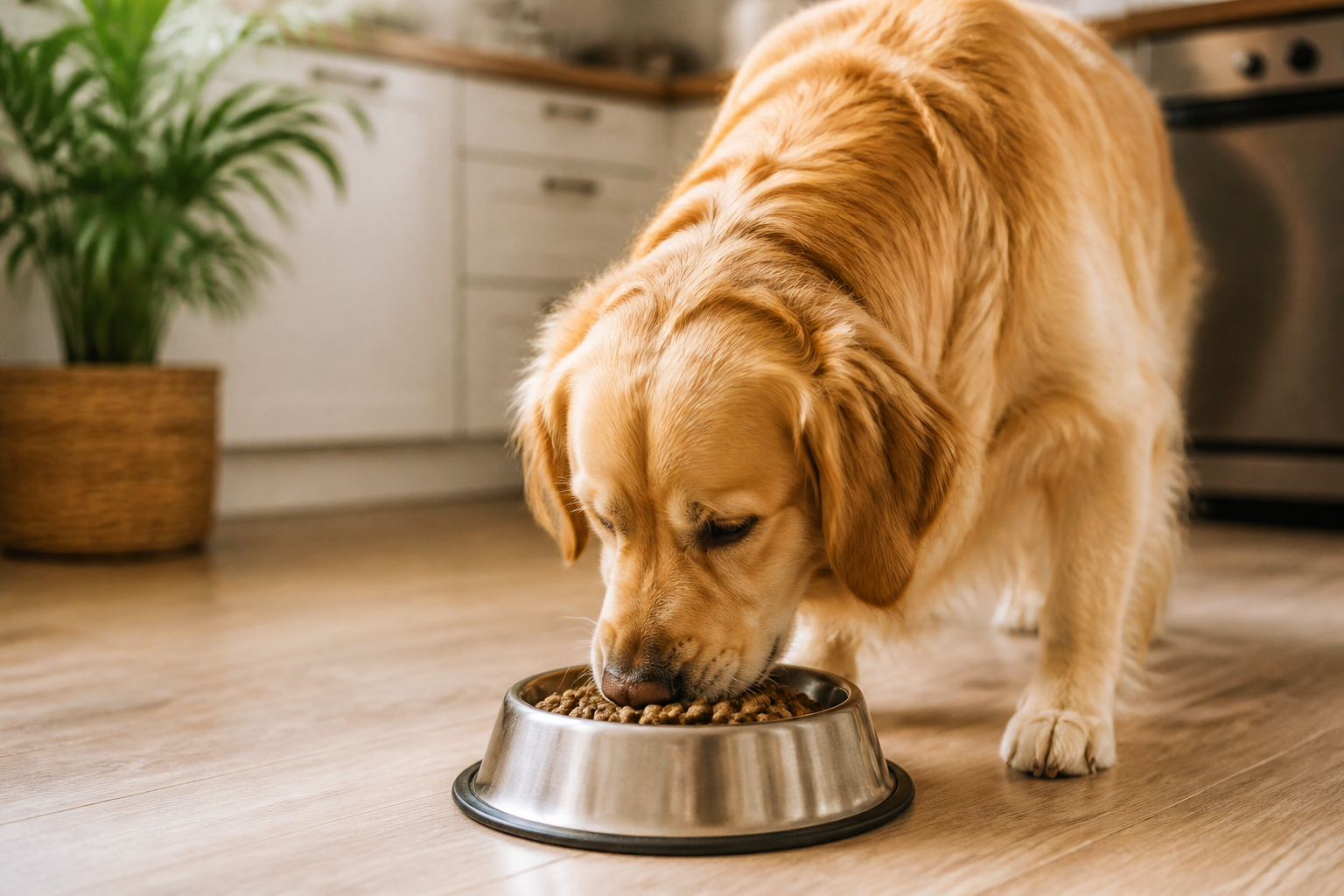
You just brought home a Golden Retriever puppy or perhaps your adult Goldie is starting to slow down during your morning walks. You want to make sure the food in their bowl supports that famous lustrous coat and their high energy levels. At BaxterBoo, we know that Golden Retrievers have very specific needs that go beyond general large-breed requirements. They are prone to certain health issues like hip dysplasia, heart conditions, and weight gain. Choosing the right dry food involves more than just picking a bag with a dog on the cover. This guide covers the essential nutrients your Golden needs at every life stage. We will help you navigate the labels to find the best fuel for your dog. Our goal is to provide practical guidance so you can make an informed choice for your pet.
The Golden Retriever Nutritional Profile
Golden Retrievers are classified as large breed dogs. This classification is important because it dictates their caloric and mineral needs. These dogs are active, athletic, and generally food-motivated. This combination means they need high-quality protein to maintain muscle, but they also need carefully managed calories to prevent obesity.
A Golden Retriever is not just a larger version of a small dog. Their metabolism and bone structure require a specific balance of calcium and phosphorus. This is especially true during their long growth period. Most Goldens do not reach full physical maturity until they are about two years old.
Why Breed Specific Matters
Many owners wonder if breed-specific food is a marketing tactic. For Golden Retrievers, it often serves a practical purpose. Brands like Royal Canin develop kibble shapes specifically for the Golden Retriever muzzle. This encourages chewing rather than gulping. Since this breed is prone to bloat, slowing down the eating process is a major safety benefit.
Breed-specific formulas also focus on the skin and coat. Goldens have a dense, water-repellant double coat. This coat requires significant amounts of protein and omega fatty acids to stay healthy. Without the right nutrients, their skin can become itchy and their fur can lose its shine.
Quick Answer: The best dry dog food for Golden Retrievers is a large-breed formula that includes high-quality animal protein, taurine for heart health, and glucosamine for joints. Look for brands like Royal Canin or Farmina that balance these needs for different life stages.
Best Dry Dog Food for Golden Retriever Puppies
Feeding a Golden Retriever puppy is a balancing act. You want them to grow, but you do not want them to grow too fast. Rapid growth in large breeds is a primary cause of hip and elbow dysplasia. The bones grow faster than the supporting tissues can handle.
If you are comparing growth formulas, browse our puppy dog food category for options designed for young dogs.
Controlled Growth and Calcium
The most important factor in puppy food for this breed is the calcium and phosphorus ratio. Standard puppy foods often contain too much calcium for a large breed. This can lead to skeletal deformities. You must choose a bag specifically labeled for large breed puppies.
Look for a formula that supports brain development as well. Ingredients like DHA, which is an omega-3 fatty acid found in fish oil, are essential for a growing puppy. This helps with trainability and eye health.
Step 1: Verify the label. / Ensure the bag explicitly states it is for large breed puppies.
Step 2: Check the protein source. / Look for a named meat like chicken or lamb as the first ingredient.
Step 3: Monitor growth. / Keep your puppy at a lean weight where you can feel but not see their ribs.
Vet Tip: Always consult your veterinarian before switching your puppy to adult food. Many Golden Retrievers need to stay on puppy formulas until they are 18 to 24 months old to ensure their joints are fully developed.
For additional guidance, read our guide to choosing dry food for puppies.
Best Dry Dog Food for Adult Golden Retrievers
Once your Golden reaches adulthood, the focus shifts to maintenance and prevention. An adult Goldie needs a diet that fuels their daily activity without adding excess fat. They are notorious for being "easy keepers," which is a polite way of saying they gain weight very easily.
You can compare adult life-stage recipes in our adult dry dog food selection.
Maintaining Energy and Weight
High-quality animal protein should remain the foundation of their diet. Brands like Farmina or Orijen offer high-protein options that use limited carbohydrates. This is helpful for keeping a Golden Retriever lean. If your dog is less active, you might look for a formula with slightly lower fat content.
We carry a wide variety of adult formulas at BaxterBoo that cater to these specific needs. Our selection includes options with ancient grains or grain-free recipes, depending on your dog's sensitivities. Many owners find that a grain-inclusive diet with wholesome fibers like oatmeal or brown rice works best for their Golden's digestion.
Key Takeaway: Adult Golden Retrievers need a protein-rich diet with controlled fat levels to prevent obesity, which is a major contributor to joint pain and heart disease in the breed.
For a closer look at one of the brands mentioned here, explore our selection of Farmina dog food.
Joint Support in Adulthood
Even if your dog is not showing signs of stiffness, adult food should include joint support. Look for ingredients like glucosamine and chondroitin on the guaranteed analysis panel. These compounds help maintain the cartilage in the hips and elbows.
Bottom line: Focus on calorie control and joint-supporting ingredients to keep your adult Golden Retriever active for years.
Best Dry Dog Food for Senior Golden Retrievers
As your Golden Retriever enters their senior years, usually around age seven or eight, their nutritional needs change again. Their metabolism slows down, and their immune system may need extra support.
Joint and Heart Support
Senior Goldens often struggle with mobility. A dry food with higher levels of EPA and DHA can help reduce inflammation in the joints. You may also see formulas with added antioxidants like Vitamin E and C to support cognitive function.
Heart health is another major concern for aging Goldens. Taurine is an amino acid that is vital for heart muscle function. While many dogs produce their own taurine, some Goldens benefit from extra amounts in their diet. Many premium senior foods now include supplemental taurine to address these concerns.
If you are considering a brand with formulas for multiple life stages, our Orijen dog food selection includes puppy, adult, and senior options.
Managing Senior Weight
It is very easy for a senior Golden to become overweight if they are no longer running and playing as much. Overweight senior dogs have a much harder time managing arthritis. You may need to transition to a senior-specific dry food that has fewer calories per cup but maintains high nutrient density.
Key Takeaway: Senior Golden Retriever diets should prioritize joint anti-inflammatories like fish oil and heart-healthy nutrients like taurine while reducing overall calorie intake.
Key Ingredients to Look For
When you are reading the back of a dog food bag, the ingredient list can be overwhelming. For a Golden Retriever, certain items are non-negotiable.
Protein Sources
Always look for a named meat source. "Chicken meal" or "Deboned Salmon" are better than generic "Meat meal." Goldens do well on a variety of proteins, but chicken, lamb, and fish are the most common. Fish is particularly beneficial for their skin and coat health.
Healthy Fats and Omegas
Omega-3 and Omega-6 fatty acids are essential for that signature Golden glow. These fats also support the skin barrier, which is important because Goldens can be prone to hot spots and environmental allergies. Look for sources like salmon oil, flaxseed, or sunflower oil.
If skin sensitivity is a concern, our guide to sensitive skin dog food offers more ideas for comparing formulas.
Functional Fiber
Golden Retrievers generally have sturdy stomachs, but they benefit from fiber that promotes a healthy gut microbiome. Ingredients like dried beet pulp, chicory root, or pumpkin can help keep their stools firm and their digestion regular.
- Taurine: Supports heart health.
- Glucosamine: Protects joint cartilage.
- DHA: Supports brain and eye health.
- L-Carnitine: Helps the body burn fat and maintain lean muscle.
Managing Common Health Issues Through Diet
The right dry food can act as a first line of defense against breed-specific health problems.
Allergies and Skin Sensitivity
If your Golden is constantly licking their paws or has recurring ear infections, they might have a food sensitivity. Common culprits can include specific proteins or cheap fillers like corn and soy. In these cases, a limited ingredient diet or a prescription diet may be necessary.
Our pharmacy carries a range of FDA-approved prescription pet foods through our partnership with Pet's Choice. If your veterinarian determines your dog has a severe food allergy, they may prescribe a hydrolyzed protein diet. These formulas break down the protein so the immune system does not recognize it as a threat. We can fulfill these orders quickly to help your dog get relief.
For prescription-related needs, visit our pet pharmacy for dogs.
Heart Health and DCM
There has been much discussion regarding Dilated Cardiomyopathy (DCM) in Golden Retrievers. While the exact cause is still being studied, many experts recommend ensuring your dog's food contains adequate taurine and is not overly reliant on legumes like peas or lentils in the first few ingredients.
Vet Tip: If your Golden Retriever shows signs of exercise intolerance, coughing, or fainting, see a veterinarian immediately. These can be signs of heart issues that require more than just a change in diet.
How to Transition to a New Dry Food
Once you have selected the best food for your Golden, do not swap it out all at once. Their digestive systems need time to adjust to new protein levels and fiber sources.
For more ideas about changing diets gradually, read our guide to selecting your pet's nutrition.
Step 1: Mix 25% new food with 75% old food. / Do this for the first two to three days.
Step 2: Move to a 50/50 split. / Continue for another three days while watching for any stomach upset.
Step 3: Transition to 75% new food. / Use this ratio for the final few days of the week.
Step 4: Serve 100% new food. / By day ten, your Golden should be fully transitioned.
If you notice loose stools or gas, slow the process down. Some Goldens have more sensitive stomachs than others. Adding a spoonful of plain canned pumpkin can also help ease the transition.
You can also review our puppy weaning and food-transition timeline for related transition guidance.
Conclusion
Choosing the best dry dog food for your Golden Retriever means looking at the specific needs of their breed, age, and activity level. You want a formula that supports their joints, protects their heart, and keeps their coat shiny. Whether you choose a breed-specific option like Royal Canin or a high-protein choice like Farmina, the quality of ingredients matters. At BaxterBoo, we are committed to helping you find the right products for every stage of your dog's life. We offer a wide selection of premium foods and a dedicated pharmacy for your pet's specialized health needs. Consider signing up for our Autoship programme to ensure you never run out of your Golden's favorite kibble while saving on every order.
FAQ
Can Golden Retrievers eat grain-free dog food?
Golden Retrievers can eat grain-free food, but it is important to ensure the formula is well-balanced and includes taurine. Some studies have suggested a link between certain grain-free diets and heart issues in this breed, so many owners prefer grain-inclusive options. Always discuss your dog's specific needs with your veterinarian before choosing a grain-free path.
How much should I feed my Golden Retriever?
The amount depends on the calorie density of the food and your dog's activity level. Most adult Goldens require between two and three cups of dry food per day, split into two meals. Use the feeding chart on the bag as a starting point and adjust based on your dog's body condition.
Why is my Golden Retriever always hungry?
Golden Retrievers are genetically predisposed to be highly food-motivated. This does not always mean they are actually hungry. To help them feel full without adding calories, you can add low-calorie toppers like green beans or use puzzle feeders to slow down their eating.
When should I switch my Golden Retriever to senior food?
Most Golden Retrievers are considered seniors when they reach seven or eight years of age. You should consider switching when you notice their activity levels dropping or if they begin to put on weight more easily. Senior formulas help manage these changes by offering fewer calories and more joint support.






