
 Save 15% on your 1st Autoship learn more

 Email us
 Live Chat
 FAQs
FAQs





Introduction
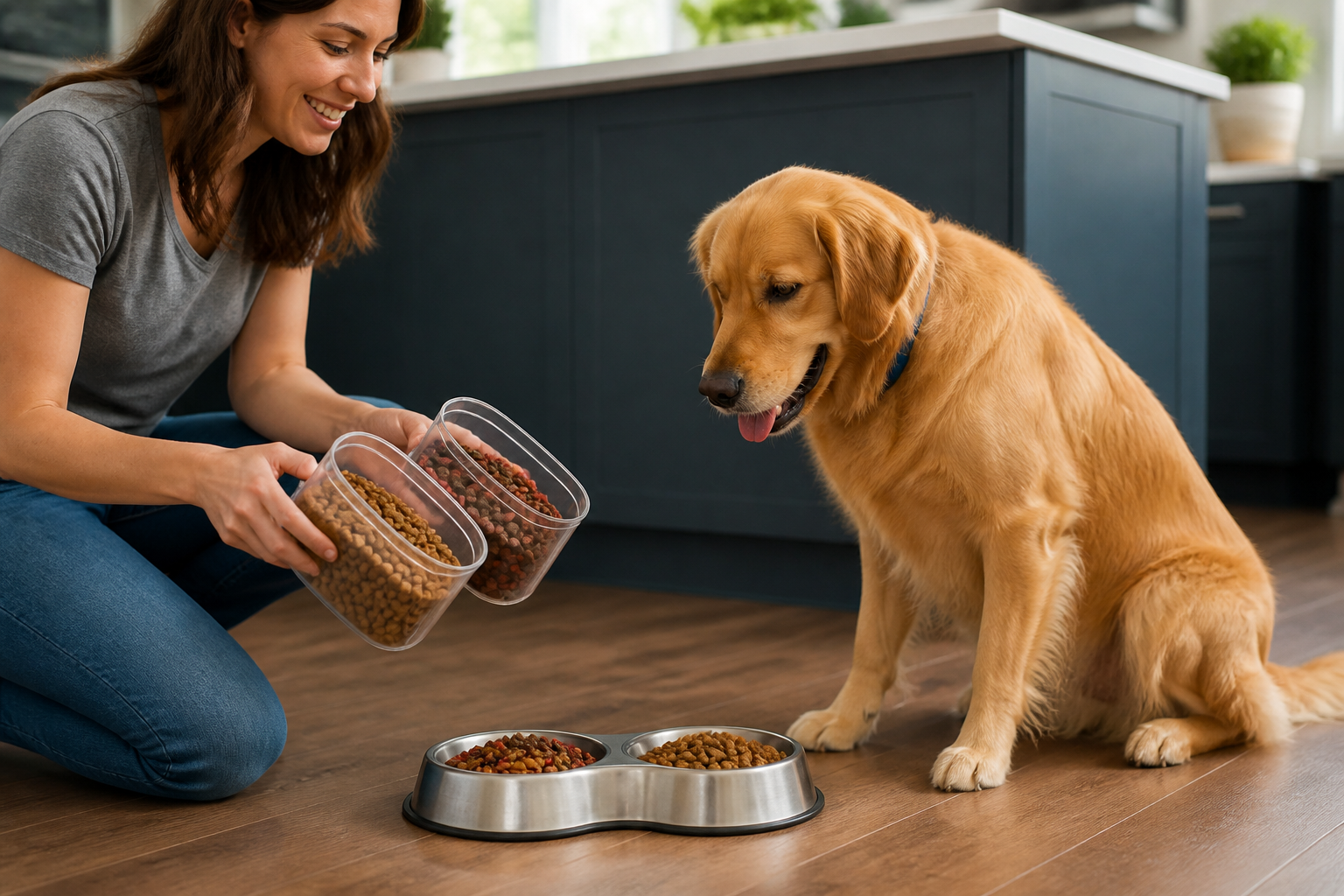
You are standing in your kitchen with a nearly empty bag of chicken kibble and a brand-new bag of a salmon formula. Maybe you are trying to save money by mixing a premium brand with a standard one. Perhaps your dog has decided their usual meal is suddenly boring and needs a flavor boost. Whatever the reason, many pet owners find themselves wondering if it is okay to combine different bags of kibble. At BaxterBoo, we talk to pet parents every day who want to provide variety without causing an upset stomach or nutritional gaps. This guide covers the safety, benefits, and practical steps of mixing two dry dog foods. Mixing kibble is a perfectly safe practice for most healthy dogs as long as you follow a few basic rules regarding life stages and calorie counts.
Why Pet Owners Mix Dry Dog Foods
There are several practical reasons why you might want to blend two different types of kibble. Understanding your specific goal will help you choose the right foods to combine.
Managing Picky Eaters
Some dogs simply get bored with the same flavor day after day. Adding a small amount of a more aromatic or "tasty" kibble can act like a topper. This encourages them to finish their entire portion. For more ideas, read our guide to dry dog food for picky eaters. Brands like Stella and Chewy’s or Orijen often have high protein levels and strong aromas that appeal to finicky eaters.
Stretching the Budget
High-quality, nutrient-dense food can be expensive. Many owners choose to mix a premium, grain-free, or biologically appropriate food with a more affordable, high-quality standard kibble. This allows you to provide a nutritional boost while keeping your monthly costs manageable.
Adding Targeted Nutrition
You might want to address a specific concern like joint health or skin sensitivity without switching diets entirely. Mixing a maintenance food with a formula designed for a specific goal can provide a steady intake of helpful ingredients. For example, you might mix a standard adult food with a formula rich in omega fatty acids for coat health.
Transitioning to a New Brand
This is the most common reason for mixing. Switching a dog’s food too quickly often leads to gas, diarrhea, or vomiting. Mixing the old and new food over a week or two allows the digestive system to adapt. When comparing formulas, browse our dog food category for options suited to different life stages and preferences.
Quick Answer: Yes, you can safely mix two dry dog foods if both are "complete and balanced" and formulated for the same life stage. The key is to maintain consistent calorie counts and transition slowly to avoid digestive upset.
The Safety of Mixing Dry Foods
Most commercial dog foods are formulated to be a "sole source" of nutrition. This means they contain every vitamin and mineral a dog needs in the correct ratios. When you mix two different brands, you are creating a new nutritional profile. For most healthy adult dogs, this is safe and even beneficial.
The AAFCO Standard
Always look for the AAFCO (Association of American Feed Control Officials) statement on both bags. It should say the food is "complete and balanced." If both foods meet this standard, mixing them will not cause a nutritional deficiency. You are simply blending two different sets of high-quality ingredients.
Matching Life Stages
This is one of the most important rules. You should generally avoid mixing a puppy food with an adult maintenance food. Puppies require specific ratios of calcium and phosphorus for bone growth. They also need higher calorie density. Adult dogs do not need these high levels and could gain unhealthy weight or face mineral imbalances if fed puppy food long-term.
Considering Kibble Size
While it may seem like a small detail, the size of the kibble matters. If you mix a large-breed kibble with a tiny "small bite" formula, the pieces might settle differently in the bag. Your dog might end up eating all the small pieces one day and the large ones the next. This can make portion control difficult.
Key Takeaway: Only mix foods that are designed for the same life stage to ensure your dog gets the correct balance of minerals and calories for their age.
Understanding Calorie Density
One of the biggest risks of mixing food is unintentional weight gain. Not all kibble is created equal in terms of energy. One cup of a "weight management" formula might have 300 calories. A cup of a "high-performance" or "active" formula could have over 500 calories.
Measuring by Weight vs. Volume
A cup of small, dense kibble often weighs more than a cup of large, airy kibble. If you mix them 50/50 by volume, you might be feeding significantly more calories than you realize. If you plan to mix foods long-term, it is helpful to look at the kcal/kg (calories per kilogram) listed on the packaging.
Calculating the Mix
If your dog needs 800 calories a day, you cannot just give them two cups of food and hope for the best. You need to calculate how many calories are in a half-cup of Food A and a half-cup of Food B. Our team at BaxterBoo suggests using a kitchen scale for the most accurate results. This ensures your dog stays at a healthy weight. For additional guidance on choosing formulas, see our dry dog food nutrition guide.
Monitoring Body Condition
Watch your dog’s waistline over the first month of a new mix. You should be able to feel their ribs easily but not see them. If they start putting on weight, reduce the total amount of the mix you are feeding. If they seem lethargic or lose weight, you may need to increase the portion.
Vet Tip: If your dog is on a strict weight loss plan, avoid mixing different foods. It is much harder to track exact caloric intake when blending two products with different densities.
When Mixing Is Not Recommended
While mixing is fine for the average healthy dog, there are specific situations where it can do more harm than good. Consistency is often the best medicine for dogs with chronic health issues.
Prescription and Therapeutic Diets
If your veterinarian has prescribed a specific food for a medical condition, do not mix it with over-the-counter kibble. This includes foods for:
- Urinary crystals or stones
- Kidney disease
- Heart disease
- Severe inflammatory bowel disease (IBD)
These diets are precisely formulated to control levels of protein, minerals, or pH. Adding regular kibble dilutes the therapeutic effect. It could even trigger a relapse of the condition. Our pet pharmacy offers specialized products for dogs with veterinary dietary needs. If your dog requires a specialized diet, stick strictly to the vet's instructions.
Severe Food Allergies
For dogs with "limited ingredient" or "hydrolyzed protein" diets, simplicity is vital. Mixing in a second food introduces a whole new list of potential allergens. If your dog is prone to itchy skin, ear infections, or hot spots, keep their diet as simple as possible.
Sudden Digestive Sensitivity
If your dog has a "glass stomach" and reacts to every small change, mixing might not be the best idea. Some dogs thrive on the exact same protein and fiber profile every single day. For these pets, variety is a recipe for diarrhea.
Bottom line: Never mix a prescription or therapeutic diet with standard food without explicit permission from your veterinarian.
How to Mix Two Dog Foods Safely
If you have decided that mixing is right for your dog, follow these steps to make the change as smooth as possible. A rushed transition is the most common cause of digestive upset.
Step 1: Consult Your Veterinarian
This is especially important for senior dogs or those with known health issues. Your vet can confirm if the two foods you have chosen are nutritionally compatible for your dog’s specific needs.
Step 2: Choose Your Ratio
Decide why you are mixing. If it is for cost, a 50/50 split is common. If it is for flavor, you might use 80% of the base food and 20% of the "tasty" food as a built-in topper.
Step 3: Blend Thoroughly
Do not just put one food on the left side of the bowl and the other on the right. Many dogs will simply pick out the flavor they like best and leave the rest. Mix the kibble together in a large, airtight container or stir it well in the bowl. You can also read our guide to mixing dry dog food with wet food for more ideas about combining foods.
Step 4: The 7-Day Transition
Even if you plan to feed a 50/50 mix forever, you must start slowly. Use this schedule to help your dog's gut bacteria adjust:
- Days 1–2: 75% Old Food, 25% New Mix
- Days 3–4: 50% Old Food, 50% New Mix
- Days 5–6: 25% Old Food, 75% New Mix
- Day 7: 100% of your chosen New Mix
Checklist for a Successful Mix
- Verify the AAFCO statement on both bags.
- Ensure both foods are for the same life stage.
- Calculate the calories per cup for both brands.
- Use an airtight container for storage to prevent spoilage.
- Watch stool consistency for the first two weeks.
Maintaining Freshness and Quality
One of the biggest challenges of mixing two dry dog foods is storage. When you open a bag of kibble, the fats begin to oxidize as they are exposed to air. This can lead to the food going rancid and losing nutritional value. For additional storage guidance, read how long dry dog food stays fresh once opened.
Avoiding Large Batch Mixing
It might be tempting to dump two 30-pound bags into a large bin and stir. However, unless you have multiple large dogs, that food will sit for a long time. It is better to mix smaller batches that will be consumed within two to three weeks. This keeps the fats fresh and the vitamins potent.
Proper Storage Containers
Keep your kibble in a cool, dry place. Avoid keeping food in the garage where temperatures fluctuate. If possible, keep the food in its original bags and place the bags inside an airtight plastic or metal bin. The original packaging is designed to keep moisture and light out.
Checking "Best By" Dates
When mixing two brands, pay attention to the expiration dates. If one bag is older, make sure that the mix is used before that bag would have expired. Never mix fresh food with a bag that is past its prime or smells "off."
Key Takeaway: Oxidation is the enemy of kibble. Store your mix in an airtight container and only blend what your dog can eat in a few weeks.
The Benefits of Rotational Feeding
Some owners take mixing a step further by practicing rotational feeding. This involves changing the main protein source every few months. For example, you might finish a mix of chicken and rice kibble and then move to a mix of lamb and sweet potato.
Preventing Food Boredom
Just like humans, some dogs appreciate variety. Rotating proteins can keep them excited about mealtime. This is particularly helpful for dogs that tend to stop eating their food after a few months on the same bag.
Broadening the Nutrient Profile
Different proteins and carbohydrates offer different amino acids and phytonutrients. By rotating or mixing, you ensure your dog gets a wide variety of nutrients over time. A dog eating a mix of Farmina and Acana will get a different profile than a dog eating only one brand. You can compare our selection of Farmina products when exploring different formulas.
Reducing Sensitivity Risks
There is a theory in pet nutrition that feeding the exact same protein for years can lead to the development of allergies. By mixing or rotating proteins, you may reduce the chance of your dog becoming sensitive to a single ingredient. If you want to try this, BaxterBoo offers a huge variety of brands like NutriSource, Zesty Paws, and Stella and Chewy’s to help you build a diverse menu.
Monitoring Your Dog’s Response
Once you have started your mix, you need to be a bit of a "poop detective." Your dog’s stool is the best indicator of how they are handling the change. For another approach to adjusting mealtimes, see whether you should mix dry dog food with water.
What to Look For
Ideally, stools should be firm, brown, and easy to pick up. If the stools become soft or runny, you may have transitioned too quickly. If the problem persists for more than a few days, the two foods might simply not be a good match for your dog's digestion.
Energy and Coat
A healthy diet shows on the outside. Within a month of starting a new mix, your dog’s coat should remain shiny and their energy levels should be stable. If you notice increased itching, ear redness, or a dull coat, one of the ingredients in the new mix might be causing a mild sensitivity.
Water Intake
Some kibbles have higher salt content than others. If you notice your dog is drinking significantly more water after starting a mix, check the ingredient labels. While increased thirst isn't always a problem, sudden changes in drinking habits are worth a mention to your vet.
Vet Tip: Keep a small journal or note on your phone of which brands and flavors you have mixed. If your dog has a reaction, you will know exactly which ingredients were new to their system.
Using the BaxterBoo Pharmacy for Specialized Needs
Sometimes, mixing standard kibble isn't enough to manage a dog's health. If your dog is dealing with chronic issues like joint pain, allergies, or anxiety, they may need more than just a blend of retail foods. We are proud to offer a fully licensed pharmacy through our partnership with Pet's Choice.
Prescription Diets
As mentioned before, if your dog needs a therapeutic diet like Royal Canin Veterinary Diet or Farmina Vet Life, our pharmacy can help. These foods are considered medical treatments. We can work with your veterinarian to ensure your dog gets the exact formulation they need delivered right to your door.
Support Beyond the Bowl
In addition to food, our pharmacy carries FDA-approved medications for flea and tick prevention, heartworm, and chronic pain. If you find that your dog's skin or joints aren't improving with food changes alone, consult your vet about medical options. You can then fulfill those prescriptions through us with the same convenience as your regular food orders.
Practical Tips for the Long-Term Mixer
If you decide that mixing is a permanent solution for your household, these tips will make your life easier and your dog's belly happier.
- Stick to the same "base" food: Change only one of the two foods at a time. This makes it easier to identify the cause if your dog has an upset stomach.
- Use the same brand family: Many brands, like Acana or Orijen, design their different flavors to be interchangeable. Mixing two flavors from the same brand is often easier on the stomach than mixing two different companies.
- Keep measuring cups consistent: Don't guess. Use a standard measuring cup or a scale every single time to prevent "portion creep."
- Sign up for Autoship: Once you find the perfect mix, use our Autoship programme. You can set different delivery schedules for each bag so you never run out of either component of your dog's special blend. Plus, you get a discount on your first order and a free MVP Gold membership.
Conclusion
Mixing two dry dog foods is a practical and safe way to add variety, manage costs, or entice a picky eater. By ensuring both foods are for the same life stage and maintaining strict calorie control, you can provide a high-quality, customized diet for your pet. Always remember to transition slowly over at least seven days and watch for any signs of digestive upset. If your dog has a medical condition, always talk to your vet before changing their diet or mixing in new foods. For those managing specialized health needs, our pharmacy is a reliable resource for prescription diets and medications. Whether you are blending for flavor or budget, we are here to support your journey with the best brands and expert advice.
Bottom line: Mixing kibble is safe for most healthy dogs as long as you match life stages and maintain the correct daily calorie count.
FAQ
Is it okay to mix different brands of dog food?
Yes, you can mix different brands as long as both are labeled as "complete and balanced" by AAFCO standards. It is often helpful to choose brands with similar quality levels and ingredient philosophies to avoid digestive upset. Always ensure both foods are intended for your dog's specific life stage, such as adult or senior.
Will mixing two dog foods cause diarrhea?
It can cause diarrhea if you do not transition slowly. A dog’s digestive system relies on specific enzymes to break down their food, and a sudden change can overwhelm those enzymes. By mixing the two foods gradually over 7 to 10 days, you give the gut bacteria time to adjust to the new protein and fiber sources.
Can I mix puppy food with adult dog food?
Generally, you should not mix puppy food with adult food unless directed by a veterinarian. Puppy food is much higher in calories and has different mineral ratios designed specifically for rapid growth. Feeding this mix to an adult dog can lead to obesity, while feeding it to a puppy might dilute the essential nutrients they need for development.
How do I calculate how much to feed when mixing two foods?
The most accurate way is to look at the calories (kcal) per cup or kilogram listed on each bag. Calculate the total calories your dog needs per day, then determine how much of each food is required to reach that total based on your desired ratio. Using a kitchen scale to weigh the food in grams is much more accurate than using a measuring cup.






