
 Save 15% on your 1st Autoship learn more

 Email us
 Live Chat
 FAQs
FAQs





Introduction
You just hauled a thirty pound bag of premium kibble into your kitchen. If you live in a humid climate or a home without central air, you might look at that bag and wonder if the pantry is actually the safest place for it. Most of us are used to putting our own leftovers in the fridge to keep them from spoiling. It seems logical to do the same for our pets. At BaxterBoo, we hear this question often from owners who want to protect their investment in high quality nutrition.
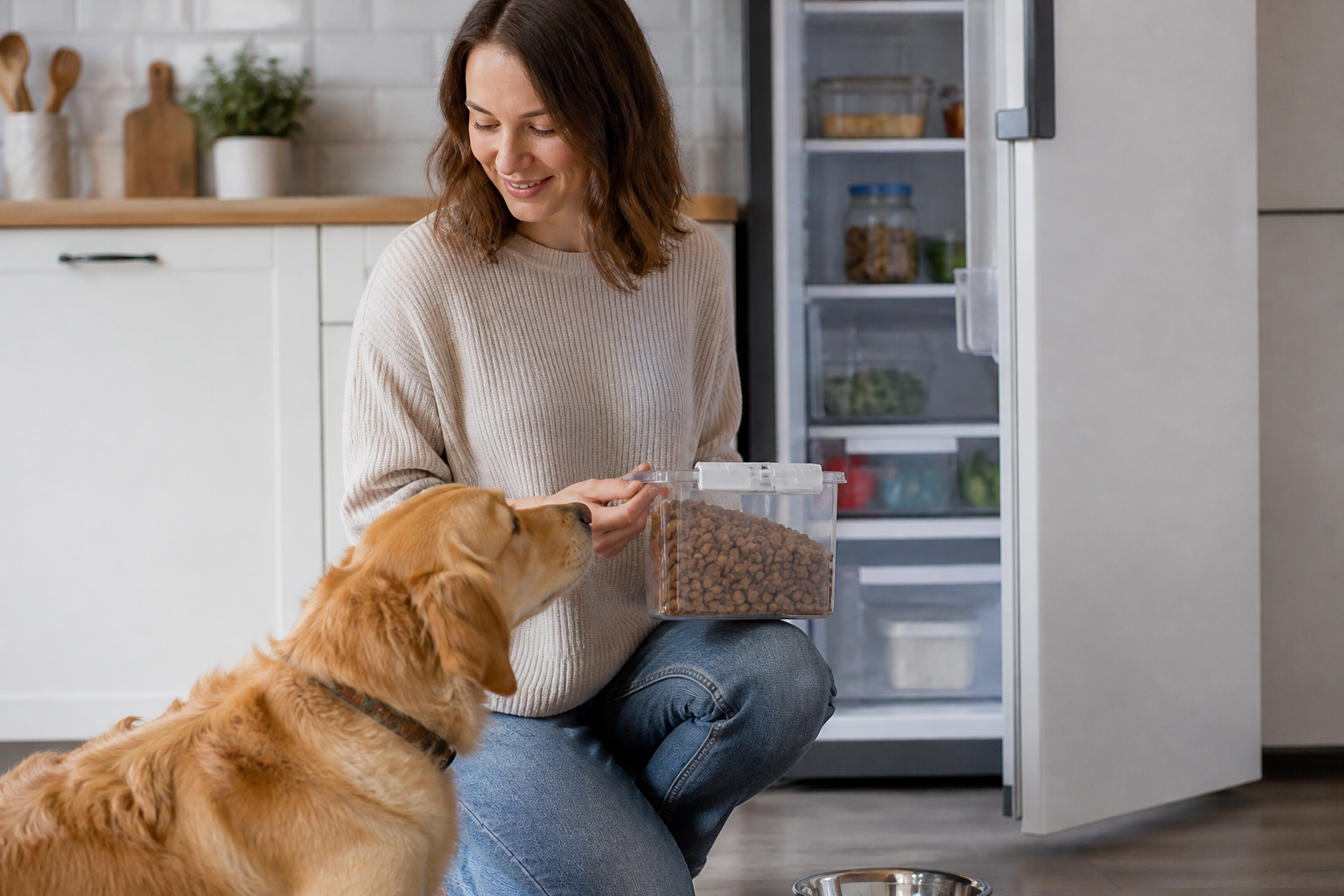
While you can technically refrigerate dry dog food, it is rarely the best way to keep it fresh. In fact, cold storage can sometimes cause more problems than it solves. This article covers the science of kibble storage, the dangers of moisture, and how to keep your dog’s meals safe without taking up all your shelf space. We will help you understand when refrigeration might be helpful and when it is better to stick to a cool, dry cabinet.
Quick Answer: You can refrigerate dry dog food, but it is generally not recommended because of moisture risks. Condensation can build up inside the bag when you move it in and out of the fridge, leading to mold growth. It is better to store kibble in its original bag inside an airtight container in a cool, dry place.
The Science of Dry Dog Food Storage
Dry dog food is not actually "dry" in the way a cracker is. It contains a specific balance of moisture, proteins, and fats. Premium brands like Orijen or Acana often have higher fat contents to support skin and coat health. These fats are prone to oxidation when they are exposed to heat and oxygen. When fats oxidize, the food becomes rancid. This ruins the flavor and can eventually lead to digestive upset for your pet.
The manufacturing process of kibble involves cooking the ingredients and then drying them to a very low moisture level. This low moisture is what prevents bacteria and mold from growing at room temperature. When you change the temperature of the food rapidly, you interfere with that stability.
For more guidance on freshness timelines, read our post about how long dry dog food stays fresh once opened.
Why Refrigeration is Tricky
The biggest enemy of dry dog food is not necessarily heat, but moisture. Refrigerators are naturally humid environments. Every time you open the refrigerator door, warm air from your kitchen hits the cold air inside. This creates condensation. If you store a bag of kibble in the fridge and take it out every morning to scoop a bowl, that temperature change creates tiny droplets of water inside the bag.
Even a small amount of moisture can trigger mold growth. Some molds produce mycotoxins, which are invisible and very dangerous for dogs. Because kibble is porous, it absorbs that moisture quickly. Within a few days, the crunchy texture can become soft, and the safety of the food is compromised.
Our article on how to tell if dry dog food has gone bad covers additional signs of spoilage.
The Role of the Original Packaging
Many owners make the mistake of pouring kibble directly into a plastic or metal bin. We recommend keeping the food inside its original bag. Pet food manufacturers spend a lot of money developing bags with specialized liners. These liners are designed to act as an oil barrier. They keep the fats inside the kibble from seeping into the packaging and becoming rancid.
When you pour food into a plastic bin, the fats rub off on the plastic. Over time, these residual fats go rancid. If you do not wash the bin with hot, soapy water between every single bag, the old rancid fats will contaminate the new, fresh food. By keeping the food in the bag and then placing the entire bag inside an airtight container, you get two layers of protection.
Key Takeaway: The original bag is designed to protect the food’s fats and nutrients. Always keep the food in the bag, roll the top down tightly, and secure it with a clip before placing it in a secondary container.
You can also compare storage-friendly options in our dog food category.
Ideal Temperature for Kibble
The FDA suggests that dry dog food and unopened canned food should be stored in a cool, dry place. The temperature should ideally stay below 80 degrees Fahrenheit. If your kitchen gets much hotter than that during the summer, you might be tempted to use the fridge.
If you must refrigerate dry food, follow these steps:
- Divide the large bag into smaller, airtight freezer bags.
- Only take out one small bag at a time.
- Keep the rest in the fridge so they are not constantly changing temperatures.
- Check for any signs of moisture before feeding.
For most homes in the US, a climate-controlled pantry or a closet is much better than the refrigerator. Avoid storing pet food in garages or sheds. These areas fluctuate wildly in temperature and often have high humidity, which can spoil a bag of food in just a few weeks.
For additional ideas about protecting kibble from humidity, see our guide to keeping dog food dry.
How Long Does Opened Dry Food Last?
Once you break the seal on a bag of kibble, the clock starts ticking. Most manufacturers suggest using the food within six weeks to two months. Even if the "Best By" date on the bag is a year away, that date only applies to unopened bags. Once oxygen hits the kibble, the nutritional value starts to slowly decline.
If you have a small dog but prefer buying large bags to save money, you might struggle to finish the bag in two months. This is one of the few times where freezing might be better than refrigerating. You can freeze portions of dry food in airtight bags for several months. When you are ready to use a portion, let it thaw completely in the bag before opening it. This prevents condensation from forming directly on the food.
For more detail on opened-bag timelines, read how long dry dog food is good after opening.
Identifying Spoiled Dog Food
It is important to trust your senses when feeding your dog. Dogs have a much stronger sense of smell than we do, but we can still catch the early signs of spoilage.
Look for these red flags:
- A sour or "off" odor that smells like old paint or wet cardboard.
- Visible mold, which may look like white fuzzy spots or dark green patches.
- A greasy or sticky film on the kibble that was not there before.
- Your dog suddenly refusing to eat a food they usually love.
- New or worsening digestive issues, like diarrhea or gas.
Vet Tip: If your dog accidentally eats spoiled or moldy food, watch for signs of tremors, vomiting, or lethargy. Consult your veterinarian immediately if you suspect mycotoxin poisoning. Our pet pharmacy carries prescription medications, but a vet visit is the first priority for acute poisoning.
The Importance of Clean Gear
Storage is not just about the bag. It is also about the bowls and scoops. Every time you dip a plastic scoop into a bag of food, you are introducing bacteria from your hands and the environment. If you do not wash your dog's bowl daily, the fats from the food can build up and grow bacteria.
At BaxterBoo, we suggest using stainless steel or ceramic bowls. These materials are less porous than plastic and are much easier to sanitize. Wash the food bowl after every meal and the water bowl at least once a day. This simple habit prevents a lot of the common "tummy bugs" that people often mistake for food allergies.
Managing Pests and Contaminants
Proper storage is also your first line of defense against pests. Ants, weevils, and rodents are all attracted to the smell of grain and animal fats. A bag left open on the floor is an invitation for an infestation.
Airtight containers are essential for keeping bugs out. However, do not assume that a "snap-on" lid is truly airtight. Look for containers with a rubber or silicone gasket around the rim. This creates a vacuum seal that keeps the smell of the food in and the pests out. It also helps maintain the moisture levels of the food so it does not get too dry and crumbly.
Our post on dry dog food storage and freshness tips offers another look at managing pantry storage.
Specialty Foods and Different Rules
Not all "dry" foods are the same. If you feed air-dried or freeze-dried raw food, like those from Stella and Chewy’s or Vital Essentials, the storage rules are slightly different. These foods have even less moisture than traditional kibble. They are very shelf stable, but they are also much more expensive.
Because these foods are often sold in smaller bags, refrigeration is usually not necessary. However, they are extremely sensitive to humidity. If you live in a coastal area, an airtight container is non-negotiable. For air-dried foods that have a slightly "jerky" texture, keeping them in a cool, dark place is the best way to preserve the vitamins and minerals that are often added after the drying process.
Explore our selection of Vital Essentials products when comparing freeze-dried food options.
The BaxterBoo Approach to Freshness
We believe that the best way to ensure your dog is eating fresh food is to buy the right amount for your dog's size. While bulk buying is great for the wallet, it is only a value if the food stays nutritious until the bottom of the bag.
If you find that your food is frequently going stale, consider our Autoship programme. This allows you to receive smaller, fresher bags on a schedule that matches how much your dog actually eats. You also get the benefit of our MVP Rewards, earning points on every bag of food you buy. This way, you never have to worry about the kibble sitting in your pantry for three months.
When to Seek Professional Help
Sometimes, even with perfect storage, a dog might have a reaction to their food. This could be due to a sudden recipe change by the manufacturer or an underlying health issue like a food sensitivity. If your dog has chronic skin itching, ear infections, or loose stools, it might not be the freshness of the food at all.
In these cases, your vet might recommend a prescription diet. Our pharmacy offers FDA approved prescription foods and medications for chronic conditions. We make it easy to get the specific nutrition your dog needs delivered right to your door. Always talk to your vet before switching to a therapeutic diet or adding supplements to your dog's routine.
Step-by-Step: The Best Way to Store Kibble
If you want to maximize the life of your dog's food, follow this simple routine every time you bring a new bag home.
Step 1: Check the date.
Look for the "Best By" date on the back or bottom of the bag. Ensure you have enough time to finish the bag before that date.
Step 2: Keep the bag.
Do not pour the food out. Keep it in the original packaging to protect the fats and have the lot number available in case of a recall.
Step 3: Seal it tightly.
Squeeze as much air out of the bag as possible. Fold the top over multiple times and use a heavy duty clip to keep it shut.
Step 4: Use a secondary bin.
Place the clipped bag inside a sturdy, airtight plastic or metal bin. This prevents pests from chewing through the bag and adds another layer of protection against humidity.
Step 5: Choose a cool spot.
Place the bin in a pantry, laundry room, or closet where the temperature stays consistent. Keep it off the floor if possible to prevent moisture from wicking up through the bottom.
Frequently Asked Questions About Kibble Storage
A lot of common myths circulate about pet food. Here are some of the most frequent questions we receive at our warehouse in Vernon Hills.
Can I mix old food with new food in the same bin?
You should never pour new food on top of old food. The old crumbs and fats at the bottom of the container are likely starting to oxidize. When you pour fresh food on top, you contaminate it immediately. Always finish the bag, wash the container, and dry it completely before adding a new bag.
Is it okay to store dog food in the garage?
It is generally a bad idea to store dog food in a garage. Garages are not usually temperature controlled, meaning they can get much hotter than 80 degrees in the summer. Heat significantly speeds up the process of fats turning rancid and destroys sensitive vitamins like B1 and Vitamin A.
Does freezing dry dog food kill nutrients?
Freezing does not significantly damage the nutrients in dry dog food. It is a much safer way to extend shelf life than refrigeration because the food remains at a constant, very low temperature. Just remember to let the food reach room temperature before opening the airtight bag to avoid condensation.
Can I leave dry food in the bowl all day?
While dry food is more stable than wet food, it still starts to degrade once it is out in the open air. The fats can begin to smell, and it may attract insects. If your dog is a "grazer," only put out the amount they will eat in a few hours rather than filling the bowl to the brim once a day.
Conclusion
Storing your dog's food correctly is the easiest way to ensure they are getting the nutrients you are paying for. While you can refrigerate dry dog food, the risk of mold from condensation usually outweighs the benefits. Stick to a cool, dry pantry and keep that original bag tightly clipped. This keeps the flavor peak and the vitamins intact.
Bottom line: Skip the fridge and focus on airtight storage in a climate controlled room to keep your dog's kibble safe and tasty.
If you are concerned about your dog's digestive health or need to manage a food allergy, visit our Medical and Mobility section or check out our pharmacy for expert supported solutions. For the freshest food delivered on your schedule, sign up for Autoship today and never worry about a stale bag again.
FAQ
Can I store dry dog food in a plastic container without the bag?
It is better to keep the food in the original bag inside the container. Plastic containers can absorb fats over time, which then turn rancid and contaminate new food. If you must pour it in, you need to wash the container thoroughly with soap and water between every single bag.
How can I tell if my dog's food has gone bad?
The most common sign is a sour or metallic smell, similar to old oil. You might also notice the kibble feels damp or greasy. If your dog suddenly refuses to eat or has an upset stomach, the food could be spoiled even if you cannot see mold.
Is it safe to feed dog food past its expiration date?
The "Best By" date is a guide for peak nutrition and safety. While the food might not be toxic the day after it expires, the vitamins have likely started to break down. We recommend replacing any food that is past the date printed on the bag to ensure your dog gets a complete diet.
Why does my dog get diarrhea from a new bag of food?
If the food is fresh, it might be the result of a sudden transition. If you think the food might be spoiled, check the bag for a foul odor or mold. If the problem persists even with fresh food, consult your vet about a possible sensitivity or the need for a prescription digestive diet from our pharmacy.






