
 Save 15% on your 1st Autoship learn more

 Email us
 Live Chat
 FAQs
FAQs





Introduction
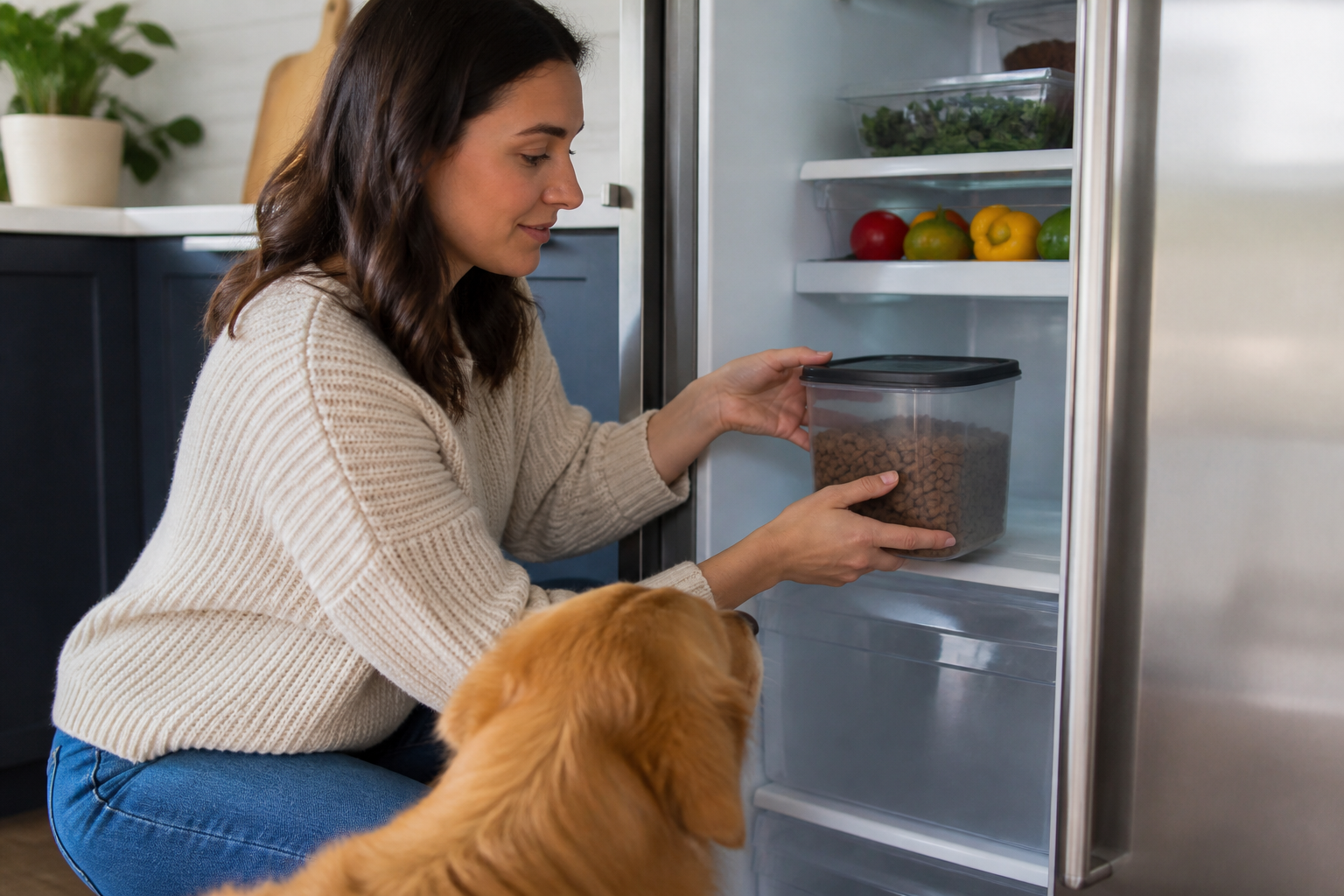
You might find yourself standing in your kitchen during a humid summer afternoon, wondering if that expensive bag of kibble will stay fresh in the heat. It is a common concern for pet owners who want to get the most value out of their purchases and keep their dogs healthy. While we often think of the refrigerator as the safest place for anything edible, the rules for pet nutrition are a bit different. At BaxterBoo, we talk to pet owners every day who are looking for the best ways to preserve the quality of premium ingredients. This post covers the science of kibble storage, the risks of cold environments, and how to maintain nutritional integrity. You will learn that while you can store dry dog food in the fridge, it is rarely the best option for your pet.
Quick Answer: You can store dry dog food in the fridge, but it is not recommended for most households. The main risk is condensation, which leads to moisture buildup and potential mold growth. It is better to store kibble in its original bag inside an airtight container at room temperature.
The Science of Dry Food Preservation
Dry dog food is processed to be shelf stable. Manufacturers use a combination of low moisture levels and specific preservatives to ensure the food stays safe for months in a warehouse or pantry. When the bag is sealed, the environment inside is controlled. Once you open the bag, the food is exposed to oxygen, light, and humidity.
Most premium brands use natural preservatives like tocopherols, which are forms of Vitamin E. These are effective but they do not last as long as synthetic chemicals. This is why proper storage becomes a priority the moment you break the seal. The goal of storage is to slow down oxidation. This is the process where fats in the food begin to break down and turn rancid.
Refrigeration does slow down chemical reactions like oxidation. This is why people consider it a viable option. However, the internal climate of a refrigerator is quite humid. Dry food is designed to stay dry. It typically has a moisture content of around 10 percent. If that level rises due to the damp air in a fridge, the texture and safety of the kibble change rapidly. For more guidance on freshness, read our post about how long dry dog food stays fresh.
Why Moisture Is the Enemy of Your Kibble
The biggest danger when putting dry food in the fridge is condensation. Every time you take the container out of the cold fridge and open it in a warm room, tiny droplets of water form on the surface of the food. You might not even see them at first. Over several days, this moisture accumulates.
Moisture provides the perfect breeding ground for mold and bacteria. Certain molds produce mycotoxins, which are invisible but highly toxic to dogs. Even a small amount of mold can cause digestive upset or more serious health issues over time. If you notice a musty smell or see any fuzzy growth on the kibble, you must discard the entire bag.
Vet Tip: If your dog suddenly refuses to eat a food they usually love, check the bag for signs of moisture or a sour smell. Spoiled food can cause vomiting or lethargy. Always consult your veterinarian if your dog shows signs of illness after eating, as they can help rule out food poisoning or other digestive issues.
When Refrigeration Might Be Necessary
There are very specific situations where the fridge might be a better choice than a pantry. If you live in an extremely hot and humid environment without air conditioning, your indoor temperatures might regularly exceed 80 degrees Fahrenheit. High heat accelerates the breakdown of fats very quickly.
In these cases, you must follow strict protocols to prevent the moisture issues mentioned above. You should only refrigerate a small amount of food at a time. This prevents the large bulk of the food from experiencing temperature swings.
Step 1: Divide the food.
Take out enough kibble for three to four days of feeding.
Step 2: Use airtight glass.
Place the small portion in a glass jar or high quality plastic container with a rubber gasket seal.
Step 3: Keep the bulk bag separate.
Store the large bag in the coolest part of your home, away from the fridge, to avoid constant temperature changes.
The Problem with Palatability
Dogs rely heavily on their sense of smell to enjoy their meals. Cold temperatures mute the aroma of the fats and proteins in the kibble. If you serve food straight from the fridge, your dog might find it unappealing. This is especially true for picky eaters or senior dogs with a declining sense of smell.
Furthermore, the texture of the kibble changes when it is cold. The fats can become waxy or hard. While some dogs do not mind a cold crunch, many prefer their food at room temperature. If you must refrigerate the food, let it sit on the counter for twenty minutes before serving to let the natural aromas return.
Key Takeaway: Refrigeration is a trade-off. While it preserves fats in high-heat environments, it risks mold growth through condensation and reduces the food's appeal to your dog.
Why the Original Bag Is Better Than a Bin
It is tempting to pour a new bag of food directly into a large plastic rolling bin. We see this often, but it is actually one of the most common mistakes in pet food storage. The original packaging is an engineered piece of technology. High quality brands like Royal Canin or Orijen use bags with specialized liners designed to keep fat from seeping out and oxygen from getting in.
When you pour food into a plastic bin, the plastic can leech odors into the kibble. Also, the residual fats from the old bag of food will stick to the walls of the bin. These old fats turn rancid and contaminate the new food immediately.
If you want to use a storage bin for convenience or to keep pests out, keep the food inside its original bag. Fold the top of the bag down tightly and use a clip. Then, place the entire bag inside the bin. This gives you two layers of protection and keeps your bin clean. You can also compare options in our dog food category.
Important Information on Your Pet Food Bag
Keeping the original bag is also a safety measure. Every bag of dog food has a "Best By" date, a lot number, and a UPC code. If there is ever a product recall or if your dog gets sick, you will need this information to contact the manufacturer or your vet.
- Lot Number: Tells the company exactly when and where the food was made.
- Best By Date: Shows how long the preservatives are guaranteed to work.
- Ingredient List: Essential if your dog develops a sudden allergy.
- Contact Info: Allows you to report any quality issues directly to the brand.
Bottom line: Never throw away the original packaging until the food is completely gone.
Storing Prescription Diets and Specialized Food
If your pet requires a prescription diet, such as those for kidney health or urinary support, storage is even more critical. These foods are often formulated with specific nutrient balances that can be fragile. Our pet pharmacy carries prescription products through our partnership with Pet's Choice. Because these diets are an investment in your pet's health, you want to ensure they do not spoil.
Prescription diets often come in smaller bags because they contain fewer synthetic preservatives. If you are managing a chronic condition, always follow the storage instructions on the label exactly. If the label says "store in a cool, dry place," the fridge is likely not the intended location.
Our pharmacy provides a reliable way to get these specialized foods delivered to your door. Combining these high-quality diets with proper storage ensures your pet gets the full therapeutic benefit of the formula.
The 80-Degree Rule for Pantries
The ideal temperature for dry dog food storage is between 50 and 70 degrees Fahrenheit. You should avoid any area where the temperature fluctuates or exceeds 80 degrees. This means the garage, the laundry room, and the space next to the oven are poor choices.
Garages are particularly bad because they get very hot in the summer and very cold in the winter. These swings cause the fats in the kibble to expand and contract, which speeds up spoilage. Laundry rooms often have high humidity from the dryer, which can soften the kibble even if the bag is closed.
Instead, look for a kitchen pantry, a coat closet, or a spot in the basement that stays dry. Make sure the bag is off the floor. Concrete floors can pull moisture into the bag through a process called wicking. Placing the bag on a shelf or inside a plastic bin on a pallet is a better choice. For additional storage guidance, see our article on keeping dry dog food fresh.
How to Tell if Dry Food Has Gone Bad
Even with perfect storage, dry food does not last forever. Most bags are meant to be used within six to eight weeks of opening. If you have a small dog and buy a massive bag to save money, you might be feeding rancid food by the time you reach the bottom.
We recommend checking the food every time you fill the bowl. Look for these red flags:
- A sour or "paint-like" chemical smell.
- A greasy or oily film on the kibble that was not there before.
- Visible mold or white, fuzzy spots.
- The presence of grain mites or weevils.
- A change in the color of the kibble.
If the food smells like old vegetable oil, the fats have oxidized. While it might not kill your dog immediately, rancid fats can cause long-term health issues and vitamin deficiencies. Learn more about recognizing spoiled dry dog food.
Using Autoship to Manage Freshness
One of the best ways to avoid the "should I put this in the fridge" dilemma is to buy smaller amounts more frequently. We offer our Autoship programme that allows you to schedule deliveries so you never have a bag sitting open for too long. This ensures the food is always within its peak nutritional window.
When you use Autoship, you also get a free MVP Gold membership. This is a great way to save money while prioritizing the freshness of your dog's diet. Instead of buying a 40-pound bag that lasts three months, you can have a 15-pound bag delivered every few weeks. This eliminates the need for refrigeration entirely.
Safe Storage for Wet Food Leftovers
While dry food is better at room temperature, wet food is the opposite. Once a can of wet food is opened, it must be refrigerated. Bacteria grow very quickly in the high-moisture environment of canned food.
If your dog does not eat the entire can in one sitting, follow these steps:
- Remove the food from the can if possible. While you can use a plastic lid on the can, transferring it to a glass container is better for preserving flavor.
- Seal it tightly. An airtight lid prevents the food from picking up "fridge smells" like onions or garlic.
- Use it quickly. Wet food should be consumed within three days of opening.
- Warm it up. Most dogs prefer wet food that has been warmed slightly or at least brought to room temperature.
For a broader comparison, read our guide to choosing between wet and dry dog food.
Maintaining Your Storage Containers
If you do use a bin or a dedicated container for your dog's food, you must clean it regularly. Many people simply "top off" the bin by pouring a new bag over the crumbs of the old one. This is a recipe for spoilage.
Every time the container is empty, wash it with hot, soapy water. Rinse it thoroughly to ensure no soap residue remains. The most important step is to let it dry completely. Even a few drops of water at the bottom of the bin can ruin an entire new bag of food. Our post on dry dog food storage tips covers additional handling practices.
Key Takeaway: Hygiene is just as important for pet food as it is for human food. Clean containers and fresh bags are the best defense against contamination.
The Role of Pests in Food Storage
Another reason people consider the fridge is to keep out ants, roaches, or mice. Dry dog food is very attractive to pests. However, a high quality airtight container at room temperature is just as effective as a refrigerator at keeping bugs out.
Look for containers with a silicone or rubber gasket. These create a true seal that blocks the scent of the food. If pests cannot smell the food, they are much less likely to try to get into the container. Keeping the area around the food bowl clean is also a major factor in pest prevention.
Regional Considerations for US Pet Owners
Where you live in the United States changes how you should handle food.
- The South and Gulf Coast: High humidity is your main challenge. Using a dehumidifier in your pantry can help more than putting food in the fridge.
- The Southwest: Intense heat can bake a pantry that shares an exterior wall. Move food to a central closet.
- The Northeast and Midwest: Winter dryness is actually great for kibble, but summer humidity spikes require extra care.
- The Pacific Northwest: Constant dampness means you must be extra vigilant about checking for mold.
No matter where you are, keeping the food in a climate-controlled part of the house is the gold standard. BaxterBoo carries a variety of storage solutions that can help you manage these regional challenges without resorting to the refrigerator.
Summary of Best Practices
To keep your dog's food fresh and safe, follow these simple rules. Avoid the fridge unless it is a dire heat emergency. Stick to the original bag and a cool, dry pantry.
- Store kibble between 50 and 70 degrees Fahrenheit.
- Keep the food in its original bag for the best fat barrier.
- Use a clip to seal the bag tightly after every meal.
- Wash your storage bins and food bowls regularly.
- Buy only as much food as your dog can eat in six to eight weeks.
By following these steps, you ensure that your pet gets the high quality nutrition you paid for. You also protect them from the hidden dangers of mold and rancidity. For more advice on timing meals and portions, read about how much dry food to feed a dog.
Conclusion
Storing dry dog food in the fridge is a choice that comes with more risks than benefits for the average pet owner. While it may seem like a good way to fight the heat, the danger of mold from condensation is a serious concern. Instead, focus on finding a cool, dry spot in your home and keeping the food in its original packaging. At BaxterBoo, we want to help you make informed decisions about your pet's health and wellness. Whether you are using our pharmacy for prescription diets or taking advantage of our Autoship programme for fresh deliveries, proper storage is the final step in a great nutrition plan.
Bottom line: Skip the fridge for dry food and stick to a cool pantry with an airtight container for the safest, tastiest meals.
FAQ
Can I freeze dry dog food to make it last longer?
You can freeze dry dog food, and it is safer than refrigeration because it prevents mold growth. However, you must ensure the food is in a completely airtight, moisture-proof freezer bag. When you take it out, let it thaw completely before opening the bag to prevent condensation from forming on the kibble.
How long can dry dog food stay in the fridge?
If you choose to refrigerate it, try to use the food within two to three weeks. The longer it stays in the fridge, the higher the risk of moisture seeping into the kibble. Always check for a change in texture or smell every time you feed your dog from a refrigerated container.
Is it okay to leave the bag open if it is in a storage bin?
It is better to seal the bag even if it is inside a bin. An open bag allows oxygen to circulate freely, which speeds up the rancidity of the fats. Folding the top of the bag and using a clip provides an extra layer of protection against both oxygen and pests.
Does cold kibble lose its nutritional value?
The cold itself does not destroy vitamins or minerals in the food. The primary issue with cold storage is the potential for moisture to introduce mold, which can be toxic. As long as the food stays dry, the nutritional profile remains stable in the fridge, though the flavor may be less appealing to your dog.






