
 Save 15% on your 1st Autoship learn more

 Email us
 Live Chat
 FAQs
FAQs





Introduction
You are likely standing in your kitchen or garage looking at a large bag of kibble and wondering how long it will actually last. Perhaps you are trying to find the right storage container or setting up a recurring delivery for the first time. At BaxterBoo, we see this often when owners are trying to balance their budget with their dog's nutritional needs. Understanding the volume of a 30 pound bag helps you plan your space and your schedule. This article covers the math behind kibble volume, how density changes the count, and how to determine the lifespan of your dog's food supply. We will help you turn that weight into a clear number of daily meals for your pet.
If you are comparing options while you read, our dry dog food category is a good place to start.
Determining the Total Cup Count
The most common question we get in our Vernon Hills warehouse is how to translate weight into volume. For most standard dry dog foods, the general rule is that one pound of kibble equals roughly four cups. If you apply this to a 30 pound bag, the math suggests you have about 120 cups of food.
This number is a reliable baseline for many popular brands like NutriSource or Acana. However, it is rarely an exact science because every brand uses a different recipe and cooking process. Some kibble pieces are puffed with more air, while others are dense and heavy.
Quick Answer: A 30 pound bag of dry dog food contains approximately 120 cups of kibble. This estimate is based on the average weight of four cups per pound, though actual volume varies by brand density.
The Role of Kibble Density
Density is the reason one brand might have 110 cups while another has 130 cups in the same 30 pound bag. High protein or high fat diets often have denser kibble. These formulas, such as those from Orijen or Stella and Chewy's, might yield fewer cups per pound because the pieces are heavier.
For a deeper explanation of how kibble weight and shape affect volume, read how much a cup of dry dog food weighs.
On the other hand, some weight management or "lite" formulas use fiber to add volume without adding many calories. These kibbles are often lighter and more porous. In those cases, you might find that your 30 pound bag feels significantly larger and fills a bigger storage bin.
Small Bites vs. Large Breed Kibble
The physical size of the kibble also changes how it fits into a measuring cup. Small bite formulas for toy breeds pack together tightly with very little air space between the pieces. This usually means you get a higher cup count per pound.
Large breed kibble consists of much bigger chunks. These pieces leave large gaps of air in your measuring cup. If you are feeding a large breed formula from a brand like Royal Canin, you might notice that the bag finishes faster than a small breed bag of the same weight.
How Long a 30 Pound Bag Lasts
Knowing the total number of cups is only half the battle. You also need to know how many days of feeding that provides for your specific dog. This calculation depends entirely on your dog's daily portion size.
We have broken down the typical lifespan of a 30 pound bag (assuming 120 cups total) based on common feeding amounts:
| Dog Size | Daily Amount | Total Days Bag Lasts |
|---|---|---|
| Small (Under 20 lbs) | 1 cup | 120 days (4 months) |
| Medium (20 to 50 lbs) | 2 cups | 60 days (2 months) |
| Large (50 to 90 lbs) | 3.5 cups | 34 days (approx. 1 month) |
| Giant (Over 90 lbs) | 5 cups | 24 days |
If you have multiple dogs, you must divide the total days by the number of pets eating that same food. For owners with two large dogs, a 30 pound bag might only last about two weeks.
For another example of connecting bag size to daily portions, see how many cups are in 24 pounds of dry dog food.
Key Takeaway: A 30 pound bag is often the most cost-effective choice for medium to large dogs because it typically provides a one to two month supply.
Why Precise Measurement Matters
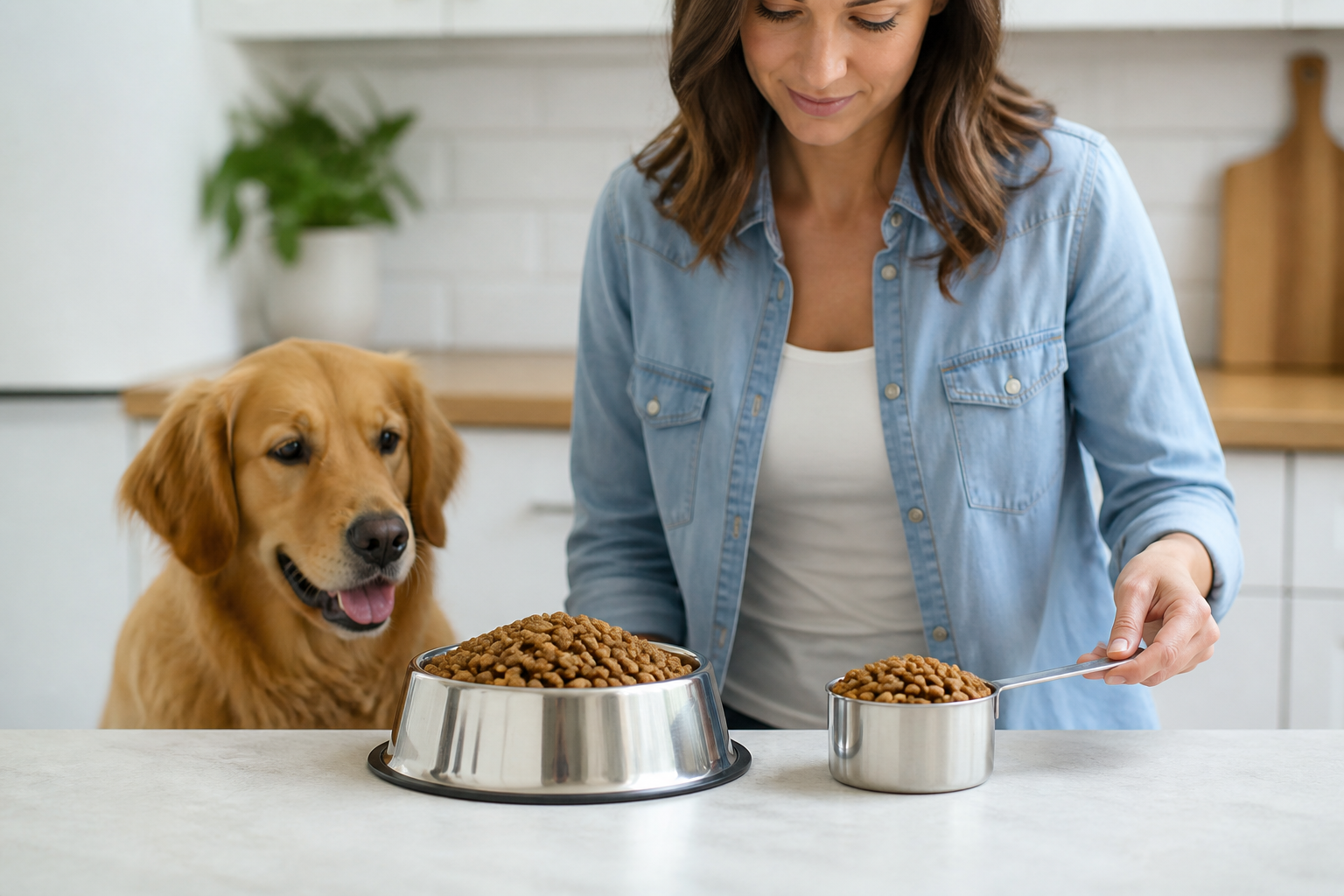
It is tempting to use a coffee mug or a plastic scoop to dish out dinner. However, overfeeding by even a small amount can lead to significant weight gain over time. A "heaping" cup instead of a "level" cup can add 10 to 20 percent more calories to your dog's daily intake.
If your dog is managing a health condition like obesity or kidney issues, precision is even more important. Many prescription diets, such as those from Farmina Vet Life, require strict portion control to be effective. Our pet pharmacy offers these FDA-approved prescription foods through our partnership with Pet's Choice. If your veterinarian has prescribed a specific diet, always use a standard dry measuring cup to ensure you are following their instructions exactly.
Vet Tip: If your dog is struggling with weight management, ask your veterinarian for the recommended amount in grams rather than cups. Using a digital kitchen scale is the most accurate way to feed your dog and prevent obesity related health issues.
Factors That Change Your Dog's Daily Needs
Your dog's requirements will likely change throughout their life. A bag of food that lasted two months last year might only last six weeks this year if your dog's activity levels increase.
Life Stage and Growth
Puppies require significantly more calories than adult dogs because they are building bone and muscle. You might find yourself feeding a 40 pound puppy more cups per day than a 70 pound senior dog. As your dog transitions into their senior years, their metabolism slows down. At this stage, you may need to reduce the cup count to prevent weight gain, which can put unnecessary stress on their joints.
Activity Level and Environment
A dog that spends all day hiking or working on a farm burns more fuel than a dog that naps on the sofa. Seasonal changes also matter. In cold climates, dogs may burn more calories just to maintain their body temperature. Always check your dog's body condition regularly. If you can no longer feel their ribs easily, it may be time to slightly reduce the number of cups you feed per day.
Caloric Density of the Food
Not all cups are created equal. One cup of a high calorie performance food might contain 450 calories, while a cup of a standard maintenance diet might only have 350 calories. When you switch brands, do not assume the portion size remains the same. Always read the feeding chart on the new bag to see how many cups your dog needs.
For additional guidance on measuring portions by weight instead of volume, read how much a cup of dry dog food weighs.
Bottom line: Your dog's daily cup requirement is a moving target that depends on their age, activity, and the specific calorie count of the food.
Choosing the Right Storage Container
Since a 30 pound bag contains roughly 120 cups, it takes up a specific amount of physical space. In terms of volume, 30 pounds of dry dog food typically fills about 12 to 15 gallons of space.
When shopping for a storage bin, look for one labeled for at least 40 to 45 quarts. We always recommend keeping the food inside its original bag and then placing that bag into an airtight container. The bags are designed to keep fats from oxidizing and turning rancid.
For more storage guidance, read how to keep dry dog food fresh once opened.
Benefits of Original Bag Storage:
- It keeps the kibble fresher by providing an extra barrier against air.
- It keeps the oils from the food from coating the inside of your plastic bin.
- It ensures you have the UPC and lot number in case of a product recall.
- It provides the feeding instructions and expiration date for easy reference.
Transitioning to a New Bag or Brand
When you reach the final 10 or 15 cups of your current bag, it is time to start thinking about the transition. Even if you are buying the same brand, a new batch can sometimes cause minor digestive upset if your dog is sensitive. If you are switching brands entirely, a slow transition is mandatory.
Step 1: Mix 25 percent of the new food with 75 percent of the old food. / Do this for two to three days while watching for any changes in stool consistency.
Step 2: Increase to a 50/50 split for another two to three days. / This allows your dog's gut bacteria to adjust to the new ingredients.
Step 3: Move to 75 percent new food and 25 percent old food. / If your dog seems comfortable and excited about the bowl, you are almost there.
Step 4: Transition to 100 percent of the new food. / Monitor your dog's energy levels and coat health over the next month to ensure the new diet agrees with them.
For another gradual transition example, read how to switch from dry to wet dog food.
Managing Your Supply with BaxterBoo
Buying 30 pounds of food at a time is a great way to save money and ensure you aren't making emergency trips to the store. At BaxterBoo, we want to make that process as easy as possible. Our Autoship programme is designed for exactly this situation. Once you know that a 30 pound bag lasts your dog exactly 60 days, you can set your delivery for every eight weeks.
Using Autoship also qualifies you for a free MVP Gold membership. This helps you earn rewards on every bag of food you buy. Whether you are feeding a premium brand like Open Farm or a veterinarian-recommended diet like Royal Canin, the MVP Rewards programme can help you maintain a consistent supply without the heavy lifting.
If your dog has specific health needs that require medication or specialized diets, our pharmacy partnership with Pet's Choice is here to help. You can manage your pet's prescriptions and their daily kibble in one place. This is especially helpful for senior dogs who might need joint supplements like Cosequin alongside their regular meals.
For more information about freshness and storage, read does dry dog food go bad.
Key Takeaway: Planning your dog's food volume helps you take advantage of programs like Autoship and MVP Rewards to save time and money.
Conclusion
Calculating that a 30 pound bag contains roughly 120 cups is the first step in being a proactive pet owner. This knowledge allows you to plan your storage, budget for your monthly expenses, and ensure your dog is never staring at an empty bowl. Remember that kibble size and density will always cause slight variations, so keep an eye on the bag's progress as you get toward the bottom.
To keep your dog in peak condition, always use a standard measuring cup and consult your veterinarian if you notice unexpected weight changes. If you are ready to simplify your routine, consider setting up an Autoship order for your favorite 30 pound bag of kibble today.
Bottom line: A 30 pound bag offers a convenient and cost effective way to feed most dogs when you measure carefully and store the food properly.
FAQ
Is it better to buy a 30 pound bag or several smaller bags?
Buying a 30 pound bag is usually much more cost effective than buying multiple small bags. Most brands offer a lower price per pound on their larger sizes. However, you should only buy the 30 pound bag if your dog can finish it within six to eight weeks to ensure the food stays fresh and the fats do not turn rancid.
How do I know if my measuring cup is the right size?
You should use a standard 8 ounce dry measuring cup meant for baking. Do not use a liquid measuring cup or a generic plastic cup from your kitchen. Many pet food companies also sell dedicated kibble scoops that are calibrated to match their feeding charts. If you want the highest level of accuracy, weigh your food in grams using a digital scale.
Why does my dog seem hungry after eating the recommended number of cups?
Feeding charts are just a starting point and may not account for your dog's unique metabolism. Some dogs are more active or have a higher muscle mass, meaning they burn calories faster. If your dog is constantly begging or losing weight, consult your veterinarian to see if you should increase their daily cup count or switch to a more calorie-dense formula.
What should I do if my 30 pound bag has a weird smell?
If the food smells sour, metallic, or paint-like, the fats in the kibble may have oxidized. This can happen if the bag was stored in a hot garage or if it is past its expiration date. Do not feed rancid food to your dog as it can cause stomach upset. Always store your large bags in a cool, dry place and check the "Best By" date before opening.






