
 Save 15% on your 1st Autoship learn more

 Email us
 Live Chat
 FAQs
FAQs





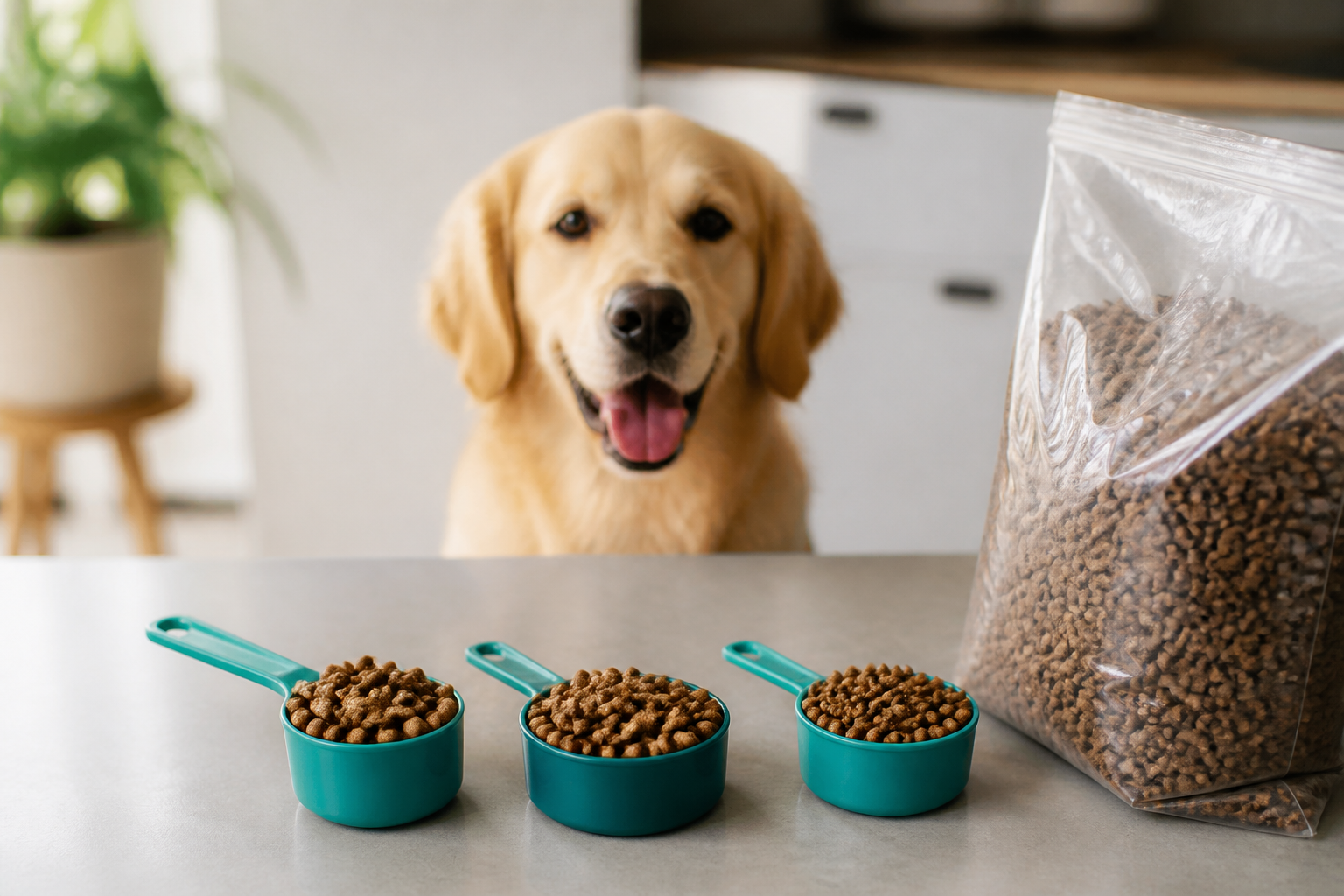
Introduction
You are standing in the pet food aisle or hauling a heavy bag from the car to your pantry. As you look at that 30-pound bag, you might wonder exactly how long it will last before you need to make another trip. Knowing how many cups are in a pound of dry dog food is not just about convenience. It is the best way to manage your budget, plan your deliveries, and ensure your dog is eating the right amount every day. At BaxterBoo, we talk to pet owners daily who are trying to balance nutrition with practical storage. This guide will walk you through the math of kibble density, why bag sizes can be deceptive, and how to measure portions accurately. Understanding these numbers helps you take better control of your dog's long-term health and wellness.
Quick Answer: On average, one pound of dry dog food equals about 3.5 to 4 cups of kibble. This measurement can vary between 3 and 5 cups depending on the density, shape, and size of the specific kibble brand you use.
Why the Math Varies: Kibble Density and Shape
It would be much easier if every cup of dog food weighed exactly the same. However, a cup is a measure of volume, while a pound is a measure of weight. Think about the difference between a cup of lead and a cup of feathers. While that is an extreme example, dog food has similar variations. The ingredients and the cooking process change how heavy each individual piece of kibble is.
The Role of Kibble Size and Air Gaps
The shape of the kibble is one of the biggest factors in how many cups fit into a pound. If you have large, heart-shaped or triangular kibble, there will be more air gaps between the pieces in your measuring cup. This means the cup is less dense. Small, round kibble fits together more tightly with very little empty space.
If you are feeding a small breed dog a tiny kibble, you might get closer to 4.5 or 5 cups per pound. If you are feeding a large breed dog a chunky, irregular kibble, you might only get 3 cups per pound. This is why the volume can change even if the weight stays the same.
Ingredient Density and Weight
What the food is made of also matters. High-protein foods that use a lot of meat meal are often heavier and denser. Foods that use more grains or fiber-rich fillers are often lighter and "puffed" up during the extrusion process. Freeze-dried or air-dried foods, like those from Stella and Chewy's or Ziwi Peak, are significantly lighter than standard baked or extruded kibble. For these specialized diets, you might find that the number of cups per pound is much higher than average.
For another look at how weight and volume differ, read our guide to how many grams are in a cup of dry dog food.
Key Takeaway: Never assume two different brands have the same cup-to-weight ratio. Always check the specific density of a new food when you switch brands or formulas.
How Long Will a Bag Last? Conversion Chart
Most dog owners buy food by the bag weight. Knowing how many cups are in that bag helps you determine your monthly costs. If your dog eats two cups of food per day, a bag with 60 cups will last exactly one month. Use the table below as a general guideline for standard kibble.
| Bag Weight (Lbs) | Average Total Cups | Estimated Days of Food (at 2 cups/day) |
|---|---|---|
| 5 lbs | 17–20 cups | 8–10 days |
| 10 lbs | 35–40 cups | 17–20 days |
| 15 lbs | 52–60 cups | 26–30 days |
| 20 lbs | 70–80 cups | 35–40 days |
| 30 lbs | 105–120 cups | 52–60 days |
| 40 lbs | 140–160 cups | 70–80 days |
For more bag-size planning, see our guide to how many cups are in 24 pounds of dry dog food.
Bottom line: A 30-pound bag is the standard choice for many medium to large dogs because it typically covers about two months of feeding for a single pet.
Measuring for Success: Volume vs. Weight
Many pet owners use a random plastic cup or a coffee mug to scoop their dog's food. This is one of the most common ways to accidentally overfeed your dog. A study once showed that pet owners can be off by as much as 20 percent when using non-standard measuring tools.
Using Proper Measuring Cups
Always use a dedicated dry-measuring cup. Liquid measuring cups, which often have a spout, are designed for water or oils and can lead to inaccurate kibble portions. When you scoop the food, it should be level with the top of the cup. A "heaping" scoop can add an extra quarter-cup of food to every meal. Over a week, those extra bites can lead to unintended weight gain.
The Benefits of a Kitchen Scale
If you want to be as accurate as possible, weigh your dog's food on a kitchen scale. Most dog food bags list the weight of a serving in grams alongside the cup measurement. Weighing the food eliminates the problem of kibble shape and air gaps. This is especially helpful for dogs on strict weight-management diets or those with chronic health conditions like diabetes.
- Buy a simple digital kitchen scale.
- Find the "grams per cup" listing on your dog food label.
- Place your dog's bowl on the scale and hit the "tare" or "zero" button.
- Pour the kibble until you hit the exact weight recommended by your vet.
For additional portion-measuring guidance, read our article about how much a cup of dry dog food weighs.
Vet Tip: If your dog is struggling with weight issues or requires a prescription diet, weighing the food is much safer than measuring by volume. Precision helps prevent the health complications associated with canine obesity.
Determining Your Dog’s Daily Needs
Once you know how many cups are in your bag, you need to know how many your dog actually needs. The feeding chart on the back of the bag is a starting point, but it is not a perfect rule for every dog. These charts are usually based on "intact" active adult dogs. If your dog is spayed or neutered, they may need fewer calories than the bag suggests.
Activity Level and Calories
A dog that runs five miles with you every morning needs more calories than a dog that spends the day on the couch. High-energy breeds like Border Collies or Vizslas burn through kibble faster than lower-energy breeds like Basset Hounds. You should adjust the number of cups based on how much exercise your dog gets.
Age and Life Stage
Puppies require more nutrient-dense food and more frequent meals to support their growth. Senior dogs often have slower metabolisms and may need fewer cups of food to maintain a healthy weight. If you notice your senior dog is getting a bit rounder, it might be time to reduce their daily cup count slightly.
- Monitor your dog's body condition weekly.
- You should be able to feel their ribs easily but not see them.
- A visible waistline should be apparent when looking down from above.
- Adjust portions by 10 percent if you notice weight changes.
If you are feeding a growing puppy, our guide to when puppies can eat dry dog food offers a related resource.
Specialized Diets and the BaxterBoo Pharmacy
Many dogs require specific diets to manage health concerns like kidney disease, skin allergies, or joint issues. Brands like Farmina Vet Life or Royal Canin offer specialized formulas that may have different densities than standard grocery store kibble. These diets often require a prescription from your veterinarian.
Our pharmacy at BaxterBoo provides access to FDA-approved prescription pet foods and medications through our partnership with Pet's Choice. If your veterinarian has prescribed a specific therapeutic diet, you can have it delivered directly to your door. This is a practical way to ensure your pet gets the exact nutrition they need without extra trips to the clinic. Managing a chronic condition is easier when your specialized food and medications arrive on a predictable schedule.
For example, Royal Canin Large Puppy Dry Dog Food is a specialized formula with its own feeding and calorie information.
Key Takeaway: Prescription diets are formulated with specific calorie counts and nutrient ratios. Accurate measurement is even more critical when using these foods to manage a medical condition.
Smart Storage and Feeding Routines
Once you have done the math and know how many cups are in your bag, you need to keep that food fresh. Dry dog food starts to oxidize as soon as the bag is opened. This can cause the fats in the food to go rancid and the vitamins to lose their potency.
For more storage guidance, read our tips on whether dry dog food goes bad.
Proper Storage Techniques
Keep the kibble in its original bag. Most high-quality dog food bags are designed with barriers to keep out moisture and air. You can place the entire bag inside a plastic or metal airtight container for extra protection. Avoid pouring the kibble directly into a plastic bin. The plastic can leach odors into the food, and old fat residues can build up on the walls of the container.
Using Autoship for Convenience
If you know your 20-pound bag lasts exactly 40 days, you can take the guesswork out of shopping. We offer an Autoship program that allows you to schedule your deliveries based on your dog's eating habits. This ensures you never run out of food and never have to scramble for a last-minute replacement. Plus, our Autoship customers save on their first order and receive a free MVP Gold membership for ongoing rewards.
Step 1: Calculate how many days your bag lasts based on your dog's daily cups. Step 2: Set your Autoship frequency to arrive a few days before the bag is empty. Step 3: Enjoy the savings and the peace of mind that comes with a full pantry.
Managing Health and Wellness
Feeding your dog the right number of cups is the foundation of their health. However, diet is just one piece of the puzzle. Regular vet checkups are essential to ensure your dog's weight and internal health are on track. For dogs with ongoing health needs, such as flea and tick prevention or heartworm medication, our pharmacy partnership with Pet's Choice is a useful resource. We carry a wide variety of trusted brands like Frontline, NexGard, and various prescription treatments.
If you are managing a senior dog's mobility, you might also consider supplements like Cosequin or Zesty Paws. These can be added to their daily food portions to support joint health. Always talk to your vet before adding new supplements to your dog's routine to ensure they are the right fit for your pet's specific needs.
You can also compare food toppers and related nutrition options in our dog food supplement category.
Bottom line: Accurate feeding combined with regular veterinary care and high-quality supplements leads to a longer, healthier life for your dog.
Conclusion
Calculating how many cups are in a pound of dry dog food is the first step toward better pet ownership. While the average is about 4 cups per pound, the density of your specific kibble determines the true count. By using standard measuring tools, monitoring your dog's weight, and choosing high-quality food, you can keep your pet in peak condition.
We are here to help you every step of the way with a curated selection of over 500 brands and a dedicated pharmacy for your prescription needs. Whether you are managing a puppy's growth or a senior dog's weight, having the right supplies makes the job easier. Consider setting up an Autoship order for your favorite kibble today to save time and money while keeping your dog's bowl full.
- Check your bag for the weight-to-cup ratio.
- Use a level, dry measuring cup for every meal.
- Monitor your dog's body shape and adjust as needed.
- Consult your vet for personalized feeding advice.
Key Takeaway: Proper portion control is the most effective way to prevent obesity and extend your dog's life. Invest in a standard measuring cup or kitchen scale today to ensure accuracy.
FAQ
Does the shape of the kibble really change how many cups are in a bag?
Yes, kibble shape significantly changes the volume. Large or irregular shapes like stars and triangles create more air pockets in a measuring cup, meaning you get fewer pounds of food per cup. Small, round kibble packs together tightly, making the cup heavier and more calorie-dense.
How many cups are in a 30-pound bag of dog food?
A 30-pound bag of standard dry dog food typically contains between 105 and 120 cups of kibble. This estimate is based on the average density of most adult maintenance formulas. If the kibble is very small or very large, that number could shift by 10 to 15 cups.
Is it better to measure dog food by weight or by volume?
Measuring by weight using a kitchen scale is much more accurate than using a measuring cup. Volume measurements are easily affected by how you scoop the food and the size of the kibble. Weight remains constant regardless of the kibble's shape or how much air is in the cup.
How do I know if the feeding chart on the bag is accurate for my dog?
Feeding charts are general guidelines based on average activity levels. You should use the chart as a starting point and then adjust based on your dog's body condition. If your dog is gaining weight, reduce the portion slightly. If they seem too thin or have low energy, you may need to increase the daily amount.






