
 Save 15% on your 1st Autoship learn more

 Email us
 Live Chat
 FAQs
FAQs





Introduction
You are standing in your kitchen with an empty bag of kibble and a single can of wet food. Perhaps you forgot to restock your usual supply, or maybe you are considering adding a savory topper to entice a picky eater. You find yourself staring at the bowl, wondering how to make the math work without accidentally overfeeding your dog. It is a common puzzle for many pet owners, and getting the ratio wrong can lead to unintended weight gain or digestive upset.
At BaxterBoo, we know that feeding time should be a moment of connection rather than a math exam. Understanding the caloric exchange between different food formats is essential for maintaining your dog’s health and energy levels. This post covers the specific conversion ratios, the importance of nutrient density, and how to safely transition between food types. We want to help you find the perfect balance so your dog stays healthy and satisfied. If you are comparing formulas, browse our dog food category for dry and wet options.
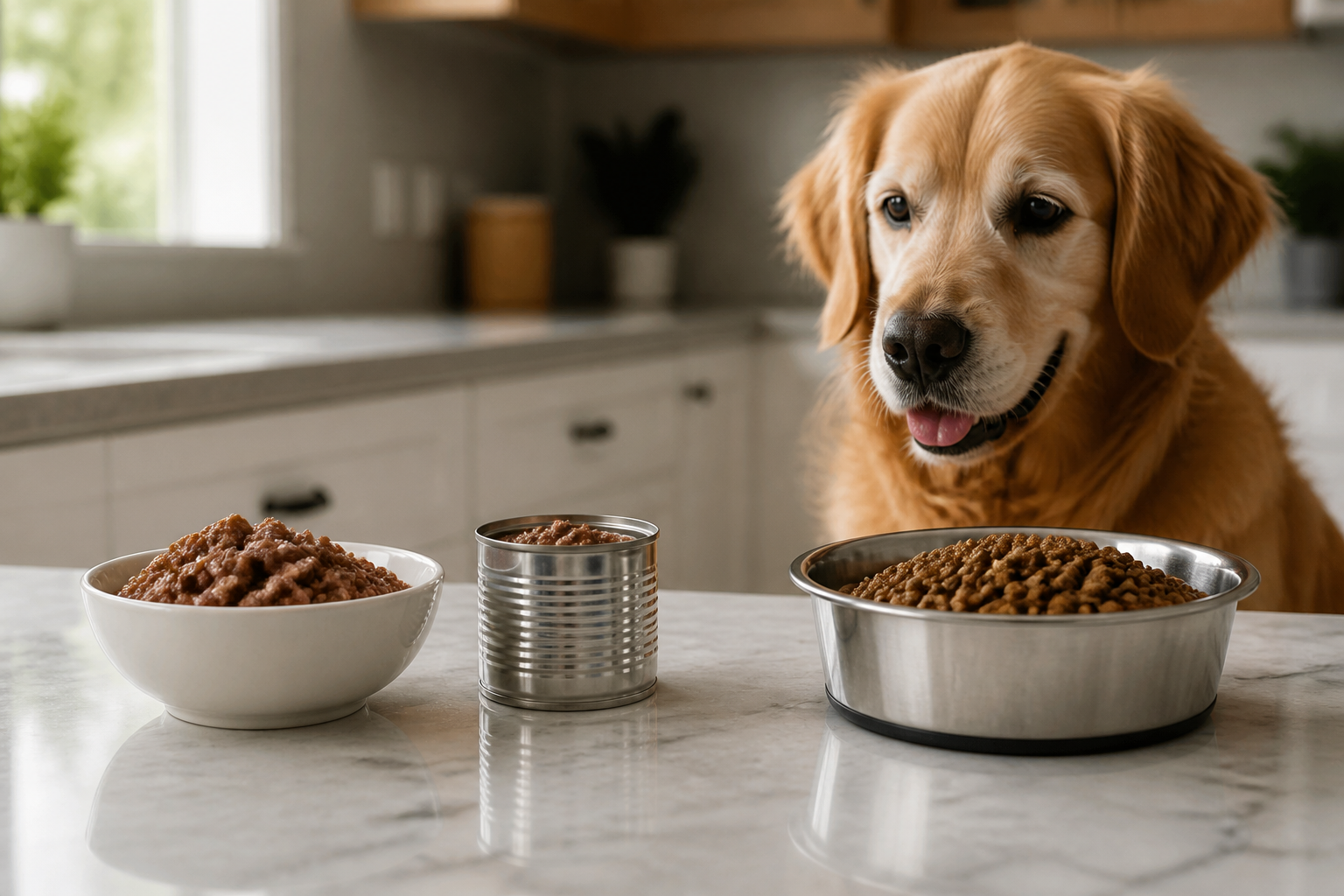
Quick Answer: Generally, one standard 13.2-ounce can of wet dog food is equivalent to about one cup of dry kibble. This conversion is based on caloric density, as most high-quality brands aim for roughly 350 to 450 calories per cup or can.
The Moisture Factor and Why It Matters
The most significant difference between wet and dry dog food is the water content. This simple biological fact is why you cannot swap them cup-for-cup based on volume alone. If you filled a bowl with one cup of wet food, your dog would receive significantly less nutrition than if you filled that same bowl with one cup of dry kibble.
Most dry dog food contains only about 10 percent moisture. The rest of the bag is packed with concentrated proteins, fats, carbohydrates, and minerals. In contrast, wet dog food is often 75 percent to 80 percent water. This high moisture content is excellent for hydration and makes the food smell and taste more appealing. However, it means the actual nutrients are much more diluted within the total volume of the can.
Because the nutrients in kibble are so condensed, a small amount goes a long way. When you switch to wet food, you have to increase the volume of food to reach the same caloric count. This often surprises owners who see their dog finish a large bowl of wet food and still look around for more. The stomach might feel full from the water volume, but the caloric energy must still match what they usually get from their dry diet. For more on adding moisture to meals, read how to wet dry dog food for better digestion and hydration.
How to Calculate the Conversion Ratio
To figure out the exact conversion for your specific brand, you must look past the weight and the volume. You need to look at the calories. This is usually listed on the label as kcal/cup for dry food and kcal/can or kcal/kg for wet food. While every brand is different, there is a standard baseline you can use for most high-quality dog foods.
The General Rule of Thumb
- One cup of dry kibble is roughly equal to one standard 13.2-ounce can of wet food.
- One-fourth cup of dry kibble is roughly equal to about 3.3 ounces of wet food.
- One-half cup of dry kibble is roughly equal to about 6.6 ounces of wet food.
This 3-to-1 or 4-to-1 ratio by weight is a helpful starting point. If your dog usually eats two cups of dry kibble a day, they would need two full 13.2-ounce cans of wet food to maintain the same energy levels. If you are using smaller 5.5-ounce cans or pouches, the math changes significantly. You would likely need two and a half of those smaller cans to equal a single cup of kibble.
| Dry Food Amount | Equivalent Wet Food (by Weight) | Equivalent Standard Cans (13.2 oz) |
|---|---|---|
| 1/4 Cup | ~3.3 oz | 1/4 Can |
| 1/2 Cup | ~6.6 oz | 1/2 Can |
| 3/4 Cup | ~9.9 oz | 3/4 Can |
| 1 Cup | ~13.2 oz | 1 Full Can |
| 2 Cups | ~26.4 oz | 2 Full Cans |
Checking the Caloric Density
Always verify the kcal count on the back of the packaging before making a full swap. A standard cup of dry kibble usually contains between 350 and 450 calories. A standard 13.2-ounce can of wet dog food typically falls in the same range. If your dry food is a high-calorie performance blend and your wet food is a weight management formula, the ratio will not be one-to-one. In those cases, you might need more wet food than expected to provide the same fuel for their daily activities.
Key Takeaway: Never swap wet and dry food based on volume alone. Always check the calorie count per cup and per can to ensure your dog receives the correct amount of energy for their size and activity level.
Understanding Nutrient Density and Dry Matter Basis
One of the most confusing parts of comparing wet and dry food is the guaranteed analysis on the label. When you look at a bag of dry food, you might see a protein percentage of 26 percent. On a can of wet food, that number might look shockingly low, perhaps only 8 percent. This does not mean the wet food is low in protein. It simply means the protein is being measured alongside the 80 percent water content.
To compare the two fairly, you have to look at the dry matter basis. This calculation removes the water from the equation so you can see the actual nutrient levels. To do this, subtract the moisture percentage from 100. Then divide the protein percentage by that result and multiply by 100.
For example, if a wet food is 8 percent protein and 80 percent moisture:
- 100 - 80 = 20 (This is the dry matter).
- 8 divided by 20 = 0.4.
- 0.4 times 100 = 40 percent protein on a dry matter basis.
In this scenario, the wet food actually contains more protein than the 26 percent dry kibble. This is why wet food is often recommended for dogs who need higher protein levels or for those who are struggling to maintain muscle mass. For another perspective on comparing food formats, see should dogs eat dry or wet food.
The Benefits of a Hybrid Diet
Many dog owners choose not to stick to just one type of food. A mixed feeding approach offers the advantages of both formats. You get the convenience and dental benefits of dry kibble, along with the hydration and palatability of wet food.
Wet food is an excellent way to add extra moisture to the diet of dogs who do not drink enough water on their own. This extra hydration supports kidney health and helps keep the urinary tract functioning properly. It is especially beneficial for senior dogs or those prone to urinary crystals.
Additionally, a small amount of wet food mixed into dry kibble can make a world of difference for picky eaters. The fats and proteins in wet food are more aromatic than those in dry food. This scent is often enough to entice a dog who is feeling under the weather or bored with their standard routine. Mixing the two also allows you to stretch your budget further than feeding 100 percent canned food. Read should you feed your dog wet and dry food for more mixed-feeding considerations.
Managing Health Conditions and Weight
If your dog is managing a health condition like obesity, kidney issues, or severe allergies, the conversion math becomes even more critical. Weight management is often easier with a wet food component because of the high volume and low calorie density. A dog can eat a larger portion of wet food and feel fuller while actually consuming fewer calories than a small, dense portion of kibble.
For dogs with chronic health needs, a veterinarian may recommend a specific prescription diet. Through our partnership with Pet's Choice, the BaxterBoo pet pharmacy offers a range of FDA-approved prescription pet foods from trusted brands like Royal Canin and Farmina Vet Life. These specialized diets are formulated for conditions like urinary health, weight management, and skin sensitivities. Our pharmacy makes it easy to have these essential foods delivered to your door, ensuring your dog never misses a specialized meal.
Vet Tip: If you are changing your dog's diet to manage a health condition or weight issue, always consult your veterinarian first. They can provide specific caloric goals and help you determine if a prescription diet from our pharmacy is the right choice for your pet's long-term wellness.
How to Mix Wet and Dry Food Safely
If you decide to start mixing wet food into your dog's dry kibble, you should not just add it on top of their current portion. Adding wet food without reducing the dry food is a primary cause of pet weight gain. You need to adjust the ratios carefully to keep the total calorie count stable. For additional guidance, read can you mix dry dog food with wet.
- Step 1: Determine the total daily calories. Look at the feeding guide on your dog's primary food bag or consult your vet to find their total daily requirements.
- Step 2: Choose your mixing ratio. A common split is 75 percent dry and 25 percent wet, or a 50/50 split for more variety.
- Step 3: Calculate the reduction. If you add 1/4 can of wet food (about 100 calories), you must remove roughly 1/4 cup of dry kibble (about 100 calories) from the bowl.
- Step 4: Mix thoroughly. Stir the two together until the kibble is well-coated. This prevents your dog from picking out the wet food and leaving the dry pieces behind.
- Step 5: Monitor weight and energy. Watch your dog’s body condition over the first two weeks and adjust the portions slightly if you notice them gaining or losing weight.
Transitioning Between Food Types
Any time you change your dog's diet, you must do so gradually. Their digestive systems are sensitive to sudden changes in fat, fiber, and protein levels. Moving too quickly from dry to wet food can lead to loose stools or an upset stomach. A slow transition allows the beneficial bacteria in the gut to adjust to the new ingredients.
Start by replacing about 25 percent of their old food with the new food for two to three days. If their stool remains firm and they seem comfortable, move to a 50/50 mix for another three days. By day seven, you can move to 75 percent new food. Finally, by day ten, you can complete the transition to 100 percent of the new diet. This slow pace is the best way to avoid digestive distress and ensure your dog enjoys their new meal plan. For a detailed schedule, see how to switch from dry to wet dog food.
Storage and Hygiene for Mixed Feeding
When you introduce wet food into your routine, cleanliness becomes much more important. Dry kibble is shelf-stable and can be left out for the day, but wet food is perishable. You should never leave wet food in the bowl for more than 30 to 60 minutes. If your dog does not finish it, the remaining food should be discarded to prevent the growth of harmful bacteria.
Once a can of wet food is opened, it must be covered and refrigerated immediately. Most canned foods should be used within two to three days of opening. If you only use a small amount as a topper, consider using silicone can covers to keep it fresh and prevent odors from spreading in your fridge. For the dry kibble, keep it in a sealed, airtight container to maintain its nutritional value and prevent it from going stale.
Bottom line: Mixing food requires a commitment to hygiene. Keep your dry food sealed in an airtight container and treat open wet food with the same care as your own leftovers.
Common Mistakes to Avoid
Even well-meaning dog owners can fall into traps when converting food portions. One common mistake is "eyeballing" the measurements. A scoop is not a universal measurement. One person’s scoop might be a level cup, while another's is a heaping mound. This inconsistency is one of the leading causes of pet obesity. Always use a standard measuring cup for dry food and a kitchen scale if you want the highest level of accuracy for wet food portions.
Another mistake is ignoring the treats. If you are adding wet food as a special treat, those calories still count toward the daily total. Many owners add a topper but forget to reduce the amount of biscuits or dental chews they give throughout the day. If your dog is getting 10 percent of their calories from treats, you must account for that when calculating your wet-to-dry conversion.
Finally, do not forget the water. While wet food provides extra hydration, it is not a replacement for a clean bowl of fresh water. Always ensure your dog has access to water, especially if you are transitioning from a high-moisture wet diet back to a dry diet.
Considering Different Life Stages
Your dog’s nutritional needs change as they age, and the way you handle their food conversion should reflect that. Puppies have very high energy requirements and smaller stomachs. They often benefit from more frequent, calorie-dense meals. For a puppy, a mix of wet and dry food can provide the energy they need for growth while being easy on their developing teeth.
Senior dogs, on the other hand, often have slower metabolisms but may face new challenges like dental disease or reduced appetite. For an older dog, wet food is often easier to chew and more appealing to their fading sense of smell. If a senior dog is losing weight, increasing the ratio of wet food can help them consume enough calories without feeling overly full from the bulk of dry kibble. For more age-specific guidance, read should senior dogs eat wet or dry food.
Regardless of age, consistency is the goal. Whether you choose to feed 100 percent dry, 100 percent wet, or a combination of both, try to keep the timing and portions the same each day. This helps regulate their digestion and makes it easier for you to spot any changes in their appetite that might indicate a health concern.
Your Conversion Checklist
- Check the labels of both foods for kcal/cup and kcal/can.
- Determine your dog's total daily calorie requirement.
- Use the 3:1 weight ratio as a starting point if calorie info is missing.
- Scale down the dry portion as you add the wet portion.
- Store opened cans in the refrigerator and use them within 3 days.
- Monitor your dog's weight and energy for two weeks after any change.
BaxterBoo carries over 500 trusted brands, including options like Royal Canin, Stella & Chewy's, and Open Farm. Whether you need premium kibble or a specialized canned diet, we provide the selection and expertise to help you make the best choice. Our MVP Rewards programme also helps you earn points on every purchase, making it more affordable to provide high-quality variety in your dog's diet.
FAQ
Can I leave wet food out if my dog is a grazer?
No, you should not leave wet food out for more than an hour. Unlike dry kibble, which is shelf-stable, wet food can quickly grow bacteria at room temperature. If your dog does not finish their wet food within 30 to 60 minutes, you should pick up the bowl and discard the leftovers or refrigerate them if they haven't been touched.
Is wet food better for my dog's teeth than dry food?
Dry kibble is often touted for its dental benefits because the crunching action can help scrape away some plaque. However, wet food is much easier for dogs with existing dental issues or missing teeth to consume comfortably. For the best of both worlds, many owners feed a base of dry kibble for dental support and use wet food as a nutritious topper.
How do I know if I am overfeeding after switching to wet food?
The best way to tell is by monitoring your dog's body condition and weight. If you can no longer easily feel their ribs or if they lose their visible waistline when viewed from above, you may be providing too many calories. Remember that wet food often looks like a larger portion than it is, so always rely on the calorie math rather than the size of the bowl.
Do I need a prescription to buy wet food from the BaxterBoo pharmacy?
Yes, if the food is a designated prescription diet, such as Royal Canin Veterinary Diet or Farmina Vet Life, you will need a valid prescription from your veterinarian. Our pharmacy works through a partnership with Pet's Choice to verify these prescriptions and ensure your dog receives the correct therapeutic nutrition. Many other high-quality wet foods we carry do not require a prescription and can be ordered directly from our main site.






